Three tea traditions turn afternoon tea into a small ritual: gongfu cha with many short infusions, East Frisian tea with kluntje and wulkje, and hojicha.Where the three rituals come from, the equipment you need and the caffeine content of hojicha.
A lump of rock sugar lies in the cup, hot tea runs over it, and the sugar crackles. The crackling shows that the tea is hot enough. Then a spoonful of cream goes in. Nobody stirs.
In the afternoon, a fixed sequence of steps like this is worth it. It creates a break in the middle of the day.
Many small infusions: gongfu cha
‘Gongfu cha’ roughly translates as ‘making tea with skill’. It means a brewing method from China, not a formal ceremony, even though it is often called one. It probably developed in Fujian and in the Chaoshan region in eastern Guangdong and likely dates back to the 18th century. Experts disagree on whether it originated in the Wuyi Mountains or in the city of Chaozhou.
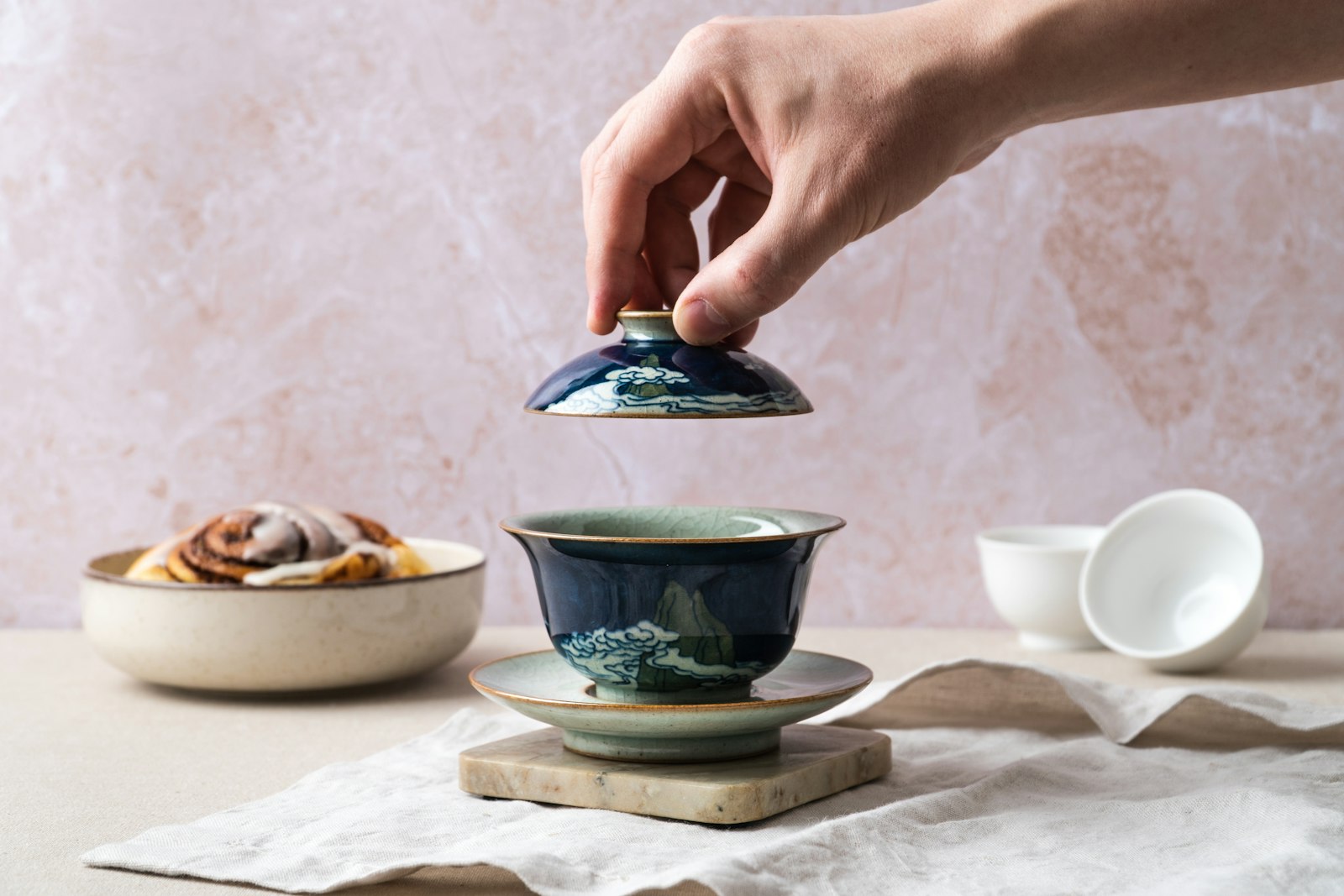
The principle is simple: lots of leaf, little water, very short steeping times. You brew in a small teapot or a gaiwan, a lidded bowl with a saucer. These vessels often hold only 60 to 200 ml. You pour the finished infusion into a small jug, called ‘gongdao bei’ in Chinese, the ‘fairness cup’. From there you share it out among the cups. This way the tea doesn’t keep steeping, and every cup is equally strong.
Oolong teas work well for this. You can read what makes oolong special in our article on oolong. For an afternoon break, gongfu cha is above all an exercise in attention. Each infusion tastes slightly different, and you notice how the leaves open round by round.
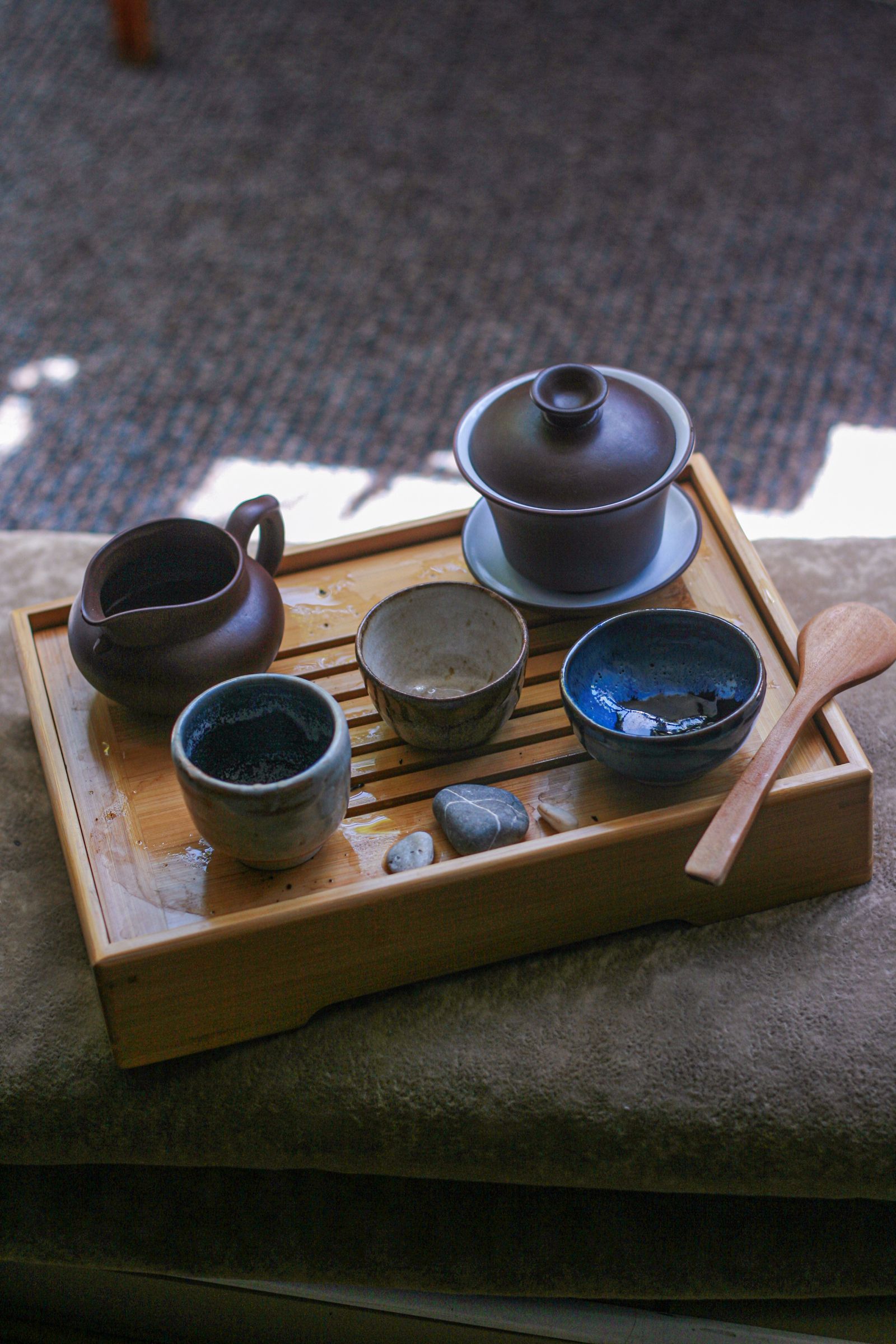
A gaiwan or a small teapot holding about 100 ml. A pouring jug and two to four small cups. 3 to 5 g of oolong (guide value: 3 to 5 g per 100 ml of water). Water at about 85°C.
- Warm up Rinse the gaiwan, jug and cups with hot water and pour it away.
- Rinse the leaves Put the tea in the gaiwan, pour a little hot water over it and pour this off straight away.
- First infusion Fill up with water at 85°C and let the tea steep for 10 to 15 seconds.
- Pour off Slide the lid back slightly so that it holds back the leaves, and pour all the tea into the jug. Then share it out among the cups.
- Keep going Extend the steeping time with each infusion. 15 to 40 seconds and 4 to 10 infusions with the same leaves are usual.
Three layers in one cup: East Frisian tea
‘East Frisia has been a tea-drinking region for around 300 years,’ writes the German Commission for UNESCO. The proximity to the Netherlands played a part: the Dutch East India Company first brought tea to the region in the early 17th century. Tea was considered healthy and was promoted as an alternative to beer. Since 2016, East Frisian tea culture has been on Germany’s national inventory of intangible cultural heritage.
What makes it special is the order. A lump of rock sugar, white or brown, lies in the cup: the ‘kluntje’. The tea goes on top, then a little cream at the edge. It first sinks and then rises again. This cloud is called the ‘wulkje’.
Because nobody stirs, every sip tastes different: first the mild cream, then the strong tea, and finally the sweetness of the rock sugar. East Frisian tea is a blend of various black teas, including Assam. A leaflet from the Ostfriesische Landschaft, the region’s cultural association, recommends loose tea instead of tea bags and soft water.
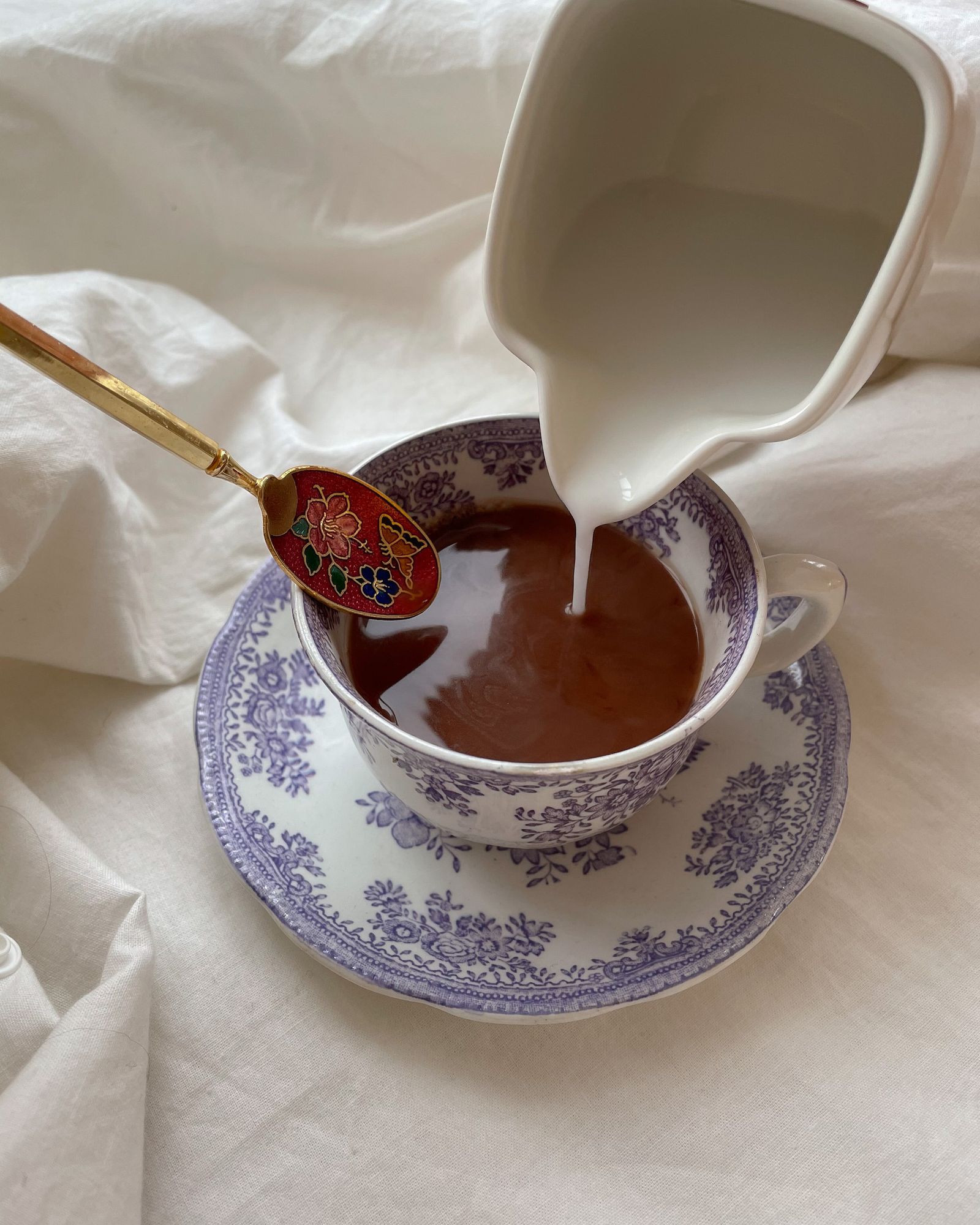
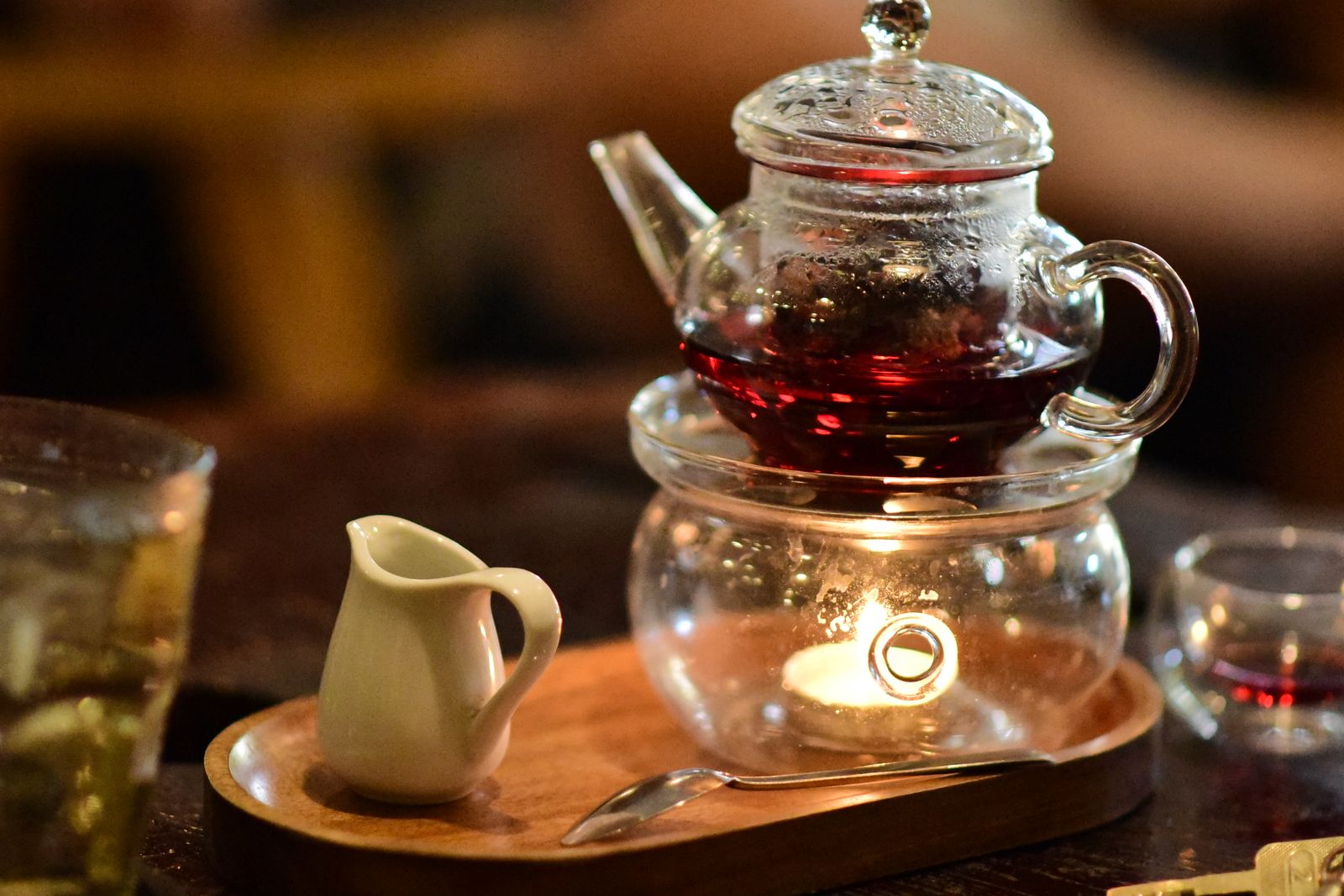
A teapot holding about 1 litre, a tea warmer (a stand with a tealight) and a tea strainer. 10 g of East Frisian tea blend per litre of water. Brown rock sugar, single cream and a small cream spoon.
- Warm the pot Rinse the pot with boiling water.
- Brew Put the tea in the pot and pour on boiling water until it is about a third full. Let the tea steep for 3 to 5 minutes.
- Top up and keep warm Top up with boiling water and put the pot on the warmer. Pour the tea through the strainer so that no leaves get into the cups.
- Kluntje Put a lump of rock sugar in each cup and pour the hot tea over it.
- Wulkje Use the cream spoon to add a little cream to the tea at the edge of the cup. Traditionally, you pour it in anticlockwise; this, it is said, ‘stops time’.
- Don’t stir Drink the tea in layers. When you’ve had enough, stand the spoon in the cup.
Roasted and mild: hojicha
Hojicha is a Japanese green tea whose leaves are roasted. This gives it its nutty, toasty aroma. It is relatively young: according to a popular story, a tea merchant in Kyoto roasted unsold bancha, stems and all, around 1920. You’ll find more about its origins and production in our profile hojicha: roasted green tea.
Hojicha suits a ritual for in between because it works on its own and without much equipment: a small pot and a few quiet minutes. If you prefer it with milk, our guide on how to make a hojicha latte has everything you need. You can read how cafés are currently serving it in hojicha serving trends.
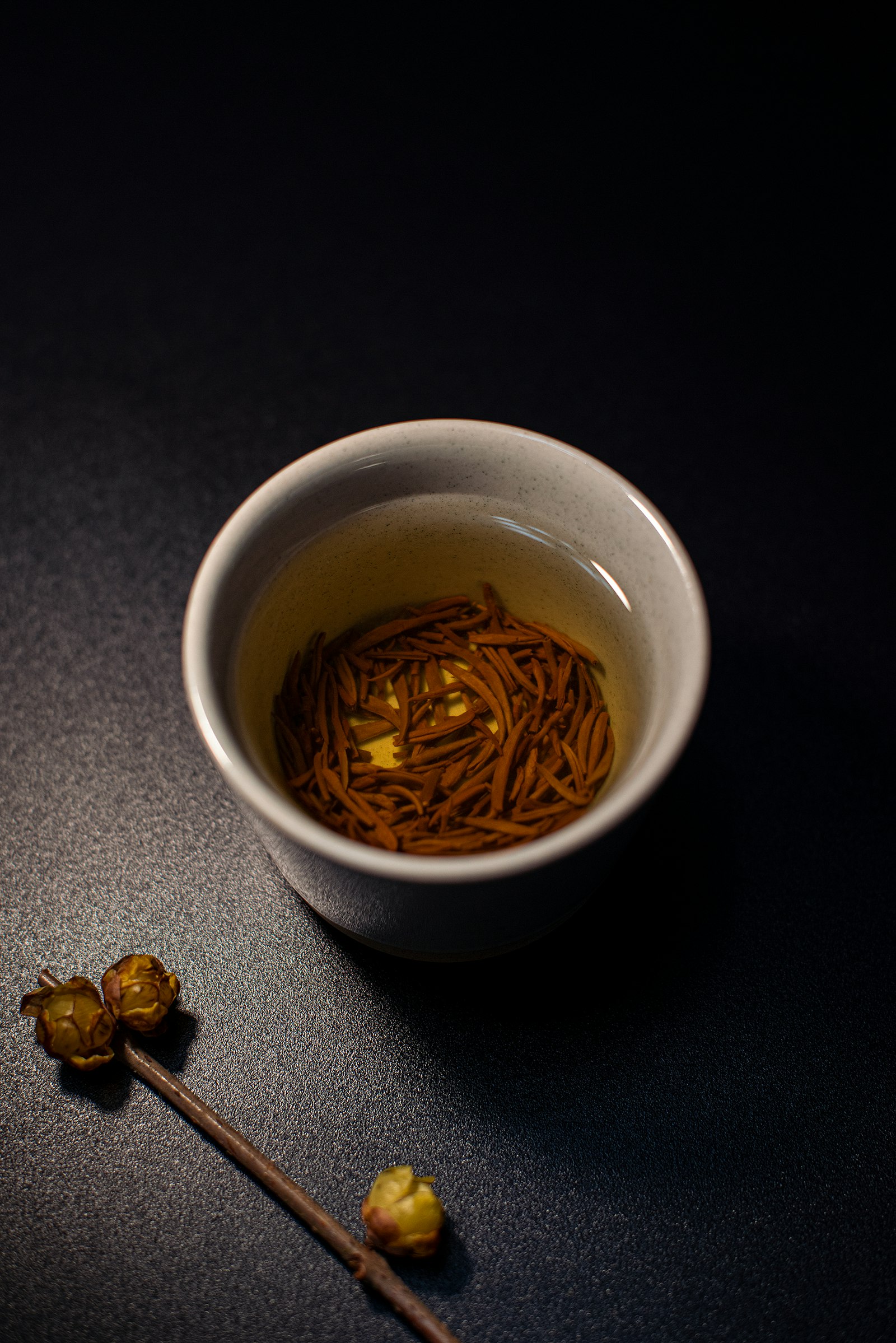
A small teapot, 5 g of hojicha, 150 ml of water at 80°C.
- Let the water cool Bring the water to about 80°C.
- Brew Put the hojicha in the pot and pour on the water.
- Steep Let the tea steep for about one minute, then pour it all off.
- Re-steep If you empty the pot completely each time, you can infuse the same leaves up to about five times.
And what about caffeine?
Hojicha is considered low in caffeine. The Japan External Trade Organization (JETRO) rates its caffeine content as ‘low’ and that of sencha as ‘medium’. The figures are not quite so clear-cut, though. The official Japanese food composition table gives 0.02 g of caffeine per 100 g for a hojicha infusion. This is the Standard Tables of Food Composition in Japan, 8th edition, 2023 supplement. The infusion is brewed with 15 g of tea and 650 ml of water at 90°C for 30 seconds. The table also lists 0.02 g for sencha, brewed with 10 g of tea and 430 ml of water at 90°C for one minute. So hojicha is not caffeine-free, and how much caffeine ends up in the tea depends on the amount of leaf and how you brew it.
For context: the European Food Safety Authority (EFSA) notes that in some people, caffeine can affect sleep from about 100 mg. This applies especially if it is drunk shortly before bedtime. If you are sensitive, the afternoon is a better time for your tea ritual than late evening. Our article on matcha, caffeine and L-theanine explains how caffeine works in matcha.

If you have a samovar or want to try the Russian principle, here is how it works. A small teapot holds a lot of tea, usually black tea, with little water. This concentrate is called ‘zavarka’. Each person dilutes it in their own cup with hot water at a ratio of 1:3 to 1:10, deciding how strong their tea will be. One centre of samovar production is the city of Tula, south of Moscow.
A ritual for every afternoon
All three traditions have one thing in common. You slow down and notice small details: the water temperature, the moment you pour off or the cream at the cup’s edge. You’ll find the basics of temperature, steeping time and amount of leaf in our article on how to brew tea properly.
Our recommendation for further reading
There is one book for all three rituals that explains varieties, origins and brewing in depth.
Further reading
Book
Rainer Schmidt: Das große Teebuch
Pros: Rainer Schmidt, a former tea importer in Hamburg, presents around 150 teas with their growing regions and harvest times. He also explains tea traditions, buying, storage and brewing.
Cons: Published in 2017, so details on suppliers and the market may be out of date. At 368 pages, it is more a reference work than a quick introduction.
Our selection is editorial, there are no paid placements. Links marked * are affiliate links to Amazon Germany (amazon.de): if you buy through them, we receive a small commission at no extra cost to you. We have not tested the products ourselves; pros and cons are based on manufacturer information and retailer descriptions. Prices are guide prices from German shops as of October 2026, and prices and availability on Amazon may differ.
Last updated: October 2026.
Sources
- Deutsche UNESCO-Kommission: Ostfriesische Teekultur (in German), accessed 18 October 2026.
- Kultusministerkonferenz: 34 Kulturformen neu ins deutsche Verzeichnis des Immateriellen Kulturerbes aufgenommen (in German), 9 December 2016.
- Ostfriesische Landschaft (text: Etta Bengen): Ostfriesische Teekultur (Faltblatt) (in German), 2021.
- Utopia: Ostfriesentee: So bereitest du ihn richtig zu (in German), 11 April 2019.
- Wikipedia: Gongfu tea, accessed 18 October 2026.
- Tea Soul: How to use a gaiwan, the traditional Chinese teacup, 28 October 2024, updated 22 December 2025.
- JETRO: About Japanese green tea, accessed 18 October 2026.
- Japanese Taste: Discovering Hojicha – The Roasted, Low Caffeine Green Tea, 7 April 2023, updated 5 October 2026.
- calorie.slism.jp (data: MEXT, Standard Tables of Food Composition in Japan, 8th edition, 2023 supplement): Hojicha, infusion, accessed 18 October 2026.
- calorie.slism.jp (data: MEXT, ibid.): Sencha, infusion, accessed 18 October 2026.
- EUFIC: EFSA opinion on the safety of caffeine, 23 June 2015.
- dewiki.de: Samowar (in German), accessed 18 October 2026.
- Alimentarium: Tee in Russland (in German), accessed 18 October 2026.
- Bookshop buch-ka.de: Rainer Schmidt: Das große Teebuch, €25.00, accessed 24 October 2026.
- eBay.de: Das Große Teebuch (Gebundene Ausgabe) (in German), Braumüller 2017, new €25.00, accessed 24 October 2026.