Ube is a purple yam from the Philippines, neither a sweet potato nor taro. Only the ingredients list tells you whether an ube latte contains the real tuber.How it differs from sweet potato and taro, nutritional values, colourings on the label and an ube latte recipe.
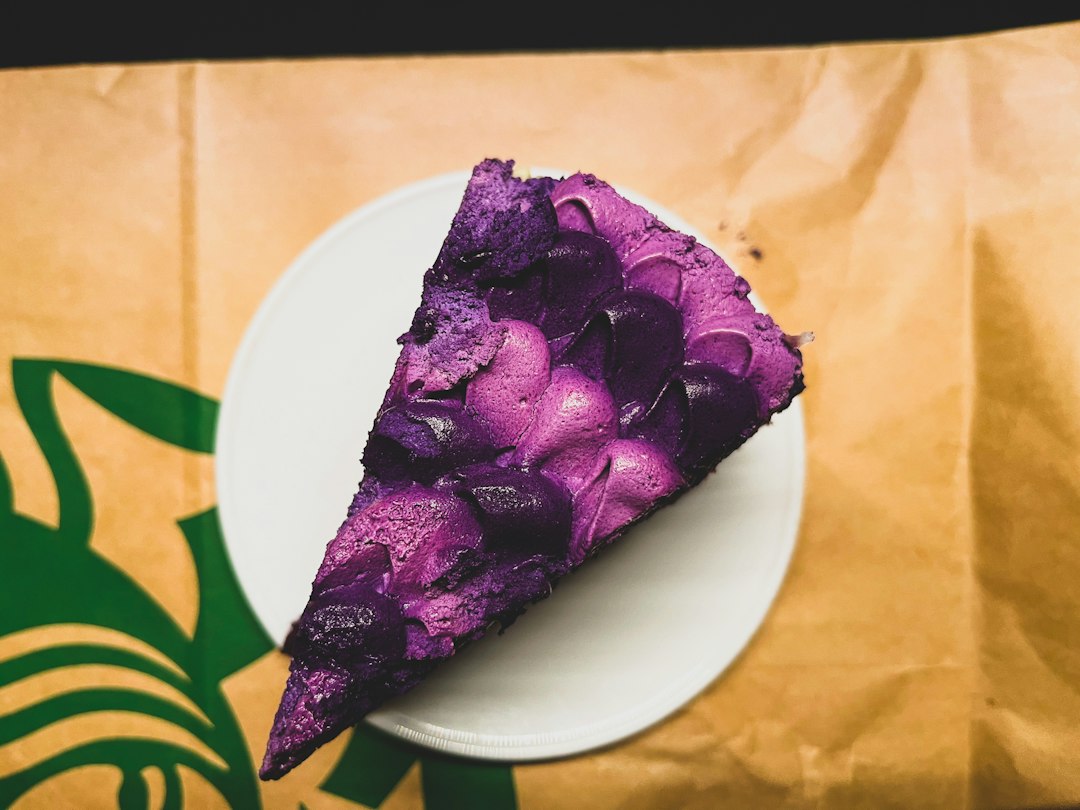
A café menu lists a drink in a vivid shade of purple, next to the word ube. You order it and mainly taste sweet milk. You can’t tell from the cup how much of it comes from the tuber.
Ube, also spelled ubi in the Philippines, is the tuber of a tropical climbing plant. In shops it is often confused with purple sweet potato and taro. On top of that, there are syrups that mainly provide colour and flavouring. Botany, the label and the nutrition table help you sort them out.
Botany: three purple tubers from three plant families
Ube is the tuber of Dioscorea alata. The species belongs to the yam family and was described by Linnaeus as early as 1753. According to the Kew Gardens plant database, it is native to tropical Asia, including the Philippines. It grows as a twining climber from an underground tuber.
The plant handbook PROSEA describes the stem as four-angled and usually clearly four-winged. That is where the species name alata, meaning winged, comes from. The plant twines to the right. A tuber usually weighs 5 to 10 kg, and its flesh is white, cream or purple. The species is practically unknown in the wild, as it arose in South-East Asia as a cultivated plant.
Botanically, the purple sweet potato is something quite different. Ipomoea batatas belongs to the morning glory family and comes from Central America or northern South America. Its storage organ is not a tuber but a thickened root. Taro, Colocasia esculenta, belongs to the arum family and forms a corm.
| Feature | Ube | Purple sweet potato | Taro |
|---|---|---|---|
| Species | Dioscorea alata | Ipomoea batatas | Colocasia esculenta |
| Family | Yam family | Morning glory family | Arum family |
| Storage organ | Tuber, usually 5 to 10 kg | Thickened storage root | Corm, up to 4 kg |
| Origin | South-East Asia | Central America or northern South America | South-East or southern Central Asia |
| Flesh | white, cream or purple | white, yellow, orange or purple | colour depends on variety |
| Note | only eaten cooked | includes varieties with purple flesh | irritates mouth and throat when raw |
The table also shows why colour is no proof. Purple flesh occurs in ube and in sweet potatoes, and ube can be white too. Raw taro tastes sharp, probably because of needle-shaped calcium oxalate crystals, according to PROSEA. Cooking or fermenting softens this.
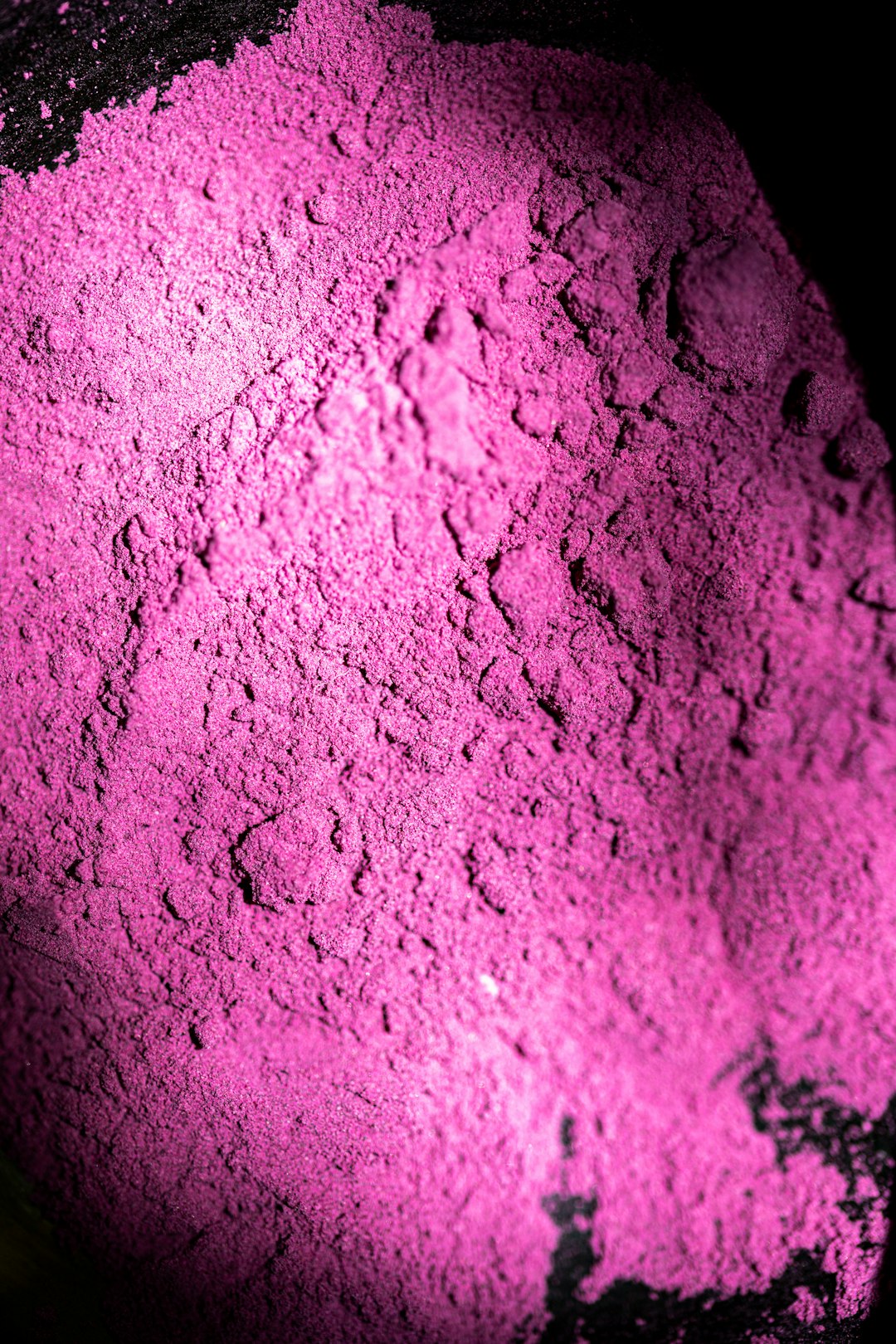
The purple colour of ube comes from anthocyanins. A 2020 study of Thai ube varieties mainly found alatanin C, a cyanidin with sinapic acid attached. Pigments with an acid group like this are called acylated. But the colour alone doesn’t reveal which plant it comes from.
Ube in the Philippines: halaya, kinampay and an export ban
In the Philippines, ube is mainly an ingredient for sweet things. PROSEA names ice cream and confectionery as typical uses of the purple varieties. The best-known preparation is ube halaya, a thick, sweet paste made from grated tuber. It is the base for pastries, ice cream and many ube drinks.
A popular Filipino recipe cooks about 450 g of grated, thawed ube with coconut milk and butter. Sweetened and unsweetened condensed milk and a cup of sugar go in too. After 30 to 40 minutes of stirring, it turns into a firm paste. One ingredient on the side is worth noting. Two to three drops of ube extract can optionally be added for an even colour.
Kinampay is one of the well-known varieties. PROSEA groups it with Morado and Vino Violeta among compact purple varieties that grow mainly in the Philippines. The Slow Food Foundation lists kinampay in its Ark of Taste. It is grown on the island of Panglao and in Guindulman on Bohol, among other places.
According to Slow Food, kinampay is planted in May and harvested in January. In the harvest month, Bohol holds an annual festival. According to legend, the tuber saved the island’s people during a famine. The people there see it as a symbol of their survival.
The harvest is small and shrinking. A report by the US Department of Agriculture gives less than 12,500 tonnes for 2025, after 14,150 tonnes in 2021. In autumn 2026, the Philippine Department of Agriculture suspended exports of fresh ube and planting material indefinitely. Processed goods such as powder are exempt.
Agriculture Secretary Francisco Tiu Laurel Jr. justified the move with a shortage of planting material in the country. Philippine varieties should not become competitors abroad. The founder of a Philippine ube supplier commented that a lot of ube abroad is purple sweet potato or colouring. That is fine, he said, as long as it is labelled correctly.
Nutritional values: what the Philippine food composition table shows
Reliable nutritional values come from the Philippine food composition table of the state Food and Nutrition Research Institute (FNRI). It lists ube under Dioscorea alata, raw and boiled. Alongside are purple sweet potato, taro and two typical ube sweets. All values are per 100 g of edible portion.
| Food (100 g) | Energy | Carbohydrates | of which sugars | Fibre | Protein | Vitamin C |
|---|---|---|---|---|---|---|
| Ube, preparation not specified | 97 kcal | 22.2 g | 0.4 g | 3.4 g | 1.7 g | 6 mg |
| Ube, boiled | 77 kcal | 18.2 g | 0.3 g | 2.6 g | 0.7 g | 4 mg |
| Purple sweet potato, preparation not specified | 125 kcal | 29.8 g | 5.9 g | 4.2 g | 0.6 g | 41 mg |
| Taro, preparation not specified | 141 kcal | 32.6 g | 0.5 g | 5.0 g | 2.3 g | 9 mg |
| Ube pudding with coconut (maja ube) | 191 kcal | 43.4 g | 25.9 g | 2.0 g | 1.7 g | 0 mg |
| Ube fudge (pastillas) | 349 kcal | 75.9 g | 58.6 g | 0 g | 8.0 g | 0 mg |
The tuber itself is starchy and, according to the table, contains hardly any sugar. Purple sweet potato has much more sugar and vitamin C. In the sweets, most of the energy comes from added sugar. For drinks, this means the sweetness almost always comes from halaya, syrup or condensed milk.
Colourings and flavourings: what the label must reveal in the EU
Many ube products are coloured with colourings or seasoned with flavourings. That is allowed, but it must be recognisable. In the ingredients list, additives appear under their class name, such as colour, followed by the name or E number.
Six synthetic colourings carry an extra requirement under the EU regulation on food additives. If a product contains E 102, E 104, E 110, E 122, E 124 or E 129, a warning must follow. It reads: ‘May have an adverse effect on activity and attention in children.’ Exemptions include drinks with more than 1.2 per cent alcohol by volume.
With flavourings, the wording matters. Article 16 of the EU flavourings regulation sets out when the word natural is allowed. Depending on the wording, the flavouring comes entirely, partly or not at all from the tuber.
| Wording on the label | What it means |
|---|---|
| Ube, ube powder with the species named | Tuber as an ingredient, the amount is in the ingredients list |
| natural ube flavouring | at least 95 per cent of the flavouring component by weight comes from ube |
| natural ube flavouring with other natural flavourings | only partly from ube, the ube taste must be easily recognisable |
| natural flavouring | from various source materials, no link to ube needed |
| flavouring | Article 16 says nothing about its origin |
| Colour E 129 and warning | synthetic colouring from the list that requires a warning |
In a café, there is no packaging. For loose food, colourings are declared with the note ‘with colouring’, according to a leaflet from a food inspection authority in Lower Saxony. If you ask, the café should be able to name the ingredients of the ube component.
Ube latte: how the tuber goes with coffee, matcha and cocoa
An ube latte is milk with a sweet ube component, with or without espresso. Halaya brings sweetness, body and the taste of the tuber. An extract mainly provides colour and a strong flavour. A US food blogger describes her extract as strong and coconut-like, so she only uses a tiny pinch.
Her recipe for an iced ube latte starts with 2 tablespoons of halaya and an eighth of a teaspoon of extract. She mixes these with a pinch of salt and 1 tablespoon of sweetened condensed milk. Around 180 ml of cold milk goes in too (converted from cups by us). The ube milk goes over ice, and she slowly pours around 120 ml of moka pot espresso on top.
Halaya is hard to stir in. The blogger whisks it or shakes it in a screw-top jar. You know the principle from the matcha latte. First you stir the paste smooth with a little liquid, then you add the rest. For the hot version, the rules for milk foam and oat drink apply.
Ube has a mild taste. A strong, dark espresso can easily overpower it. With matcha or cocoa it works as a sweet layer, and its own flavour takes a back seat. That is our assessment based on the recipes, not a measurement.
Iced ube latte with halaya for one glass:
- Whisk 2 tablespoons of ube halaya with 1 tablespoon of sweetened condensed milk, a pinch of salt and a splash of milk until smooth.
- Pour in around 180 ml of cold milk and stir until no lumps remain. Shaking it in a screw-top jar is quicker.
- Taste before sweetening, as halaya already contains sugar and condensed milk.
- Fill a glass halfway with ice and pour in the ube milk.
- Pour a double espresso slowly over an upturned spoon so it floats on top. Stir before drinking.
The situation in the Philippines is reminiscent of the matcha shortage. Rapidly growing demand meets a limited harvest. For your next purple latte, this mainly means checking the label. If it says Dioscorea alata or ube halaya, the real tuber is in it.
Last updated: 24 October 2026.
Sources
- Royal Botanic Gardens, Kew, Plants of the World Online: Dioscorea alata L., accessed 24 October 2026.
- PROSEA, Plant Resources of South-East Asia: Dioscorea alata L., accessed 24 October 2026.
- PROSEA via Pl@ntUse: Ipomoea batatas (PROSEA), accessed 24 October 2026.
- PROSEA via Pl@ntUse: Colocasia esculenta (PROSEA), accessed 24 October 2026.
- International Journal of Food Science: Profiling Anthocyanins in Thai Purple Yams (Dioscorea alata L.), January 2020.
- Kawaling Pinoy, Lalaine Manalo: Halayang Ube, undated, accessed 24 October 2026.
- Fondazione Slow Food: Ubi Kinampay, Ark of Taste, accessed 24 October 2026.
- FoodNavigator: Ube exports have been suspended: why and what happens now?, 13 October 2026.
- DOST-FNRI, Philippine Food Composition Table, Release 1 (December 2019): Yam, purple (Dioscorea alata), accessed 24 October 2026.
- DOST-FNRI, Philippine Food Composition Table, Release 1 (December 2019): Yam, purple, boiled, accessed 24 October 2026.
- DOST-FNRI, Philippine Food Composition Table, Release 1 (December 2019): Sweet potato, purple (Ipomoea batatas), accessed 24 October 2026.
- DOST-FNRI, Philippine Food Composition Table, Release 1 (December 2019): Taro (Colocasia esculenta), accessed 24 October 2026.
- DOST-FNRI, Philippine Food Composition Table, Release 1 (December 2019): Purple yam (ube) pudding with grated coconut topping, accessed 24 October 2026.
- DOST-FNRI, Philippine Food Composition Table, Release 1 (December 2019): Fudge, yam (Pastilyas, ube), accessed 24 October 2026.
- Regulation (EC) No 1333/2008, Annex V (via gesetze.legal): Liste der Lebensmittelfarbstoffe mit zusätzlicher Kennzeichnungspflicht (in German), accessed 24 October 2026.
- Regulation (EC) No 1334/2008, Article 16 (via gesetze.legal): Besondere Anforderungen an die Verwendung des Begriffs „natürlich“ (in German), accessed 24 October 2026.
- LALLF Mecklenburg-Vorpommern: Lebensmittelzusatzstoffe (Faltblatt) (in German), 2023.
- Landkreis Aurich, Veterinärwesen und Lebensmittelüberwachung: Merkblatt Kenntlichmachung von Zusatzstoffen, Version 1.2 (in German), undated, accessed 24 October 2026.
- Delicious Not Gorgeous: Ube Latte, 28 October 2020.