For good milk foam, draw a little air into cold milk, let it roll in the jug and stop at around 55 to 65°C. With oat drink, the barista version works best.Temperature and sweetness, the steam wand step by step, foam without a machine and plant-based drinks compared.
Milk foam is made of air, milk and heat. On an espresso machine it takes you around half a minute. Without a steam wand, a French press (cafetière) or a frother will do, but the foam turns out a little coarser or stiffer.
For a cappuccino the foam should be fine and glossy, for a flat white even finer and thinner. Cow’s milk and oat drink behave differently, but the technique stays the same.
The right temperature: warm enough, but not cooked
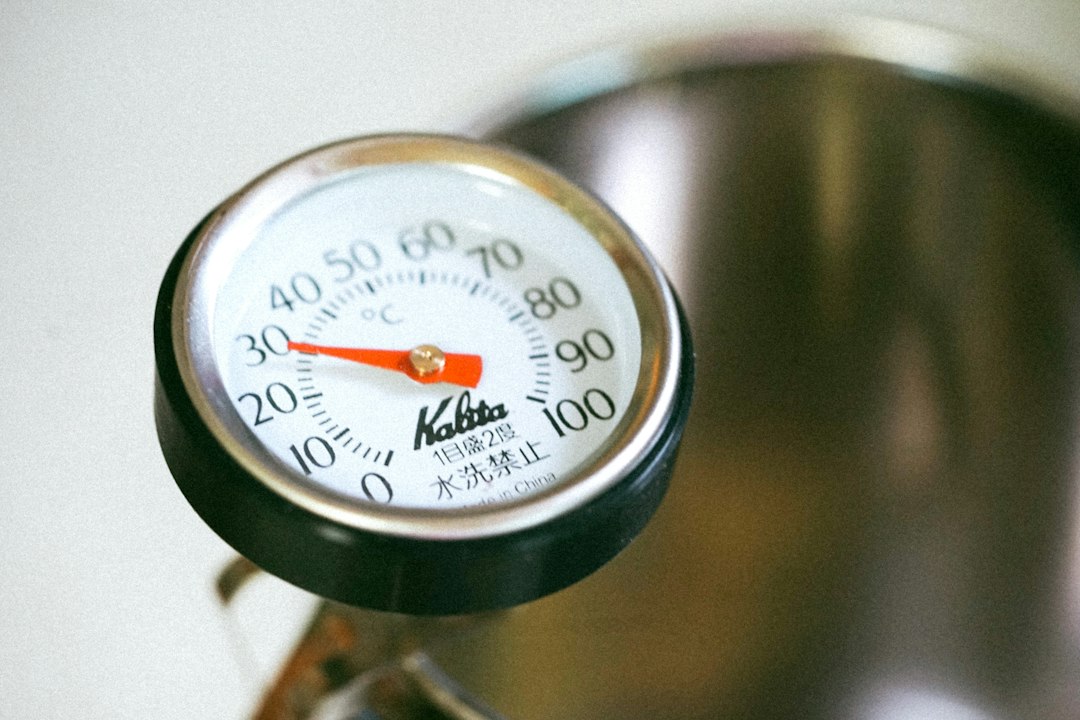
Most specialist sources give 60 to 65°C as the target for cow’s milk. A Swiss roastery warns that milk loses sweetness above 70°C. A roastery blog suggests 55 to 60°C if sweetness is what you care about most. For barista oat drink, the Swiss roastery recommends a little less, around 55 to 60°C.
If the milk gets too hot, it tastes cooked. A roastery guide explains this with proteins that curdle and milk sugar that catches slightly. A US retailer puts the limit at around 71°C, above which the milk tastes burnt.
Why warm milk tastes sweeter than cold milk is not fully understood. Barista Hustle rejects the idea that milk sugar breaks down during steaming. If it did, the milk would stay sweeter after cooling, and it doesn’t. It is more likely that the tongue perceives sweetness more strongly in warm drinks.
| Milk or drink | Guide value |
|---|---|
| Cow’s milk for cappuccino and latte | 60 to 65°C |
| Cow’s milk, as sweet as possible | 55 to 60°C |
| Barista oat drink | 55 to 60°C |
| Upper limit, beyond this it tastes cooked | around 65 to 70°C |
A thermometer helps at the start. After that, your hand on the jug is enough. A US retailer gives a rule of thumb: if the base is so hot that you can only hold it briefly without pain, you are in the target range.
At the steam wand: air first, then the whirlpool
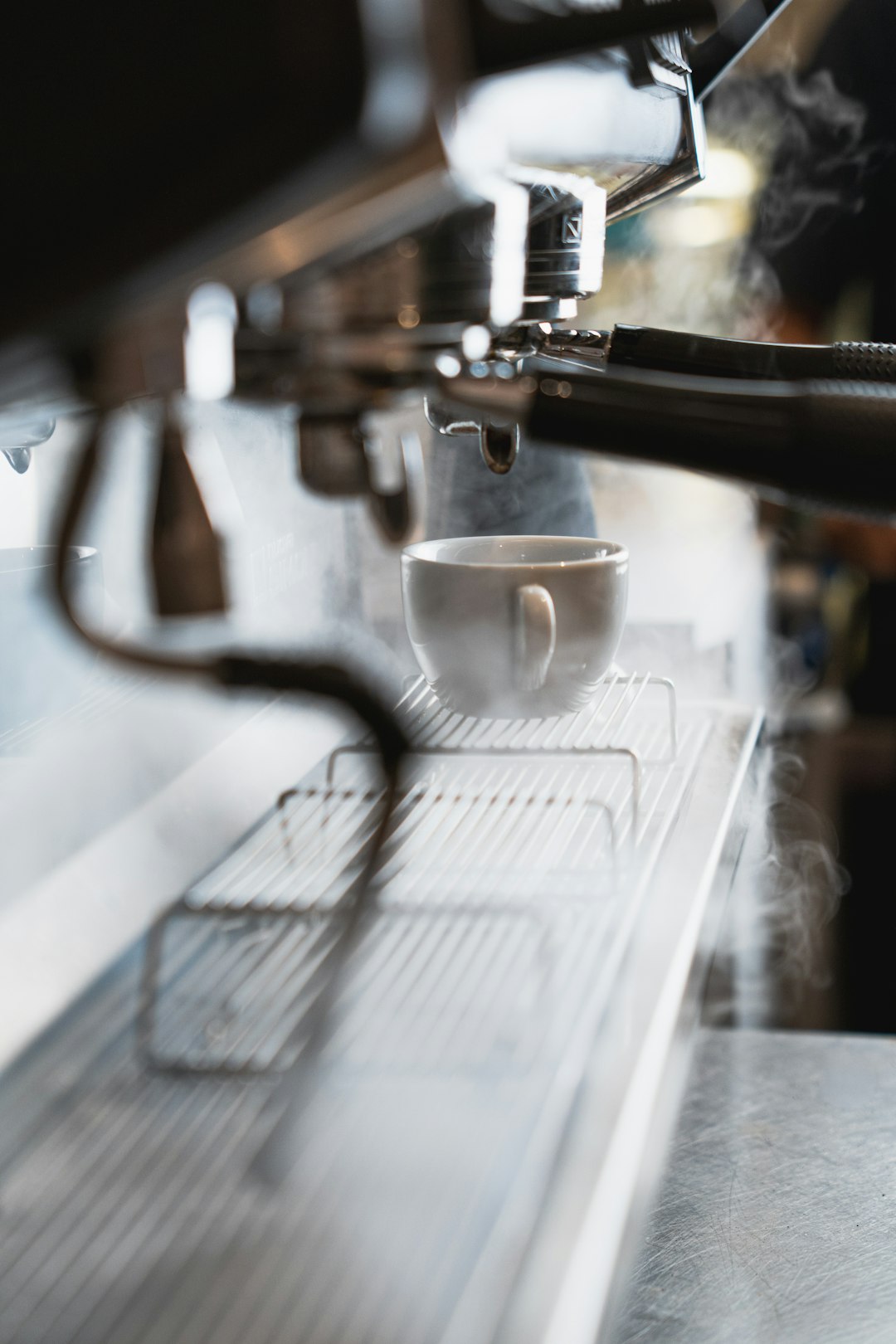
Steaming on the machine has two phases. First you draw air into the milk, which is called stretching. Then you set the milk spinning in a whirlpool that breaks up large bubbles and spreads the air finely. Cold milk straight from the fridge gives you more time before it gets too hot.
- Prepare: Fill the milk jug about half full with cold milk, at most to just below the spout. Purge the wand briefly beforehand so that condensation comes out of the tip.
- Stretch: Hold the tip just below the surface and turn on the steam. A quiet hissing or slurping sound shows that air is getting in. For a latte, 2 to 4 seconds are enough, for a cappuccino 4 to 6 seconds.
- Roll: When the jug feels hand-warm, dip the tip deeper. Hold the jug at a slight angle until the milk spins in a circle.
- Turn off: At 60 to 65°C, turn off the steam before the tip leaves the milk. Wipe the wand straight away and purge it briefly.
- Smooth and pour: Tap the jug on the counter so that large bubbles burst. Swirl the milk until it is glossy and pour straight away.
With enough steam, the whole process takes 15 to 30 seconds, according to a US retailer. Afterwards the milk should have grown by about a third. Don’t wait too long before pouring, because foam and milk separate after around 30 seconds.
The best milk is little help if the espresso underneath is off. How to set grind size and shot time is explained in dialling in espresso.
How to get fine foam at the steam wand:
- Take the milk out of the fridge just before steaming.
- Choose a milk jug that holds about twice your amount of milk.
- Stop the hissing as soon as the jug is hand-warm, otherwise the foam turns coarse.
- Tap and swirl the milk before you pour.
- Wipe the wand straight away every time, before the milk dries on.
Without an espresso machine: French press, hand frother and electric devices
Without a steam wand, you split the job into two steps. First heat the milk in a pan or in the microwave to around 60 to 65°C. A US roaster advises not going above 80°C. Then whisk air into it.
| Method | How to do it | Result |
|---|---|---|
| French press | pour in warm milk, pump quickly for around 30 seconds | decent foam, a little coarser |
| Hand frother with plunger | milk between the min and max marks, heat to around 65°C, pump firmly, rest for 30 seconds | stiff foam |
| Electric wand | dip into the warm milk, run for a few seconds | quick, easy to control |
| Electric frother with jug | heats and froths in one go | often very stiff |
| Whisk | tall, narrow pan, whisk for around one minute | coarse foam |
The same tricks help with every method as at the machine. Let the foam stand briefly, tap the container and swirl the milk. Large bubbles then burst and the rest becomes smoother. According to a roastery blog, electric frothers often produce a very stiff foam that is too firm for latte art.
Frothed milk works on other drinks too. You can prepare it the same way for a hot chocolate made with couverture.
Cow’s milk: protein holds the foam, fat makes it creamy
To stop air bubbles bursting straight away, protein wraps around them like a thin skin. Fat works against this. A 2008 study found that milk fat reduces foam formation and stability, especially between 15 and 45°C. In that range, foam from skimmed milk held best when it was made at 45°C.
Even so, baristas usually use whole milk. A machine manufacturer explains this with texture. Skimmed milk foams quickly and in large amounts, but it doesn’t get as smooth and silky. Whole milk gives a creamier foam that pours well.
A roastery blog names at least 3.3 per cent protein as the basis for stable foam. According to the same blog, UHT milk foams more easily than fresh milk, and lactose-free and semi-skimmed milk work too. Barista milk contains added milk protein, is ultra-heat treated and costs 10 to 20 cents more. That is according to Verbraucherzentrale Niedersachsen (the consumer advice centre of Lower Saxony). It still recommends fresh whole milk.
Oat drink and other plant-based drinks: why barista versions foam better
Plant-based drinks usually contain less protein than cow’s milk, and only soya comes close, according to the consumer advice centre. Barista versions make up for this. Manufacturers add pea or soya protein and rapeseed or sunflower oil. Some also contain stabilisers, emulsifiers, acidity regulators or phosphate salts.
The acidity regulator has a job of its own. One manufacturer writes that it stops its barista oat drink from flocculating in hot drinks. The oil raises the fat content to around 3 per cent. The term ‘barista’ is not protected. Only the ingredients list tells you what is in the carton.
A 2024 study compared cow’s and goat’s milk with six plant-based drinks, frothed with an electric frother. At 65°C the animal milks formed more foam than the best plant-based drinks made from oat, pea and soya. At 10°C, however, oat, soya and almond foamed more and for longer than cow’s milk. Across all tests, foam from oat drink lasted longest.
| Drink | When frothing | What to watch |
|---|---|---|
| Oat drink, barista | long-lasting foam, a little less volume than cow’s milk when hot | don’t overheat, around 55 to 60°C |
| Soya drink | foams well, lots of protein | can flocculate in hot coffee |
| Pea drink | among the best plant-based drinks when hot | look for a barista version |
| Almond drink | good when cold, difficult when hot | separates easily, not too hot |
| Rice and coconut drink | little foam that doesn’t last | not well suited to milk foam |
Soya drink flocculates in coffee mainly when it gets hot. In 2019, researchers in Glasgow saw no separation up to 30°C in a mixture with 15 per cent soya drink, and rapid separation from 45°C. More soya drink in proportion to the coffee helped. An Australian trade magazine also points to acidity: light roasts make soya flocculate more readily than dark roasts.
According to a US retailer, almond drink is hard to froth and breaks down quickly above about 60°C. Oat drink is also less forgiving of overheating than cow’s milk. So it is better to froth plant-based drinks a little cooler.
Cappuccino or flat white: how much foam belongs in the cup
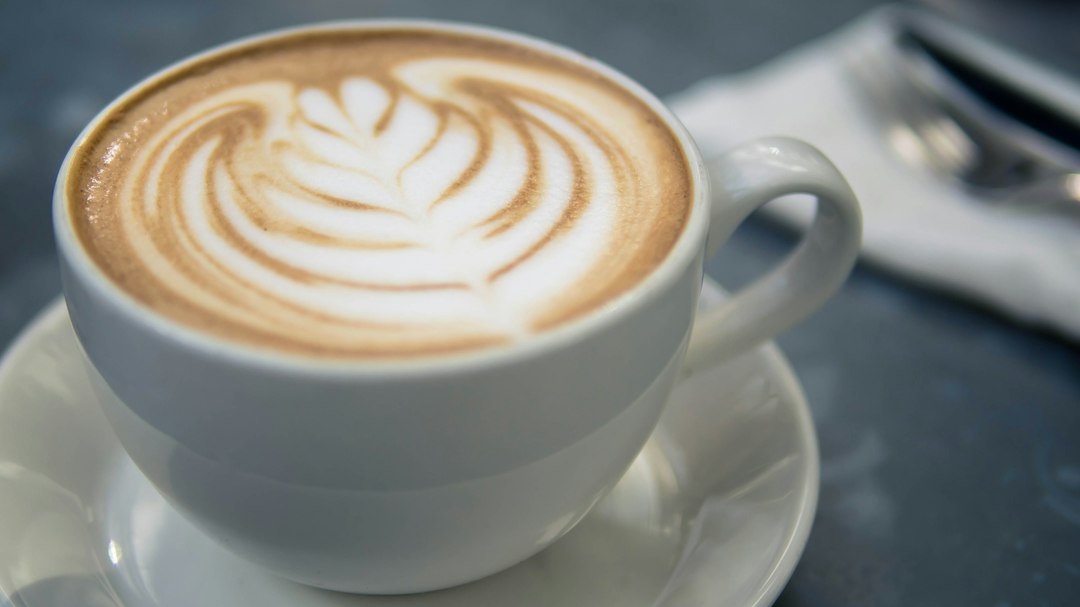
Microfoam has very small, evenly spread bubbles and shines like gloss paint. It blends with the espresso and is suitable for latte art. Stiff, dry foam with larger bubbles sits on the drink like a cap instead. If it is too stiff, it separates from the coffee as you drink.
A Swiss roastery serves both drinks in a 160 ml cup. The difference lies in the foam and the espresso. A cappuccino has 1 to 2 cm of foam on top, traditionally on the stiff side. On a flat white the microfoam is no more than 0.5 cm thick.
| Cappuccino | Flat white | |
|---|---|---|
| Foam layer | 1 to 2 cm | no more than 0.5 cm |
| Foam | stiffer, traditionally a cap | very fine microfoam |
| Stretching at the steam wand | longer, around 4 to 6 seconds | shorter |
| Espresso in the house recipe | single | double |
| Milk in the house recipe | around 140 g | 120 g |
So for a flat white you draw in less air. Because of the double espresso, it also contains more caffeine. Exactly how much is shown in caffeine in espresso, filter coffee and cold brew.
For everyday use, a simple sequence is enough. Take cold milk or a barista drink, stretch briefly and let the milk roll until the jug gets hot. Then tap, swirl and pour straight away.
Last updated: 24 October 2026.
Sources
- Kaffeemacher, Benjamin Hohlmann: Flat White, 5 July 2026.
- Simon & Bearns, Simon Kuch: Flat White vs. Cappuccino: Differences and Preparation, 22 October 2025.
- Happy Coffee, Deva Tamminga: Milchschaum zubereiten (in German), 7 May 2025, updated 22 April 2026.
- Barista Hustle: Milk Science, lesson MS 3.04 on the sweetness of milk, undated, accessed 24 October 2026.
- La Marzocco Home, Ashlea Shiels: How to steam milk like a pro barista, 18 March 2025, modified 23 July 2025.
- Clive Coffee: How to Steam Milk for Lattes and Cappuccinos at Home, 11 May 2026.
- Volcanica Coffee: How to Froth Milk Without Fancy Equipment, 9 August 2025.
- Kamath, S.; Huppertz, T.; Houlihan, A. V.; Deeth, H. C., International Dairy Journal 18 (10 to 11), 994 to 1002: The influence of temperature on the foaming of milk, October 2008.
- Hassan, L. et al., Soft Matter 20, 8215 to 8229: The bubbly life and death of animal and plant milk foams, 18 September 2024.
- Verbraucherzentrale Niedersachsen: Marktcheck Barista-Varianten: Perfekter Schaum oder Schaumschläger? (in German), as of 9 October 2026.
- Oatly (manufacturer): Oatmilk Barista Edition, ingredients and FAQ, undated, accessed 24 October 2026.
- Brown, M. et al., Food Hydrocolloids 95, 462 to 467: ‘Curdling’ of soymilk in coffee: a study of the phase behaviour of soymilk coffee mixtures, online 20 April 2019.
- BeanScene, Ethan Miller: Proteins with purpose: why milk curdles and how to avoid it, 14 November 2018.