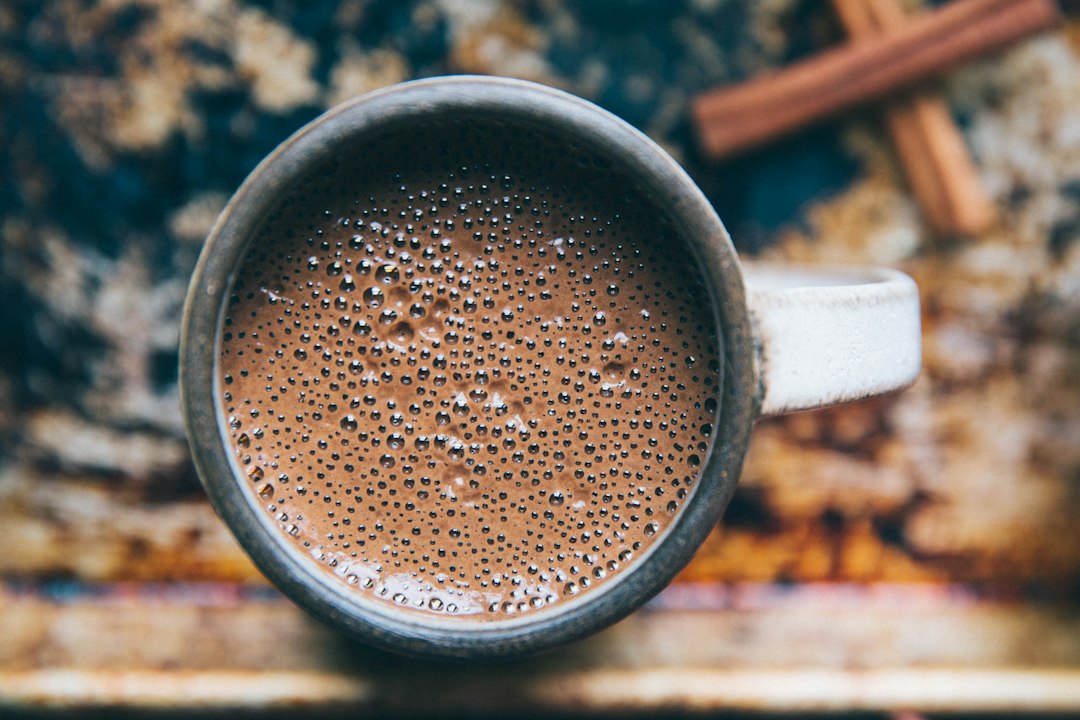
For one cup, stir 45 to 65 grams of dark chocolate into 250 millilitres of milk heated to about 70°C.Quantities from professional recipes, the ganache technique, four recipes and tips on milk, water and oat drink.
Hot chocolate made from a bar tastes fuller than cocoa made from powder. The reason is cocoa butter. Much of it is pressed out of the powder, but the chocolate still contains it. It coats your tongue in a thin film and carries the flavour.
Three things make the drink smooth. You need the right amount of chocolate, milk that isn’t too hot and the right order when stirring. The figures below come from recipes by chocolate makers and pastry chefs.
Our selection is editorial, there are no paid placements. Links marked * are affiliate links to Amazon Germany (amazon.de): if you buy through them, we receive a small commission at no extra cost to you. We have not tested the products ourselves; pros and cons are based on manufacturer information and retailer descriptions. Prices are guide prices from German shops as of October 2026, and prices and availability on Amazon may differ.
The ratio: how much chocolate goes in the cup
There is no fixed formula, but the professional recipes are close to each other. We have converted them to 250 millilitres of liquid. For recipes given in grams, we treated one gram of liquid as one millilitre.
| Recipe | Liquid | Chocolate per 250 ml (our conversion) |
|---|---|---|
| Callebaut, Hot Chocolate 811 | Milk | around 44 g |
| Dominique Ansel, New York | Whole milk, plus condensed milk and sugar | around 42 g |
| Patisserie Chanson, New York | Whole milk, plus sesame paste | around 44 g |
| Valrhona, basic recipe with oat drink | Oat drink and a little water | around 54 g |
| Valrhona, basic recipe with milk | Whole milk and a little water | around 63 g |
| Petrossian, New York | Half milk, half cream | 75 g |
With just over 40 grams per 250 millilitres, the chocolate stays light and fills a large mug. At 60 grams or more, it becomes dense and filling. A small cup is then enough. To start with, 45 to 50 grams is a good amount.
The Parisian style uses even more chocolate and comes close to liquid chocolate. You’ll find the recipe and its history in our article on drinking chocolate as in Paris.
The ganache method: how to get smooth chocolate
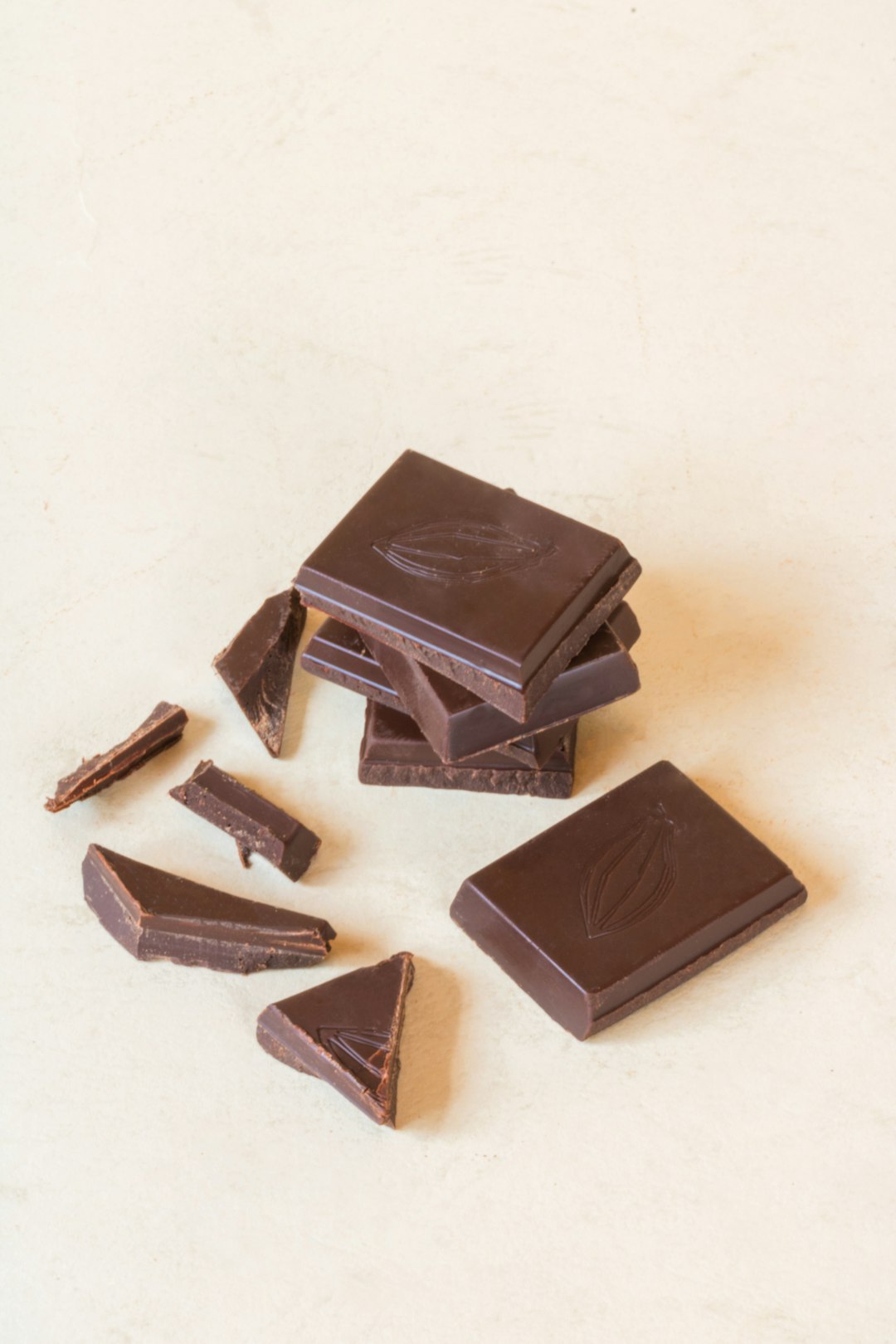
Chocolate contains almost no water. If you add just a splash of liquid, the sugar and cocoa particles attract the water and clump together. The mixture turns thick and grainy. Pastry chefs call this seizing.
The test kitchen of the US flour company King Arthur tried this out. After more than five drops of water on 57 grams of chocolate, the mixture began to seize. With more water it became smooth again. The cookbook author Shirley Corriher gives a minimum. For 57 grams of chocolate with 60 to 70 per cent cocoa, you need at least 1.5 tablespoons of liquid.
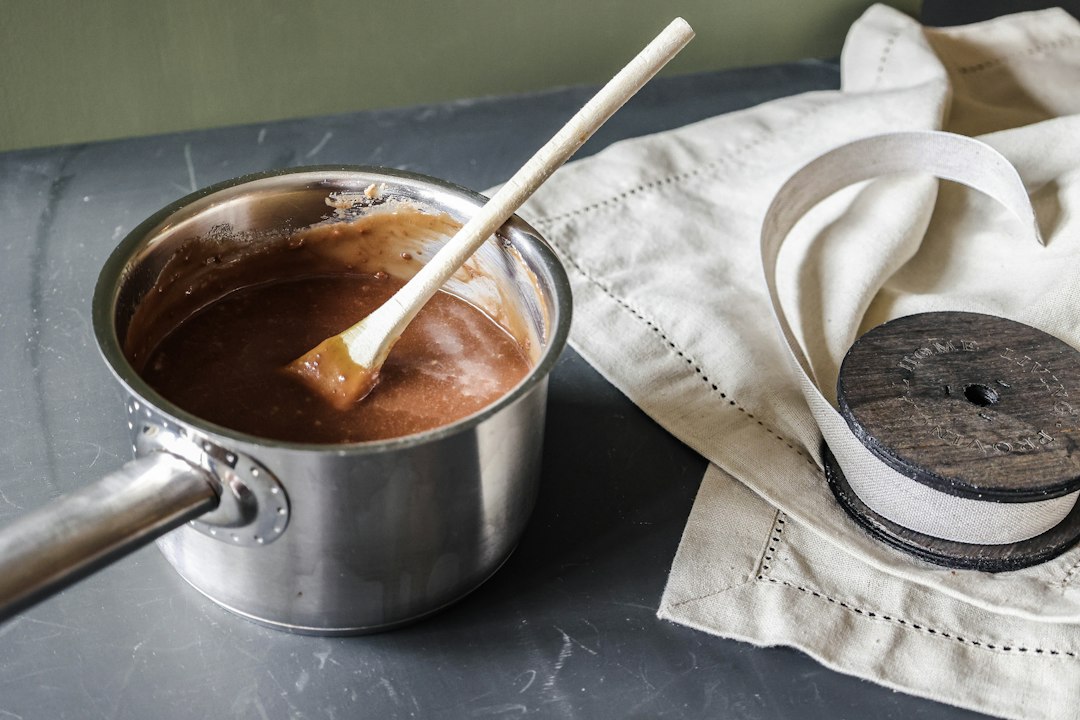
That is why you don’t add the milk drop by drop. Pastry chefs first stir a ganache, a smooth mixture of chocolate and part of the hot milk. Dominique Ansel uses half the milk for this, Patisserie Chanson a small amount. Only once the mixture is glossy does the rest go in.
Here is how to do it:
- Chop: Chop the chocolate finely or use drops. Put it in a small pan or a tall container.
- Heat: Bring the milk to about 70°C. It should steam but not boil.
- Stir the ganache: Pour about a third of the milk over the chocolate. Wait 30 seconds and stir from the centre until the mixture is glossy.
- Thin: Stir in the rest of the milk a little at a time. A whisk or stick blender makes the drink slightly frothy.
- Season: Taste it and add a pinch of salt if needed. Let the cup stand briefly before drinking.
There is also a quicker way. Callebaut stirs its drops straight into hot milk. A Valrhona recipe shakes chocolate and liquid at 70°C in a shaker. This works well with small drops, but coarse pieces from a bar melt more reliably with the ganache method.
To make sure nothing goes wrong:
- Weigh the chocolate instead of breaking it off by eye.
- At the start, add too much milk to the chocolate rather than too little.
- If the ganache has turned grainy, stir in more hot milk until it is smooth again.
- Stir once more before drinking, as cocoa particles slowly sink.
- If it tastes too bitter, replace part of it with milk chocolate next time.
Our recommendations
Couverture · around €10 to €15
Valrhona Guanaja 70 %, Drops 250 g
Pros: Matches the 70 per cent recipes above, such as those by Valrhona or Petrossian. You don’t need to chop the small drops, and they dissolve in hot milk faster than coarse pieces from a bar.
Cons: Strong and bitter, so mix in milk chocolate for a mild everyday cup. At 45 to 65 g per cup, the pack is enough for four to five cups.
Drinking chocolate · around €22 to €31
Callebaut Hot Chocolate 811, 875 g (25 × 35 g)
Pros: The portions are already weighed and, according to the manufacturer, melt straight into hot milk, so you don’t need scales. The manufacturer gives a shelf life of 24 months.
Cons: With 53.8 % cocoa according to the retailer, it is milder and sweeter than the 70 per cent recipes above. Each portion is wrapped individually, which creates more packaging waste than a bar.
Our selection is editorial, there are no paid placements. Links marked * are affiliate links to Amazon Germany (amazon.de): if you buy through them, we receive a small commission at no extra cost to you. We have not tested the products ourselves; pros and cons are based on manufacturer information and retailer descriptions. Prices are guide prices from German shops as of October 2026, and prices and availability on Amazon may differ.
Temperature: 70°C is plenty
You don’t need boiling milk. The cocoa butter in well-tempered chocolate melts at just under 34°C. In its recipe, Valrhona heats the liquid to 70°C. That is enough for the chocolate to dissolve quickly. The milk doesn’t boil over or burn on the bottom of the pan.
Without a thermometer, take the pan off the hob as soon as the milk is steaming strongly. It shouldn’t boil. A kitchen thermometer makes things easier if you make hot chocolate often.
Let it cool a little before you drink it. The International Agency for Research on Cancer classifies drinks above 65°C as probably carcinogenic to the oesophagus. The data come mainly from regions where tea or maté is drunk very hot. There are no specific studies on hot chocolate.
In studies on coffee, preferred drinking temperatures ranged from about 58 to 71°C. One review recommends serving hot drinks at 54 to 71°C. So let your cup stand for one to two minutes.
Four recipes for one cup
We derived the quantities from the professional recipes above and converted them to one serving. We have not checked them in a tasting of our own. Each one is made with the ganache method.
| Version | Liquid | Chocolate | Result |
|---|---|---|---|
| Everyday cup | 250 ml whole milk | 45 g dark chocolate, 55 to 65 % | light, for a large mug |
| Cocoa-forward (after Valrhona) | 125 ml whole milk and 25 ml water | 38 g couverture, 65 to 70 % | strong cocoa aroma, medium cup |
| Dense (after Petrossian) | 75 ml whole milk and 75 ml cream | 45 g couverture, 70 % | thick, for small cups |
| With oat drink (after Valrhona) | 150 ml oat drink and 25 ml water | 38 g dark chocolate, 65 to 70 % | dairy-free, medium cup |
You usually don’t need sugar, because dark chocolate already contains it. If it is too bitter for you, mix in some milk chocolate. Dominique Ansel combines two kinds and adds vanilla. A Valrhona recipe seasons it with a pinch of fleur de sel.
Cinnamon also works well. In Jamaica, there was already a hot drink of cocoa, milk and cinnamon around 1494. The Natural History Museum in London reports this. That was long before the British physician Hans Sloane, who is often credited with inventing drinking chocolate with milk.
Which chocolate: couverture, bars and cocoa content
Germany’s Cocoa Regulation (Kakaoverordnung) defines what couverture is. It must contain at least 31 per cent cocoa butter, ordinary chocolate only 18 per cent. More cocoa butter makes the drink rounder. A good dark bar still works, you just chop it more finely.
The professional recipes above mostly use chocolate with 62 to 70 per cent cocoa. The higher the percentage, the less sugar and the more bitterness. So at 70 per cent, you can use a little less chocolate than at 55 per cent.
You can also taste the origin of the beans in the cup. Valrhona offers its ground chocolate for drinks as a Ghana with 68 per cent and a Grenada with 65 per cent, for example. Our guide to cocoa varieties explains the differences. You’ll also find good bars from bean-to-bar makers in Germany, Austria and Switzerland.
Under the regulation, ready-made drinking chocolate powder from the supermarket only has to contain 25 per cent cocoa powder. The rest is sugar. That has little to do with real chocolate.
Milk, water, cream or oat drink: what changes
Whole milk is the usual base. It brings milk fat and lactose and makes the drink mild. In its basic recipes, Valrhona adds a little water, both with milk and with oat drink. Water has no flavour of its own, so the cocoa comes through more clearly.
Valrhona even has a recipe made entirely with water. It uses 30 grams of chocolate to 100 grams of water, so much more chocolate than with milk. Cream makes the drink heavier and softens the bitterness. Oat drink works well, but you can still taste it.
Patisserie Chanson froths the milk with the steam wand and then stirs in the ganache. You can do the same with an espresso machine. Our guide to milk foam shows how to froth milk and oat drink properly.
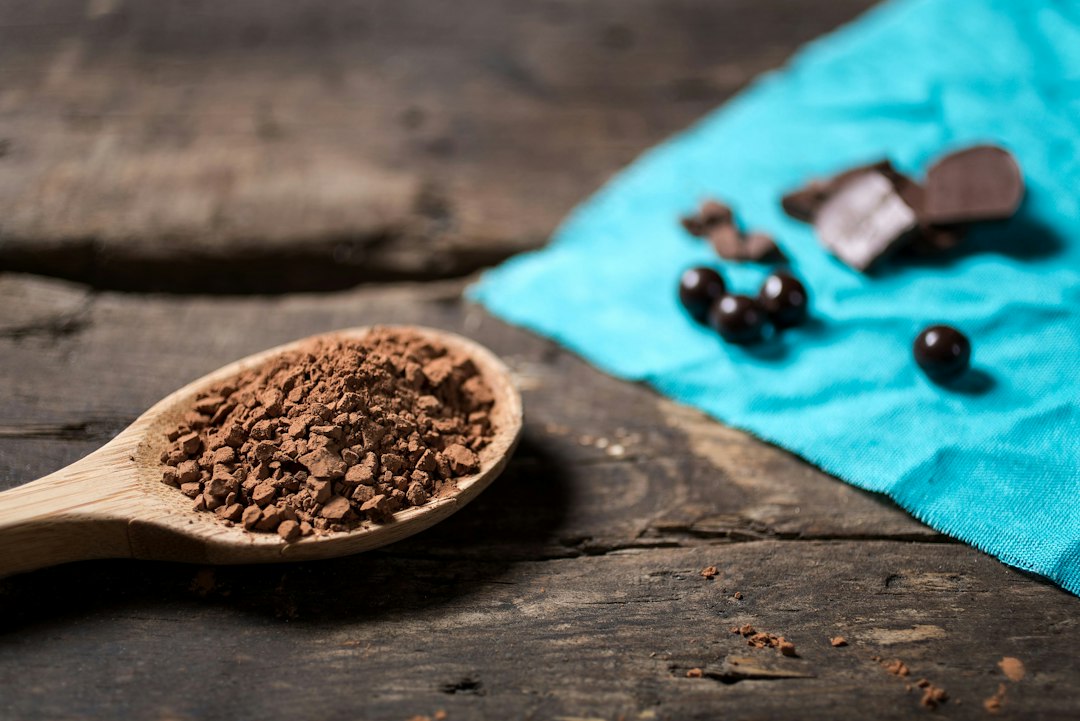
If you only have cocoa powder, stir it into a paste with a little sugar and a splash of hot milk. Only then add the rest of the milk, so no lumps form. Natural cocoa powder tastes bitter and slightly acidic. Alkalised, or Dutch-process, powder is darker and milder. With powder, though, you won’t get the body that chocolate gives.
With scales, milk at 70°C and the ganache method, your hot chocolate will work first time. Start with 45 grams to 250 millilitres and adjust the amount next time. More chocolate makes it denser, a splash of water makes the cocoa stand out more.
All product details are based on manufacturer and retailer information; we have not tested the products ourselves.
Last updated: 24 October 2026.
Sources
- Callebaut: Hot Chocolate 811, Dark Chocolate for Drinks, 35-g-Callets, accessed 24 October 2026.
- Valrhona: Ground Chocolate product sheet (Ghana, Grenada) with basic recipes, accessed 24 October 2026.
- So Good Magazine: Three hot chocolate recipes you’ll find at the Valrhona Festival 2018 in NYC (Dominique Ansel, Petrossian, Patisserie Chanson), 2018.
- Jessica Battilana, King Arthur Baking: Things bakers know: Yes, you can mix chocolate and water (with minimum quantities after Shirley Corriher, BakeWise), 6 February 2025.
- Royal Society of Chemistry / Nuffield Foundation: The structure and properties of chocolate, accessed 24 October 2026.
- IARC/WHO, published via PAHO: IARC Monographs evaluate drinking coffee, maté, and very hot beverages, 15 June 2016.
- Abraham, J.; Diller, K., Journal of Food Science 84(8): A Review of Hot Beverage Temperatures: Satisfying Consumer Preference and Safety, 2019.
- Federal Ministry of Justice (Bundesministerium der Justiz): Kakaoverordnung (KakaoV), Anlage 1 (in German), accessed 24 October 2026.
- Marlene Geiger, Iowa State University Extension (AnswerLine): Natural vs Dutch-processed Cocoa, 4 February 2025.
- Valrhona Collection: Dunkle Backschokolade Guanaja 70 %, 250 g (€14.90) (in German), accessed 24 October 2026.
- Deligio: Valrhona Guanaja 70 %, 250 g (€9.90) (in German), accessed 24 October 2026.
- Callebaut Shop Germany: Hot Chocolate Recipe 811 Dark Chocolate 875 g (€21.94, RRP €31.35), accessed 24 October 2026.
- Natural History Museum London: Hans Sloane: physician, collector and botanist, accessed 24 October 2026.