For a hojicha latte, stir 2 to 3 g of powder smooth with a little hot water, then add around 150 ml of warm milk.Recipes with powder and leaf tea, iced latte, milk and sweetness, caffeine per cup.
A hojicha latte is brown rather than green and tastes of roasted nuts. Its base is roasted Japanese green tea. Roasting removes many of the tannins, so it is hardly astringent and tolerates hot water. More on its origin and roasting is in hojicha, the roasted green tea.
You can make it with powder or with whole leaves. With powder you go about it as for a matcha latte, except that the temperature is less critical. With leaves you brew a strong tea or simmer it directly with milk.
Powder or leaf: two ways to a hojicha latte
Hojicha powder is finely ground roasted tea. As with matcha, you drink the whole leaf. For its powder, a Berlin tea retailer roasts tencha at 200°C, the raw material for matcha.
With leaf tea, only the infusion ends up in the cup and the leaves stay in the strainer. You need no powder and no whisk, just a teapot or a small pan. The difference shows mainly in the caffeine and the equipment.
| with powder | with leaf tea | |
|---|---|---|
| in the cup | the whole ground leaf | only the infusion |
| water | a little, 75 to 95°C | boiling, brewed strong |
| equipment | fine sieve, whisk or frother | teapot with strainer, or a pan |
| caffeine | depends on the amount of powder | probably less, the leaf stays behind |
Powder is quicker to mix. You may already have leaf tea in the cupboard, and it works without any lumps.
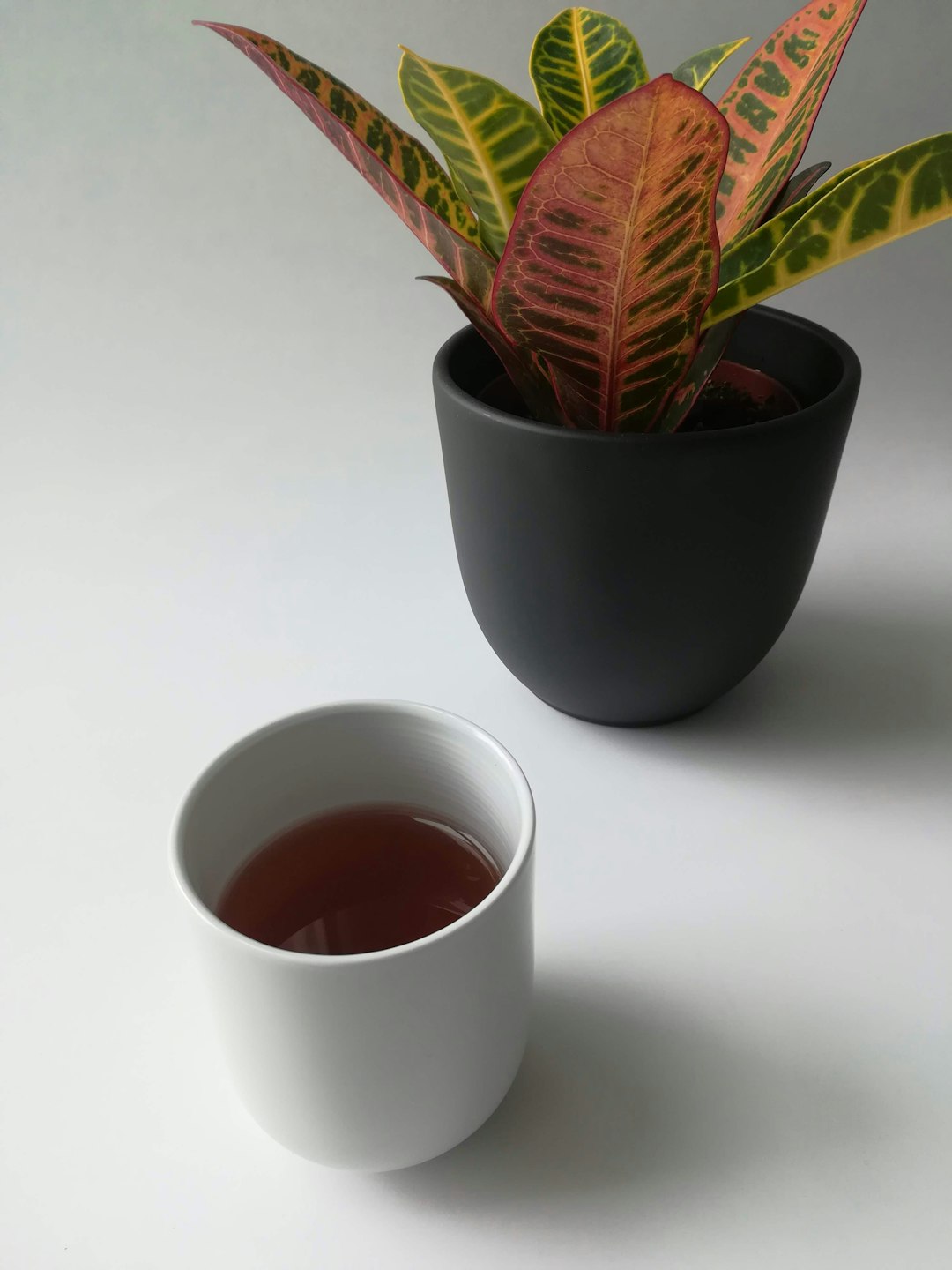
Hojicha latte with powder: make a paste, add the milk
Hojicha powder clumps easily and, according to a US recipe blog, mixes poorly with cool or cold water. So always stir it into a paste with a little hot water first. The milk goes in last. The recipes vary widely in the amounts they use.
| Recipe | Powder | Water | Milk | Sugar |
|---|---|---|---|---|
| Kyoto tea retailer | 2.5 g | 20 g, hot | 150 g, warm or frothed | 5 g |
| US recipe blog | 1.5 tsp | 2 tbsp, 80°C | around 180 ml, about 65°C | 0.5 tsp, optional |
| Montreal tea house | around 2 g, 1 tsp | 50 ml, around 90°C | 200 ml, hot | 1 tsp |
| German specialist tea retailer | 10 g, 2 tsp | not stated | 200 ml, hot or cold | not stated |
To start with, the Kyoto recipe with 2.5 g of powder to 150 g of milk works well. If the latte tastes too mild, use more powder next time.
- Sift: Push the powder through a fine sieve into a cup or small bowl.
- Stir the paste: Add the sugar and around 20 ml of hot water. Whisk everything in W-shaped movements for about 20 seconds until smooth and slightly frothy.
- Adjust: If the paste is too thick to pour, add water a teaspoon at a time, as little as possible.
- Warm the milk: Heat the milk to 65°C at most, or froth it.
- Pour: Pour the milk into the centre of the paste and stir once. A little powder on top is a matter of taste.
The Kyoto retailer stirs with a spoon or spatula. You have more leeway with the water than with matcha: the recipes give 75 to 95°C.
Some cafés serve a dirty hojicha latte. For this, the US recipe blog puts two espressos in the cup before the milk goes in. It then tastes distinctly of coffee.
Hojicha latte from leaf tea: brew it strong or simmer it in milk
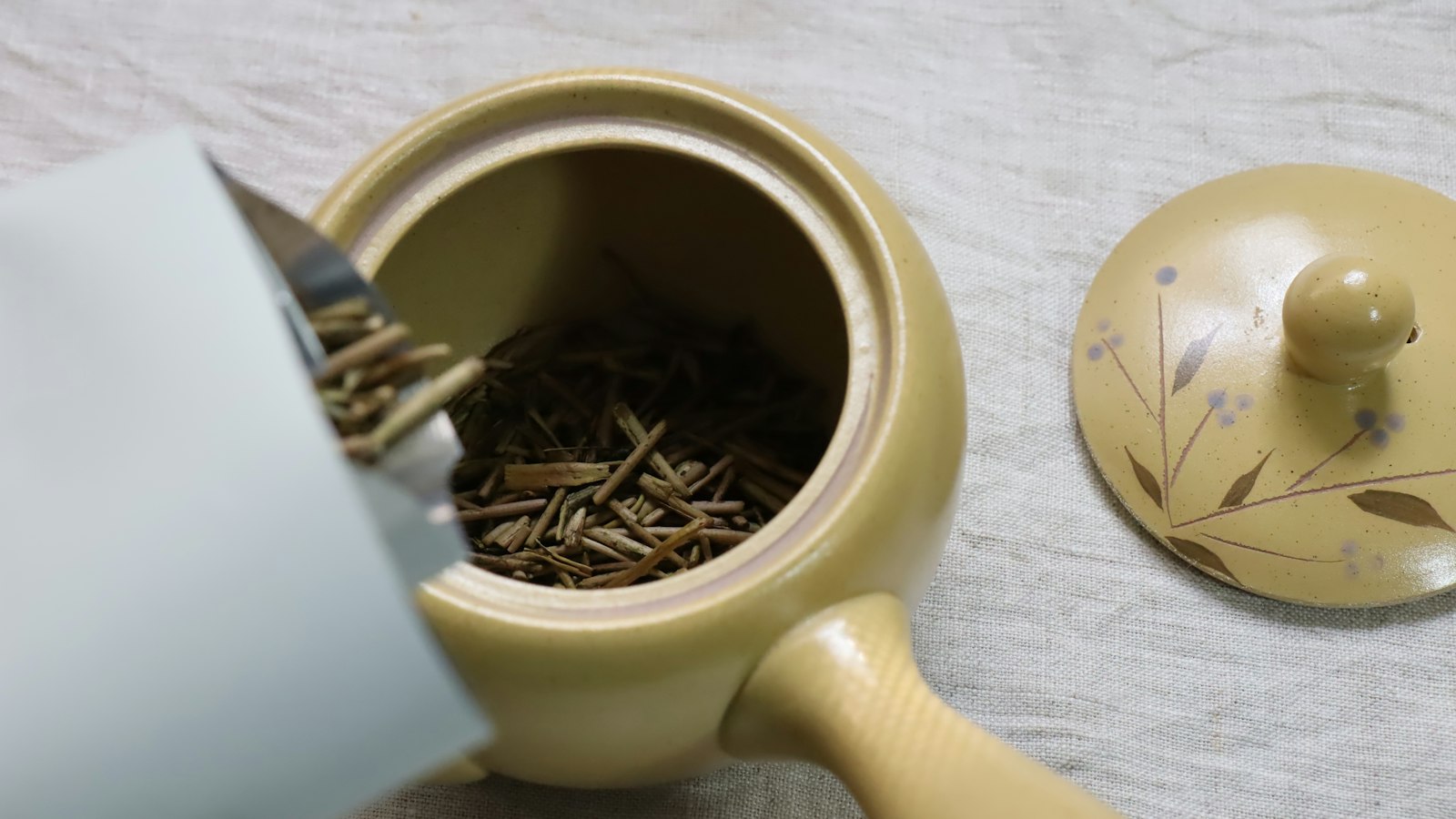
Without powder, brew a strong hojicha. For the milk version, a Kyoto tea retailer uses 15 g of leaves, which is about 6 tablespoons. Pour 200 ml of boiling water over them and let the tea steep for at least 1 minute without stirring. Then add warm or cold milk to taste.
For plain hojicha, the same retailer gives 10 g to 240 ml and 30 seconds. So for the latte there is around 1.8 times as much leaf in every millilitre (our calculation). On top of that comes double the steeping time. A normal infusion would be lost in the milk.
In Japan, hojicha latte is also simmered in a pan. A tea farm from Kyoto simmers 4 tablespoons of leaves in 200 ml of water until it smells of hojicha. Then 150 ml of milk or soya drink go in. Everything steeps over a low heat until the colour is a nice brown, and then it is strained.
| Method | Leaves | Water | Time | Milk |
|---|---|---|---|---|
| teapot, Kyoto tea retailer | 15 g, around 6 tbsp | 200 ml, boiling | at least 1 min | to taste, warm or cold |
| pan, Kyoto tea farmers | 4 tbsp, around 10 g | 200 ml, simmering | until fragrant | 150 ml, simmered with it |
We converted the 10 g for 4 tablespoons from the Kyoto retailer’s figures.
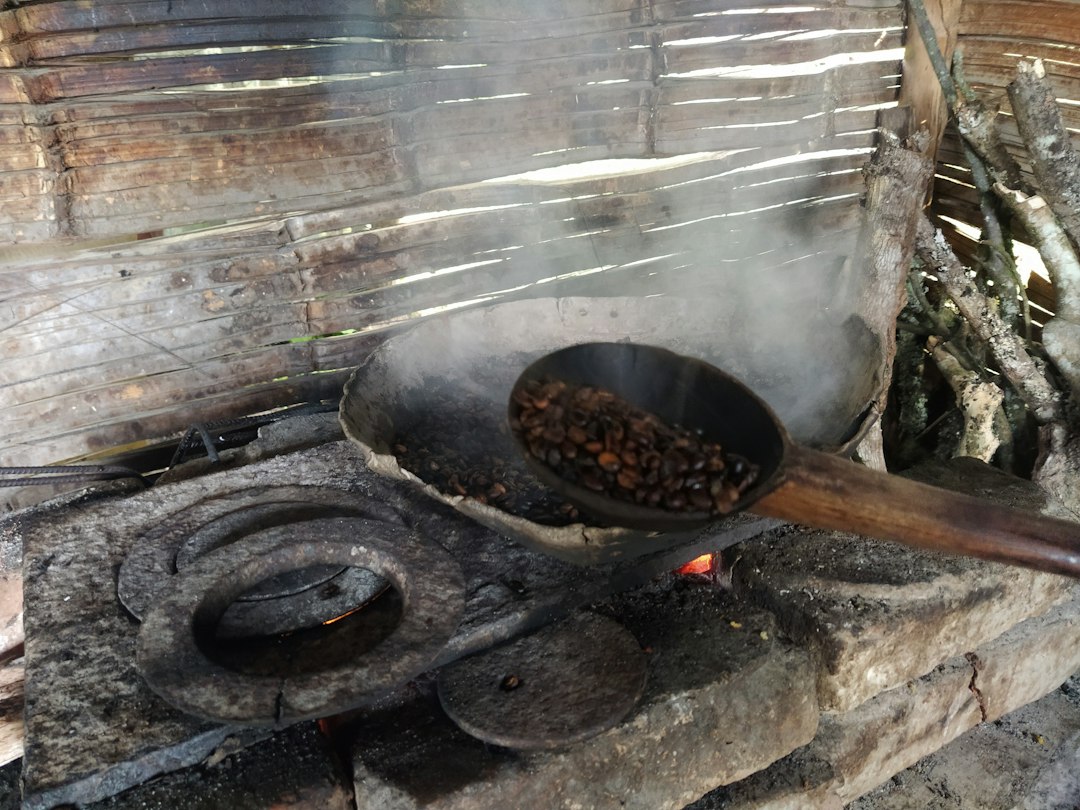
If you have no hojicha but an old pack of sencha, you can roast it yourself. A Japanese tea producer lines the frying pan with baking paper and roasts over a low heat first, stirring. As soon as it smells fragrant, it adds a short burst of high heat. If roasted too long, the tea turns bitter.
How to get your hojicha latte right:
- Weigh once how much your teaspoon holds. The retailers reckon on 2 to 5 g of powder per teaspoon.
- Stir sugar or syrup straight into the hot paste, as sugar dissolves poorly in cold milk.
- If you need several cups, mix the paste at a ratio of 1 to 2 to 8 in a jar and divide it up.
- A small milk frother also makes the paste smooth without a bamboo whisk.
- For a leaf latte, empty the teapot completely, otherwise the rest keeps steeping in the leaves.
Iced hojicha latte: mix it hot, serve it cold
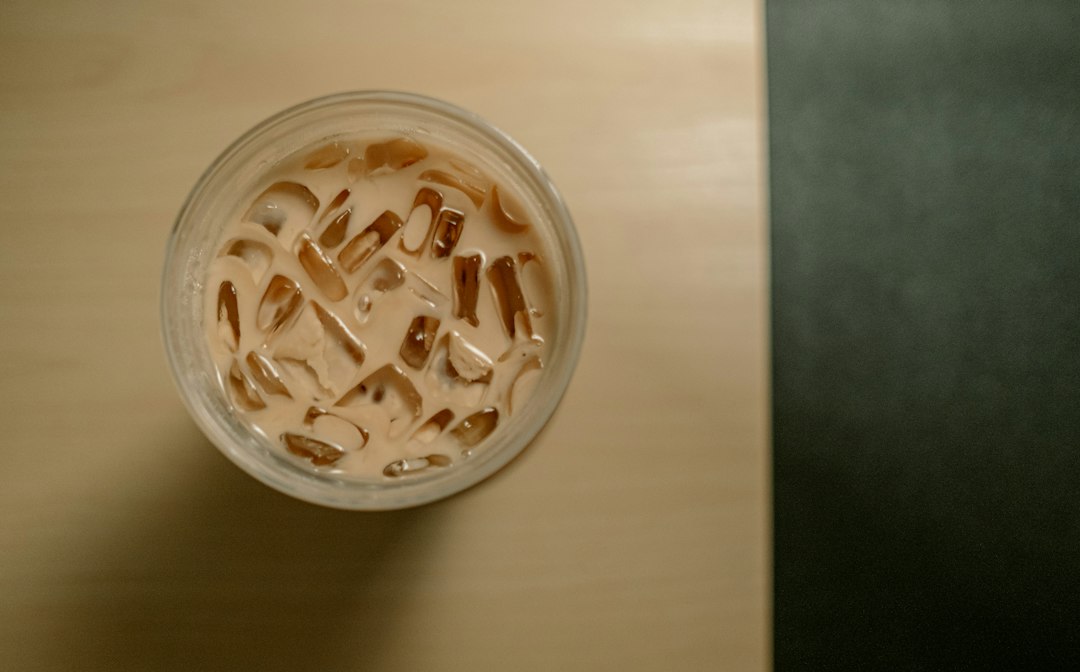
For the cold version too, mix the powder with hot water. The Kyoto retailer puts around 100 g of ice in the glass and adds its paste made with 2.5 g of powder. After a quick stir, it tops up with 155 g of cold milk.
The Montreal tea house first pours around 180 g of milk over the ice. Then it whisks 4 g of powder with 1 to 2 teaspoons of sugar in 50 ml of water at 75 to 95°C. It pours this paste over the milk.
For the cold version, the tea house uses twice as much powder as for the hot latte. This probably makes up for the melting ice, but that is our assessment.
It works with leaf tea as well. For iced hojicha, the Kyoto retailer brews 10 g of leaves with 240 ml of boiling water for 60 seconds. Then it pours the tea straight over plenty of ice. Add cold milk, and you have an iced latte without powder.
Milk, oat drink and sweetness: what suits the roasted aroma
For a hot latte, warm cow’s milk to 55 to 65°C. At 55 to 60°C it stays sweetest. Barista oat drink tolerates less heat, and a Swiss roastery recommends around 55 to 60°C. Above 70°C, milk loses sweetness.
The recipes leave the choice of milk up to you. The US recipe blog suggests oat or almond drink as a substitute, and the Kyoto tea farmers also simmer it with soya drink. For plenty of foam in a hot latte, cow’s milk or barista oat drink is the safe choice. How to manage this without a machine is explained in milk foam for cappuccino and oat drink.
For cold foam on an iced latte, a plant-based drink works better. In a 2024 study, oat, soya and almond drinks foamed more than cow’s milk at 10°C.
For sugar, the recipes range from none at all to 2 to 3 tablespoons for a large cup. The Kyoto retailer uses twice as much sugar as powder, so 5 g per cup. Hojicha contains fewer tannins than sencha and tastes hardly bitter. So try it first with little or no sugar, that is our advice.
Caffeine in a hojicha latte: the powder is what counts
Hojicha is not caffeine-free, even though you often read that it is. The Japanese food composition table gives 20 mg of caffeine per 100 ml for the infusion, exactly as much as for sencha. In measurements by the Japanese tea association, caffeine fell by only about 10 per cent on average during roasting.
With a leaf latte you drink only the infusion. The table value applies to a weak infusion steeped for 30 seconds. For a latte you brew it stronger and longer, so more caffeine is likely to end up in the cup. We found no measurements on this.
With powder you drink the whole leaf. We found no official value for hojicha powder. According to the food composition table, matcha has an average of 32 mg of caffeine per gram. Hojicha powder is probably a little lower per gram, but in our assessment of the same order of magnitude.
| Cup | Tea in it | Caffeine, in context |
|---|---|---|
| hojicha latte, Kyoto tea retailer | 2.5 g powder | slightly less powder than a matcha latte with 3 g |
| iced latte, Montreal tea house | 4 g powder | more powder than a matcha latte with 3 g |
| latte, German specialist tea retailer | 10 g powder | well over three times as much leaf as a matcha latte |
| 100 ml hojicha infusion | leaf tea, 30 s | around 20 mg according to the table |
| dirty hojicha latte | paste plus 2 espressos | over 160 mg (our calculation) |
According to the BfR, Germany’s Federal Institute for Risk Assessment, an espresso has around 80 mg of caffeine. EFSA, the European Food Safety Authority, considers up to 200 mg at once and up to 400 mg a day safe for healthy adults. With a dirty hojicha latte you quickly reach the single dose. How much is in other coffee drinks is shown in caffeine in espresso, filter coffee and cold brew.
For your first attempt, a sieve, a cup and hot water are enough. Stir 2.5 g of powder into a smooth paste with a little water and pour in 150 ml of warm milk. With leaves, brew 15 g in 200 ml of boiling water.
Last updated: 24 October 2026.
Sources
- Hiroki Katsumura, Kurasu (retailer information): Hojicha Latte Recipe, 4 July 2024.
- Namiko Hirasawa Chen, Just One Cookbook: Hojicha Latte (plus Dirty Hojicha Latte), undated, accessed 25 October 2026.
- Camellia Sinensis (retailer information): Hojicha Powder Organic, undated, accessed 25 October 2026.
- Paper & Tea (retailer information): Hojicha Powder N° 331, undated, accessed 25 October 2026.
- TeeGschwendner, product page: Hôjicha for Latte Bio (in German), accessed 24 October 2026.
- Ippodo Tea (retailer information): Hojicha with Milk Recipe, undated, accessed 25 October 2026.
- Ippodo Tea (retailer information): Iced Hojicha, undated, accessed 24 October 2026.
- Obubu Tea Farms, Yunomi: ほうじ茶ラテのレシピ (hojicha latte recipe) (in Japanese), 11 September 2019.
- Yamamotoyama (manufacturer information): Don’t waste old tea! How to make eco-friendly and easy roasted green tea, undated, accessed 25 October 2026.
- Simon Kuch, Simon & Bearns: Flat White vs. Cappuccino: Differences and Preparation, 22 October 2025.
- Benjamin Hohlmann, Kaffeemacher: Flat White, 5 July 2026.
- Hassan, L. et al., Soft Matter 20, 8215 to 8229: The bubbly life and death of animal and plant milk foams, 18 September 2024.
- MEXT, Standard Tables of Food Composition in Japan, 8th edition, 2023 supplement, via calorie.slism.jp: hojicha, infusion (in Japanese), accessed 24 October 2026.
- MEXT, Standard Tables of Food Composition in Japan (8th edition, 2023 supplement), via calorie.slism.jp: 抹茶 (matcha, powder) (in Japanese), accessed 24 October 2026.
- Nihon Chagyō Chūōkai (Japan Tea Central Public Interest Incorporated Association): ほうじ茶 残留農薬調査報告, business year 2024 (Reiwa 6) (in Japanese), 2025, no exact date, accessed 25 October 2026.
- Bundesinstitut für Risikobewertung (BfR): Fragen und Antworten zu Koffein und koffeinhaltigen Lebensmitteln, einschließlich Energy Drinks (in German), as of 5 January 2026.
- European Food Safety Authority (EFSA): Caffeine (topic page on the opinion of 27 May 2015), accessed 24 October 2026.