Green and white tea need 70 to 90°C and 1 to 2 minutes. Black tea, oolong and pu-erh need boiling water and 2 to 5 minutes.Guide values for each type of tea, tips on scales and water, and a gongfu guide.
How your tea tastes depends on water temperature, steeping time and the amount of leaf. Hot water dissolves the compounds faster, and more leaf puts more of them in the cup. That is why the three values are linked. If you use more tea, a shorter steeping time is usually enough.
Our selection is editorial, there are no paid placements. Links marked * are affiliate links to Amazon Germany (amazon.de): if you buy through them, we receive a small commission at no extra cost to you. We have not tested the products ourselves; pros and cons are based on manufacturer information and retailer descriptions. Prices are guide prices from German shops as of October 2026, and prices and availability on Amazon may differ.
The values in this guide are recommendations from specialist tea retailers and tea associations. They are a good start, not a fixed rule. If a pot tastes too thin or too bitter, change exactly one value next time and taste again.
Guide values for each type of tea: temperature, amount and steeping time
The following table is based on the product pages of a German specialist tea retailer. It gives the amount of leaf per litre. We converted the amounts for a large cup or a small pot of 250 millilitres.
| Tea (example) | Leaf per litre | per 250 ml (converted) | Water | Steeping time |
|---|---|---|---|---|
| Darjeeling first flush | 12 g | 3 g | 100°C | 2 min |
| East Frisian broken blend | 13 g | around 3.3 g | 100°C | 5 min |
| Japanese sencha | 11 g | around 2.8 g | 90°C | 1 min |
| Japanese gyokuro | 11 g | around 2.8 g | 70°C | 2 min |
| White tea (Pai Mu Tan) | 11 g | around 2.8 g | 70°C | 2 min |
| Oolong (Formosa) | 12 g | 3 g | 100°C | 3 min |
| Pu-erh | 13 g | around 3.3 g | 100°C | 3 min |
| Rooibos (not a true tea) | 12 g | 3 g | 100°C | 5 min |
As a rule of thumb, the same retailer gives around 2 minutes for Darjeeling first flush and up to 5 minutes for strong Assam. Steep Japanese green tea for 1 to 2 minutes. Herbal, fruit and rooibos teas are less sensitive and can take 5 to 10 minutes. Matcha is whisked at 60 to 80°C.
For sencha, the recommendations differ. The tea association of Japan’s Kagoshima Prefecture advises 80°C and 1 minute for everyday sencha. It brews high-quality sencha at 70°C and steeps it for 90 seconds. You can read more about this tea in our guide to sencha.
Temperature without a thermometer: cooling times as a guide
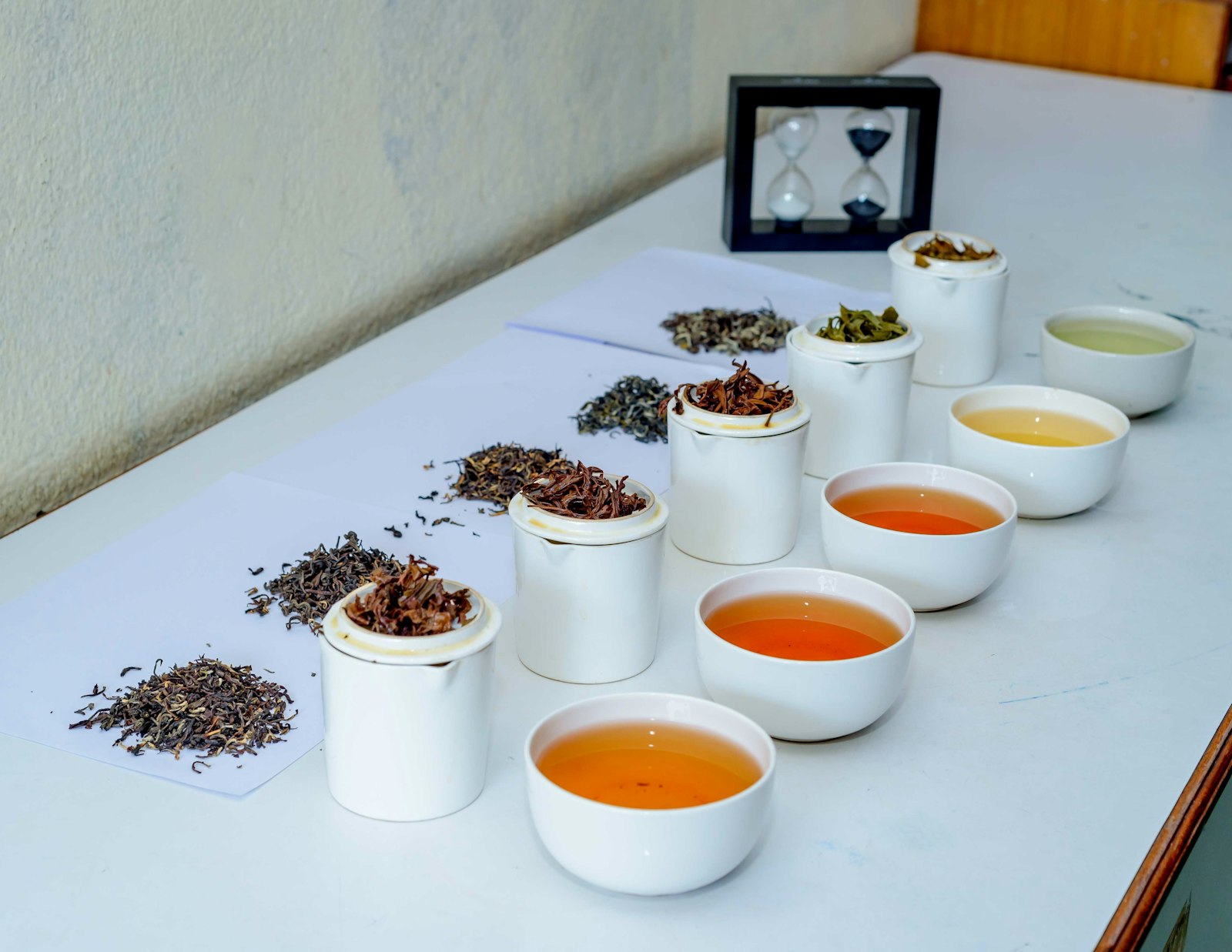
For black tea, oolong and pu-erh, use water at a rolling boil. Green and white tea need water that has cooled a little after boiling. Without a thermometer, a clock helps. The specialist retailer gives rough cooling times after boiling.
| Waiting time after boiling | Temperature (approx.) | suits, for example |
|---|---|---|
| cool briefly | 95°C | oolong such as Oriental Beauty |
| 5 min | 90°C | sencha as the retailer specifies |
| 10 min | 80°C | everyday sencha as Kagoshima recommends |
| 15 min | 70°C | gyokuro, Pai Mu Tan, high-quality sencha |
| 20 min | 60°C | matcha (lower limit) |
The times are guide values. How quickly water cools depends on the amount and the vessel. A half-full pan loses heat faster than a full kettle. A device that sets the temperature itself is more reliable. The models available are covered in our guide to the kettle with temperature control.
Our recommendations
Kettle · around €50 to €55
Rommelsbacher WK 3000, 1.7 l
Pros: Six preset levels from 45 to 100°C cover gyokuro at 70°C as well as black tea with water at a rolling boil, and the temperature shows on the display.
Cons: Only fixed levels instead of exact degrees, no timer for the steeping time, and the single-walled stainless steel gets very hot in use.
Steeping time: what happens in the first few minutes
A laboratory experiment in Sri Lanka measured how quickly compounds dissolve from black tea. Most of the caffeine dissolved within the first 2 minutes. The polyphenols, which include many astringent tannins, only peaked after 6 to 8 minutes. The researchers tested only a finely broken CTC tea, and the curves may differ for other teas.
So a short steeping time hardly makes the tea lower in caffeine, but it does make it less astringent. A long steeping time puts more tannins in the cup. That is why steeping only ends when leaf and water are separated. A strainer that stays in the pot lets the tea keep steeping.
The ISO 3103 standard shows how strong a test infusion is. It specifies 2 grams of tea per 100 millilitres, with 6 minutes of steeping time for black tea. That is 20 grams per litre, clearly more than the retailer values above. The standard is meant for tasters who compare lots under the same conditions. For drinking, this infusion is too strong for most people.
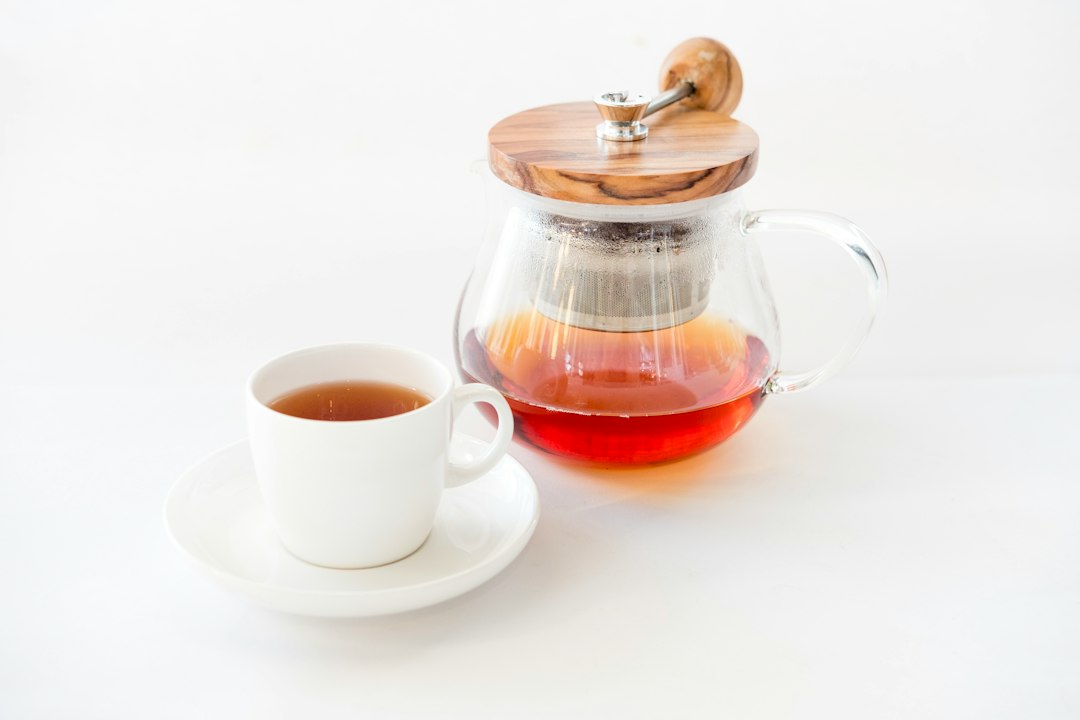
How to find your settings:
- Start with the values in the table and set a timer.
- If the tea is too thin, use more leaf next time rather than more time.
- If it is too bitter, shorten the steeping time, or lower the temperature for green tea.
- Change only one value per attempt, otherwise you won’t know what made the difference.
- Pour the tea off completely into a second, pre-warmed pot.
Scales instead of a spoon: why grams are more accurate
A spoon measures volume, not weight. Large, loose leaves weigh much less per spoon than finely broken tea. The specialist retailer’s product pages show this well. For 11 grams of gyokuro, it gives around 4 level measuring spoons. For 13 grams of pu-erh it is around 6, for 12 grams of rooibos around 7.
So depending on the tea, a measuring spoon holds around 2.8, 2.2 or 1.7 grams (our calculation). For Pai Mu Tan and Formosa oolong, the retailer advises against a measuring spoon altogether. The large leaves can’t be dosed sensibly that way, so you should weigh them.
Simple kitchen scales with 0.1-gram steps are enough for this.
Our recommendations
Precision scales · around €40 to €45
Timemore Black Mirror Basic 2
Pros: Weighs in 0.1-gram steps, accurate enough for 3 grams of leaf per cup or 5 grams in a gaiwan, built-in stopwatch for the steeping time, 1,600 mAh battery.
Cons: Not waterproof, and according to the retailer the surface only tolerates 60°C, or 100°C with the supplied silicone mat. So a hot gaiwan shouldn’t go straight onto the scales.
Our selection is editorial, there are no paid placements. Links marked * are affiliate links to Amazon Germany (amazon.de): if you buy through them, we receive a small commission at no extra cost to you. We have not tested the products ourselves; pros and cons are based on manufacturer information and retailer descriptions. Prices are guide prices from German shops as of October 2026, and prices and availability on Amazon may differ.
Water for tea: soft helps, very soft not always
The specialist retailer’s amounts apply to soft water. Hard, chalky water robs delicate teas in particular of their aroma. For first flush Darjeeling and fine green teas, the retailer therefore recommends filtered tap water. Strong Assams and East Frisian blends cope with hard water too. If your water is hard, you can also try a little more leaf.
For sencha, the Kagoshima tea association recommends soft water with 0 to 60 milligrams of hardness per litre, calculated as calcium.
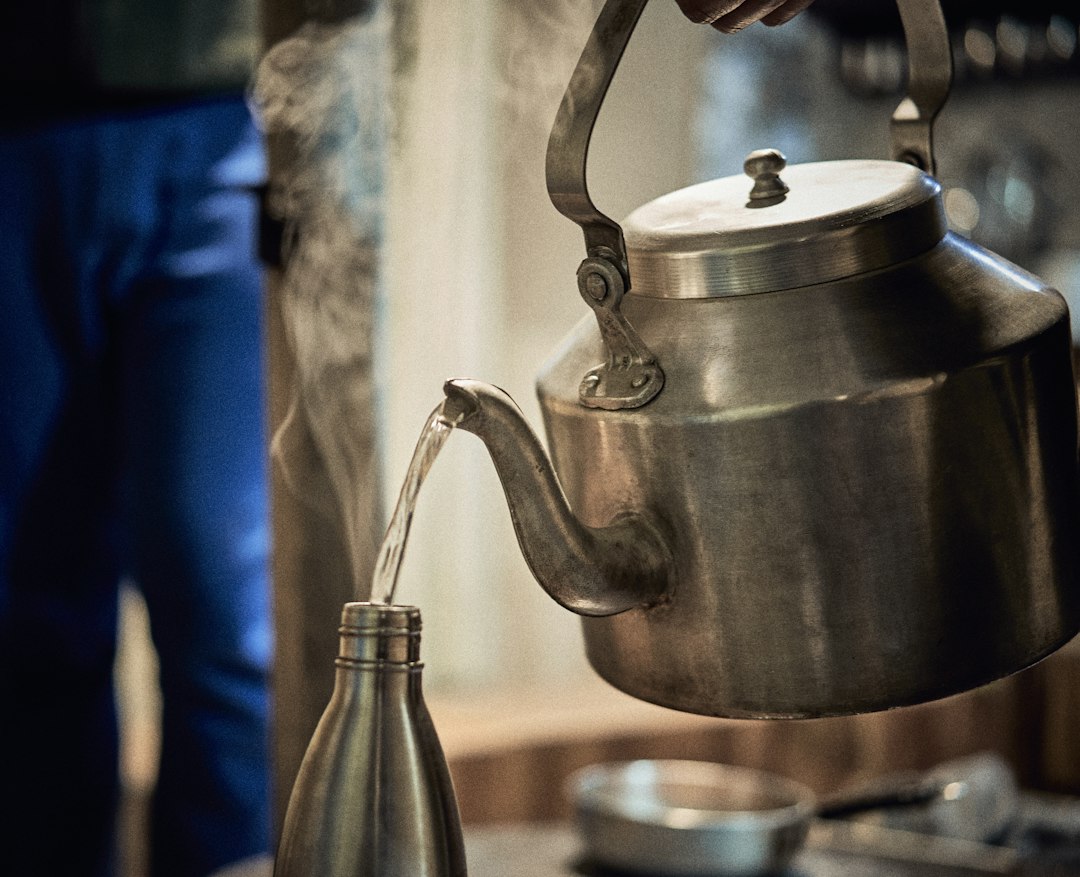
Very soft water is no guarantee of better green tea, though. In an experiment at Cornell University, green tea made with bottled water contained about twice as much EGCG as green tea made with tap water. This tannin tastes astringent, and the tea became more bitter. The test participants preferred the sweeter-tasting green tea made with tap water.
With black tea, a group of more than 100 people tasted no difference. The study leader suspects that minerals such as calcium and magnesium slow down the extraction of EGCG. That is an explanation the experiment did not test directly. How to assess the hardness of your water is shown in our guide to water for coffee. The values can be applied to tea.
Gongfu guide: lots of leaf, little water, short infusions
Gongfu cha is the southern Chinese way of brewing tea. Instead of a large pot, you use a gaiwan, a lidded bowl, or a small clay teapot. A London tea retailer works with about six times the amount of leaf per 100 millilitres compared with a Western pot. In return, many short infusions follow with the same leaves.
A Swiss tea retailer bases the amount on the size of the gaiwan. For around 80 millilitres it gives 3 to 5 grams. For 110 millilitres it is 5 to 8 grams, for 140 millilitres 8 to 10 grams. A retailer from Yunnan gives guide values for each type of tea.
| Tea | Leaf per 100 ml | Water | Rinse |
|---|---|---|---|
| Green and white tea | 5 to 6 g | around 85°C | 10 s |
| Black tea | 5 to 6 g | around 90°C | 10 s |
| Oolong | 4 to 5 g | 95°C and above | 10 s |
| Pu-erh | around 6 g | 95 to 100°C | sheng once for 20 s, shou twice for 15 s |
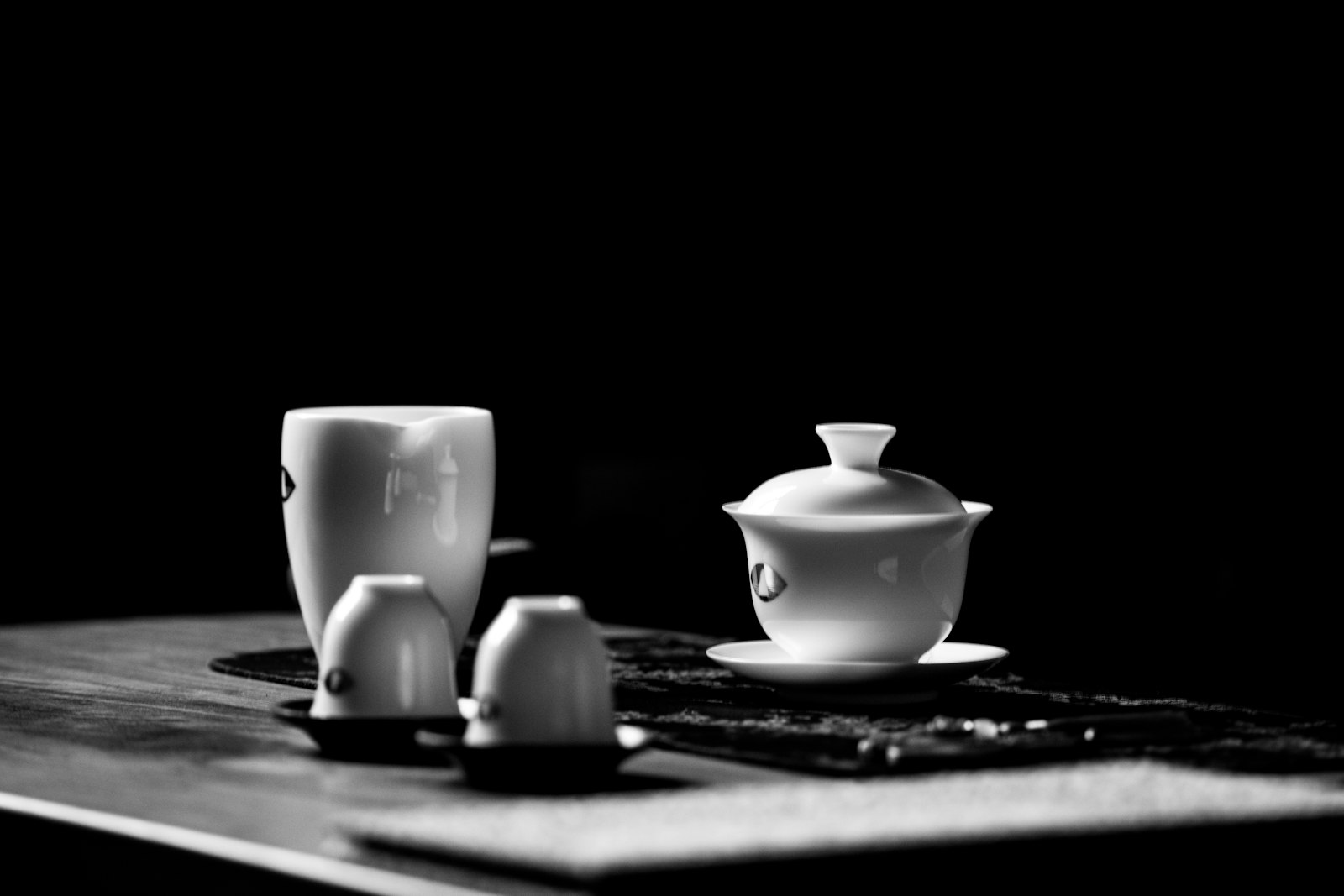
How to brew an oolong in a gaiwan:
- Preheat: Rinse the gaiwan and cups with hot water.
- Weigh: Put 4 to 6 grams of oolong into a medium-sized gaiwan.
- Rinse: Cover tightly rolled oolongs with boiling water, swirl briefly and pour it off after a few seconds. Open-twisted teas such as Da Hong Pao don’t need this.
- First infusion: Fill the gaiwan to just below the rim and steep the tea for 5 to 10 seconds.
- Pour off completely: Pour the infusion fully into a cup or a small jug so that nothing keeps steeping.
- Further infusions: Extend to 10 to 20 seconds and then step by step. Six infusions or more are normal.
For tightly rolled oolongs from Taiwan, the Swiss retailer gives 1.5 to 2 minutes for the first infusion. The leaves need time to open, and after that the infusions get shorter. You’ll find more tips on this tea in our guide to oolong.
With the values from the table, a timer and scales, you’ll quickly make a good cup. Your taste does the rest. Note down what worked well for your favourite tea, so you don’t have to start from scratch next time.
Retailer information can change with new harvests. All product details are based on manufacturer and retailer information, and we have not tested the products ourselves.
Last updated: 24 October 2026.
Sources
- TeeGschwendner: Teezubereitung (in German), accessed 24 October 2026.
- TeeGschwendner, product page: Darjeeling Soom First Flush (in German), accessed 24 October 2026.
- TeeGschwendner, product page: Thiele Broken Silber (in German), accessed 24 October 2026.
- TeeGschwendner, product page: Japan Sencha Bio (in German), accessed 24 October 2026.
- TeeGschwendner, product page: Japan Gyokuro Bio (in German), accessed 24 October 2026.
- TeeGschwendner, product page: China Pai Mu Tan Bio (in German), accessed 24 October 2026.
- TeeGschwendner, product page: Formosa Fancy Superior Oolong (in German), accessed 24 October 2026.
- TeeGschwendner, product page: China Mannong Pu Erh Bio (in German), accessed 24 October 2026.
- TeeGschwendner, product page: Rooibos Bio (in German), accessed 24 October 2026.
- Kagoshima Prefectural Tea Industry Association: The Art of Brewing Delicious Kagoshima Tea, accessed 24 October 2026.
- Fernando, C. D.; Soysa, P., Nutrition Journal 14:74: Extraction kinetics of phytochemicals and antioxidant activity during black tea brewing, 2015.
- Wikipedia: ISO 3103 / BS 6008, accessed 24 October 2026.
- Cornell University, CALS: Green tea steeped in bottled water increases antioxidants, alters flavor, 10 January 2019.
- Franks, M.; Lawrence, P.; Abbaspourrad, A.; Dando, R., Nutrients 11(1):80: The Influence of Water Composition on Flavor and Nutrient Extraction in Green and Black Tea, 2019.
- Mei Leaf (retailer information): Basics of Brewing: Leaf to Water Ratio, undated.
- Teamania (retailer information): How to Brew Oolong Tea, updated January 2024.
- Yunnan Sourcing (retailer information): Brewing guide for green, black, oolong and pu-erh teas, accessed 24 October 2026.
- Rare Tea Company (retailer information): How to Make Oolong with a Gaiwan, accessed 24 October 2026.
- MediaMarkt, product page: Rommelsbacher WK 3000 Wasserkocher, Edelstahl (in German), accessed 24 October 2026.
- Bluepick, price comparison and data sheet: Rommelsbacher WK 3000 (in German), accessed 24 October 2026.
- Coffee Circle, product page: Timemore Black Mirror Basic 2, accessed 24 October 2026.