Hojicha is Japanese green tea that is roasted as a final step. It tastes nutty, is hardly bitter and has about as much caffeine as sencha.Origin and roasting, caffeine compared, brewing hot, iced and as a latte.
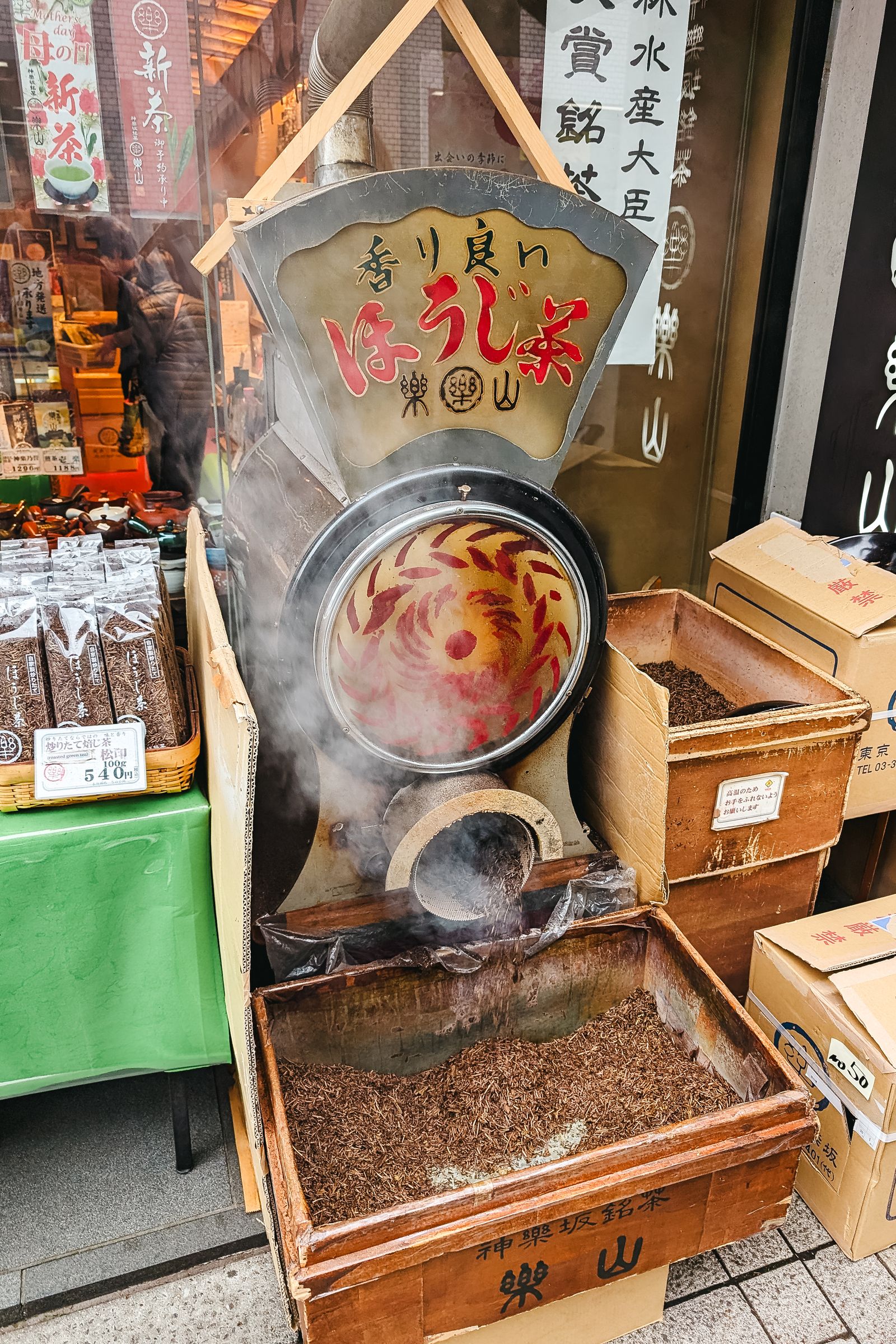
Hojicha starts out as perfectly ordinary Japanese green tea. The leaves are steamed, rolled and dried. Then they go back into the heat, this time dry and much hotter. The name describes exactly that: hōji means roasting and cha means tea.
In the process the dry leaf turns reddish brown and the infusion amber. In aroma, hojicha is more reminiscent of roasted nuts than of grass or seaweed. Because it is so easy to brew, it is seen in Japan as an everyday tea for the whole family.
Origin: a tea from Kansai that long stayed regional
Hojicha developed in the Kansai region around Kyoto. That is according to a tea project at Tokyo University of the Arts. Tea that had lost its aroma through moisture was heated again there in porcelain vessels. This gave it back its fragrance.
For a long time the roasted tea remained a speciality of western Japan. According to the same source, it was hardly drunk in the Tokyo area as recently as about 50 years ago. It only became known across the country with Kyoto cuisine. In Tohoku in the north, hojicha is still often simply called bancha. Today it also sits bottled as a ready-to-drink tea in chiller cabinets.
Raw material and roasting: from 100 to over 300°C
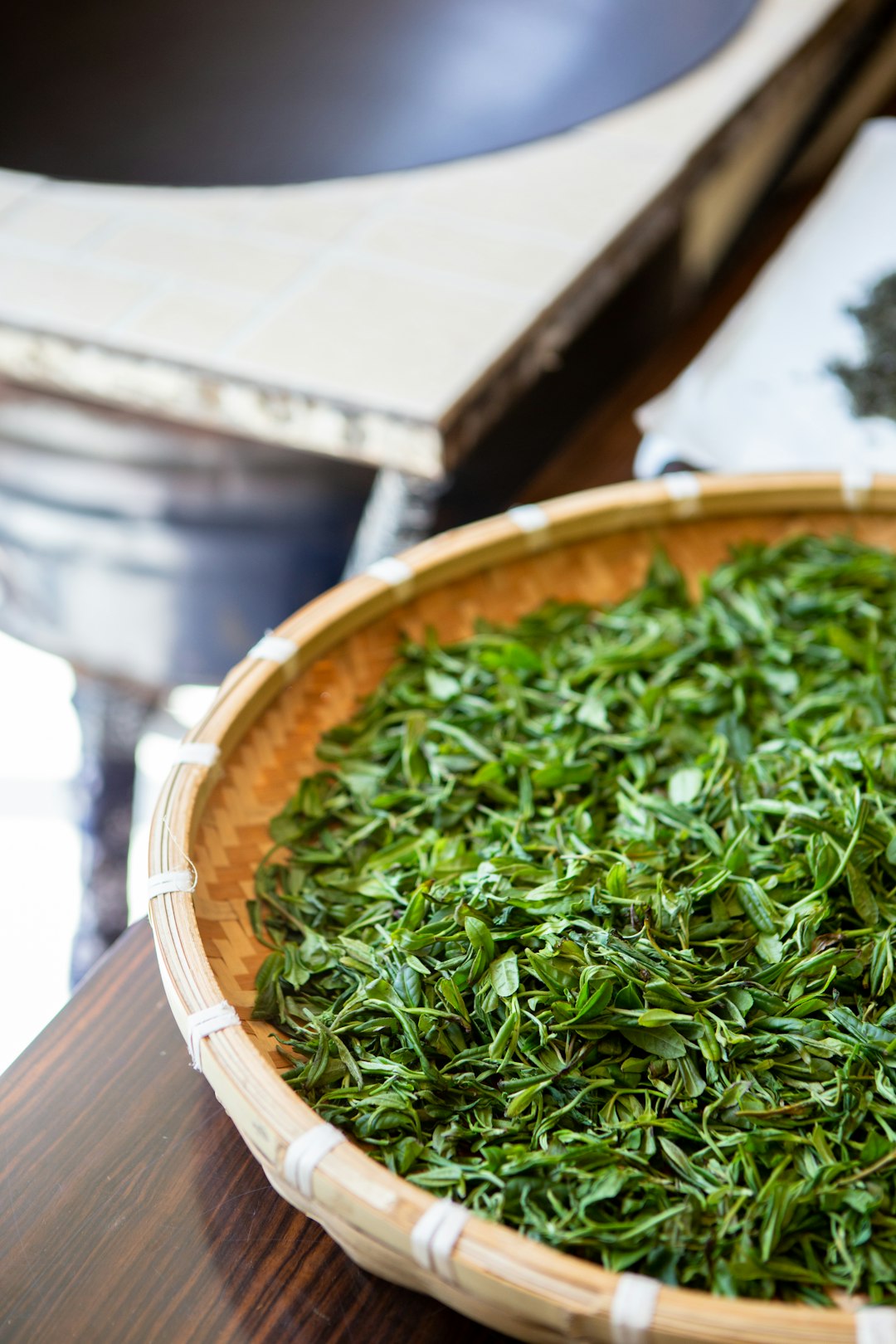
Producers often use simpler grades for hojicha. Bancha from late harvests with large, firm leaves is common. Stems left over from sorting sencha also go into the roaster. But there is also hojicha from the year’s first harvest.
A report by the Japanese tea association Nihon Chagyō Chūōkai shows how broad the field is. For the 2024 business year it analysed 38 hojicha teas from 38 producers. They roasted at 100 to 335°C, for between 30 seconds and 80 minutes. No fixed rule could be derived from this.
| Raw material according to the association’s report | Number of samples |
|---|---|
| first harvest (ichibancha) | 17 |
| blend of two teas | 11 |
| autumn and winter bancha | 6 |
| second harvest (nibancha) | 4 |
The figures come from samples that Japanese producers submitted for an export programme. So they do not show a market average. They do show, however, that hojicha does not have to be a way of using up leftovers. Almost half of the samples came from the first harvest.
Flavour: fewer tannins, more roasted aroma
In 2020 a Japanese research group measured what heat changes in the leaf, using tea stems. They roasted at 180, 200 and 220°C. The hotter the roast, the more pyrazines formed. These compounds smell nutty and roasted, and they also shape the aroma of coffee.
At the same time, the floral aroma compound geraniol increased with temperature. Catechins and amino acids, on the other hand, fell quickly at high heat. Catechins are green tea’s tannins, which make it bitter and astringent. The amino acids provide umami. Hojicha therefore largely lacks both.
The Japanese food composition table shows the difference in the infusion too. It gives 40 mg of tannins per 100 ml for hojicha and 70 mg for sencha. That is why hojicha tastes rounder and tolerates boiling water. During roasting the colour of the leaf shifts from yellowish green to reddish.
Caffeine: about as much as sencha
Hojicha has a reputation for being almost caffeine-free. That is not true. The Japanese food composition table gives 20 mg of caffeine per 100 ml for the infusion, exactly as much as for sencha. A Japanese tea producer states explicitly that hojicha is not low in caffeine.
| Drink | Caffeine per 100 ml | Tannins per 100 ml |
|---|---|---|
| gyokuro | 160 mg | 230 mg |
| sencha | 20 mg | 70 mg |
| hojicha | 20 mg | 40 mg |
| bancha | 10 mg | 30 mg |
| genmaicha | 10 mg | not stated |
| mugicha (barley tea) | 0 mg | not stated |
The values for gyokuro, sencha, hojicha and bancha come from the food composition table, and those for genmaicha and mugicha from the tea producer. The table measures hojicha after only 30 seconds and sencha after 1 minute. With the same steeping time, hojicha might therefore release even more caffeine.
The association’s report measured caffeine before and after roasting. On average it fell by only about 10 per cent. The samples ranged from 58 per cent less to 18 per cent more, and seven samples even contained more after roasting. The association found no clear link with temperature or duration.
Hojicha seems mild mainly because of its raw material and the way it is brewed. According to the tea producer, bancha from late harvests contains 10 to 15 per cent less caffeine than young leaves. Based on the table, a 130 ml cup comes to around 26 mg (our conversion). According to the BfR, Germany’s Federal Institute for Risk Assessment, an espresso has around 80 mg. How much is in a bowl of matcha is shown in how much caffeine does matcha have.
Brewing: boiling water, short steeping time
There is no need to cool the water for hojicha. Shizuoka and Saitama prefectures recommend boiling water and a steeping time of only 30 seconds. For five cups, use around 15 g of tea, which is 3 g per cup. After the second infusion, put fresh leaves in the pot.
| Method | Tea | Water | Steeping time |
|---|---|---|---|
| teapot (Shizuoka Prefecture) | 15 g | around 650 ml, boiling | 30 s |
| teapot (Kyoto tea retailer) | 10 g | 240 ml, 100°C | 30 s |
| large teapot (German specialist tea retailer) | 12 g | 1 l, 90°C | 2 min |
| iced (Kyoto tea retailer) | 10 g | 240 ml, 100°C | 60 s, then over plenty of ice |
| latte with powder (German specialist tea retailer) | 10 g powder, 2 tsp | 200 ml milk | stir in |
The amounts sound high because the roasted leaf is large and light. 15 g of hojicha takes up much more volume than 15 g of sencha. A Kyoto tea retailer reckons on about 4 tablespoons for 10 g. Pour out every pot to the last drop, otherwise the rest keeps steeping. More on temperature and steeping time in general is in how to brew tea properly.
For a hojicha latte there is ground tea, which goes into the cup leaf and all. A German retailer stirs 10 g of powder into 200 ml of milk, hot or cold. Because you drink the whole leaf, you take in more caffeine than with an infusion. How to froth milk finely, oat drink included, is explained in milk foam for cappuccino.
How to get hojicha right:
- Weigh the tea, as with a spoon you easily underestimate the amount because of the large leaves.
- Use water at a rolling boil, as the roasted aroma needs heat.
- Keep the first steeping time short and then pour off completely.
- For iced hojicha, brew twice as long and pour straight over plenty of ice.
- If you want less caffeine in the evening, choose mugicha, as hojicha is not caffeine-free.
Buying: prices, roast level and residues
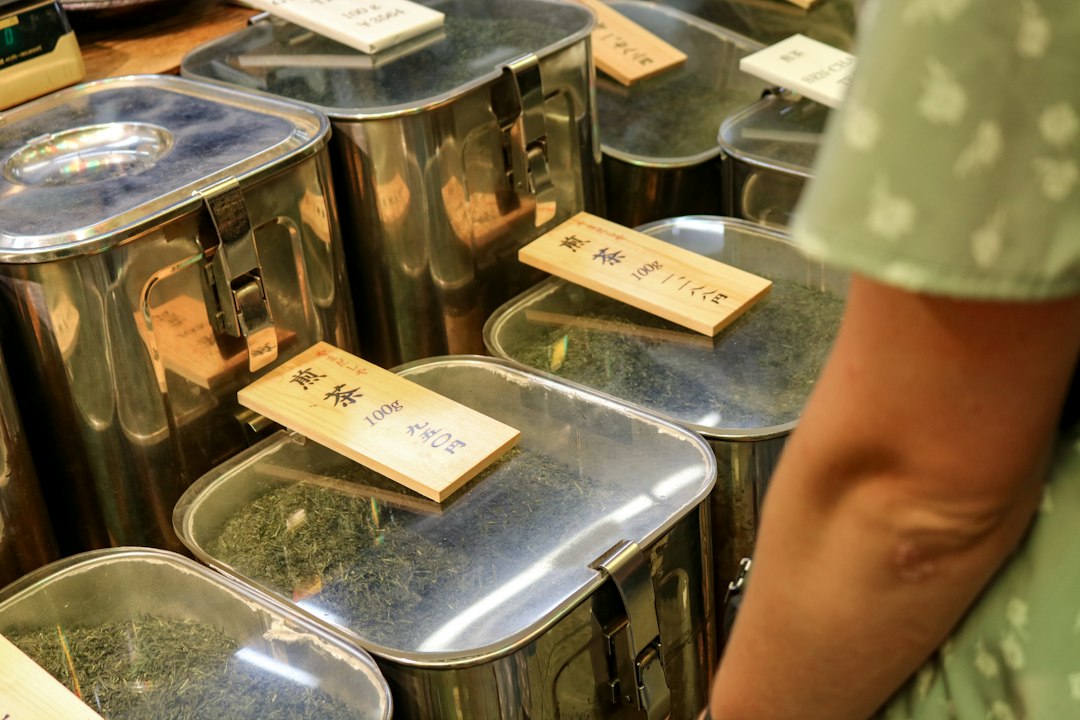
Hojicha is usually cheaper than matcha or gyokuro. In 2020 a Japanese women’s magazine gave around 300 to 1,200 yen per 100 g. In Germany, good leaf tea costs considerably more.
| Product | Price | per 100 g in euros |
|---|---|---|
| Japan, typical range (2020) | 300 to 1,200 yen per 100 g | roughly €1.80 to €7 (our conversion) |
| stem hojicha, Kyoto tea retailer | 16 US dollars per 100 g | roughly €14 (our conversion) |
| organic hojicha, German specialist tea retailer | €12.90 per 100 g | €12.90 |
| hojicha powder for lattes, German specialist tea retailer | €21.90 per 200 g | €10.95 |
Some retailers state how deeply the tea is roasted, for example as a mild roast. Good retailers also name the raw material, leaf or stem, and the harvest. A German specialist tea retailer describes its mildly roasted hojicha as nutty, with hints of cocoa and coffee.
The association’s report also names a problem with exports. The substance phthalimide was found in 20 of 38 samples. In the EU it counts as part of the residue of the fungicide folpet. According to the report, folpet has never been used in Japan’s tea gardens. Of 13 samples intended for the EU, 9 met European requirements and 4 did not.
According to the association, it is unclear where the phthalimide comes from. It considers formation during roasting possible, or contamination, for example from plasticisers. A 2021 study from Turin also found the substance in coffee roasted without folpet. There it formed from phthalates and amino acids, most strongly at 200°C. If you buy hojicha in the EU, you can ask the retailer for residue analyses.
To start with, a bag of leaf hojicha and a teapot are enough. Brew 3 g per cup with boiling water and pour off after 30 seconds. If it tastes too thin, use a little more leaf next time.
Last updated: 24 October 2026.
Sources
- Tokyo University of the Arts, Geicha project: article on hojicha (ほうじ茶) (in Japanese), 9 September 2019.
- Nihon Chagyō Chūōkai (Japan Tea Central Public Interest Incorporated Association): ほうじ茶 残留農薬調査報告, business year 2024 (Reiwa 6) (in Japanese), 2025, no exact date, accessed 24 October 2026.
- Sasaki, T.; Yuikawa, N.; Tanihiro, N.; Michihata, T.; Enomoto, T., Food Science and Technology Research 26(5): The Effects of Roasting Conditions on the Physical Appearance Traits and Aroma and Taste Components of Roasted Stem Tea, 19 October 2020.
- MEXT, Standard Tables of Food Composition in Japan, 8th edition, 2023 supplement, via calorie.slism.jp: hojicha, infusion (plus sencha 116037, bancha 116039, gyokuro 116034) (in Japanese), accessed 24 October 2026.
- Yamamotoyama (manufacturer information): Is Hojicha low in caffeine? Actually, that’s not true!, 10 December 2024.
- Bundesinstitut für Risikobewertung (BfR): Fragen und Antworten zu Koffein und koffeinhaltigen Lebensmitteln, einschließlich Energy Drinks (in German), as of 5 January 2026.
- Shizuoka Prefecture: おいしいお茶の入れ方 (how to brew good tea) (in Japanese), 11 January 2023.
- Saitama Prefecture: お茶のおいしいいれ方 (how to brew good tea) (in Japanese), 15 September 2026.
- Ippodo Tea (retailer information): Kuki Hojicha, undated, accessed 24 October 2026.
- Ippodo Tea (retailer information): Iced Hojicha, undated, accessed 24 October 2026.
- TeeGschwendner, product page: Japan Hôjicha Mild Roast Bio (in German), accessed 24 October 2026.
- TeeGschwendner, product page: Hôjicha for Latte Bio (in German), accessed 24 October 2026.
- FRaU, Kodansha (Hanada Yoko): article on Japanese tea varieties with price ranges (in Japanese), 2 May 2020.
- Menzio, J.; Tagliapietra, S.; Calegari, E.; Serito, B.; Binello, A.; Cravotto, G., Journal of Agricultural and Food Chemistry 69(16): Phthalimide Residue in Coffee: Does It Solely Derive from Folpet?, 2021.