

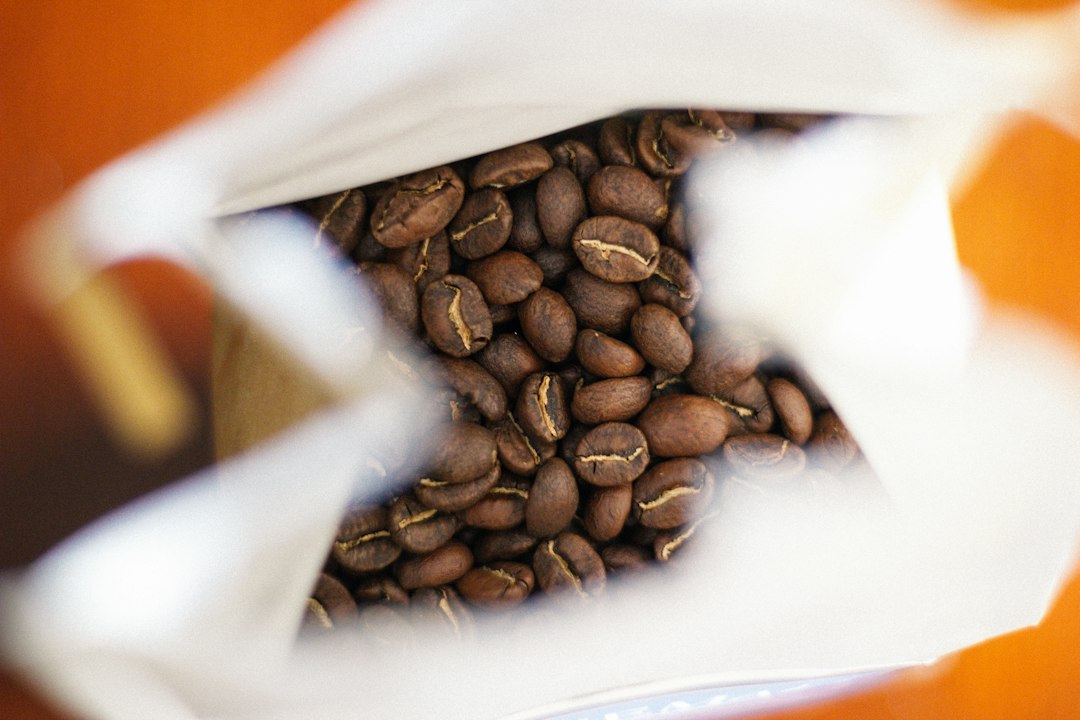
Coffee beans taste best about one to four weeks after the roast date, and frozen in portions they keep for several months.Time frames at a glance, roast date and best-before date, storage after opening and freezing in portions.
Roasted coffee does not go off like milk. It loses aroma over time, because volatile compounds escape and oxygen reaches the bean. How fast this happens depends on three things. What matters is whether the bag is open or closed, whether the beans are whole or ground, and the temperature.
The time frames below come from the industry body Specialty Coffee Association (SCA) and two studies by the ZHAW. The ZHAW is the Zurich University of Applied Sciences. They are complemented by a tasting by a German roastery. They are guide values. A dark espresso ages differently from a light filter coffee.
Our selection is editorial, there are no paid placements. Links marked * are affiliate links to Amazon Germany (amazon.de): if you buy through them, we receive a small commission at no extra cost to you. We have not tested the products ourselves; pros and cons are based on manufacturer information and retailer descriptions. Prices are guide prices from German shops as of October 2026, and prices and availability on Amazon may differ.
How long coffee stays fresh: the time frames at a glance
| Condition | Time frame | Source |
|---|---|---|
| Whole beans, bag closed | freshest 1 to 4 weeks after roasting | SCA |
| Whole beans, well packed and chilled | in theory 3 months to 1 year | SCA |
| Whole beans, frozen in portions | barely changed after 6 months, slightly weaker after 1 year | tasting by a roastery |
| Bag open, closed with screw cap or clip | almost as much oxygen as room air after 2 weeks | ZHAW 2022 |
| Beans moved to a canister or bag closed with tape | oxygen as in room air after 1 week | ZHAW 2022 |
| Ground | up to 75 % of the gas escapes in the first 90 seconds | ZHAW 2018 |
This gives you a simple rule. Buy as much as you will use in two to four weeks, and grind only shortly before brewing. If you need longer, freeze part of it straight after buying.
Roast date and best-before date: what the pack tells you
The best-before date is a guarantee from the producer. It promises that the unopened food keeps its smell, taste and nutritional value if stored correctly. Once opened, the best-before date no longer applies. According to the Verbraucherzentrale, Germany’s consumer advice centre, coffee past its date is not automatically spoiled.
The roast date tells you more about freshness. Many specialty coffee roasteries print it voluntarily. The SCA gives one to four weeks after roasting as a typical freshness window. Without a roast date, you can only estimate the age of the beans.
Very fresh is not automatically best. According to the SCA, most of the gas escapes in the first 24 to 48 hours after roasting. A German roastery advises freezing filter coffee 5 to 10 days after roasting. For espresso, it gives 8 to 20 days. By then the coffee has rested and is still fresh. Too much gas mainly gets in the way when you dial in espresso.
Degassing and valve: what happens in the closed bag
Roasting creates carbon dioxide, which stays trapped in the porous bean. According to the SCA, this gas makes up to 2 per cent of the weight of freshly roasted coffee. The ZHAW team tracked the degassing of whole Arabica beans on scales. Measurements ran for at least 400 hours at 35°C, a good 16 days (our calculation).
| Roast | slow roast | medium | fast roast |
|---|---|---|---|
| light | 2.7 mg/g | 2.5 mg/g | 2.8 mg/g |
| medium | 4.7 mg/g | 5.6 mg/g | 6.6 mg/g |
| dark | 8.5 mg/g | 10.0 mg/g | 11.9 mg/g |
The gas is given in milligrams per gram of beans. At medium roasting speed, the dark roast released four times as much as the light roast. The light roast was still degassing a month after roasting. After 800 hours, it had lost 3.4 mg/g. More on the differences is in our guide Light, medium or dark roast: flavour, acidity and caffeine compared.
Heat speeds up degassing. According to the SCA, just 10°C more roughly doubles the rate. At room temperature, it is therefore likely to be slower than in the measurement at 35°C.
In a sealed pack, the gas would inflate the bag. Packers used to punch a hole in it for that reason, which let air reach the coffee. In the 1960s, a Milan packaging maker developed the one-way valve. It lets gas out and no air in.
This is how the gas protects the beans. According to the SCA, carbon dioxide in a coffee bag typically reaches 80 per cent and pushes out the oxygen. In the 2022 ZHAW study, the 1 kg valve bags were filled under nitrogen. In the unopened control bags, oxygen stayed close to zero for over 9 weeks, and carbon dioxide rose to about 77 per cent.
Coffee ages even when sealed, just slowly. The freshness index of the unopened bags fell slightly in the study. The beans had already rested for 3 weeks before opening.
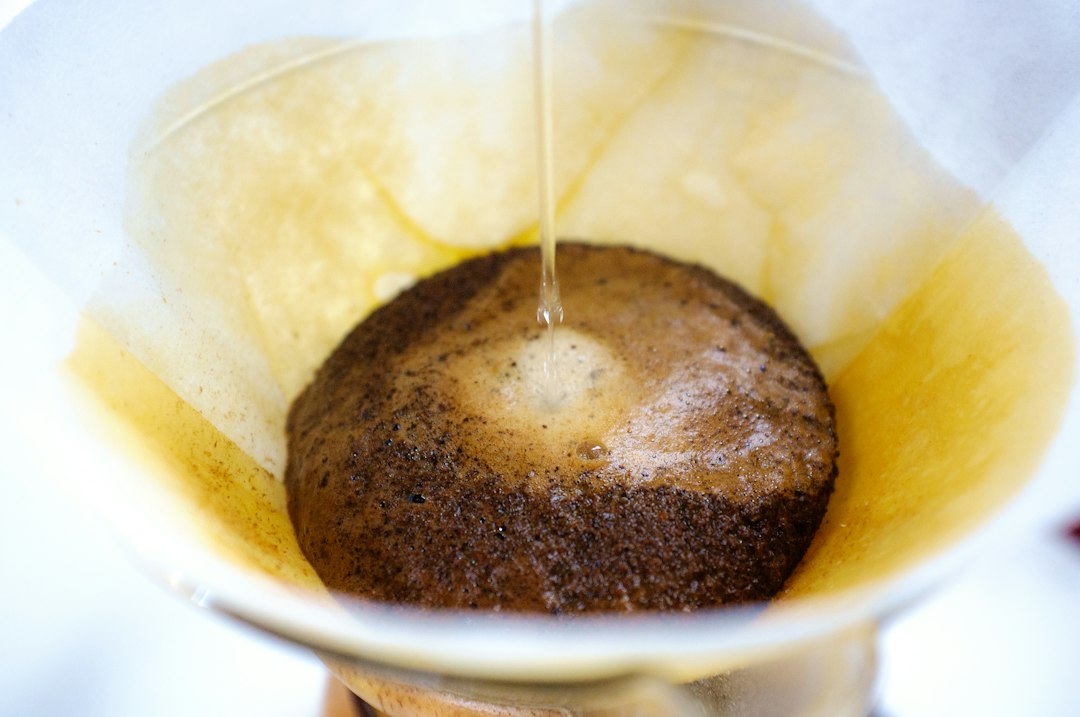
After opening: the original bag beats the canister
For the 2022 study, the researchers opened 1 kg bags of Arabica beans twice a week and took out 49 g each time. They then closed the bags in four different ways. The measurement ran for 9 weeks at room temperature. It was co-funded by a large German roaster, whose staff are also co-authors.
| Closure | Air exchanged per opening | Oxygen in the bag | Rank |
|---|---|---|---|
| Screw cap on the bag | about 60 % | over 10 % after 1 week, almost like room air after 2 weeks | 1 (best) |
| Clip | about 75 % | over 10 % after 1 week, almost like room air after 2 weeks | 2 |
| Tape | practically all | like room air after 1 week (about 21 %) | 3 |
| Airtight canister | practically all | like room air after 1 week (about 21 %) | 4 |
The ranking is based on the freshness index, which rose fastest in the canister. The canister was airtight, but almost all the air above the beans was exchanged each time it was opened. Some of the aroma compounds fell equally in all the opened bags. The study measured chemistry, not taste.
Ground coffee loses out even faster. With freshly roasted coffee, up to 75 per cent of the gas escaped during grinding in the 2018 ZHAW measurement. Volatile aromas go with the gas. Your own hand grinder therefore helps more than any storage canister.
Plunger canisters: little air above the beans
Oxygen attacks the aroma, so the air above the beans matters. Canisters such as the Airscape by Planetary Design have an inner lid that you press down onto the beans. The air escapes through a valve in the lid, which you then close with the handle. The ZHAW study did not test such canisters, and we found no reliable measurements on them. In principle, they leave much less air above the beans than a normal canister.
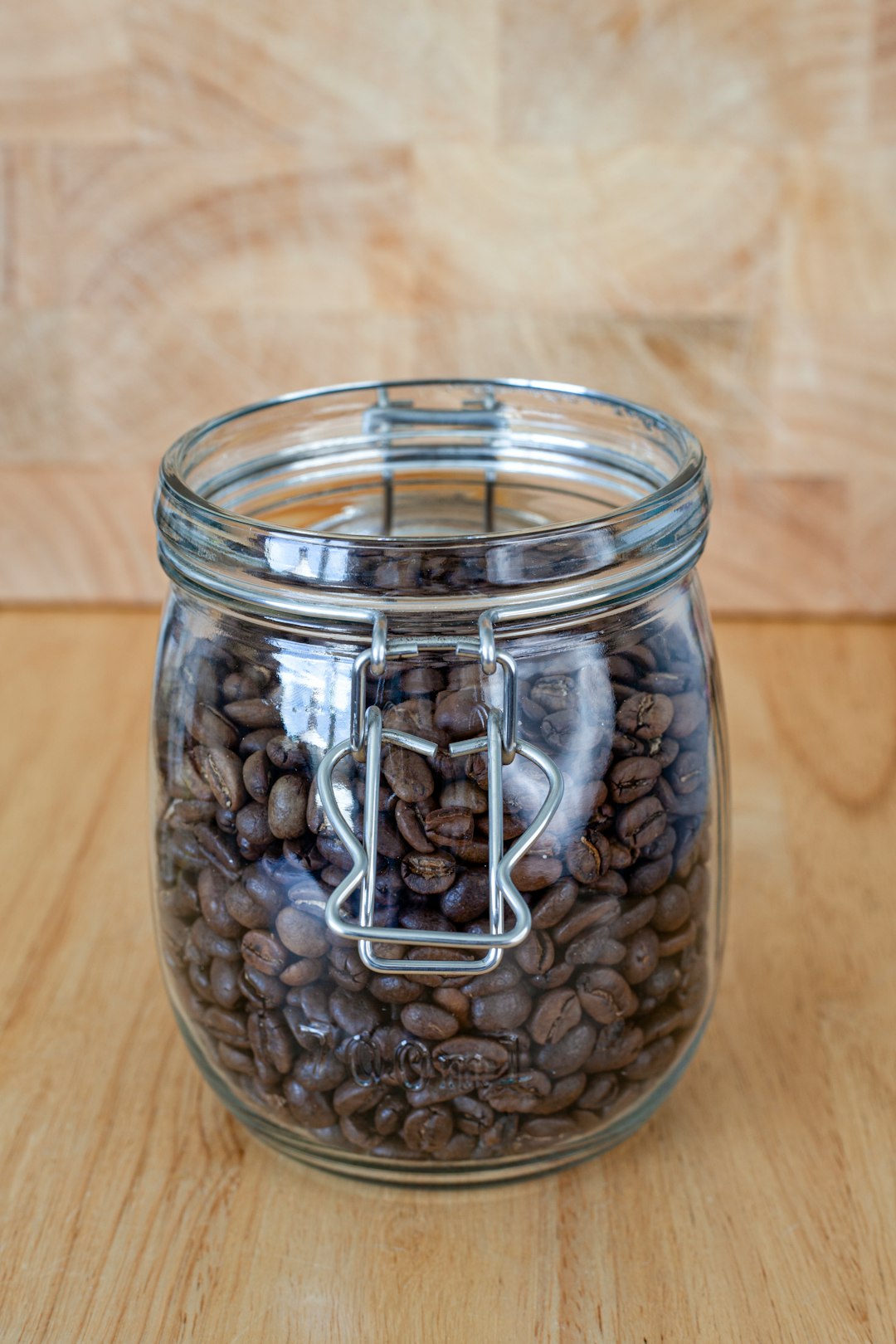
How to keep an opened pack fresh for longer:
- Leave the beans in the original bag and use the built-in closure.
- Press as much air out of the bag as possible before closing it.
- Keep the bag in a cool place, not next to the hob or the machine.
- Only grind the amount for the next brew.
- Buy packs that you will finish in two to four weeks.
Our recommendations
Storage canister with plunger lid
Planetary Design Airscape stainless steel, size M
Pros: The plunger lid pushes the air out through a valve and sits directly on the beans. So little air remains above them after each closing. The stainless steel keeps out light.
Cons: The ZHAW study did not test this type of canister, and the original bag with screw cap did better there. Decanting loses the protective gas from the bag, and air reaches the beans again on opening.
Vacuum canister · around €60
Fellow Electric Atmos 0.7 l, Matte Black
Pros: The pump in the lid draws out the air, and a sensor monitors the vacuum and pumps again automatically. According to the retailer, the battery lasts over four months with daily use.
Cons: Not dishwasher-safe, and you can only wipe the lid with a damp cloth. At around 310 g, a 500 g pack will not fit in one go.
Hand grinder · around €260 to €280
1Zpresso K-Ultra, silver
Pros: Whole beans keep longer, and with a hand grinder you only grind the amount for the next brew. According to the retailer, the external adjustment ranges from espresso to French press.
Cons: One fill holds only 35 to 40 g, so you grind larger amounts in several rounds. Grinding is done by hand with the crank.
Our selection is editorial, there are no paid placements. Links marked * are affiliate links to Amazon Germany (amazon.de): if you buy through them, we receive a small commission at no extra cost to you. We have not tested the products ourselves; pros and cons are based on manufacturer information and retailer descriptions. Prices are guide prices from German shops as of October 2026, and prices and availability on Amazon may differ.
Freezing: how to make your supply last for months
Cold slows down ageing. The SCA cites laboratory values according to which a temperature difference of 60°C slows the process by up to 35 times. A team at Penn State University stored six roasts for 9 weeks, either frozen or at room temperature. With dark roasts, the frozen beans smelled hardly any different from fresh ones to the 48 test participants.
The beans kept at room temperature, by contrast, smelled clearly different. Light roasts lost less aroma in both cases, and the differences were smaller. A German roastery tasted frozen beans over a longer period. After 6 months, the change was minimal, and after one year the score was one to two points lower.
| Step | The roastery’s recommendation |
|---|---|
| Portion | only as much per container as you need for one brew |
| Packing | fill tubes to the brim or vacuum-seal, whole beans rather than ground |
| Temperature | at least −10°C, better −18°C |
| Taking out | open the pack only to grind, grind espresso straight from frozen |
| Afterwards | use thawed beans straight away, do not refreeze |
We found no separate measurements for the fridge. If a supply needs to last longer than a month, the studies suggest the freezer is the better choice.
EU packaging regulation: what changes on the bag
The new EU Packaging and Packaging Waste Regulation has applied in stages since 12 August 2026. Coffee capsules, pods and tea bags now count as packaging. Since then, limits for PFAS, persistent fluorinated chemicals, have applied to food packaging. How you dispose of used capsules is still decided by your local council.
From 12 February 2028, permeable coffee and tea pods must be industrially compostable. By 2030, all packaging in the EU is to be recyclable. This also affects valve bags made of composite film with aluminium. For storage at home, nothing changes for now.
Three things are enough for fresh coffee. Check the roast date when you buy, keep opened beans in the well-sealed original bag and freeze supplies in small portions.
All product details are based on manufacturer and retailer information, and we have not tested the products ourselves.
Last updated: 24 October 2026.
Sources
- Smrke, S.; Adam, J.; Mühlemann, S.; Lantz, I.; Yeretzian, C. (ZHAW), Food Packaging and Shelf Life 33: Effects of different coffee storage methods on coffee freshness after opening of packages, 2022.
- Smrke, S. et al. (ZHAW), Journal of Agricultural and Food Chemistry: Time-resolved gravimetric method to assess degassing of roasted coffee, 2018.
- Specialty Coffee Association, Antony Watson, 25 Magazine 4: Preserving Freshness: A Race Against Time, accessed 24 October 2026.
- Penn State University: Wake and smell the coffee: Research shows freezing beans can preserve aroma, 15 January 2019.
- Cotter, A. R.; Hopfer, H., Beverages 4(3), 68: The Effects of Storage Temperature on the Aroma of Whole Bean Arabica Coffee Evaluated by Coffee Consumers and HS-SPME-GC-MS, 2018.
- Kaffeemacher, Benjamin Hohlmann: Einfrieren von Kaffeebohnen: Sinnvoll oder nicht? (in German), 15 February 2025.
- Planetary Design: Airscape Coffee Canister Review: Full Breakdown, accessed 24 October 2026.
- Core77, Rain Noe: The Air-Evacuating Airscape Coffee Canister, 8 March 2023.
- Verbraucherzentrale: Mindesthaltbarkeitsdatum (MHD) ist nicht gleich Verbrauchsdatum (in German), as of 2 October 2025.
- Global Coffee Report: Goglio leads the pack: A history of innovation in coffee packaging, accessed 24 October 2026.
- Regulation (EU) 2025/40: Artikel 9: Kompostierbare Verpackungen (in German), accessed 24 October 2026.
- Austrian Federal Ministry of Agriculture and Forestry, Climate and Environmental Protection, Regions and Water Management: Neue EU-Verpackungsverordnung (in German), accessed 24 October 2026.
- testbericht.de, price comparison (including haushaltsparadies, Quelle, OTTO, Best-in-coffee, Roast Market): Planetary Design Airscape Edelstahl-Aromabehälter M, mattschwarz (in German), prices as of 23 October 2026, accessed 24 October 2026.
- Bundesgütegemeinschaft Kompost, H&K 1/2025: EU-Verpackungsverordnung in Kraft (in German), 2025.
- Coffee Friend: Fellow Electric Atmos Vakuum-Kanister, 0.7 l, Matte Black (60,00 €) (in German), accessed 24 October 2026.
- Barista Delight: 1Zpresso K-Ultra Handmühle, Silver & Iron Grey (279,00 €) (in German), accessed 24 October 2026.
- Geizhals, price comparison: 1Zpresso K-Ultra manuelle Kaffeemühle silber (259,00 €) (in German), prices as of 24 October 2026, accessed 24 October 2026.

1 Comment
Pingback: How to dial in espresso: recipe, grind size and shot time