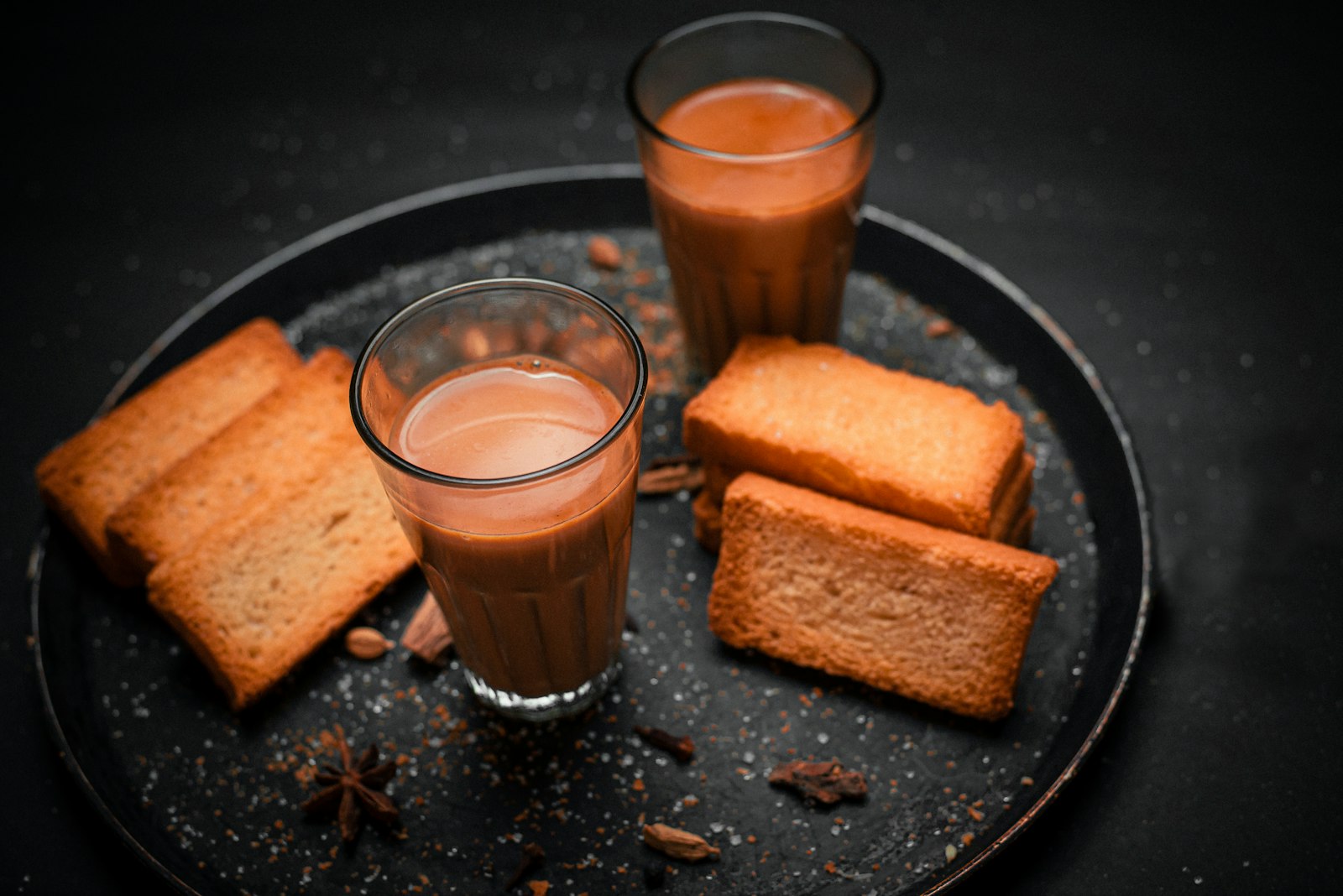
For real masala chai, simmer strong black tea with cardamom, ginger, cinnamon and cloves in water first. Then simmer it with milk for around ten minutes, using about two parts water to one part milk.The history of chai, tea and spices, a recipe for two cups and the café chai latte.
In Hindi, chai simply means tea. In India it usually refers to a sweet, milky black tea that street vendors brew in large pots. Masala means spice blend, and that is exactly what sets it apart from a tea bag with milk. The good news: you don’t need special equipment, just a pan, a sieve and whole spices.
Assam, railways and chaiwalas: how tea became a national drink
Tea had grown wild in Assam, in north-east India, for a long time. For many years people there drank it as a remedy rather than for pleasure. That changed with commercial tea growing under British rule. In the early 20th century, the British-run Indian Tea Association used newspaper adverts to promote tea drinking in India itself.
A law from 1903 channelled levies from the tea trade into advertising tea at home and abroad. Posters in several languages at railway stations explained how to brew it. By the 1930s there was a tea stall on almost every platform. Chaiwalas walked through the carriages with kettles and cups, calling ‘Chai, chai’.
The vendors, however, brewed the tea their own way: with lots of milk, lots of sugar and spices such as ginger, cardamom and cloves. At first the Indian Tea Association took a critical view of this way of making it. Even so, the spiced milky tea we now call masala chai won out.
The right tea: robust Assam rather than delicate Darjeeling
The base is usually Assam, sometimes also Darjeeling or Nilgiri. Assam made by the CTC method is particularly well suited to chai. CTC stands for crush, tear, curl: the leaves are crushed, torn and rolled into small pellets. As a result, the tea quickly releases lots of colour and strength and holds its own against milk and spices.
A fine Darjeeling is rather wasted in chai, as its floral aroma gets lost. You can read how the pickings there differ in Darjeeling: the difference between first flush and second flush. If you only have tea bags at home, a strong breakfast tea will do in a pinch.
The spices: cardamom, ginger, cinnamon and their companions
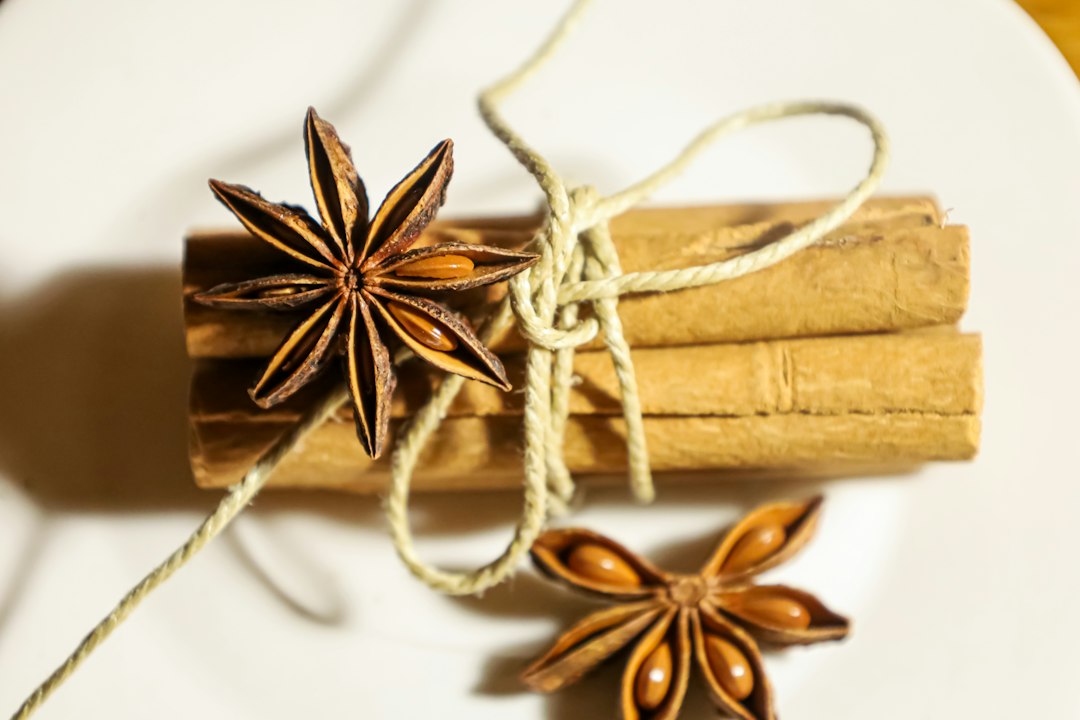
There is no fixed blend; every family and every chaiwala has their own. The most common are cardamom, fresh ginger and cinnamon. Cloves, black pepper or star anise are often added, sometimes mint or lemongrass too. Fennel seeds appear in many home recipes but are not part of the fixed core.
| Spice | Form in the pan | What it adds |
|---|---|---|
| Green cardamom | pods, lightly crushed | the typical fresh, sweetish chai aroma |
| Ginger | fresh, sliced or grated | heat and warmth |
| Cinnamon | a stick, ideally Ceylon cinnamon | sweetness and woodiness |
| Cloves | whole, used sparingly | spicy depth, quickly becomes dominant |
| Black pepper | whole peppercorns | heat in the finish |
| Fennel or star anise | optional | aniseed note |
Whole spices keep their aroma longer than ground ones. Crush them lightly in a mortar just before cooking so the essential oils pass into the water faster.
Recipe for two cups: quantities, milk and cooking time
Our recipe is our own halved version of the masala chai from the cookbook ‘Dishoom: From Bombay with Love’ by the London restaurant of the same name. The original serves four. Because the chai simmers for around 20 minutes, some of the liquid evaporates, leaving about two large cups.
- 1 tbsp loose Assam (the original uses Assam or Darjeeling)
- 6 slices of fresh ginger
- ¾ tsp black peppercorns
- 6 green cardamom pods
- 1 cinnamon stick
- 2 to 3 cloves
- 25 g sugar
- 250 ml whole milk
- 500 ml boiling water
- Put the tea, ginger and spices in a small pan and pour over the boiling water.
- Bring to the boil, reduce the heat and simmer for about 10 minutes until it smells strongly fragrant.
- Stir in the sugar and milk, bring back to the boil and simmer for about 10 minutes, stirring occasionally.
- Remove the skin from the milk, pour through a fine sieve into the cups and serve straight away.
A quicker method follows the approach of the cookery writer Madhur Jaffrey. Simmer the spices and tea in water, covered, for 10 minutes. Then add milk and sugar and let it steep for only about a minute. Her ratio is three parts water to two parts milk. This makes the chai milder and less caramel-like than the Dishoom version.
For a successful chai:
- Simmer the spices and tea in water first; the milk goes in later.
- Use a pan with high sides, as milk boils over quickly.
- Only crack the cardamom open, so it is easy to strain out later.
- Taste after straining and add more sugar then, rather than adding too much too early.
- Use Ceylon cinnamon if you drink chai often, as it contains far less coumarin.
Our recommendations
Assam · around €11
Ronnefeldt Assam Bari loose tea 100 g
Pros: Malty and spicy with lots of golden tips; Ronnefeldt explicitly recommends it with milk or cream.
Cons: Leaf grade GFBOP, so not a CTC tea; Ronnefeldt only gives a steeping recommendation of 3 to 4 minutes, nothing on simmering.
Milk pan · around €33 to €37
Riess Classic Schnabeltopf (spouted pan) 14 cm 1.7 l, white
Pros: With 1.7 litres and high sides, there is room to spare when the milk comes to the boil; the spout makes pouring through the sieve easier, enamel made in Austria.
Cons: No lid is included, and one costs extra (around €22); retailers give conflicting information on dishwasher use.
Variations: plant-based drinks, jaggery and less sugar
Instead of cow’s milk, you can use a plant-based drink. Oat drinks bring their own sweetness, while soya drinks are a little more neutral. Some plant-based drinks curdle when cooked for a long time. So add them only at the end and heat them just briefly. Which drinks are good for foaming is covered in our guide to milk foam with oat drink.
In India, jaggery is often used instead of sugar. It is an unrefined cane sugar or palm sugar with a malty flavour. Honey works too, but stir it into the finished chai. You can easily halve the amount of sugar in the recipe, as the spices carry the flavour.
Chai latte, syrup and cinnamon: what is in the café cup
A chai latte in a café is usually not simmered chai but steamed milk with syrup or concentrate. According to the retailer, a widely used chai syrup for cafés contains 60.9 grams of sugar per 100 grams. Sugar comes first on the ingredients list. A US food website puts the sugar in a grande chai latte from a large US chain at 42 grams. We have not checked whether the German recipes are just as sweet.
With cinnamon, it pays to look at the variety. Cassia cinnamon, the cheaper and more common type, can contain a lot of coumarin. The Bundesinstitut für Risikobewertung (BfR) is Germany’s Federal Institute for Risk Assessment. It gives a tolerable daily intake of 0.1 milligrams of coumarin per kilogram of body weight. According to the BfR, an adult weighing 60 kilograms reaches this value with just 2 grams of cassia cinnamon a day. A child weighing 15 kilograms reaches it with 0.5 grams. If you drink chai regularly, low-coumarin Ceylon cinnamon is the better choice.
Masala chai is more a method than a fixed recipe. With strong tea, whole spices and patience at the hob, you will get closer to railway station chai than with any syrup. For more ideas for your tea break, see afternoon tea rituals.
All prices are guide prices and may change.
All product details are based on manufacturer and retailer information; we have not tested the products ourselves.
Last updated: 24 October 2026.
Sources
- Wikipedia: Masala chai, accessed 23 October 2026.
- Lafayette College, Andie Mitchell: The Evolution of Chai in India, 2017.
- Onmanorama: History and evolution of Indian chai interwoven with railways, 2 November 2024.
- loveFOOD: Dishoom’s masala chai recipe, accessed 23 October 2026.
- MasterClass: Madhur Jaffrey’s Masala Chai Recipe, updated 4 October 2026.
- piccantino: Monin Chai Tea Syrup 0,70 l, accessed 23 October 2026.
- Tasting Table: Your Starbucks Chai Latte Has More Sugar Than You Think, 25 May 2025.
- Bundesinstitut für Risikobewertung: Cassia-Zimt mit hohen Cumaringehalten nur maßvoll verzehren (in German), 27 September 2012.
- Ronnefeldt: Assam Bari (in German), accessed 24 October 2026.
- frogcoffee: Ronnefeldt Assam Bari, 100 g loser Tee (in German), accessed 24 October 2026.
- butch.de: Riess Classic Weiß Schnabeltopf 14 cm / 1,7 L (in German), accessed 24 October 2026.
- emaille24: Riess Schnabeltopf weiß 1,7 Liter (in German), accessed 24 October 2026.
Image credits
- Bundled cinnamon sticks and star anise on a plate – Photo: Magdalena Zofia Kmiecik / Unsplash
Our selection is editorial, there are no paid placements. Links marked * are affiliate links to Amazon Germany (amazon.de): if you buy through them, we receive a small commission at no extra cost to you. We have not tested the products ourselves; pros and cons are based on manufacturer information and retailer descriptions. Prices are guide prices from German shops as of October 2026, and prices and availability on Amazon may differ.