Every kilo of roasted coffee in Germany carries €2.19 in coffee tax, and instant coffee €4.78. That puts around 55 cents into a 250 g bag.Tax rates, sample calculations per bag and cup, tax-free cases and the reform debate.
You pay the coffee tax at the till without seeing it on the receipt. The roastery pays it over as soon as the finished coffee leaves its warehouse. German customs (Zoll) collects it, and the money goes to the federal government alone. According to customs, that came to around €1.0 billion in 2025.
Because the tax is a fixed amount per kilogram, it costs as much on a cheap bag as on an expensive one. Our sample calculations based on the legal rates are marked ‘our calculation’.
The tax rates: €2.19 per kilo of roasted coffee
The legal basis is the Kaffeesteuergesetz (Coffee Tax Act). It taxes roasted coffee and instant coffee, including decaffeinated varieties. Green coffee does not appear in the act as a taxable item. Green beans are therefore tax-free, and tax only applies after roasting.
The rates are set out in Section 2. For blends of roasted and instant coffee, each share is taxed at its own rate. Coffee-containing goods such as drink powders or sweets with 10 to 900 g of coffee per kilogram pay tiered flat rates.
| Product | Tax per kg | Example, our calculation |
|---|---|---|
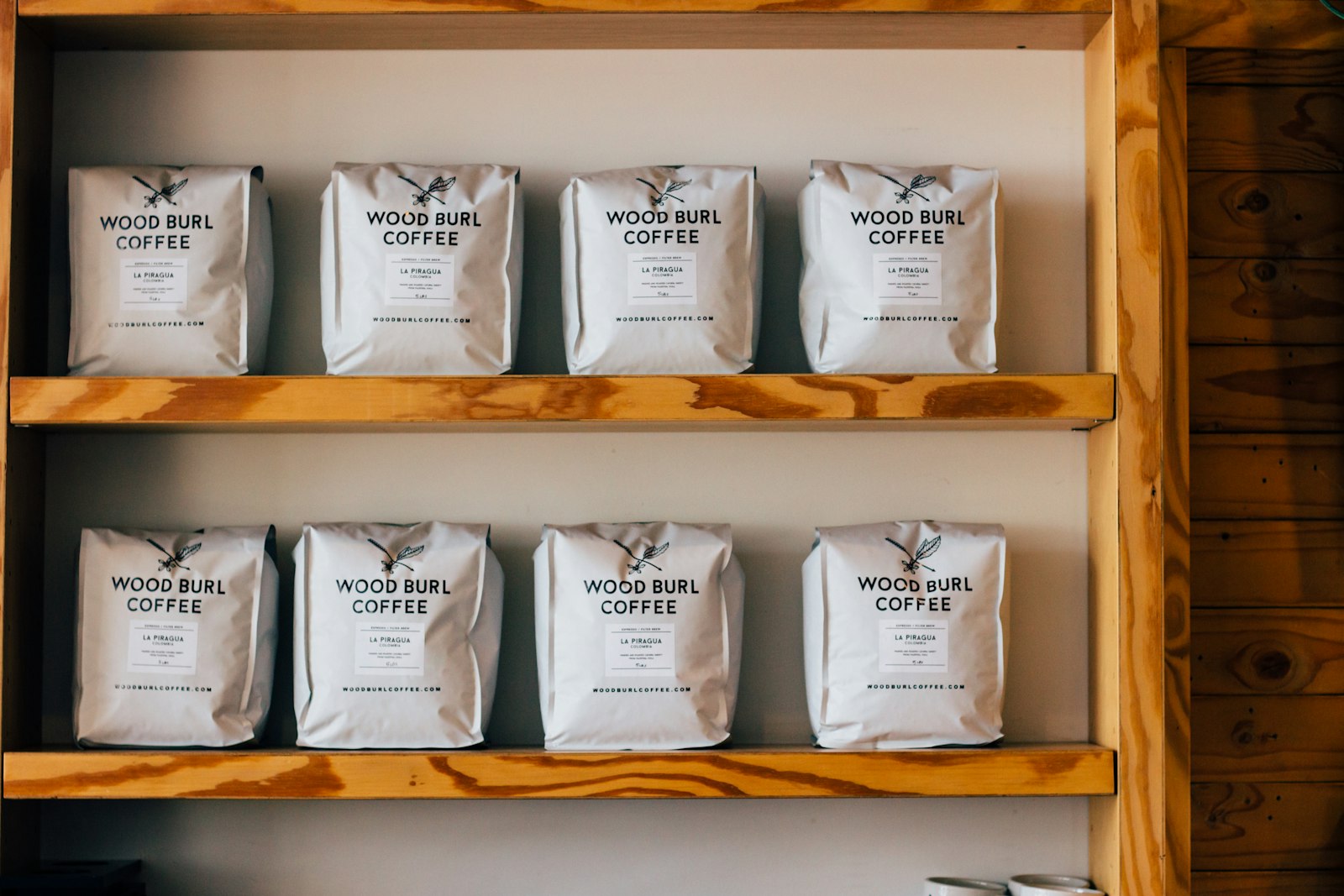
| roasted coffee, whole bean or ground | €2.19 | 250 g: around €0.55 |
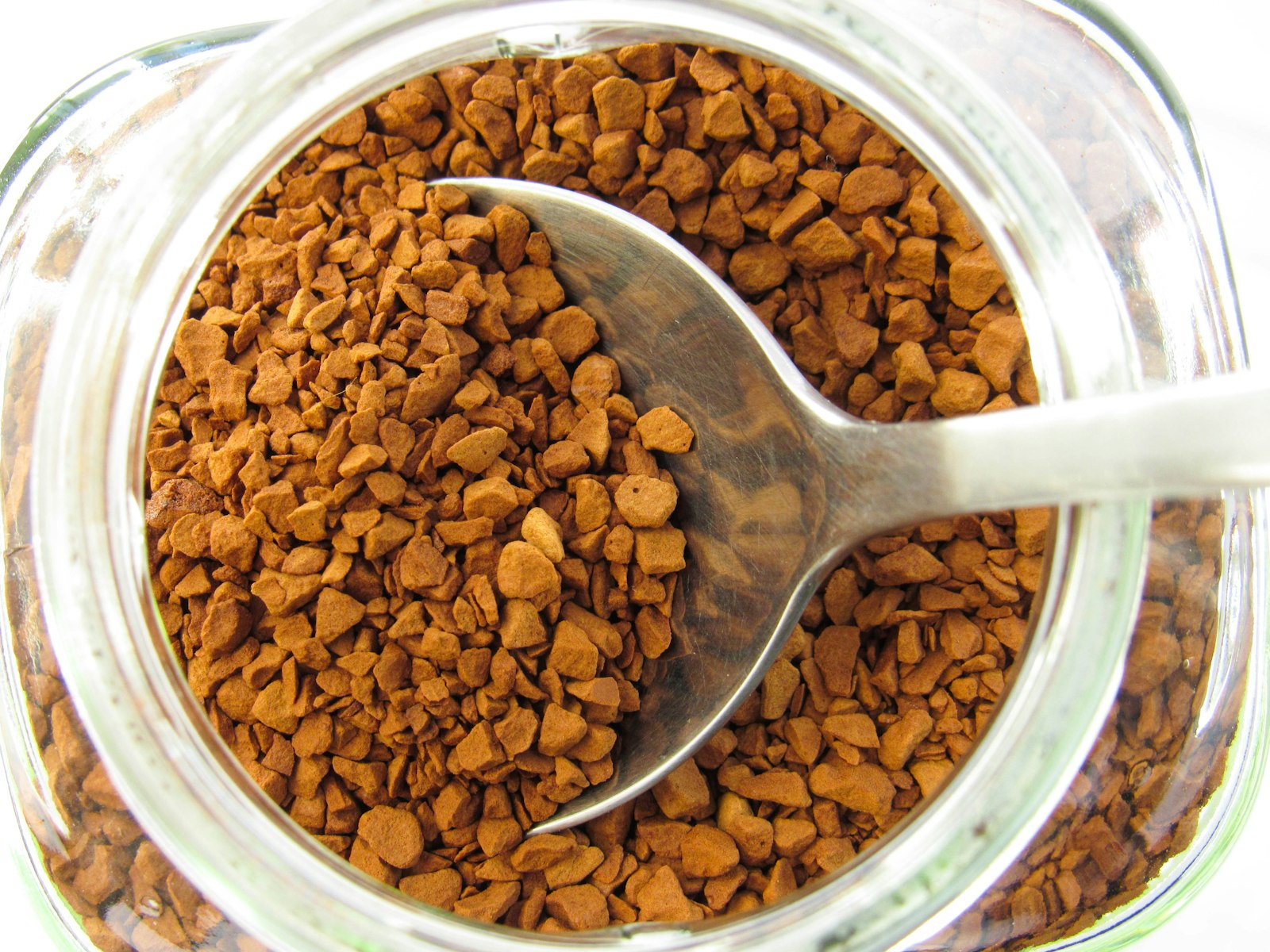
| instant coffee | €4.78 | 100 g: around €0.48 |
| blend of roasted and instant coffee | pro rata by type of coffee | 1 kg with 800 g roasted and 200 g instant coffee: around €2.71 |
| coffee-containing goods with roasted coffee | €0.12 to €1.76 per kg of product | in 5 tiers depending on coffee content |
| coffee-containing goods with instant coffee | €0.26 to €3.83 per kg of product | drink powder with 150 g of coffee per kg: €0.94 per kg of product |
The tiers for coffee-containing goods range from 10 to 100 g up to 700 to 900 g of coffee per kilogram of product. Customs gives the same rates.
Instant coffee carries more than twice as much tax per kilogram. But you only need a little powder for a cup. At 2 g per cup, that is just under 1 cent in coffee tax (our calculation).
What the tax adds to a bag and a cup
VAT is added on top of the price including coffee tax. Coffee has the reduced rate of 7 per cent, as set out in Annex 2 of the German VAT Act. So the coffee tax itself is charged another 7 per cent.
| Amount | Coffee tax | including 7 % VAT on it |
|---|---|---|
| cup of filter coffee with 15 g | around 3.3 cents | around 3.5 cents |
| double espresso with 18 g | around 3.9 cents | around 4.2 cents |
| 250 g bag of roasted coffee | around €0.55 | around €0.59 |
| 500 g bag of roasted coffee | around €1.10 | around €1.17 |
| 1 kg of roasted coffee | €2.19 | around €2.34 |
All values in the table are our calculation. The amounts per cup are our assumptions. For filter coffee, 15 g to 250 ml equals a ratio of 60 g per litre.
How much the tax weighs depends on the price. Take a 500 g bag for €8 and a 250 g bag of specialty coffee for €18, both sample prices. On the cheap bag, coffee tax plus the VAT on it make up just under 15 per cent of the price. On the expensive one, it is around 3 per cent (our calculation). What else goes into a small roastery’s price is shown in why specialty coffee costs so much.
From bonded warehouse to shelf: when the tax falls due
Roasteries work with a bonded warehouse, which needs a permit from the main customs office. There they roast, store and pack the coffee untaxed. Under Section 11, the tax only arises when the coffee leaves the bonded warehouse or is consumed there. The warehouse holder owes the tax.
According to the federal administration portal, the roastery declares the tax by the 10th day of the following month at the latest. It must pay by the 20th day of the following month, without a separate demand. If someone roasts for sale without a permit, the tax is due immediately.
If you order coffee from a retailer in another EU country, German coffee tax applies. Under Section 18, it arises on delivery to you, and the retailer owes it. If the retailer does not pay, you are liable as the recipient. Why green coffee price changes reach the shelf late is explained in Green coffee is getting cheaper: why shelf prices barely move.
Tax-free: home roasting and coffee from EU holidays
If you roast green coffee at home for yourself, you pay no coffee tax. Customs states that roasting in a private household for personal use is tax-free. There is no official monitoring for it. How to start with a pan, popcorn maker or home roaster is explained in Roasting coffee at home: how to get started.
Coffee you bring back in your own luggage from another EU country also stays tax-free. It must have been bought normally there, for example in a supermarket, and be for your own use. As a guide quantity, customs gives 10 kg of coffee and 10 kg of coffee-containing goods. Above that, it assumes a commercial purpose, but you can show that it is for personal use.
Around €1 billion a year for the federal government
The revenue has been remarkably stable for years. Customs’ annual statistics show €1.1 billion each year for 2019 to 2022, and €1.0 billion each year since 2023. The 2026 federal budget gives more detail. It shows the coffee tax raised around €992 million in 2024, and the government plans for €1.02 billion in 2026.
| Excise duty | 2023 | 2024 | 2025 | goes to |
|---|---|---|---|---|
| coffee tax | €1.0 bn | €1.0 bn | €1.0 bn | federal government |
| alcohol duty | €2.2 bn | €2.0 bn | €2.0 bn | federal government |
| beer duty | €0.6 bn | €0.6 bn | €0.5 bn | federal states |
| sparkling wine duty | €0.4 bn | €0.4 bn | €0.4 bn | federal government |
| all excise duties | €62.4 bn | €59.9 bn | €65.0 bn | federal government and states |
The coffee tax thus raises around half as much as the alcohol duty and around two and a half times as much as the sparkling wine duty. In 2025, it made up about 1.5 per cent of total excise revenue (our calculation). According to the Bundestag’s research services, customers ultimately bear it through the price.

From Prussia to October 2026: history and reform debate
Levies on coffee have a long history in Germany. In Prussia, from 1780, Frederick II had retired soldiers check that nobody roasted or drank coffee outside the state coffee monopoly. A wood engraving from 1892 shows these coffee sniffers.
After the Second World War, coffee was heavily taxed in West Germany. In Berlin, for example, a 1949 law set 10 Deutschmarks (DM) per kilogram of green coffee and DM 13 for roasted coffee. Smuggling flourished on the Belgian border, and research by the city archive found that 26 people died in the Aachen area. On 18 June 1953, the Bundestag’s finance committee proposed new rates of DM 3 for green coffee and DM 4 for roasted coffee.
Today the rates are €2.19 for roasted coffee and €4.78 for instant coffee. A new push for abolition has been before the Bundestag since 15 October 2026. In motion 21/8637, the AfD parliamentary group calls for repealing the Coffee Tax Act on 1 January 2027, as it did in 2020. As of 24 October 2026, nothing has been decided, and the rates still apply. New EU rules for coffee are explained in the EU Deforestation Regulation for coffee and cocoa.
For everyday purposes, the sum stays simple. Around 55 cents per 250 g bag goes to the federal government as coffee tax, whatever the bag costs. If you roast for your own use, it does not apply at all.
Last updated: 24 October 2026.
Sources
- Bundesministerium der Justiz, gesetze-im-internet.de: Kaffeesteuergesetz, §§ 1 und 2 (in German), accessed 24 October 2026.
- Bundesministerium der Justiz, gesetze-im-internet.de: Kaffeesteuergesetz, §§ 11 und 18 (in German), accessed 24 October 2026.
- Bundesministerium der Justiz, gesetze-im-internet.de: Umsatzsteuergesetz, Anlage 2 (zu § 12 Abs. 2 Nr. 1 und 2), Nr. 12 (in German), accessed 24 October 2026.
- Generalzolldirektion: Kaffee, kaffeehaltige Waren: Steuerhöhe (in German), undated, accessed 24 October 2026.
- Generalzolldirektion: Kaffee: Verbrauchsteuern im Haushalt (in German), undated, accessed 24 October 2026.
- Generalzolldirektion: Genussmittel: Reisen innerhalb der EU (in German), undated, accessed 24 October 2026.
- Generalzolldirektion: Verbrauchsteuererhebung, Tabelle Erhobene Verbrauchsteuern (Jahresstatistik 2025) (in German), accessed 24 October 2026.
- Bundesministerium der Finanzen, bundeshaushalt.de: Bundeshaushaltsplan 2026, Einzelplan 60, Kapitel 6001 Titel 035 02 Kaffeesteuer (in German), 2026.
- Bundesministerium der Finanzen, Verwaltungsportal des Bundes: Kaffeesteuer anmelden und bezahlen (in German), as of 30 November 2023.
- Wissenschaftliche Dienste des Deutschen Bundestages: Steuern auf Kaffee und kaffeehaltige Produkte in Deutschland (WD 4 – 3000 – 140/18) (in German), 7 September 2018.
- German History in Documents and Images: The Coffee „Sniffers“, c. 1780 (1892), accessed 24 October 2026.
- Deutscher Bundestag, Drucksache 1/4565: Mündlicher Bericht des Ausschusses für Finanz- und Steuerfragen zum Entwurf eines Kaffeesteuergesetzes (in German), 18 June 1953.
- t-online: Aachen: Als in der Eifel der Kaffeekrieg tobte (in German), 6 July 2019.
- Deutscher Bundestag, Drucksache 21/8637: Antrag der Fraktion der AfD: Steuererhöhung auf Tabak zurücknehmen … Bagatellsteuern abschaffen (in German), 15 October 2026.