First flush, picked in March and April, tastes light and floral. Second flush, picked in May and June, is stronger and turns the cup reddish brown.The four harvests compared, prices, protected origin, leaf grades and brewing.
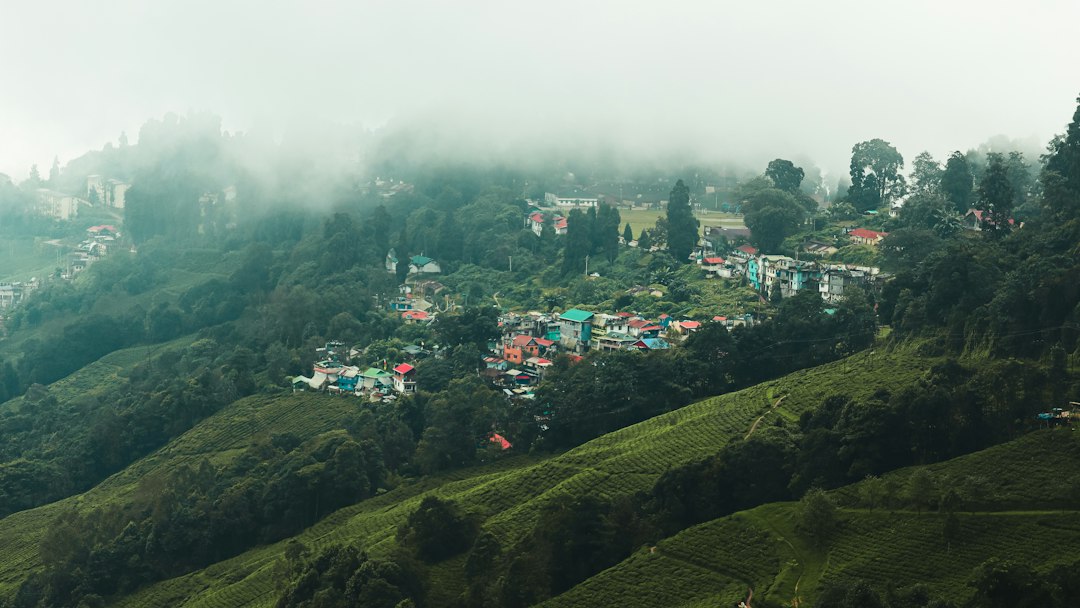
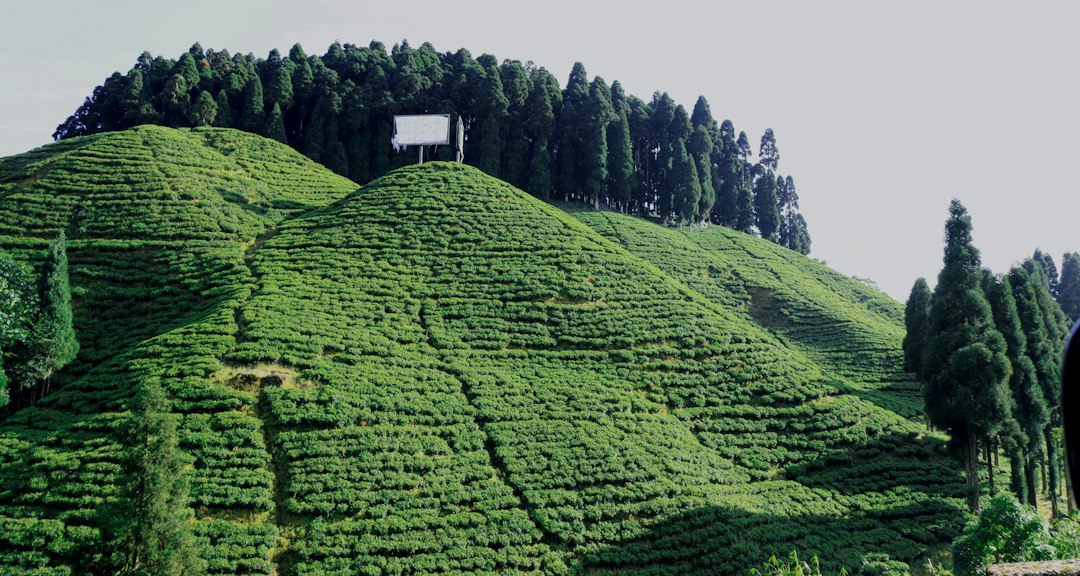
Darjeeling is a district in the north of the Indian state of West Bengal. Tea grows there on steep slopes at 600 to 2,250 metres above sea level. The bushes rest in winter and start sprouting again from March. In tea growing, each of these growth spurts is called a flush.
The same garden therefore produces very different teas over the course of a year. Weather, leaf and processing change from one harvest to the next. That is why the flush is usually printed right next to the garden name on the packet.
Four harvests from March to November
A Canadian tea house describes the year like this: first flush in March and April is followed by second flush in May and June. In July and August the monsoon arrives with heat and heavy rain. The bushes then grow fast and the harvest is large, but the aroma is diluted. In October and November cool nights slow growth down, and the autumn tea is made.
| Harvest | Picking time | Flavour | Cup |
|---|---|---|---|
| First flush | March to April | floral and fruity, green freshness | pale yellow |
| Second flush | May to June | ripe fruit, muscatel, spices | reddish brown to coppery |
| Monsoon flush | July to August, up to October depending on the source | full-bodied and dark, mostly used for blends | dark |
| Autumn flush | October to November | soft and woody with caramel notes, sweetish | light |
The boundaries shift depending on the year and the altitude. A German specialist tea retailer counts the monsoon season up to October and also lists an in-between tea around early April. It still has traits of the first flush and leads into the summer. The retailer calls the strong monsoon teas everyday teas, where quantity outweighs quality.
First flush and second flush: weather and processing
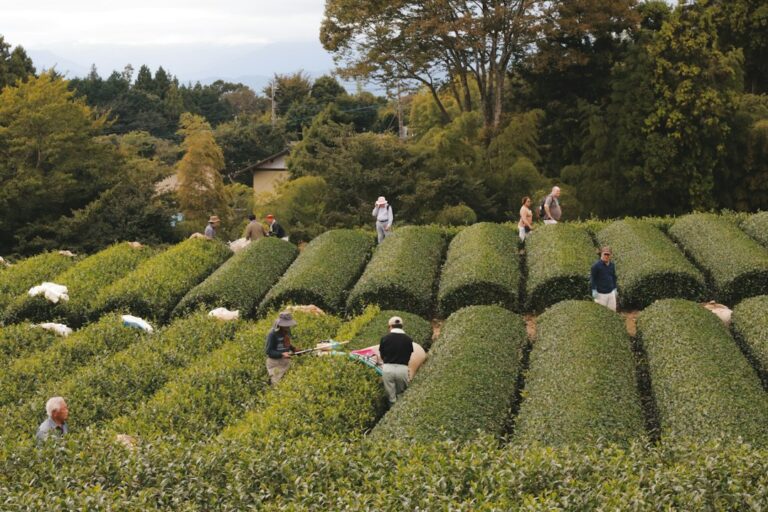
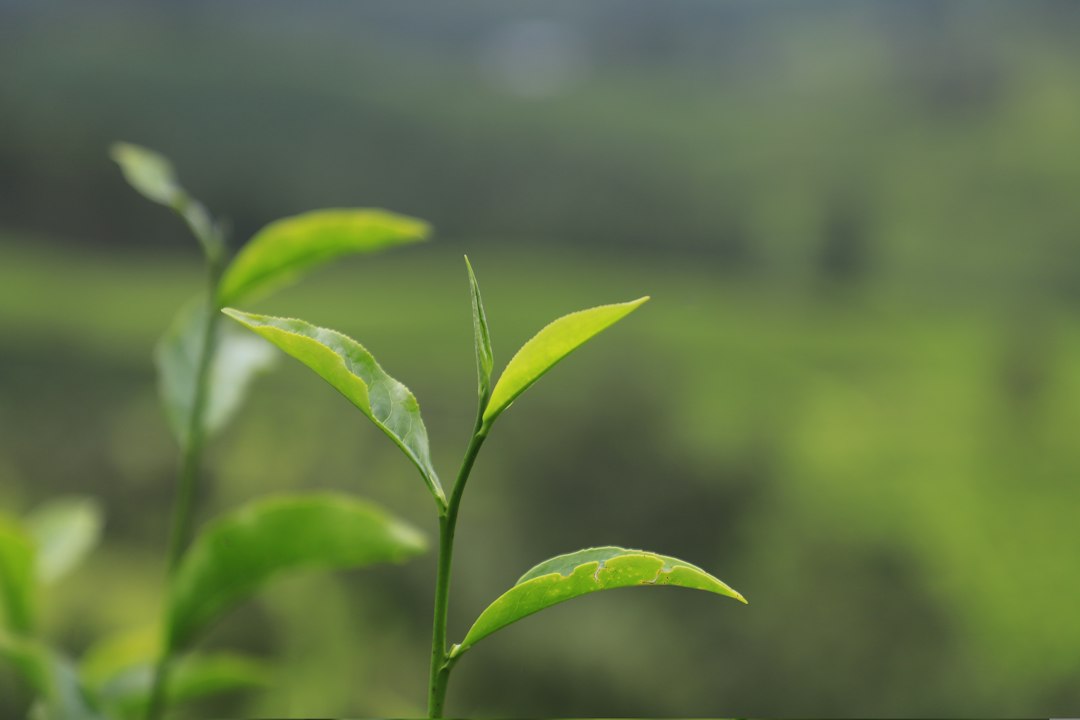
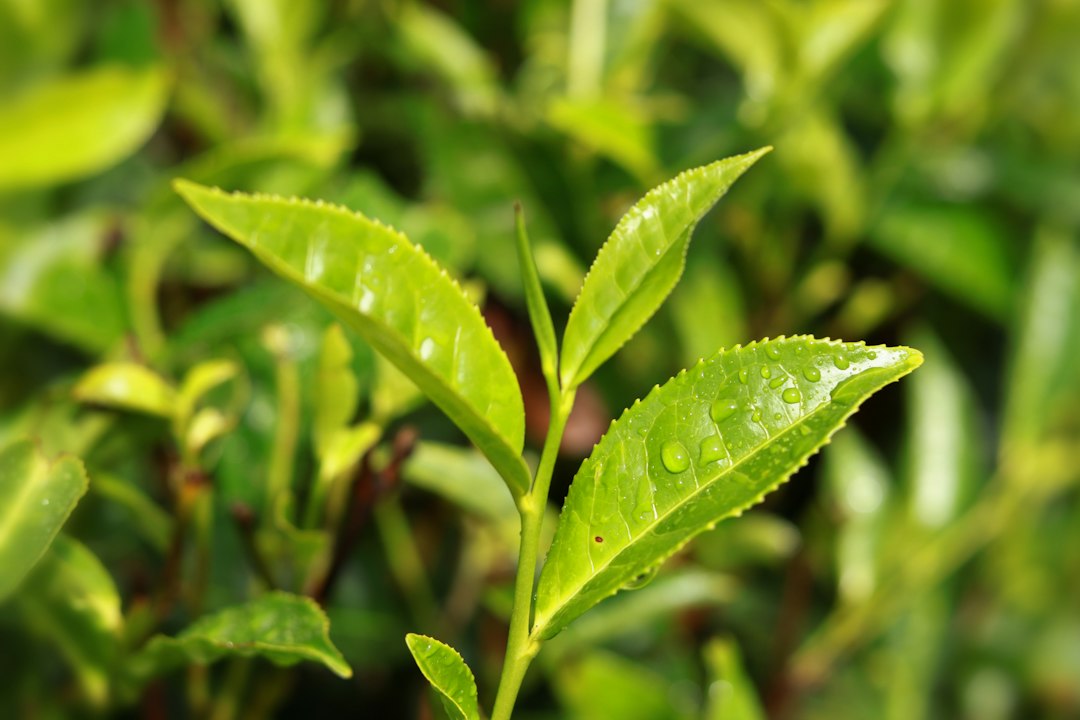
After the winter rest, spring is cool and fairly dry. Pickers take the bud with the first two leaves. For first flush, the leaves are withered for a long time and very hard, losing more than 70 per cent of their moisture. Only then does the already half-dry leaf oxidise. That is why a first flush often looks greenish in the caddy, even though it is sold as black tea.
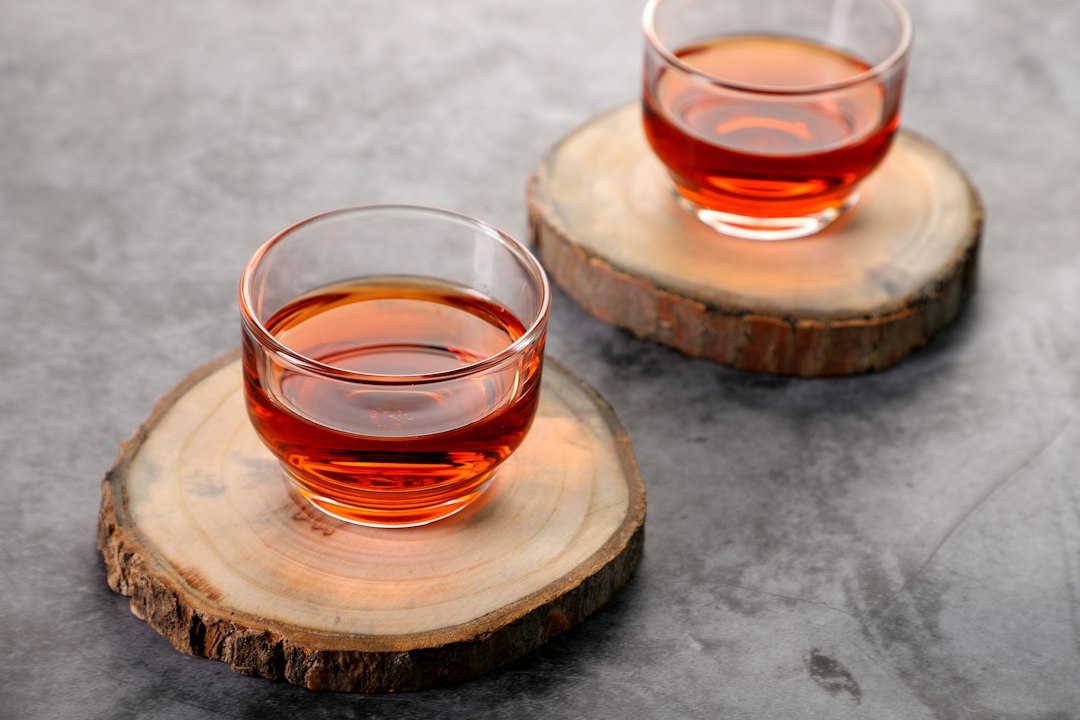
In May and June it is warm and humid, and the leaves are juicier. More cell sap is released during rolling, and oxidation goes further. The tea turns darker and tastes stronger. Descriptions range from ripe fruit and citrus to brown sugar.
Second flush is famous for its muscatel note, which is reminiscent of muscat grapes. In 2004 Japanese researchers found two aroma compounds that are especially important for the aroma of Darjeeling. Both smell of apple and muscat grape. The researchers suspect that the plant produces them when small insects suck on the shoots. How strong the note is therefore varies from garden to garden and from year to year.
Prices: why the spring harvests cost more
First and second flush make up only a small share of the harvest but bring in most of the money. According to a 2024 report, first and second flush each account for around 20 per cent of the annual volume. The remaining 60 per cent are rain teas from the summer. Back in 2017 the industry reported that second flush alone brought in around 40 per cent of annual revenue. Monsoon and autumn teas were then sold at around production cost or below.
Individual lots fetch top prices. In March 2024 one garden sold 5 kilograms of white first flush for 31,000 rupees per kilogram. That is around €290 per kilogram (our conversion, at the rate of 22 October 2026). In German specialist shops prices are much lower, as one retailer’s list shows.
| Tea from a German specialist retailer | Harvest | Price per 100 g |
|---|---|---|
| Darjeeling FOP | Second flush | €6.40 |
| Darjeeling TGFOP1 | First flush | €9.50 |
| Darjeeling FTGFOP1, organic | Second flush | €13.50 |
| Darjeeling FTGFOP1 from a single garden, organic | First flush | €14.60 |
| Darjeeling FTGFOP1, organic, 2025 harvest | First flush | €17.60 |
At comparable quality, first flush costs a little more than second flush in this list. The biggest jump, however, comes with the grade. A simple FOP costs less than half as much as an FTGFOP1 from a named garden.
Genuine Darjeeling: 87 gardens and a protected name
Darjeeling tea comes from 87 gardens covering just under 17,400 hectares, according to a 2010 case study by the World Intellectual Property Organization. At the time the region supplied just over 1 per cent of India’s tea. The Tea Board of India designed the logo with the woman picker as early as 1983. In the EU, Darjeeling has been a protected geographical indication since October 2011.
The EU regulation allows the name only for tea produced entirely within the defined area. Blends with other tea may not be sold as Darjeeling. Loose tea must be packed within the area, while retail packs may also be made elsewhere. The regulation recognises three grades: whole leaf, broken and fannings.
The harvest has been shrinking for years. In 1990 Darjeeling produced 14.49 million kilograms, and in 2008 still 11.58 million. For 2025 the industry reports only around 5.3 million kilograms. It cites old bushes, a lack of workers, unpredictable weather and weak prices as reasons.
| Year | Production in Darjeeling |
|---|---|
| 1990 | 14.49 million kg |
| 2008 | 11.58 million kg |
| 2017 (gardens shut down for months) | 3.2 million kg |
| 2025 | around 5.3 million kg |
Leaf grades: what SFTGFOP and FTGFOP mean
The strings of letters on Darjeeling packets describe how the dry leaf looks. They tell you something about leaf size and the share of buds, but little about flavour. The garden name, flush and harvest year reveal more. There is also no uniform standard for the grades, and every retailer interprets them slightly differently.
| Abbreviation | Stands for | Meaning |
|---|---|---|
| OP | Orange Pekoe | whole leaf, basic grade for black tea |
| F | Flowery | well-formed leaf that looks fresh |
| G | Golden | many golden leaf tips |
| T | Tippy | many unopened buds |
| F (at the front) | Finest | particularly good quality |
| S | Special | highest grade |
| 1 | additional distinction within the grade | |
| BOP | Broken Orange Pekoe | broken leaf, infuses faster |
An SFTGFOP1 is therefore a whole leaf with many golden tips and buds in the highest grade. The ‘orange’ in the name has nothing to do with colour. It probably goes back to the Dutch royal House of Orange-Nassau. Broken leaves give a strong infusion faster, but it is often more astringent too.
Brewing: temperature and steeping time for each harvest
The German specialist retailer brews Darjeeling with water at a rolling boil, including first flush. The difference lies in the steeping time. The delicate first flush steeps for 2 minutes, a second flush for 2.5 to 3 minutes. The retailer uses 12 to 13 grams of leaf per litre, so around 3 grams for a 250 ml cup.
| Tea | Leaf per litre | Per 250 ml | Water | Steeping time |
|---|---|---|---|---|
| First flush | 12 g | 3 g | 100°C | 2 min |
| Second flush, FTGFOP1 | 12 g | 3 g | 100°C | 2.5 min |
| Second flush, FOP | 13 g | around 3.3 g | 100°C | 3 min |
These figures match our overview on how to brew tea: temperature and steeping time. For first flush the retailer recommends filtered or soft water, because limescale robs delicate teas of their aroma. To find out how hard your tap water is, see which water is best for coffee. The figures apply to tea in exactly the same way.
Darjeeling is best drunk unsweetened. For second flush, the retailer suggests at most a small spoonful of white rock sugar per cup. Milk masks the delicate notes of a first flush, although that is our own view. With the stronger second flush it is a matter of taste.
How to get the best out of your Darjeeling:
- Weigh the leaf: around 3 grams is enough for a large cup.
- Set a timer and stick to the 2 minutes for first flush.
- Pour off all the tea so that it does not keep steeping.
- Taste first and second flush from the same garden side by side, as that is where you notice the difference most clearly.
- When buying, look at the garden name, flush and harvest year rather than just the grade.
Two packets are enough to get started: one first flush and one second flush. With boiling water and 2 to 3 minutes of steeping, each shows its own character. After that you will know which season you prefer.
Last updated: 24 October 2026.
Sources
- Camellia Sinensis: The Darjeeling’s Annual Flavour Cycle, 20 May 2022, updated 20 June 2023.
- TeeGschwendner: Anbaugebiet Darjeeling, accessed 24 October 2026.
- TeeGschwendner, product page: Darjeeling Soom First Flush (in German), accessed 24 October 2026.
- TeeGschwendner, product page: Darjeeling FTGFOP1 Avantgarde Second Flush Bio (in German), accessed 24 October 2026.
- TeeGschwendner, product page: Darjeeling Nr. 6 FOP Second Flush (in German), accessed 24 October 2026.
- Kawakami, M.; Sarma, S.; Himizu, K.; Konishi, Y.; Kobayashi, A., conference proceedings of the World Green Tea Association: Aroma Characteristics of Darjeeling Tea, 2004.
- ETV Bharat: Darjeeling premium first flush tea fetches a price of Rs 31,000 per kg, 27 March 2024.
- IANS, The Morung Express: Darjeeling shutdown hits tea industry’s production, revenue, 22 June 2017.
- European Central Bank: Euro reference exchange rate, Indian rupee (22 October 2026: 106.249 INR), accessed 24 October 2026.
- WIPO: Managing the Challenges of the Protection and Enforcement of Intellectual Property Rights (Darjeeling Tea), 11 June 2010.
- European Commission: Commission Implementing Regulation (EU) No 1050/2011 entering the name Darjeeling (PGI), 20 October 2011.
- Forbes Tea: Darjeeling Tea to hit new production low in 2025, 5 February 2026.
- Agro & Food Processing: Darjeeling Tea Industry Seeks Relief from Govt as Output, Prices Decline, 1 July 2026.
- Peter Keen, Tea Journey: Pekoe Tea Grades: Unmuddling the OP, BOP, SFTGFOP System, 10 September 2019.