Ristretto, espresso and lungo differ mainly in one number: the ratio of ground coffee to drink, roughly 1:1, 1:2 and 1:3 to 1:4.The figures from the Italian standard and specialty coffee roasters, yield and flavour, caffeine per shot and tools for home.
In Italy you order ‘un caffè’ and get a small, dense espresso. In a specialty coffee café, by contrast, the menu often lists a double shot, and bean-to-cup machines have buttons for ristretto and lungo. They all share the same technique: hot water is forced under pressure through finely ground coffee. What separates them is mainly the amount of water that runs through the same coffee puck.
Brew ratio: the number behind every shot
The brew ratio compares the amount of coffee with the drink in the cup. Both are weighed in grams. 18 grams of ground coffee and 36 grams of espresso give 1:2. The espresso machine manufacturer La Marzocco divides shots like this: ristretto 1:1 to 1:2, normale 1:2 to 1:3, lungo 1:3 to 1:4. So the boundaries are fluid.
You weigh because the crema distorts any reading in millilitres. A fresh shot foams a lot, so the volume varies with the bean and roast date. Our guide to dialling in espresso explains step by step how to set grind size and shot time.
The figures: the Italian standard and the specialty coffee café
The Istituto Nazionale Espresso Italiano (INEI) defines a single espresso very precisely for its ‘Espresso Italiano Certificato’ seal. It specifies 7 grams of coffee, a water temperature of 88°C and 9 bar of pressure. After 25 seconds, 25 millilitres including crema should be in the cup, with less than 100 milligrams of caffeine. Specialty coffee cafés usually work with a double basket and around 18 grams of coffee.
| Parameter | Espresso Italiano Certificato (INEI) | Typical specialty coffee recipe |
|---|---|---|
| Dose | 7 g ± 0.5 g | 18 g (double) |
| Water temperature | 88°C ± 2°C | 92 to 96°C |
| Pressure | 9 bar ± 1 bar | around 9 bar |
| Shot time | 25 s ± 5 s | 25 to 30 s |
| Amount in the cup | 25 ml ± 2.5 ml incl. crema | 36 to 40 g |
| Brew ratio | not specified | around 1:2 |
The specialty coffee figures come from the recipe details of a German roaster’s shop and are guide values, not a standard. A second Italian guideline is the 2018 Disciplinare for traditional espresso. It gives 7 to 9 grams, 90 to 96°C, 20 to 27 seconds and 13 to 26 grams in the cup.
Ristretto, lungo, Americano, café crème: how they differ
With a ristretto only a little water runs through, with a lungo considerably more, and both through the same coffee bed. An Americano is a normal espresso topped up with hot water afterwards. A café crème, called Schümli in Switzerland, is brewed entirely in the machine, with a coarser grind and much more water.
| Drink | Coffee | In the cup | Ratio | Time |
|---|---|---|---|---|
| Ristretto | 18 g | 18 to 27 g | 1:1 to 1:1.5 | 15 to 20 s |
| Espresso | 18 g | 36 to 40 g | around 1:2 | 25 to 30 s |
| Lungo | 18 g | 54 to 72 g | 1:3 to 1:4 | 35 to 45 s |
| Americano | espresso as above | plus 1 to 3 parts hot water | espresso to water 1:1 to 1:3 | as espresso |
| Café crème / Schümli | 7 to 8 g | around 120 ml | not specified | around 15 s, 2 to 3 bar |
The figures for ristretto, espresso, lungo and Americano come from a German roaster’s shop. The Schümli figures come from an online retailer’s guide. Other sources give slightly different ranges, Wikipedia for example 25 to 30 millilitres for an espresso and 50 to 70 millilitres for a lungo.
Acidity, sweetness, bitterness: how extraction steers flavour
During brewing, substances do not dissolve all at once. Acids come first, then sugars and sweet aromas, and bitter compounds last. A very short shot therefore often tastes sour, a very long one rather bitter and dry. Specialist literature gives an extraction yield of 18 to 22 per cent for balanced coffee: that is how much of the ground coffee ends up in the cup.
Strength is measured as total dissolved solids, TDS for short. According to a roaster’s glossary, an espresso is at 8 to 10 per cent, filter coffee at 1.3 to 1.55 per cent. You calculate the yield like this: drink weight times TDS, divided by the dose. So a ristretto is strong but often less extracted. A lungo is weaker but gets more out of the ground coffee, and with it more bitterness.
| Shot | Flavour (tendency) | Body |
|---|---|---|
| Ristretto | sweet, syrupy, little bitterness | dense |
| Espresso | sweetness, acidity and bitterness in balance | medium to full |
| Lungo | lighter, dry finish, more bitterness possible | light |
How to find your shot:
- Weigh coffee and drink instead of estimating in millilitres.
- Start with 18 grams of coffee to 36 grams of espresso in 25 to 30 seconds.
- If the shot tastes too sour, grind finer or let more run through. If it is too bitter, grind coarser or stop earlier.
- Control a ristretto with a finer grind rather than just stopping the shot earlier.
- For a large cup, an Americano is often rounder than a very long lungo.
Caffeine: the amount of coffee decides, not the cup size
How much caffeine a shot contains depends mainly on the dose, the bean and the roast. The BfR (Germany’s Federal Institute for Risk Assessment) gives around 80 milligrams for a 60-millilitre espresso. A study of 20 espressos in Glasgow cafés, by contrast, found a range of 51 to 322 milligrams per serving. The main cause was probably the differing amount of coffee. The study is a snapshot and not representative.
A ristretto tastes stronger but does not necessarily contain more caffeine than an espresso. With a lungo, slightly more caffeine can end up in the cup. We found no reliable measurements that compare the three shots directly. You’ll find more figures for other drinks in our overview of the caffeine content of espresso, filter coffee and cold brew.
Trying it at home: scales and a shot glass are enough
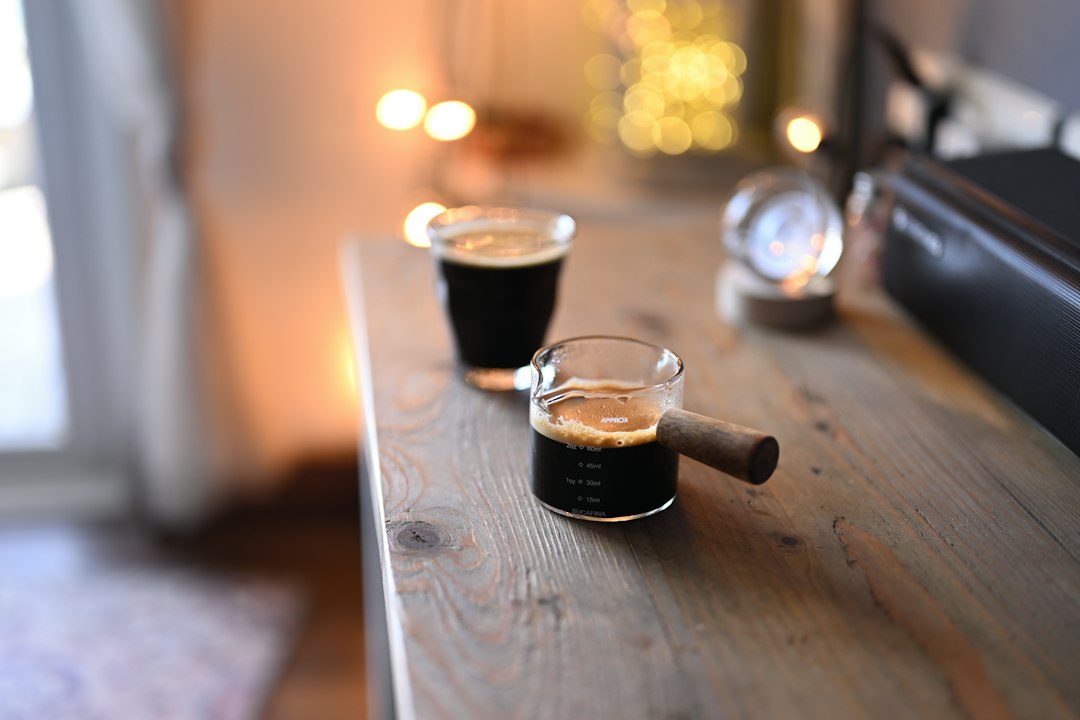
For the brew ratio, you mainly need scales with 0.1-gram resolution and a timer that fit under the cup. A shot glass with markings helps for quick comparisons and shows the crema. We cover other helpers such as tampers and WDT tools in our piece on espresso accessories.
Ristretto, espresso and lungo are not fixed recipes but points on a scale. With scales and a little patience, you can find out for yourself where your beans taste best. The figures from Italy and the specialty coffee café are a good starting point.
Last updated: 24 October 2026.
Sources
- Clive Coffee: Espresso Brew Ratios from La Marzocco, 19 August 2026.
- Beverfood: L’Espresso Italiano Certificato (in Italian), 12 March 2009.
- Espresso Italiano Tradizionale: Disciplinare Caffè Espresso Italiano Tradizionale (in Italian), 2018.
- Simon & Bearns: Espresso vs. Ristretto vs. Lungo vs. Americano, 2 December 2025.
- roastmarket: Schümli-Kaffee: Schweizer Kaffeegenuss (in German), updated 4 April 2023.
- 19grams: Kaffeelexikon: Café Crème, accessed 23 October 2026.
- Wikipedia: Lungo, accessed 23 October 2026.
- Wikipedia: Coffee extraction, accessed 23 October 2026.
- 19grams: Kaffeelexikon: Refraktometer, accessed 23 October 2026.
- Barista Hustle: Espresso Recipes: Understanding Yield, accessed 23 October 2026.
- Bundesinstitut für Risikobewertung: Koffeinhaltige Lebensmittel aus Sicht der Risikobewertung (in German), 6 April 2016.
- Crozier et al., Food & Function: Espresso coffees, caffeine and chlorogenic acid intake: potential health implications, 30 November 2011.
- Coffee Circle: Timemore Black Mirror Basic 2, accessed 23 October 2026.
- Crema: Rhinowares Double Shot Glass With Handle, accessed 23 October 2026.
- Martermühle: Bio Espresso Mexiko entkoffeiniert (in German), price accessed 24 October 2026.