An IBA espresso martini takes 50 ml vodka, 30 ml coffee liqueur, 10 ml sugar syrup and a fresh espresso. An Irish coffee takes 50 ml whiskey, 120 ml hot coffee and 50 ml cold cream.Origins and official recipes for espresso martini, Irish coffee and carajillo, Rüdesheimer Kaffee and alcohol-free versions.
Coffee and alcohol go back a long way. Spanish soldiers are said to have drunk brandy or rum in their coffee for courage. An Irish airport chef made a whiskey coffee famous in the 1940s. In the 1980s a London bartender turned coffee into a drink that is now on almost every cocktail menu.
The three classics are quick to mix once your technique and quantities are right. For the recipes we follow the International Bartenders Association (IBA), which keeps an official list of standard cocktails. For the carajillo, which is not on that list, we use the liqueur maker’s recipe.
Our selection is editorial, there are no paid placements. Links marked * are affiliate links to Amazon Germany (amazon.de): if you buy through them, we receive a small commission at no extra cost to you. We have not tested the products ourselves; pros and cons are based on manufacturer information and retailer descriptions. Prices are guide prices from German shops as of October 2026, and prices and availability on Amazon may differ.
Espresso martini: a wake-up call from Soho
The London bartender Dick Bradsell invented it around 1983 at the Soho Brasserie in Old Compton Street. According to Difford’s Guide, it was first called the ‘Vodka Espresso’ and was served on ice. Bradsell only began serving it in a martini glass in 1997, at the Match Bar. In 1998 he renamed it the ‘Pharmaceutical Stimulant’ for Damien Hirst’s restaurant Pharmacy.
There is a well-known story about a model who wanted something to wake her up and get her drunk at the same time. Bradsell never named her, though rumour points to Marie Helvin. The anecdote is bar legend and has never been confirmed.
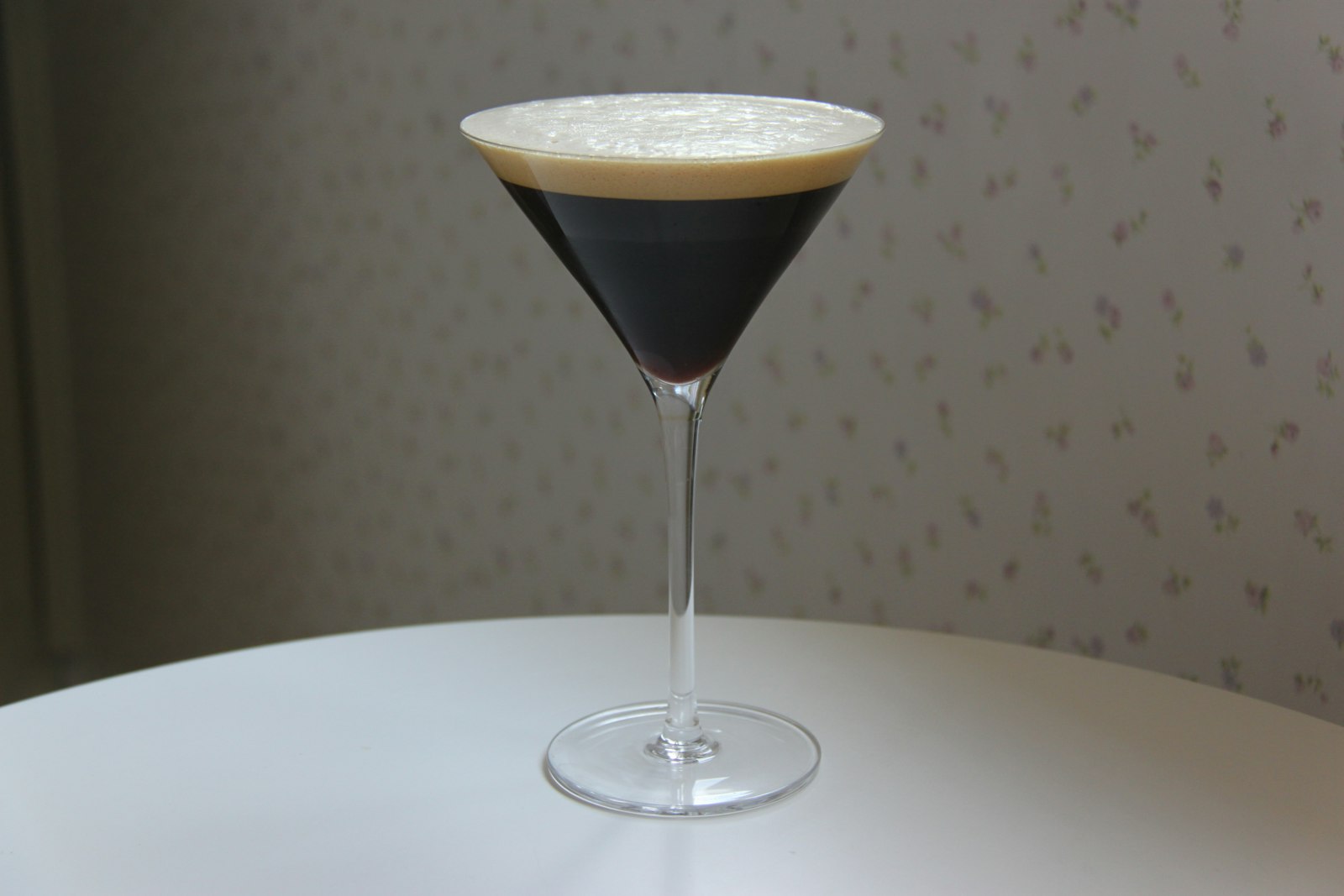
The IBA recipe: 50 ml vodka, 30 ml Kahlúa, 10 ml sugar syrup and a strong espresso. Shake everything hard with ice and strain into a chilled cocktail glass. Garnish with three coffee beans. Bradsell’s own later version is drier: 50 ml vodka, 10 ml Kahlúa, 5 ml Tia Maria, 5 ml cane sugar syrup and 25 ml double-strength espresso.
The foam forms as you shake: the IBA specifies ‘shake vigorously’, with ice. In practice, 15 to 20 seconds with plenty of ice is usual, and a freshly pulled espresso is a must. How to pull a clean shot is explained in dialling in espresso.
Irish coffee: from Foynes to San Francisco
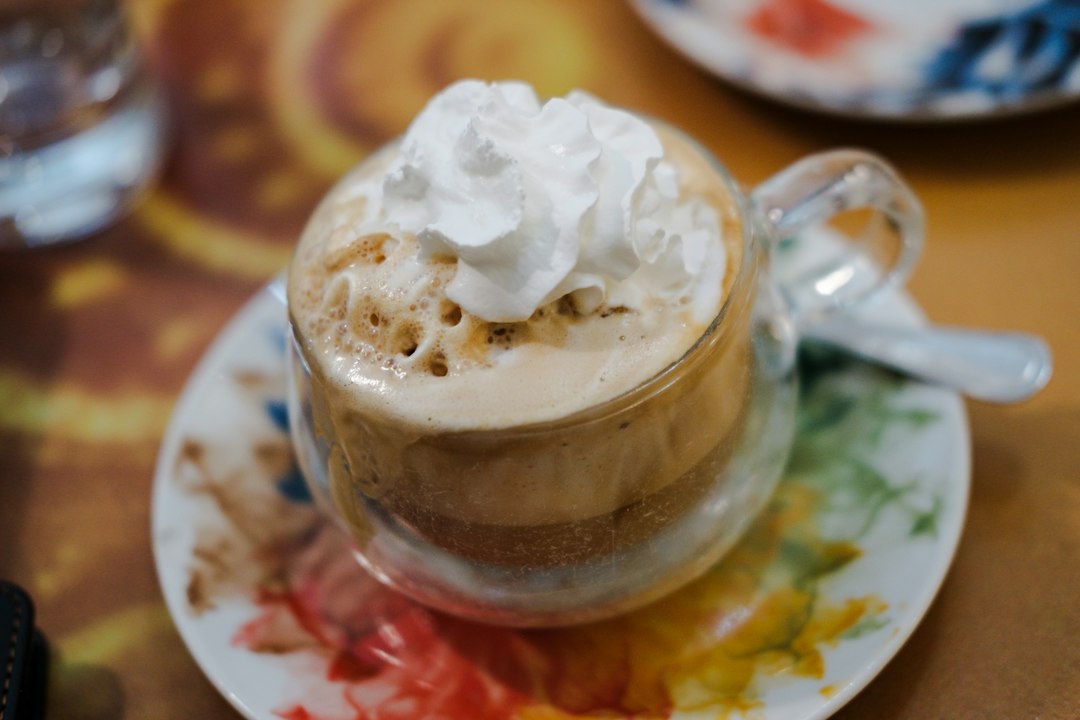
Irish coffee comes from the chef Joe Sheridan. According to the Foynes Flying Boat Museum, he became head chef at the Foynes flying boat port in 1943. There, on Ireland’s west coast, he invented the drink. When Foynes closed in October 1945, the staff moved to what is now Shannon Airport. There, in 1951, the US travel writer Stan Delaplane was served an Irish coffee.
Back in San Francisco, he tried to recreate the drink with Jack Koeppler, the owner of the Buena Vista. According to the bar, this began on 10 November 1952. The problem was that the cream would not float on top. The solution was cream aged for 48 hours and whipped to exactly the right point. Koeppler brought Sheridan to San Francisco in 1952. Today the Buena Vista says it serves up to 2,000 Irish coffees a day.
The IBA recipe: warm the glass and pour in 120 ml hot black coffee. Add 50 ml Irish whiskey and a teaspoon of sugar, and stir until the sugar dissolves. Then slowly pour 50 ml chilled cream over the back of a spoon onto the surface. Sugar syrup works instead of sugar.
Carajillo: courage in your coffee, from Spain to Mexico
Where the carajillo comes from is unclear. One popular theory traces the name back to ‘coraje’, Spanish for courage. Spanish soldiers in Cuba are said to have been given coffee with rum or brandy as a small ‘corajillo’. Catalonia has its own explanations, and the Spanish Wikipedia considers none of them established.
In Spain the hot coffee is usually laced with brandy, in Cuba with rum. In Mexico the carajillo made with Licor 43, a Spanish vanilla and citrus liqueur, has become a trendy drink. The maker calls it its most popular drink in Mexico. Its recipe: put 50 ml Licor 43 and a hot espresso in the shaker with ice, shake briefly and strain over fresh ice. Without a shaker, simply stir both together in the glass.
| Drink | Alcohol | Coffee | Other | Technique |
|---|---|---|---|---|
| Espresso martini (IBA) | 50 ml vodka, 30 ml Kahlúa | 1 strong espresso | 10 ml sugar syrup | shake on ice, strain |
| Irish coffee (IBA) | 50 ml Irish whiskey | 120 ml hot coffee | 1 tsp sugar, 50 ml cold cream | stir, float the cream |
| Carajillo 43 (maker) | 50 ml Licor 43 | 1 hot espresso | ice | shake, strain over ice |
| Rüdesheimer Kaffee (traditional) | 4 cl Asbach Uralt | 125 ml hot coffee | 3 sugar cubes, vanilla cream, grated chocolate | flambé, top up |
Rüdesheimer Kaffee: a flame instead of a shaker
Germany’s answer to Irish coffee comes from the Rheingau wine region. The TV chef Hans Karl Adam invented Rüdesheimer Kaffee in 1957 for the Asbach brandy distillery in Rüdesheim am Rhein. It is served in its own cup, the Rüdesheimer coffee cup.
In the traditional recipe, as given on Wikipedia, 4 cl Asbach Uralt and 3 sugar cubes go into the cup and are flambéed. Then you pour on around 125 ml hot, strong coffee. It is topped with cream sweetened with vanilla sugar and finished with grated chocolate. Asbach does not publish a current original recipe with quantities on its website.
When flambéing, only use a long stick lighter, keep anything flammable away and never top up the brandy from the bottle. Once the flame has gone out, stir so the sugar dissolves.
Alcohol-free and sensible: variations and an honest word
The following alcohol-free versions are our own suggestions, not official recipes. For an alcohol-free ‘espresso martini’, shake a fresh espresso with 50 ml cold brew, 15 ml sugar syrup and plenty of ice. Make the ‘Irish coffee’ with brown sugar and a hint of vanilla, and float the cream in the same way. For the carajillo, a vanilla caramel syrup replaces the Licor 43.
On drinking itself: since 2024 the Deutsche Gesellschaft für Ernährung (German Nutrition Society) has advised that it is best not to drink alcohol at all. The German portal ‘Kenn dein Limit’ (Know your limit) recommends drinking as little as possible, if at all, and not every day. An espresso martini contains around 80 ml of spirits and liqueur, so it is not a small drink. All three classics also contain caffeine, which counts in the evening, as our overview of caffeine content shows.
How to get your coffee cocktails right:
- For the espresso martini, pull the espresso fresh, let it cool briefly and shake it hard with plenty of ice for 15 to 20 seconds.
- For the Irish coffee, whip the cream only until half-stiff and let it run in over the back of a spoon. Don’t stir: you drink through the cream.
- Use a jigger with 25 and 50 ml measures so you can measure the IBA quantities precisely.
- Make the carajillo the Mexican way: shake hot espresso straight onto Licor 43 and ice.
- Alcohol-free versions work with cold brew, syrup and ice in the shaker, and the foam forms in the same way.
Shaker, jigger, glass: the tools for your home bar
A small basic kit is enough for all three drinks. You need a shaker for the espresso martini and carajillo, a measure for the quantities and heatproof glasses for the hot versions. The classic Irish coffee glass with stem and handle is nice but not essential. The glass should be heatproof and clear, so you can see the layer of cream.
Our recommendations
Cocktail coupe · around €32
Spiegelau Lifestyle Coupette, set of 4 (item 4450178)
Pros: A crystal glass coupe for the espresso martini, which the IBA serves in a chilled cocktail glass. Dishwasher-safe according to the manufacturer.
Cons: Only available as a set of 4, which works out at around €8 per glass. The manufacturer’s page does not state the capacity.
Decaf espresso · around €15 to €17
Mount Hagen organic espresso, decaffeinated, whole bean, 500 g
Pros: For an espresso martini late in the evening: according to the retailer’s description, a balanced, aromatic espresso without caffeine.
Cons: The decaffeination method is not stated in the product description. Some residual caffeine remains even in decaf.
Our selection is editorial, there are no paid placements. Links marked * are affiliate links to Amazon Germany (amazon.de): if you buy through them, we receive a small commission at no extra cost to you. We have not tested the products ourselves; pros and cons are based on manufacturer information and retailer descriptions. Prices are guide prices from German shops as of October 2026, and prices and availability on Amazon may differ.
Espresso martini, Irish coffee and carajillo show how much history fits into a glass: a London bartender, an Irish airport chef and Spanish soldiers. With fresh coffee, exact quantities and a little technique, they work at home too. And if you mix without alcohol, the coffee stays the star.
All product details are based on manufacturer and retailer information; we have not tested the products ourselves.
Last updated: 24 October 2026.
Sources
- International Bartenders Association: Espresso Martini, accessed 23 October 2026.
- International Bartenders Association: Irish Coffee, accessed 23 October 2026.
- Difford’s Guide (Simon Difford): Vodka Espresso / Espresso Martini, accessed 23 October 2026.
- Wikipedia: Espresso martini, accessed 23 October 2026.
- Foynes Flying Boat & Maritime Museum: More about Chef Joe Sheridan, accessed 23 October 2026.
- The Buena Vista: Irish Coffee Story, accessed 23 October 2026.
- Wikipedia: Carajillo (in Spanish), accessed 23 October 2026.
- Licor 43: Carajillo 43, accessed 23 October 2026.
- Wikipedia: Rüdesheimer Kaffee (in German), accessed 23 October 2026.
- Wikipedia: Rüdesheimer Kaffee (quantities), accessed 23 October 2026.
- Deutsche Gesellschaft für Ernährung: Am besten null Promille (in German), 14 August 2024.
- Kenn dein Limit: Startseite (in German), accessed 23 October 2026.
- barstuff.de: Cocktail Shaker (Preisrecherche) (in German, price research), accessed 23 October 2026.
- barstuff.de: Barmaß / Jigger (Preisrecherche) (in German, price research), accessed 23 October 2026.
- barstuff.de: Kaffeegläser (Preisrecherche) (in German, price research), accessed 23 October 2026.
- Urban Bar: Koriko Weighted Shaking Tins, price accessed 23 October 2026.
- Urban Bar: Leopold Jigger 30/60 ml, price accessed 23 October 2026.
- Riedel: Spiegelau Lifestyle Coupette Glas (4450178) (in German), price accessed 24 October 2026.
- Violey: Mount Hagen Bio Espresso, ganze Bohne, entkoffeiniert, 500 g, price accessed 24 October 2026.