Light-roasted coffee tastes fruitier and more acidic, dark-roasted more bitter and chocolatey, while the caffeine stays almost the same.Roast levels compared, acidity and bitterness, caffeine per gram and matching brew methods.
Coffee only gets its colour, aroma and roast flavours in the heat. The longer and hotter the bean roasts, the darker it becomes. Along the way acidity breaks down and bitterness builds.
Which level is better comes down to your taste. The differences, though, are easy to describe. The figures below come from tasting studies, lab analyses and experts from the specialty coffee scene.
Our selection is editorial, there are no paid placements. Links marked * are affiliate links to Amazon Germany (amazon.de): if you buy through them, we receive a small commission at no extra cost to you. We have not tested the products ourselves; pros and cons are based on manufacturer information and retailer descriptions. Prices are guide prices from German shops as of October 2026, and prices and availability on Amazon may differ.
Roast levels at a glance: from cinnamon brown to black
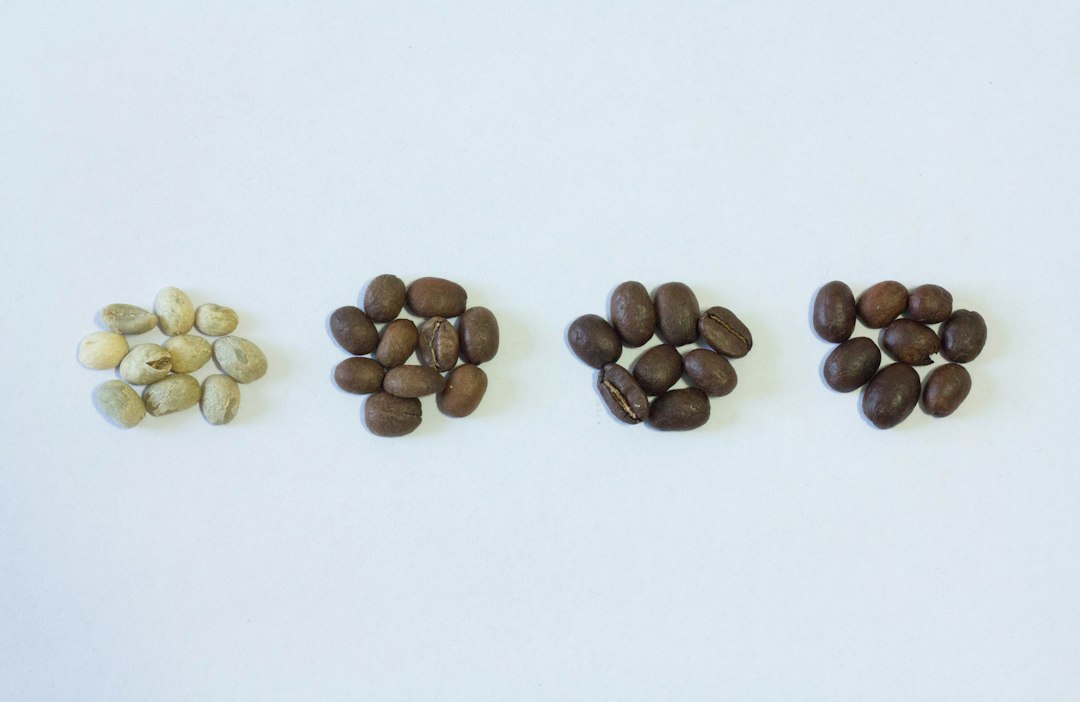
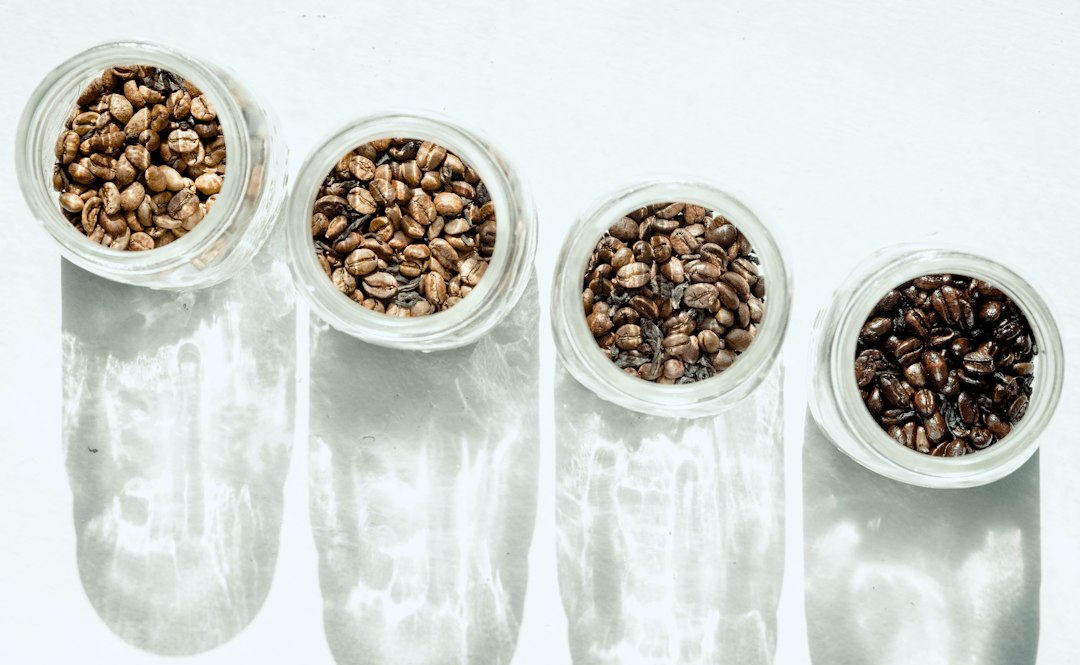
Roast level first of all means the colour of the bean. Many roasteries measure it with an optical device, and the Agtron scale is widespread. A higher value means a lighter roast. We found no uniform classification that applies to all roasteries.
The US magazine Coffee Review describes seven levels. The Agtron values there are averaged. We have combined the four outermost levels in the table.
| Level | Agtron | Appearance | Flavour |
|---|---|---|---|
| light | over 80 | light brown to cinnamon, no oil | light body, sometimes delicate and fresh, sometimes flat |
| medium-light | 70 to 80 | moderately light brown, dry | bright, sweet acidity, origin comes through well |
| medium | 60 to 70 | medium brown, mostly dry | balanced acidity, more body, origin still recognisable |
| medium-dark | 50 to 60 | rich brown, first drops of oil | fruit turns chocolatey, little acidity, slightly bitter |
| dark to very dark | 25 to 50 | deep brown to black, oily | bittersweet to bitter, roast notes, thinner body |
A look at the beans helps you place them. Light and medium roasts are dry. From medium-dark onwards drops of oil appear, and dark beans have an oily sheen.
What happens during roasting: from first to second crack
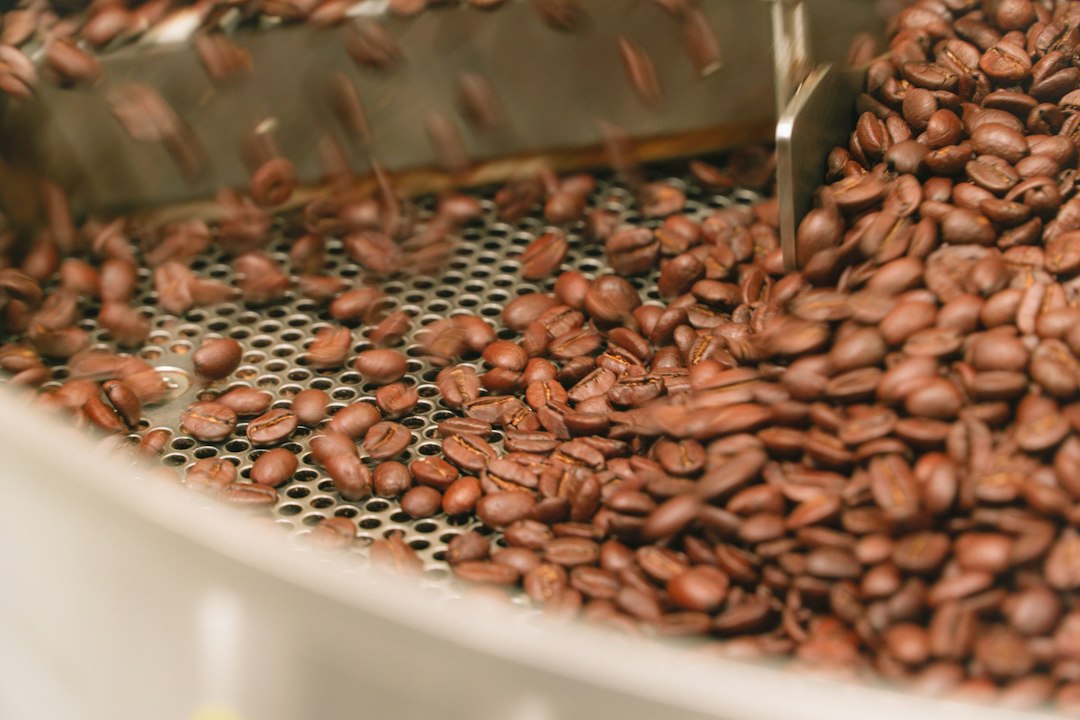
In the drum, the bean first loses water. Later, pressure from steam and carbon dioxide builds up inside it. At some point the bean bursts open with an audible crack. Roasters call this first crack.
According to the US roastery Sweet Maria’s, it happens at 390 to 410 °F in most roasting machines. That is around 199 to 210°C (our conversion). Light roasts usually end not long after. Second crack, a faster crackling, follows at around 227 to 232°C.
From here the bean darkens quickly and oil rises to the surface. So only around 20°C lie between first and second crack. A Japanese study found a marked breakdown of important compounds from about 225°C.
Dark beans also contain more carbon dioxide. The Zurich University of Applied Sciences (ZHAW) measured degassing at 35°C. At the same roasting speed, a dark roast released 10.0 mg of gas per gram, a light one 2.5 mg. What this means for storage is explained in the guide to storing coffee to keep it fresh.
Acidity, sweetness, bitterness: how the flavour shifts
Acidity changes most clearly. A research team analysed eight tasting studies with washed arabica. Roast colours ranged from Agtron 46 to 99. The darker the roast, the more bitter the coffee tasted. Acidity, sweetness and fruitiness decreased.
The researchers also looked at the time after first crack, the development time. It worked in the same direction, but more weakly than colour. Longer development brought more notes of toasted bread. Neither colour nor time changed the body noticeably.
One reason for the loss of acidity is the chlorogenic acids. They shape acidity and the slightly furry feeling on the tongue. During roasting they break down. A 2026 review gives losses of more than 80 to 90 % for dark roasts.
As the acidity goes, so does the signature of the origin. In light and medium roasts you can still clearly taste the growing region and processing. In very dark roasts the roast notes cover this almost completely. Both ends have their faults. According to Coffee Review, roasts that are too light often taste of bread, wood or grain. Roasts that are too dark taste burnt and thin.
How to taste the difference yourself:
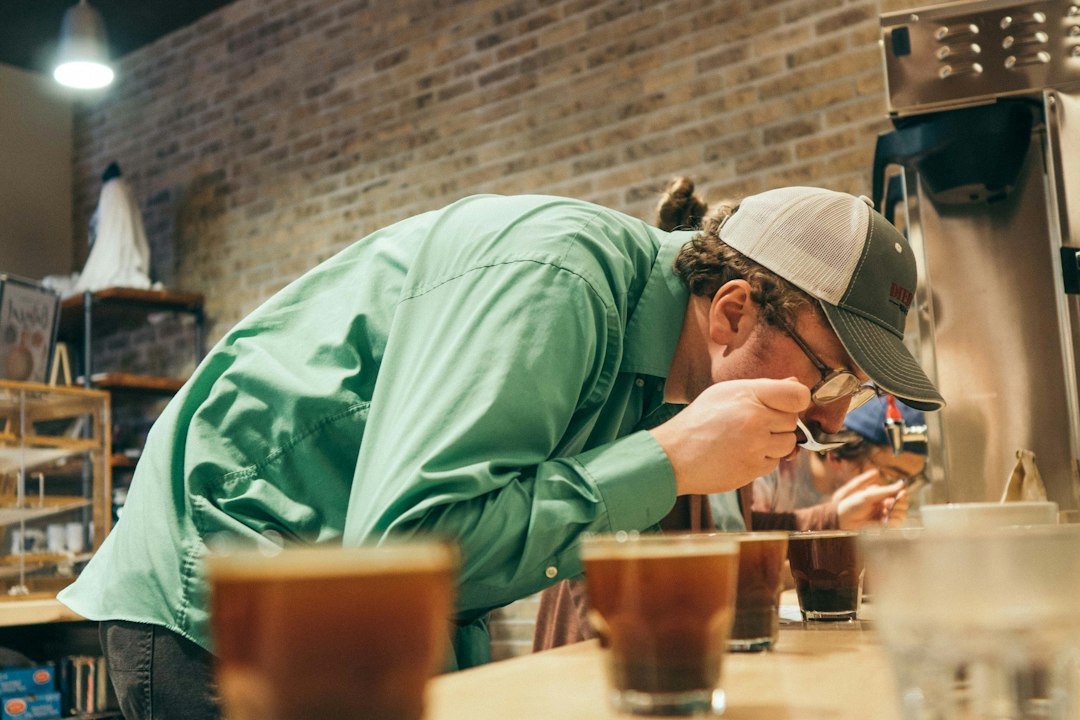
- Buy two coffees from the same roastery, one light and one dark roast.
- Weigh out the same amount of each and grind them equally fine.
- Brew both the same way and taste them side by side.
- Let the cups cool a little, as the sweetness comes through better when slightly cooler.
- Note where acidity, sweetness and bitterness stand out.
Caffeine: dark roast does not mean stronger
Many people think of dark coffee as stronger. What they usually mean is the bold flavour. Roasting changes little about the caffeine. A study from Japan examined strong roasts at up to 250°C. Chlorogenic acids and the bitter compound trigonelline broke down, but the caffeine did not.
Even so, a cup of dark roast can contain a little more caffeine. That comes down to mass. Dark beans are lighter and less dense than light ones. Per gram they therefore contain slightly more caffeine, while per bean it stays the same.
A measurement by the chemist Juliet Han shows the order of magnitude. Her darkest roast delivered around 32 % more caffeine per gram than the lightest. Measured by volume, in other words with a spoon, it was only around 9 %. She brewed by boiling. It is a single lab series, so the figures only show the direction.
| Measured | per bean | per gram | per measuring spoon |
|---|---|---|---|
| dark instead of light roast | about the same | around 32 % more | around 9 % more |
In everyday life, the amount of ground coffee, the type of bean and the brew method matter far more. Guide values per cup are in the comparison of caffeine in espresso, filter coffee and cold brew.
Which roast suits which brew method
There is no fixed rule. According to Coffee Review, though, coffees for pour-over and filter coffee machines are often roasted lighter than for espresso or French press (cafetière). In pour-over, the fruit and acidity of light roasts come through clearly.
You adjust the water temperature to the roast. The Swiss roastery Kaffeemacher tried this out for espresso. Dark roasts extract more easily. Water that is too hot quickly brings out ashy notes in them.
| Roast | Espresso temperature according to Kaffeemacher |
|---|---|
| dark | 91 to 92°C |
| medium-light | 93 to 94°C |
| light | 94 to 95°C, very light roasts from 94°C |
The roastery itself names exceptions, and its tests were small. One medium-light coffee lost its balance at 96°C. So too hot is not good for light roasts either.
Our recommendations
Coffee scales · around €43
Timemore Black Mirror Basic 2
Pros: A spoonful of dark beans weighs less than a spoonful of light ones. With scales you dose both the same, in 0.1 g steps. The timer and flow rate display help with pour-over, and according to the retailer the scales also suit espresso.
Cons: According to the retailer, do not use them while charging and do not use fast chargers. At 380 g and 15.2 × 13 cm, these are not pocket scales.
Hand grinder · around €205 to €225
Comandante C40 MK4 Nitro Blade, Alpine Lagoon
Pros: According to the retailer it suits every brew method from espresso to French press, with 20 to 25 clicks as a starting point for pour-over. This lets you set separate grind sizes for light and dark beans.
Cons: For fine espresso steps, the retailer recommends an add-on sold separately. Not dishwasher-safe.
Kettle · around €40 to €55
Hario V60 Buono Drip Kettle 1,2 l (VKB-120HSV)
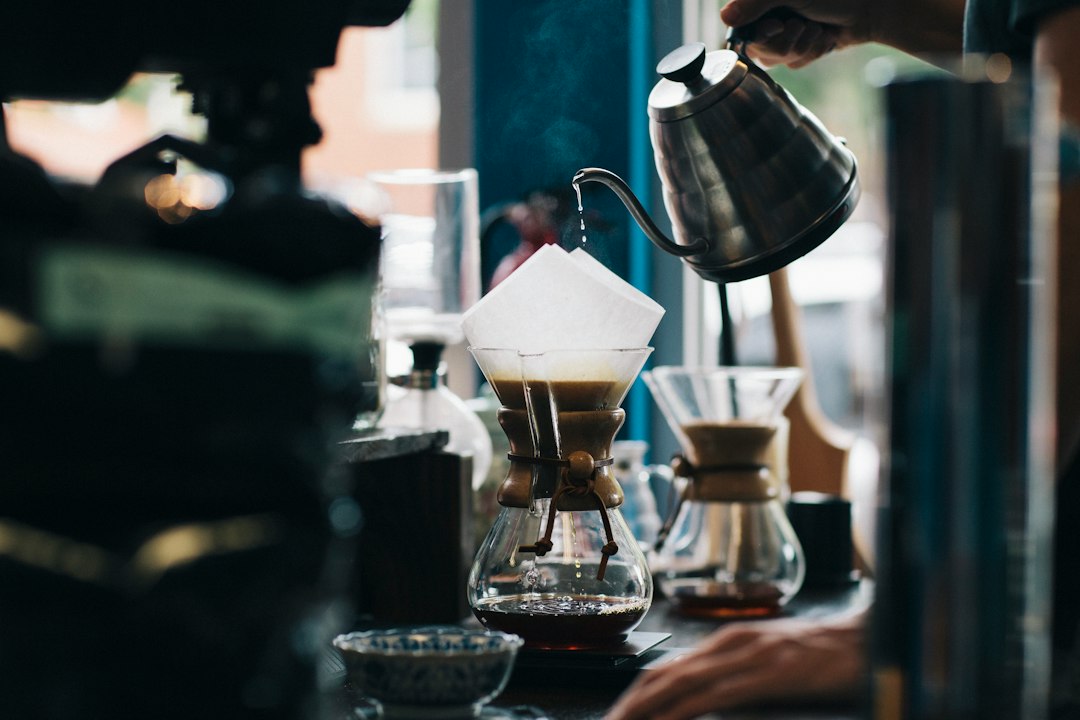
Pros: The narrow gooseneck gives an easily controlled stream of water for pour-over. The kettle works on all common hobs, including induction.
Cons: No thermometer and no temperature control, so you cannot see whether the water is at 96°C or below. The handle and lid knob are plastic.
Our selection is editorial, there are no paid placements. Links marked * are affiliate links to Amazon Germany (amazon.de): if you buy through them, we receive a small commission at no extra cost to you. We have not tested the products ourselves; pros and cons are based on manufacturer information and retailer descriptions. Prices are guide prices from German shops as of October 2026, and prices and availability on Amazon may differ.
Light as a sign of quality: what is true about it
In the specialty coffee scene, light roasts are often seen as a sign of good green coffee. In Norway, light roasting has a long tradition. The first World Barista Champion, Robert Thoresen, came from there in 2000. Tim Wendelboe won the title in 2004.
Wendelboe says a light roast shows more aromas. He drinks it black and slightly cooled so the sweetness comes through. Good coffee, he says, does not need a heavy roast to cover up defects.
The reverse follows from this too. A light roast reveals the defects of old or woody beans. A dark roast mutes the qualities of the green coffee, the good ones and the bad. According to Coffee Review, no roast level is better in itself.
For buying, a simple rule of thumb is enough. If you like it fruity and clean, choose a light roast for pour-over. If you like it bold and chocolatey, choose a medium to dark roast for espresso or French press. Weighing instead of spooning makes the comparison fair.
All product details are based on manufacturer and retailer information; we have not tested the products ourselves.
Last updated: 24 October 2026.
Sources
- Coffee Review: Roast Definitions, last updated 14 June 2026, accessed 24 October 2026.
- Sweet Maria’s Coffee Library: First Crack (glossary), accessed 24 October 2026.
- Münchow, M.; Alstrup, J.; Steen, I.; Giacalone, D., Beverages 6(2), 29: Roasting Conditions and Coffee Flavor: A Multi-Study Empirical Investigation, 8 May 2020.
- Honda, M.; Takezaki, D.; Tanaka, M.; Fukaya, M.; Goto, M., Journal of Oleo Science 71(10): Effect of Roasting Degree on Major Coffee Compounds, 2022.
- Nurhaliza, N.; Herawati, D.; Andarwulan, N., Trends in Sciences 23(9), 13444: The Dynamic Changes of Chlorogenic Acids and Alkaloids in Coffee Processing and Brewing: A Systematic Literature Review, 15 April 2026.
- Smrke, S. et al. (ZHAW), Journal of Agricultural and Food Chemistry: Time-resolved gravimetric method to assess degassing of roasted coffee, 2018.
- Nick Cho, Sprudge (on Juliet Han, Correlation Between Caffeine and Roast Levels Using HPLC): Does Dark Roast Coffee Really Have More Caffeine?, 5 April 2019.
- Kaffeemacher, Philipp Schallberger: Espresso-Temperatur (in German), 9 May 2020.
- CNN Travel: Norway’s coffee culture, undated, accessed 24 October 2026.
- Coffee Circle: Timemore Black Mirror Basic 2 (€42.70), accessed 24 October 2026.
- Kaffeemacher: Comandante C40 MK4 Nitro Blade Handmühle, Alpine Lagoon (222,00 €), accessed 24 October 2026.
- Geizhals, price comparison (including Aromatico, Coffee Circle, Moba Coffee): Comandante C40 MK4 Nitro Blade alpine lagoon (204,85 bis 225,00 €) (in German), prices as of 24 October 2026, accessed 24 October 2026.
- Geizhals, price comparison (including alza.de, Coffee Circle, FROG.coffee, Berliner Kaffeerösterei): Hario Buono Wasserkessel 1,2 l, VKB-120HSV (38,74 bis 54,90 €) (in German), prices as of 24 October 2026, accessed 24 October 2026.
- Kaffeezentrale: Hario Wasserkessel Buono 1,2 l (42,90 €) (in German), accessed 24 October 2026.
- Broowise: Hario Wasserkessel aus Edelstahl V60 Buono Drip Kettle 1,2 l, VKB-120HSV (product data) (in German), accessed 24 October 2026.