To get started you need green coffee, a heavy pan or hot air popcorn maker, a metal sieve for cooling and good ventilation.Three devices compared, green coffee and roast loss, a pan guide and the roast stages up to resting.
In small devices a roast rarely takes longer than a quarter of an hour. In that time the hard, grassy-smelling bean turns into brown, fragrant coffee. In the end you decide for yourself how light or dark your coffee will be.
You don’t need an expensive device. Attention, fresh air and a notebook matter more.
Pan, popcorn maker, home roaster: three ways to get started
In a pan the beans sit on hot metal, so you have to stir constantly. In a popcorn maker hot air swirls the beans around, which roasts them more evenly. An electric home roaster turns the beans in a heated drum or blows hot air through them, and controls time and temperature.
| Device | Amount per roast | Duration | Strength | Weakness |
|---|---|---|---|---|
| heavy pan or wok | around 255 g | first crack after 5 to 7 min | cheap, you learn the stages | easily uneven, scorched spots |
| popcorn pot with crank for the hob | around 225 to 255 g | 8 to 15 min | larger amounts, cracks easy to hear | lots of smoke, thermometer needed |
| hot air popcorn maker | ⅓ to ½ US cup, around 80 to 120 ml | 6 to 15 min | even, little effort | small amounts, hardly any control |
| small hot air home roaster | 100 g, at most around 140 g | usually 5 to 7 min | timer, cooling, chaff collector | more expensive, small amounts |
The figures come from a US green coffee retailer, and we converted them to grams and millilitres. Mains voltage, room temperature and your hob shift the times. For the popcorn maker there is one design rule. The hot air must flow into the chamber from the side through slots. Models with a mesh base blow the beans out towards the end, because they get lighter as they roast. The retailer recommends machines with 1,200 to 1,500 watts. Roasting coffee voids the warranty.
Depending on size, electric home roasters handle 50 g to a few hundred grams per batch. They are the most expensive option, but they take care of the timer, cooling and catching the chaff for you. Read the manual before buying, as it states the maximum load, running time and breaks.
Buying green coffee: quantity, price and storage
Specialist retailers and some roasteries also sell green, unroasted beans in small bags. A German roastery offers green coffee for home roasters in 2 kg bags for €33.90, which is €16.95 per kilo (as of 24 October 2026). Origin and processing strongly shape the flavour. How washed, natural and honey coffees taste is explained in washed, natural and honey processing.
During roasting the beans lose 14 to 20 % of their weight, more for dark roasts. Most of it is water escaping as steam. Excluding water, it is usually 4 to 6 %, and up to 12 % for very dark roasts, according to a course lesson for baristas. So 1 kg of green coffee gives around 800 to 860 g of roasted coffee (our calculation).
Green coffee keeps much longer than roasted coffee. Stored cool and dark in glass or an airtight bag, it stays stable for about 6 months, according to the US retailer. After 9 to 12 months it often tastes aged, usually papery and at worst like wet cardboard.
For tax purposes, roasting at home in Germany is straightforward. According to German customs, roasting coffee in a private household for your own consumption is tax-free and not officially monitored. This does not apply to roasted coffee you buy, which is subject to coffee tax.
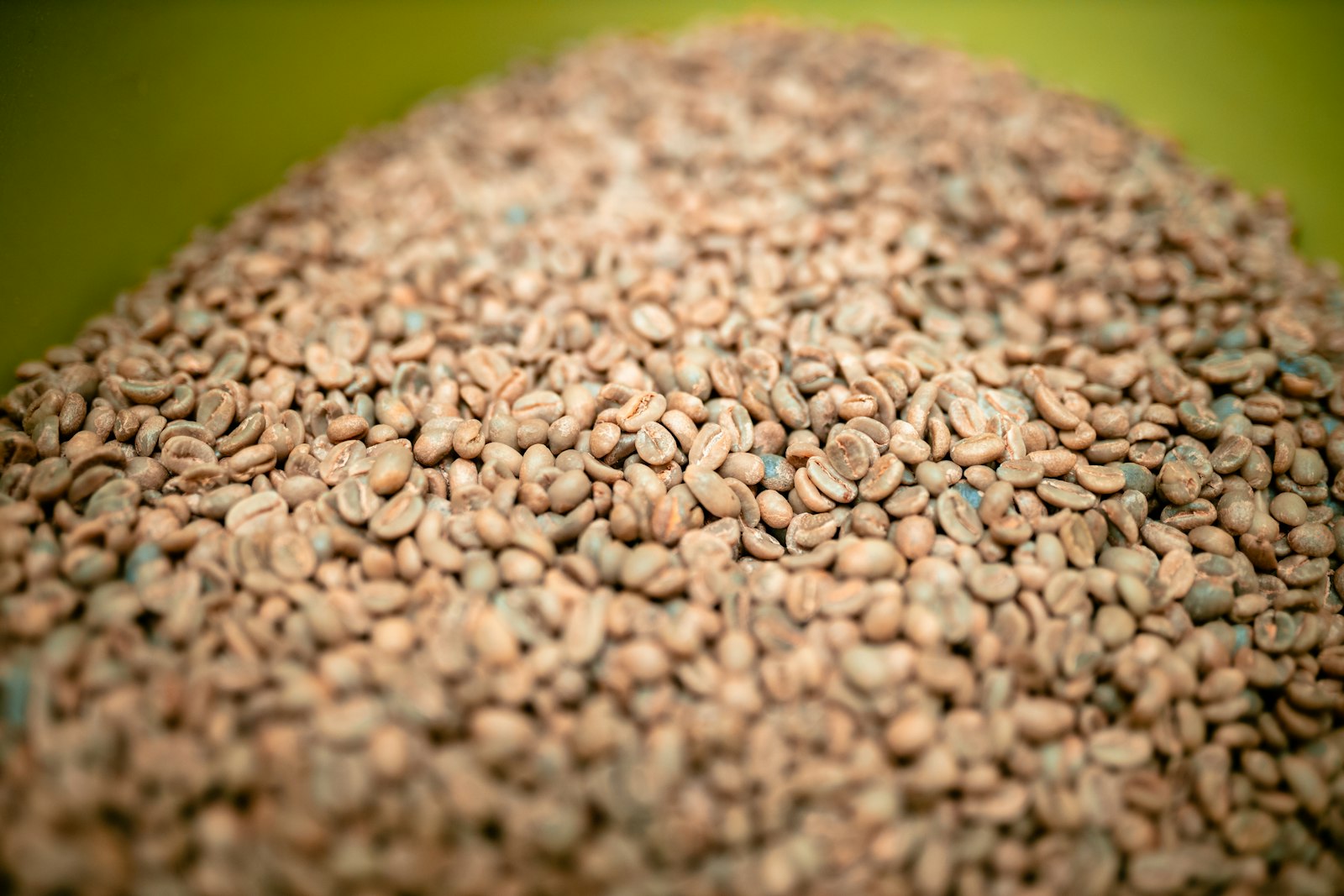
Step by step: your first roast in a pan
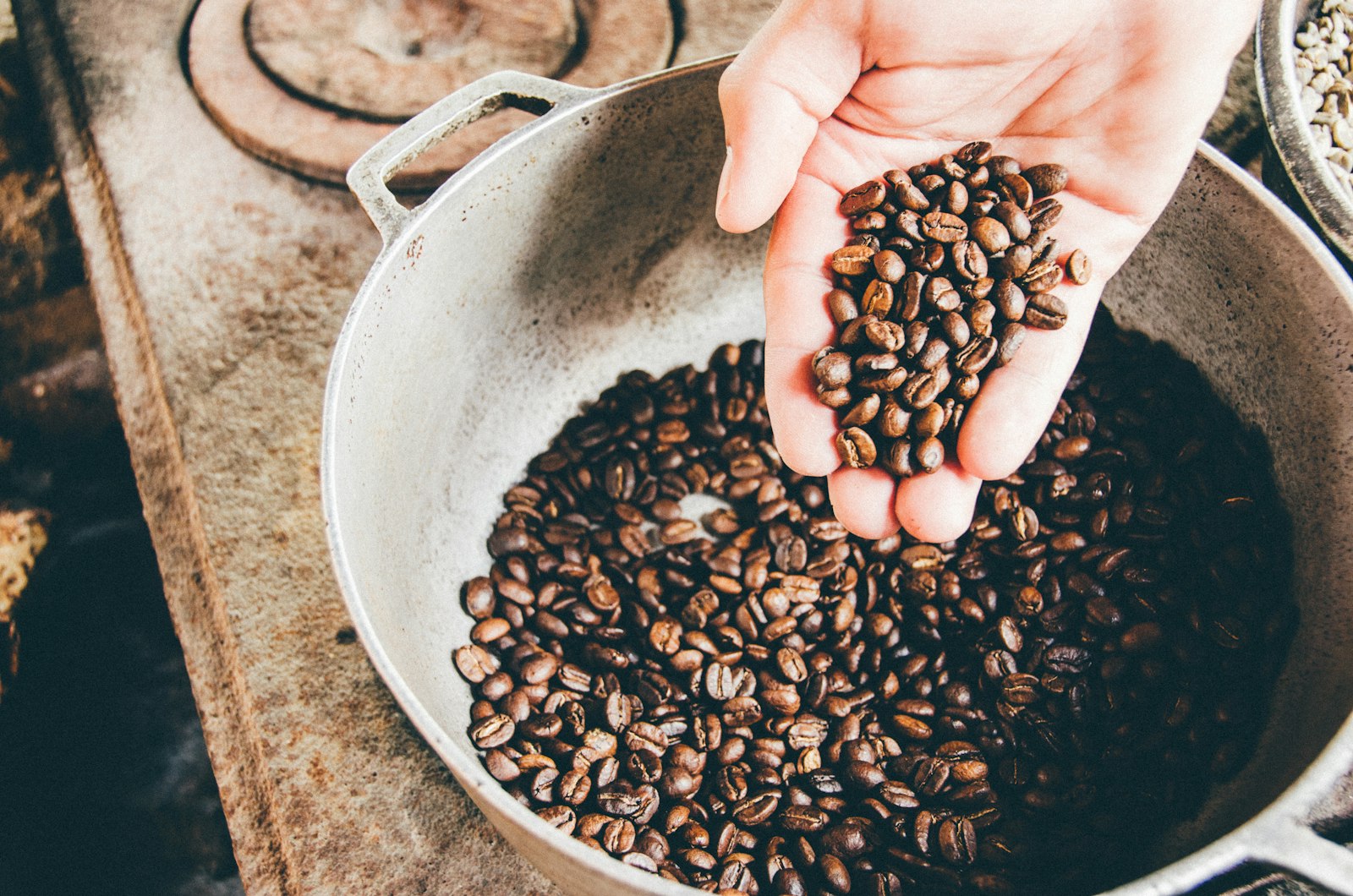
A pan is the cheapest way in. A large, heavy cast iron pan or a carbon steel wok is suitable. Thin aluminium and stainless steel without a thick base distribute heat poorly. The guide follows the US retailer, and we converted the temperatures from Fahrenheit.
- Prepare: Have a metal sieve, oven gloves and a second container ready. Switch on the cooker hood and open the window.
- Preheat: Preheat the pan with a lid and an oven thermometer inside to around 205°C. Then keep it at about 230°C.
- Add the beans: Put in around 255 g of green coffee. From now on stir without a break or shake the pan, otherwise the beans will burn.
- First crack: After about 5 to 7 minutes you hear a crack like popcorn, and smoke rises. Now turn the heat down a little.
- Check: From the first crack, check the colour about every minute. For your first roasts, stop shortly after the first crack ends.
- Cool: Tip the beans into the sieve slightly lighter than you want them. Toss them until they are only hand-warm. Loose chaff falls off as you do.
A pan roast is never completely even, and some beans will be darker or scorched.
With a popcorn maker you follow a similar approach. Fill in only as many beans as will still just turn. Plug the machine straight into the wall socket, as extension leads and power strips lengthen the roast. Here the first crack often comes after 2 to 5 minutes.
Recognising roast stages: colour, smell and two cracks
Without measuring equipment, you go by colour, smell and sound. The temperatures in the table are the US retailer’s guide values, converted by us. An oven thermometer in the pan measures the air and not the bean, so rely mainly on your senses.
| Stage | What you see and hear | Guide value |
|---|---|---|
| Yellowing | beans turn pale yellow, smell grassy like hay | first few minutes |
| Steam | water escapes, the steam starts to smell fragrant | before the first crack |
| First crack | audible cracking like popcorn, chaff comes loose | from around 199°C |
| Light to medium roast | beans turn browner and expand | after the first crack |
| Second crack | quieter, rapid crackling, oil appears, more smoke | around 227 to 232°C |
| Too dark | acrid smoke, charred beans, thin flavour | well after that |
Most of the retailer’s recommendations end shortly after the first crack. If the roast runs into the second crack, roast flavours mask the origin and the risk of fire rises. What happens inside the bean is explained in light, medium and dark roasts.
Professionals measure the time between the first crack and the end of the roast. The roasting consultant Scott Rao prefers a share of 20 to 25 % of the total time for most light to medium roasts. For him this is only a guide. A Swiss roastery considers 4 minutes total time too short for small devices and 20 minutes too long.
How to get safely through your first roasts:
- Have the sieve, gloves and a second container ready before you add the beans.
- End your first roasts shortly after the first crack, which leaves a margin before the second.
- Tip the beans out slightly lighter than you want, as they keep roasting in their own heat.
- Change only one variable per roast: amount, heat or time.
- Write down the green weight, time to first crack, end time and roasted weight.
Smoke and chaff: roasting safely at home
The biggest risk is inattention. The US retailer warns that only moments can separate a dark roast from a fire. So never leave a pan, popcorn maker or home roaster running unattended. The hood, chaff collector and pan get very hot.
Chaff is the second risk. The thin, dry silverskin comes loose as soon as the beans turn light brown. If it lies on the worktop, the air vents of a popcorn maker suck it in, where it can catch fire. Empty the chaff collector after every roast, wipe the surface and keep the vents clear.
The manual of a small hot air home roaster calls for an earthed socket without an extension lead and distance from hob rings. It also asks for a 10-minute break between two roasts. You should not interrupt the 3-minute cooling phase, and the device is for indoor use only.
Roasting produces smoke and gases. The US occupational safety institute NIOSH writes that roasted coffee gives off carbon monoxide, carbon dioxide and many volatile compounds, including diacetyl. It took its measurements in roasteries and cafés, and there is no such data for private kitchens. Roast under a cooker hood with the window open. You can also take a pan or popcorn maker out onto a balcony or terrace. With a home roaster, follow its manual.
Cool, rest, taste
Freshly roasted coffee keeps giving off carbon dioxide for days. Sources differ widely on how long it should rest.
| Source | Recommendation |
|---|---|
| US retailer, pan and popcorn pot | leave open for 12 h, then seal, ideally after around 24 h |
| US retailer, popcorn maker | wait about a day, then grind |
| Swiss roastery, filter | at least 7 days |
| Swiss roastery, espresso | at least 14 days |
| US retailer, aroma | declines from about 10 days after roasting |
For filter coffee from the pan, you can taste after one day and test the rest again later. Store the beans airtight, for example in jars or bags with a valve. How to keep beans fresh is explained in storing coffee fresh.
You get better by comparing. The Swiss roastery suggests ending the same coffee once each at 8, 10 and 12 minutes. Then taste all three side by side, just as with cupping at home.
Start with a pan or a popcorn maker, 1 kg of green coffee and an open window. Roast small batches, stop early and write everything down. After a few rounds you will know whether a home roaster of your own is worth the money.
Last updated: 24 October 2026.
Sources
- Sweet Maria’s Coffee Library: Stovetop Coffee Roasting: Skillet/Wok/Pan Roast Methods vs. Stovetop Popper Method, 19 March 2020, updated 25 October 2023.
- Sweet Maria’s Coffee Library: Stovetop Coffee Roasting in a Cast Iron Pan (or Wok), 10 June 2020, updated 8 November 2022.
- Sweet Maria’s: Hot Air Popper Tip Sheet, undated, accessed 24 October 2026.
- Sweet Maria’s Coffee Library: Recommended Air Popcorn Popper Coffee Roaster Design, 25 September 2016, updated 11 March 2021.
- Sweet Maria’s: Popper Coffee Roaster User Guide, December 2017.
- Sweet Maria’s Coffee Library: General Roast Observations, undated, accessed 24 October 2026.
- Sweet Maria’s Coffee Library: Green Coffee Storage, 3 August 2019, updated 9 March 2021.
- Philipp Schallberger, Kaffeemacher: Kaffeerösten zu Hause (in German), 28 March 2020.
- Kaffeemacher: Rohkaffee für Heimröster:innen (in German), accessed 24 October 2026.
- Scott Rao: Development Time Ratio, 25 August 2016.
- Barista Hustle: Mass Loss During Roasting, undated, accessed 24 October 2026.
- LeBouf, R. F. et al. (NIOSH), Frontiers in Public Health 8: Exposures and Emissions in Coffee Roasting Facilities and Cafés: Diacetyl, 2,3-Pentanedione, and Other Volatile Organic Compounds, 18 September 2020.
- Generalzolldirektion (Germany’s Central Customs Authority): Kaffee: Verbrauchsteuern im Haushalt (in German), undated, accessed 24 October 2026.