For filter coffee, a good hand grinder with steel conical burrs is enough. For espresso, it also needs very fine clicks and an adjustment you can use without taking it apart.Espresso versus filter, burrs and adjustment, care and three hand grinders compared.
A hand grinder works on the same principle as an electric grinder. Almost always, a steel cone turns inside a fixed ring. But the crank turns slowly, and your hand supplies the power. That is why bearings, adjustment and ergonomics shape daily use more than with a motorised machine.
With a good grinder, you crank for around half a minute for one cup of filter coffee. For a double espresso, it takes 40 to 70 seconds depending on the model. The ranking below adds to our guide Electric coffee grinder: flat or conical burrs.
Espresso or filter: what the grinder has to do for each
For espresso, the machine forces water through a tightly packed bed of coffee in 25 to 30 seconds. Even small changes to the grind size shift the shot time. In 2024, the Coffee Excellence Center at the Zurich university ZHAW showed how strongly fines matter. When the share of very fine particles rose from 10 to 15 per cent, the espresso ran around 10 seconds longer.
An espresso hand grinder therefore has to grind finely and adjust in small steps. A Swiss roastery warns that by no means every hand grinder can manage espresso, even if the maker promises it. According to one guide, a cheap grinder can take over 5 minutes for 18 g of espresso grounds.
For filter coffee, the water flows through coarser grounds without pressure. What counts here is how evenly the grinder works in the medium and coarse range. Which grind size suits the V60, Kalita and Chemex is covered in our comparison V60, Kalita Wave and Chemex compared.
| Requirement | Espresso | Filter coffee |
|---|---|---|
| Grind size | very fine | medium to coarse |
| Step per click | as small as possible, the finer the easier to dial in | larger steps are enough |
| Adjustment range | close to zero | wide open, many clicks away from espresso |
| Grinding time in tests (16 to 20 g) | around 40 to 70 s | around 25 to 35 s for 15 g |
The grinding times come from tests by a coffee blog whose author is a Q Grader.
Burrs and bearings: steel, geometry and a steady axle
Almost all good hand grinders use steel conical burrs. The Swiss roastery says it has not yet found a convincing ceramic burr for specialty coffee. The coffee blog also recommends steel and names older ceramic grinders explicitly as models to avoid.
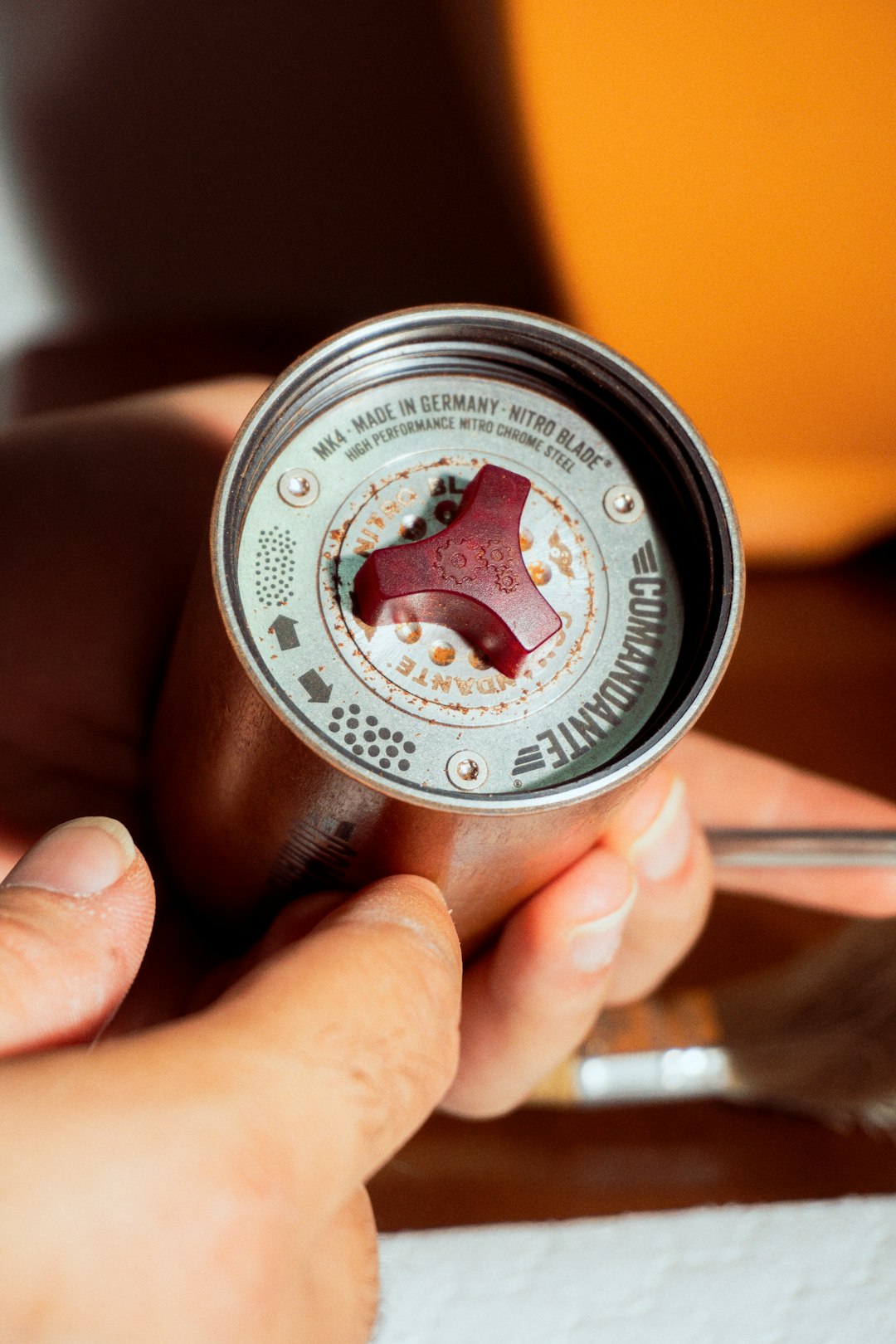
The shape of the cutting edges is usually the makers’ own design and is rarely disclosed. Comandante describes its burrs as very hard steel with a high nitrogen content, designed to last a long time. According to the data sheet, the burr of the 1Zpresso K-Ultra measures 48 mm, and that of the Comandante C40 around 39 mm.
If the axle wobbles under load, the gap between cone and ring changes while you grind. The coffee blog names bearings and crank length as buying criteria.
Adjustment: clicks, microns and the way back to filter
Most hand grinders adjust in fixed clicks. Each click moves the cone by a fixed distance, given in microns. If the adjustment sits on the outside of the body, you read it off a scale and can turn it even with a full hopper. If it sits inside, you unscrew the catch cup to adjust it and count clicks.
| Grinder | Adjustment | Step per click | Clicks per rotation | Distance per rotation |
|---|---|---|---|---|
| 1Zpresso J-Ultra | external | 8 µm | 100 | 0.8 mm |
| 1Zpresso K-Ultra | external | 20 µm | 100 | 2.0 mm |
| 1Zpresso ZP6 Special | external | 22 µm | 90 | around 2.0 mm |
| 1Zpresso Q series | internal | 25 µm | 30 | 0.75 mm |
| Comandante C40 MK4 | internal | 30 µm, 15 µm with extra axle | not stated | not stated |
| Timemore Chestnut C3S Pro | not stated | around 83 µm according to a test | 12 | around 1.0 mm |
We calculated the distance per rotation from the manufacturers’ figures. It shows how much you have to turn to switch from espresso to filter. On the K-Ultra, according to the coffee blog, espresso sits at 2.4 on the scale and pour-over at 6 to 7.5. Each whole number stands for 10 clicks, so the switch takes around 40 to 50 clicks (our calculation).
The J-Ultra hits espresso very precisely with its 8 µm steps. But for the same distance to filter, you need two and a half times as many clicks. That is exactly what the coffee blog criticises. On the Comandante, the maker’s starting values are 7 to 13 clicks for espresso and 18 to 35 clicks for filter.
Click settings cannot be transferred from brand to brand, because the zero point and burrs differ. How to fine-tune dose, yield and time after adjusting is explained in our guide How to dial in espresso: grind size and shot time.
How to get both espresso and filter right with one hand grinder:
- Note down the setting that tasted good for each brewing method.
- For espresso, turn one click at a time and grind fresh each time.
- Don’t take the cone all the way to zero, or the cutting edges will rub against each other.
- If you can’t hit the shot time precisely enough, change the dose by 0.5 to 1 g.
- A few drops of water on the beans reduce static.
Care: clean it dry and keep an eye on the zero point
Hand grinders need little care. Comandante considers cleaning once a week with heavy use and once a month with light use to be more than enough. You don’t need to clean the burrs between two grinds.
Makers are cautious with water. According to the maker, you should not soak the C40 or put it in the dishwasher. 1Zpresso recommends taking the grinder apart once a month and cleaning the lid and wooden knob only with a brush and air blower. To reach the cone of the C40, you unscrew the adjustment wheel completely. The three screws around the burrs are set at the factory and stay tight.
After reassembly, 1Zpresso refers to its own calibration guide. Then check whether your noted settings still work.
The best hand grinders for espresso and filter
Our ranking is based on published tests and manufacturer information, and we have not tested the grinders ourselves. We included one model per manufacturer. There are no paid placements. Places 1 and 2 match the hand grinder ranking in our grinder guide.
Hand grinder ranking
No. 1 · around €260
1Zpresso K-Ultra
Pros: Strong for filter and espresso, quick switching via the scale, 15 g of filter coffee in 23 to 28 s.
Cons: The grip wears, complaints about loose crank knobs, hard to get in Germany.
No. 2 · around €220 to €260
Comandante C40 MK4 Nitro Blade
Pros: Recommended by the Swiss roastery, filter and espresso, made in Germany and widely available.
Cons: Slow (around 50 s for 20 g), coarse espresso steps without the extra axle, bulky body.
No. 3 · around €70 to €110
Timemore Chestnut C3S Pro
Pros: Strong with V60, French press and Chemex in testing, robust, folding crank, little static.
Cons: Few espresso settings, hardly suitable for espresso, small capacity.
No. 1, 1Zpresso K-Ultra. With 20 µm steps and an external scale, it covers both brewing worlds. However, 1Zpresso grinders are rare in German specialist shops. You can buy them through the maker’s EU shop. There, the K-Ultra cost €259 on 24 October 2026.
No. 2, Comandante C40 MK4. The Swiss roastery recommends it as a premium hand grinder made in Germany. Specialist retailers in Germany sell it from around €220. The coffee blog now sees cheaper grinders as almost level with it. The extra axle halves the step to 15 µm, which makes espresso much easier.
No. 3, Timemore Chestnut C3S Pro. A German testing site praises it for pour-over and French press, especially with light roasts. For espresso, it has too few fine settings. If you drink almost only filter coffee, it will serve you well for less than half the price.
The 1Zpresso J-Ultra for espresso, ZP6 Special for filter and Q Air for travel take places 3 to 5 in our grinder guide. They are missing here only because we show one model per manufacturer. So third place does not mean the Timemore grinds better than the J-Ultra. We could not find the coffee blog’s No. 1, the Mavo Phantox Pro, at any German retailer.
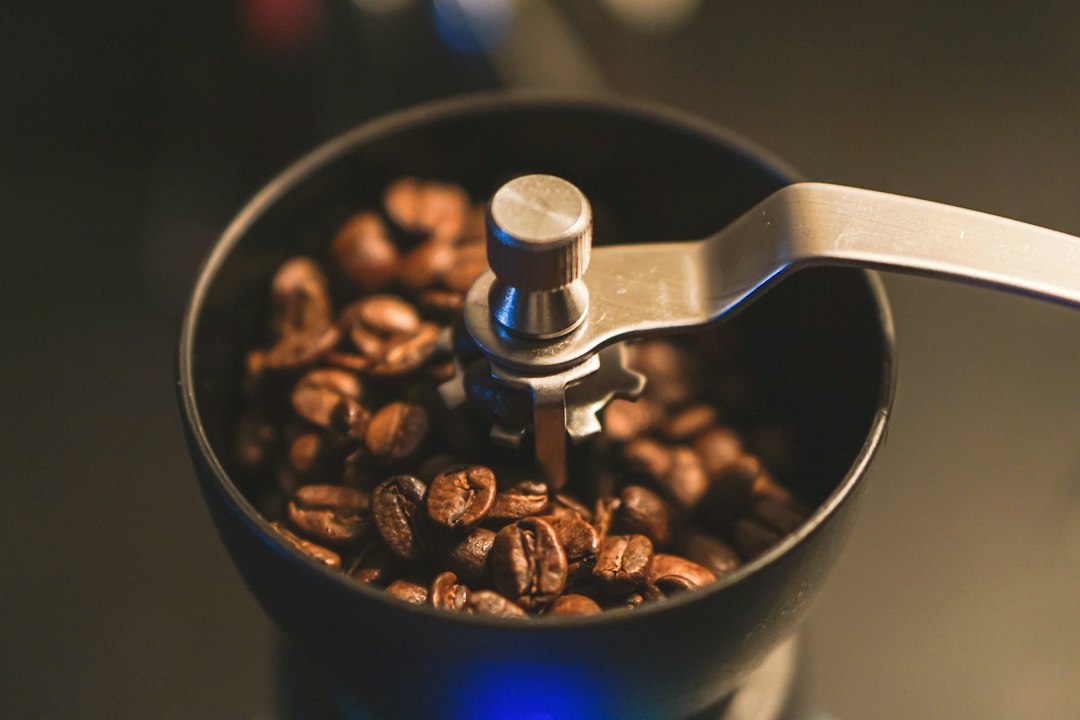
For filter coffee, consistency and speed count. For espresso, you need fine clicks and, ideally, an external adjustment.
Last updated: 24 October 2026.
Sources
- Asser Christensen, The Coffee Chronicler: The 10 Best Manual Coffee Grinders in 2026, 22 October 2026.
- Benjamin Hohlmann, Kaffeemacher: Coffee Hand Grinder Guide, 13 March 2023.
- Smrke, S., ZHAW Coffee Excellence Center: The role of fines in espresso extraction dynamics, 27 June 2024.
- 1Zpresso (manufacturer information): Grind setting, 20 October 2020, updated 28 April 2026.
- 1Zpresso (manufacturer information): Clean Tutorial for 1Zpresso External Adjustment Grinder, 22 December 2020, updated 11 June 2025.
- Comandante (manufacturer information): FAQ, accessed 24 October 2026.
- Arne Preuss, Coffeeness: Timemore Chestnut C3 Pro Handmühle Test (in German), 1 October 2025.
- Bluepick (comparison site): 1Zpresso K-Ultra (in German), 2 October 2026.
- Bluepick (comparison site): K-Ultra vs. Comandante C40 MK4 (in German), 2 October 2026.
- 1zpresso.de (shop run by 4barista): K-Ultra 259 €, auf Lager (in German), accessed 24 October 2026.
- Geizhals (price comparison): 1Zpresso K-Ultra (ab 259 €) (in German), accessed 24 October 2026.
- Kaffeemacher (shop): Comandante C40 MK4 Nitro Blade (222 €), accessed 24 October 2026.
- Geizhals (price comparison): Comandante C40 MK4 Nitro Blade schwarz (219 bis 259 €) (in German), 24 October 2026.
- happycoffee (price comparison): Timemore Chestnut C3S Pro (69 € bis 109 €) (in German), accessed 24 October 2026.