Co-fermented coffee ferments after harvest together with fruit or spices, which is why it often tastes distinctly of strawberry, peach or cinnamon.Co-fermentation and infused coffee compared, competition rules, labelling in the EU and a tasting to try at home.
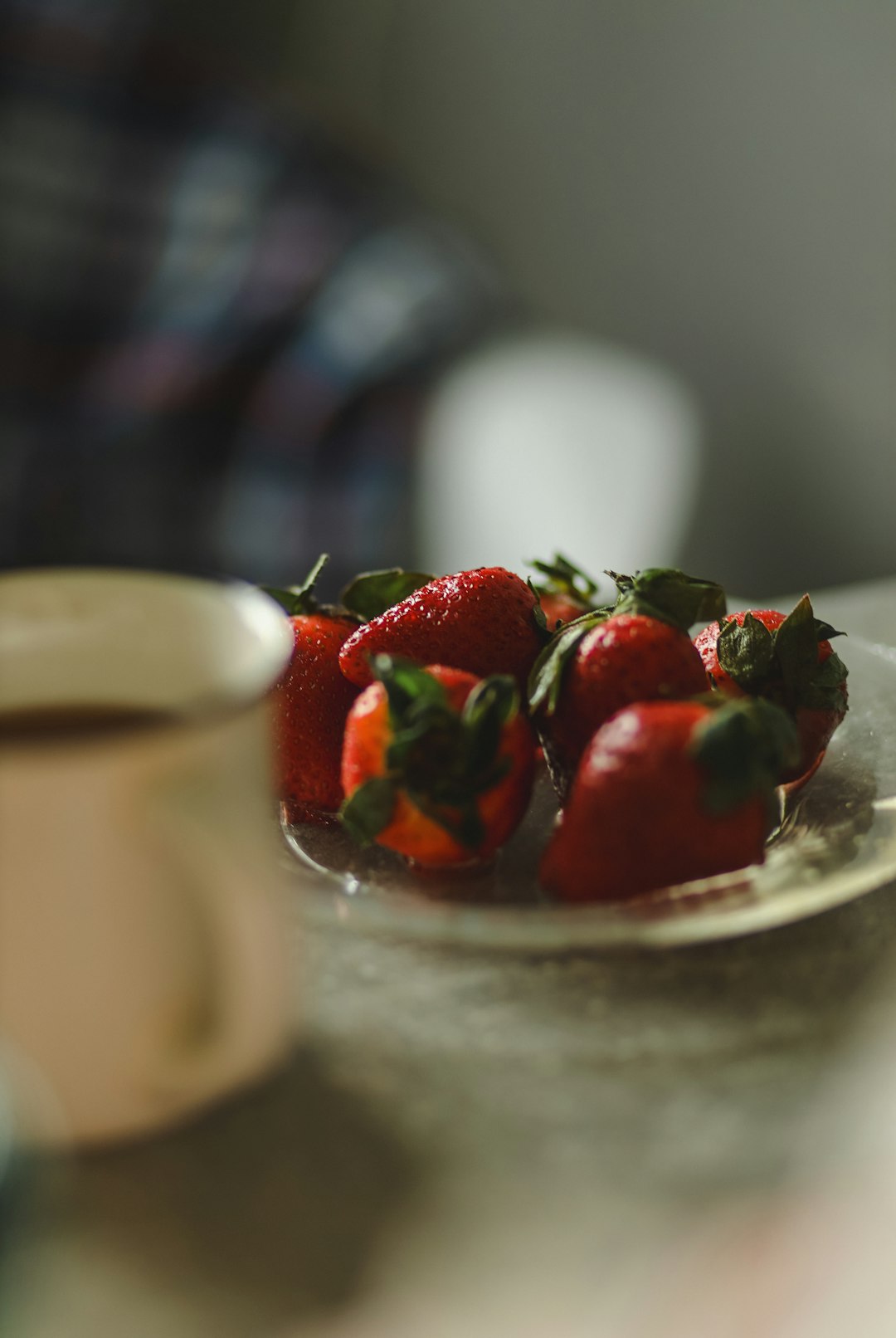
Hardly anyone forgets their first cup that tastes of strawberry. There was nothing but ground coffee in the filter, yet it smells of strawberry yoghurt. The bag often carries a word like ‘co-fermented’. It means the coffee sat in a fermentation tank with fruit while still on the farm.
For some it is an exciting experiment, for others it is cheating. What matters most for you is what was added, when it was added and whether the bag says so.
In the fermentation tank: cherries, fruit and microbes
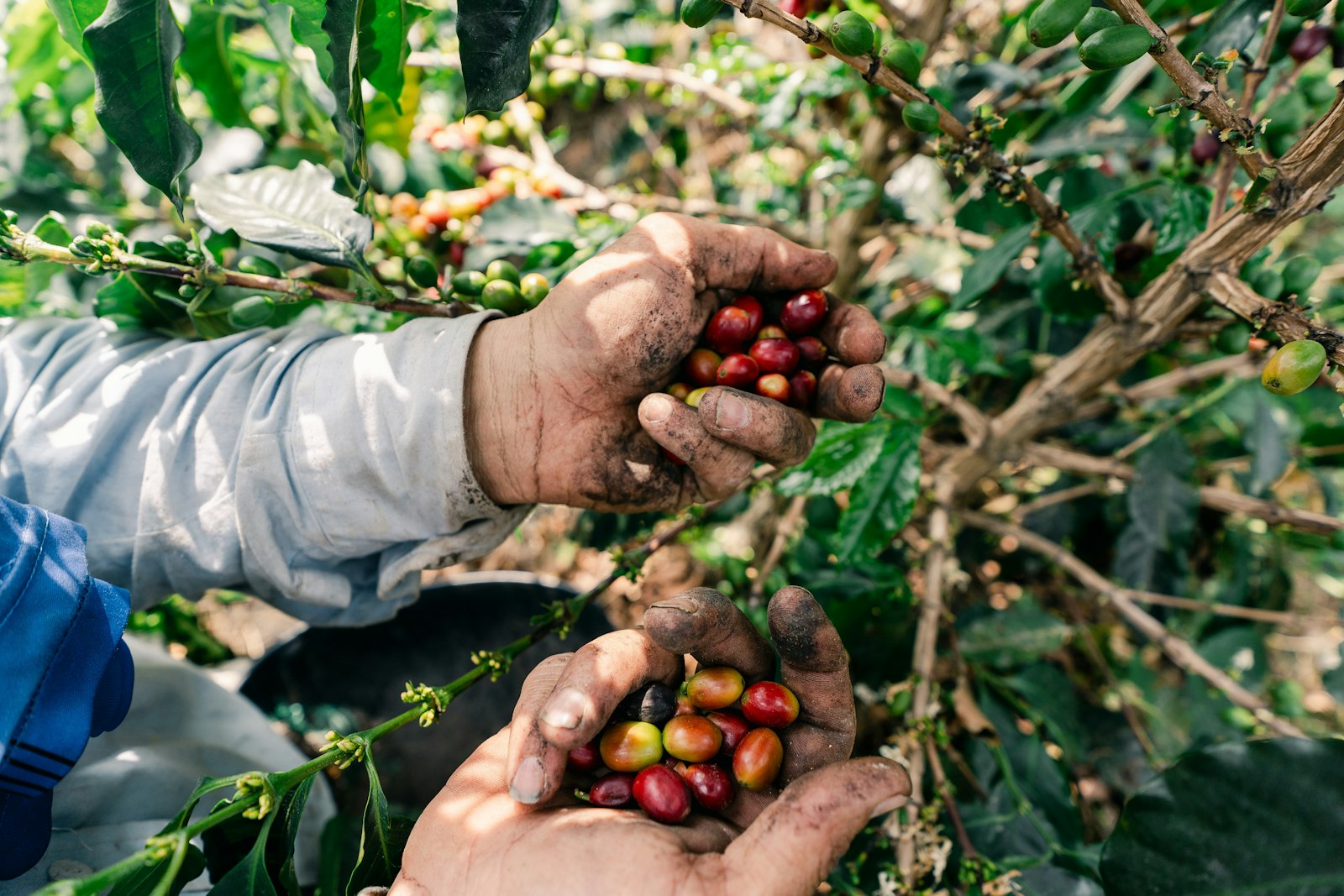
Every coffee ferments after harvest. Yeasts and bacteria break down the sugar in the pulp and mucilage, in washed coffee just as in naturals. How these classic methods work is explained in Processing: washed, natural and honey.
In co-fermentation, ingredients that do not come from the coffee are added at this stage. According to a US trade magazine for roasters, fruit is the most common addition. Hops, spices such as chilli and organic acids also go into the tank. One specialist website lists peach, strawberry, passion fruit, lychee and fresh mint.
Mosto is popular too: pressed pulp and juice from an earlier fermentation batch. It carries the microbes of the old batch. A Colombian producer describes mosto as a catalyst that speeds up and steers fermentation. After fermentation the coffee is dried and hulled like any other, and no trace of the fruit is visible in the green coffee.
Co-fermented, inoculated or infused: what is added and when
In shops the terms get mixed up, and ‘infused’ often appears on co-fermented coffees too. In 2025 a British specialist website noted that there are no formal definitions for these methods. Most experts distinguish them by what is added and at which point.
| Method | What is added | When | World Barista Championship since 2024 |
|---|---|---|---|
| Anaerobic, carbonic maceration | nothing, only the oxygen is removed, sometimes replaced by CO₂ or argon | during fermentation on the farm | allowed |
| Inoculation | selected yeasts or bacteria as a starter culture | during fermentation | allowed |
| Co-fermentation | fruit, spices, hops, acids or mosto | during fermentation, before drying | allowed |
| Infused | flavourings, flavoured oils or spirits, sometimes synthetic substances | later, without fermentation | banned |
| Flavoured coffee | flavouring, such as vanilla or hazelnut | after roasting | banned |
Controlled fermentation without fruit has already won world titles. In 2015 the Australian Sasa Sestic became World Barista Champion in Seattle. His Colombian coffee had fermented in a tank under carbon dioxide. The winning espresso of 2025 was a Gesha whose whole cherries were macerated under argon and then washed. According to one specialist website, co-fermented coffees have only been permitted since 2023.
How the strawberry gets into the bean
Researchers at CIRAD, the French agricultural research centre, soaked coffee beans in solutions of aroma compounds, including a fruit ester. According to their short paper for a 2019 conference, they then found all the tested compounds in the beans. This was not a fully peer-reviewed study.
A Colombian research group published a trial with pineapple in 2025. 155 kg of coffee cherries fermented for 100 hours with 30 kg of crushed pineapple, cane sugar, flour and two yeast strains. The comparison lot fermented spontaneously and without additions.
Three trained tasters found the lot with pineapple and yeast sweeter, cleaner and less sour. They noted pineapple, white chocolate and flowers. The green coffee contained more sucrose as well as malic and citric acid. The test covered only one farm, and the supplier of the samples helped fund the work.
So fruity notes also develop without additions. In 2026 Cenicafé, the Colombian coffee research institute, left ripe cherries to rest for 24 or 48 hours before pulping. After 48 hours, the share of red fruit notes rose from 34 to 66 per cent. When fermentation ran too long in a warm tank, however, seven out of eight samples showed a fermentation defect.
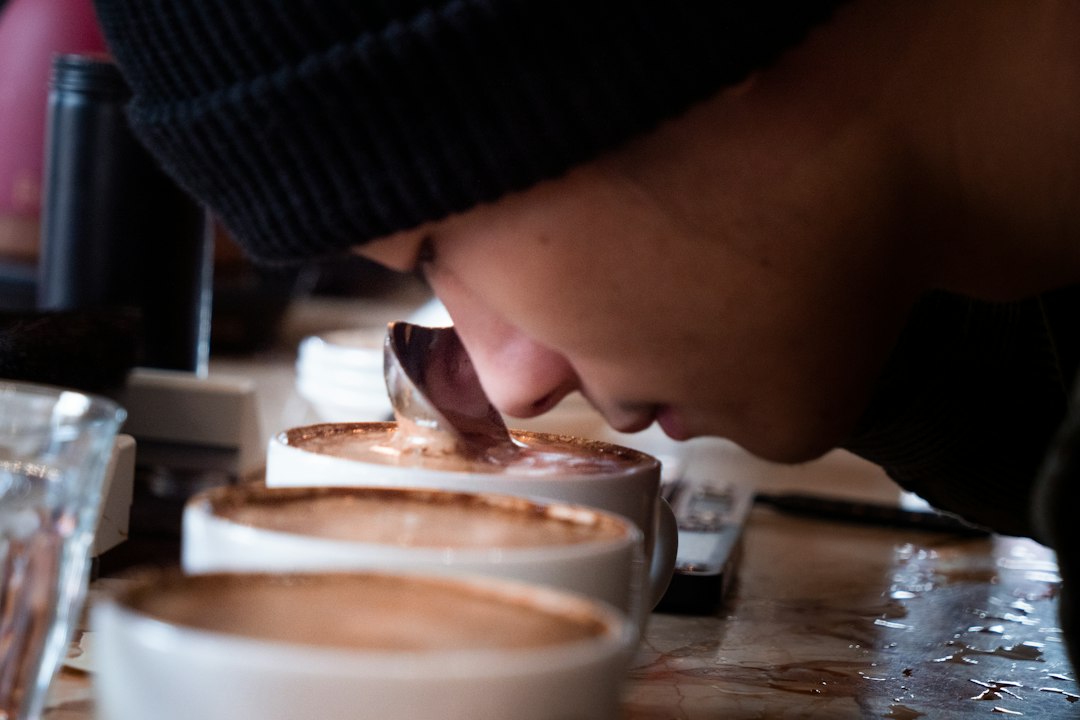
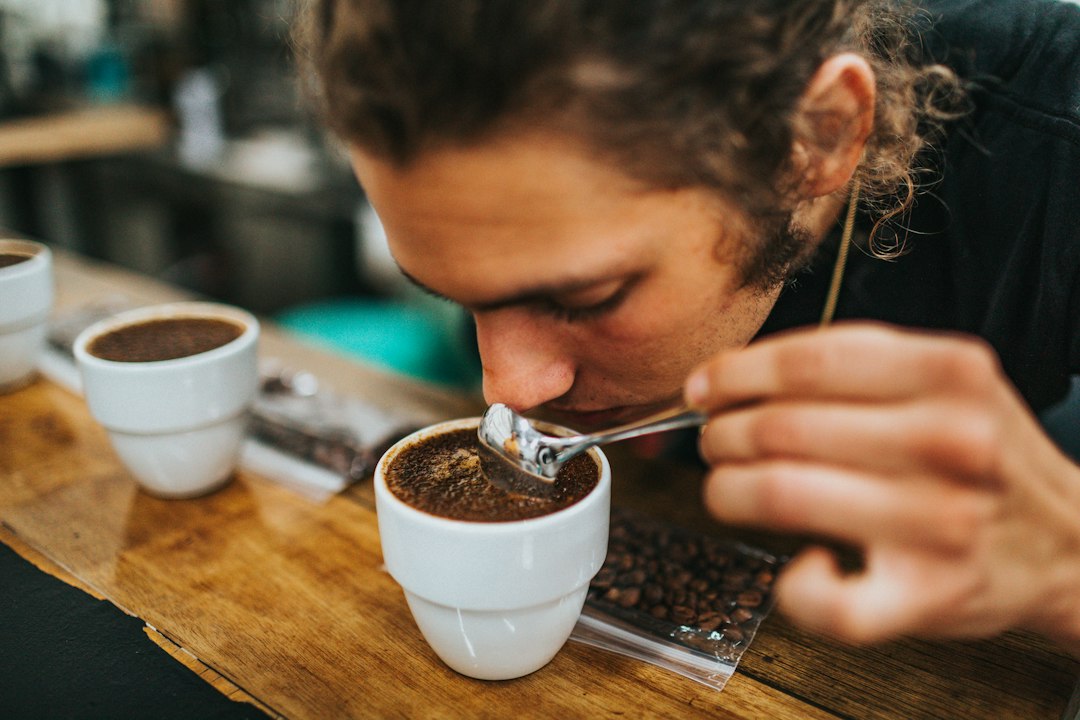
So the strawberry in your first cup does not yet prove that anything was added. You taste the difference best side by side, just as in cupping at home.
How to compare a co-fermented coffee:
- Add a second coffee from the same country, washed or anaerobic and without additions.
- Brew both with the same dose, the same grind size and the same water.
- Smell the dry grounds first, then the brew, and note where the fruit stands out.
- Taste the slightly cooled cups in turn and pay attention to acidity, sweetness and body beneath the fruit.
- Write the processing details from both bags next to your notes.
Competitions: where the line is drawn
The World Barista Championship clarified its rule for the 2024 season. From the green coffee stage onwards, nothing may be added to the coffee. That includes contact with flavourings, perfumes, liquids or powders. Anything added during processing before drying remains allowed.
So co-fermented coffees may go on stage, while coffees flavoured afterwards may not. The rules for the 2026 championship in Panama did not change this.
The Cup of Excellence is stricter. Since October 2023, countries can introduce a category for experimental processing there. Additions other than water are not allowed in it.
Best of Panama went furthest. In June 2024 the country’s coffee association excluded four coffees it said had been altered from their natural expression. It called for such coffees to be classified separately. At the 2023 auction the coffees had fetched an average of 868 US dollars per pound, roughly €1,700 per kilogram (our conversion).
The association did not explain how the alteration was detected, which a US coffee rating website also criticised in December 2024. None of the sources used here describes a standard test that reliably detects co-fermentation.
Labelling in the EU: ingredient, residue or flavouring
EU law has no specific rules for co-fermented coffee. The key text is the 2011 Food Information Regulation. It defines an ingredient as a substance used in making a food that remains in the final product, even in altered form. Residues are expressly not considered ingredients.
Roasted coffee without additions needs no list of ingredients, because it consists of a single ingredient. That changes if coffee is flavoured after roasting. The flavouring then belongs in the list of ingredients. What may be called ‘natural’ is governed by the 2008 Flavourings Regulation.
| Case | What applies |
|---|---|
| Roasted coffee without additions | no list of ingredients required (FIR Art. 19) |
| flavoured after roasting | flavouring appears in the list of ingredients |
| ‘natural strawberry flavouring’ | at least 95 per cent by weight obtained from strawberries (Flavourings Regulation Art. 16) |
| co-fermented | no specific rule, classification as ingredient or residue unresolved |
It is unclear how fruit from the fermentation tank should be classified. It is used during processing, but little of it remains after drying, hulling and roasting. We have not found any official classification on this. A US trade magazine calls disclosure good practice, but not a legal requirement.
The regulation also bans misleading information, including on the method of production. Strawberry and peach are not among the 14 major allergens that must always be declared. Intolerances still exist, so critics are calling for clear labelling.
If the bag of your strawberry coffee just lists ‘strawberry’ as a tasting note, that only describes the impression at first. Only the processing details reveal whether fruit was in the tank. If they are missing, your only option is to ask the roastery.
The debate in specialty coffee: experiment versus origin
Supporters see new flavours and new markets. In early 2026 a Cenicafé scientist said co-fermentation could bring farmers extra value. The conditions, she said, are responsibility and transparency, along with traceability, control and training.
Critics argue that specialty coffee draws its value from variety, location and origin. In 2024 the Panamanian association warned against an artificial levelling of different terroirs and varieties. Others speak of deception or of cheating in evaluations.
The editor-in-chief of that US rating website took a middle position. He finds it bothersome to change the basic profile of coffee with outside ingredients. Even so, his website put a coffee fermented with oranges at the top of its 2024 annual list, with 98 points.
Artificial flavourings sharpen the debate. According to a British specialist website, some producers now use flavourings instead of fruit. In 2025 a Swiss coffee trainer called for every flavour-altering ingredient to be declared, whether natural or artificial.
Experimental coffees usually cost more than classically processed ones. Why specialty coffee is more expensive in general is explained in Why specialty coffee costs so much.
With your next strawberry cup, check the processing details. If they name a fruit or say ‘co-fermented’, it was in the tank with the coffee. If the information is missing, ask the roastery.
Last updated: 24 October 2026.
Sources
- Liz Clayton, Sprudge: What Is Co-Fermentation In Coffee?, 21 January 2026.
- Chris Kornman, Royal Coffee (reprinted from Roast Magazine): Co-Fermented Coffee: Processing Trends and Controversy, 23 October 2025.
- Tasmin Grant, Perfect Daily Grind: Infused coffees are diversifying, but should roasters embrace them all?, 1 May 2025.
- Yudi Guo, Perfect Daily Grind: Five years on, where does the industry stand on infused coffees?, 29 July 2025.
- Global Coffee Report: Australian wins 2015 World Barista Championship, 13 April 2015.
- BeanScene, Daniel Woods: Behind Jack Simpson’s WBC triumph, 2 December 2025.
- Hadj Salem, F. et al. (CIRAD), Cocotea 2019, Book of Abstracts, p. 40: Transfer of volatiles and aroma precursors into the coffee seeds during fermentation, a reality?, 2019.
- Madrid-Restrepo, M. A. et al., mSystems 11(1): Metagenomic, metabolomic, and sensorial characteristics of fermented Coffea arabica L. var. Castillo beans inoculated with microbial starter cultures, 12 December 2025.
- Osorio Pérez, V. et al., Revista Cenicafé 77(1), e77103: Compuestos volátiles y su relación con la calidad del café diferenciado en el procesamiento vía húmeda (in Spanish), 30 June 2026.
- Tasmin Grant, Perfect Daily Grind: New rules for the World Barista Championship 2024, 23 November 2023.
- BeanScene: SCA updates rules for 2026 World Barista Championship, 18 May 2026.
- Tasmin Grant, Perfect Daily Grind: Cup of Excellence rule changes, 2 November 2023.
- Nick Brown, Daily Coffee News: Best of Panama Organizers Take Hard Stance Against Infused Coffees, 28 June 2024.
- Kenneth Davids, Coffee Review: Commenting on the Coffee and Fruit Co-Fermenting Debate, 12 December 2024.
- European Union: Regulation (EU) No 1169/2011 (Food Information Regulation), Art. 2, 7, 9, 19, Annex II, 25 October 2011.
- European Union: Regulation (EC) No 1334/2008 on flavourings, Art. 3 and 16 (in German), 16 December 2008.