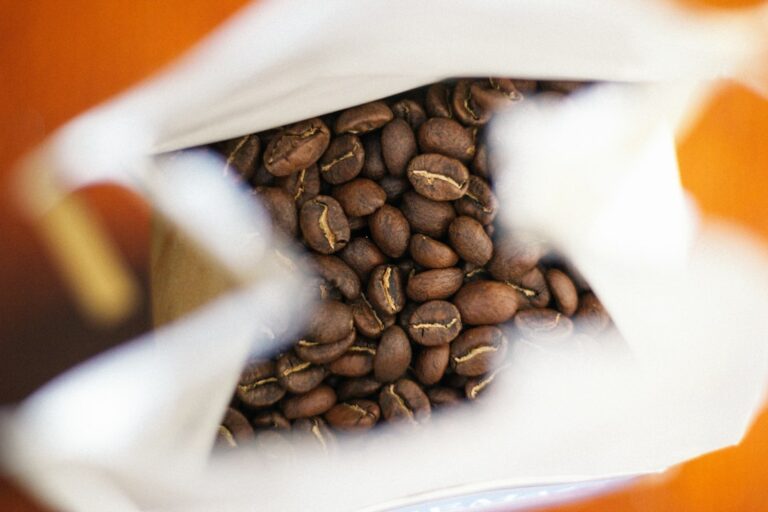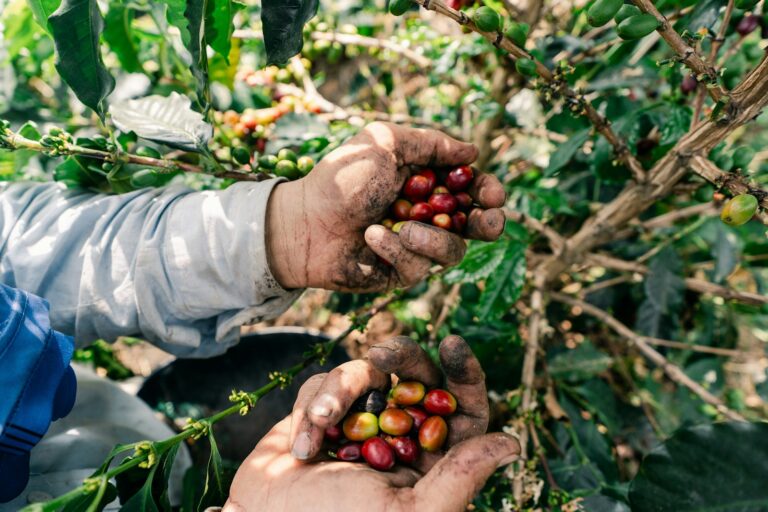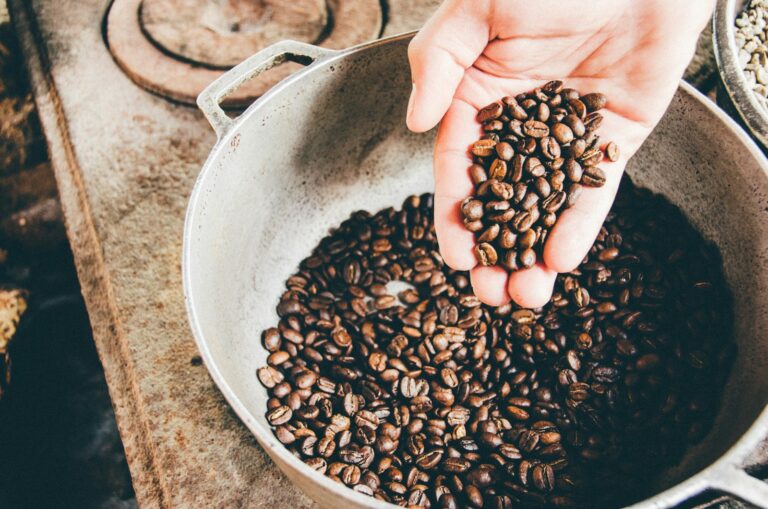
Coffee from Nepal is Arabica from small gardens in the hill country. The crop is tiny, and only a few tonnes a year reach Germany.Growing regions and altitudes, harvest and export figures, varieties and processing, and prices in euros.
According to the state tea and coffee authority NTCDB, Nepal harvested 641.9 tonnes of green coffee in the 2024/25 fiscal year. That is more than twice as much as five years earlier. On a world scale it remains a footnote. The country drinks most of the crop itself and also imports more coffee than it harvests.
The figures come mainly from the NTCDB and Nepal’s customs department, as reported by the Nepalese business press. Nepal’s fiscal year starts in mid-July. We convert rupees to euros via the US dollar, and the rates are given in the section on prices.
Growing regions: hill country rather than high mountains
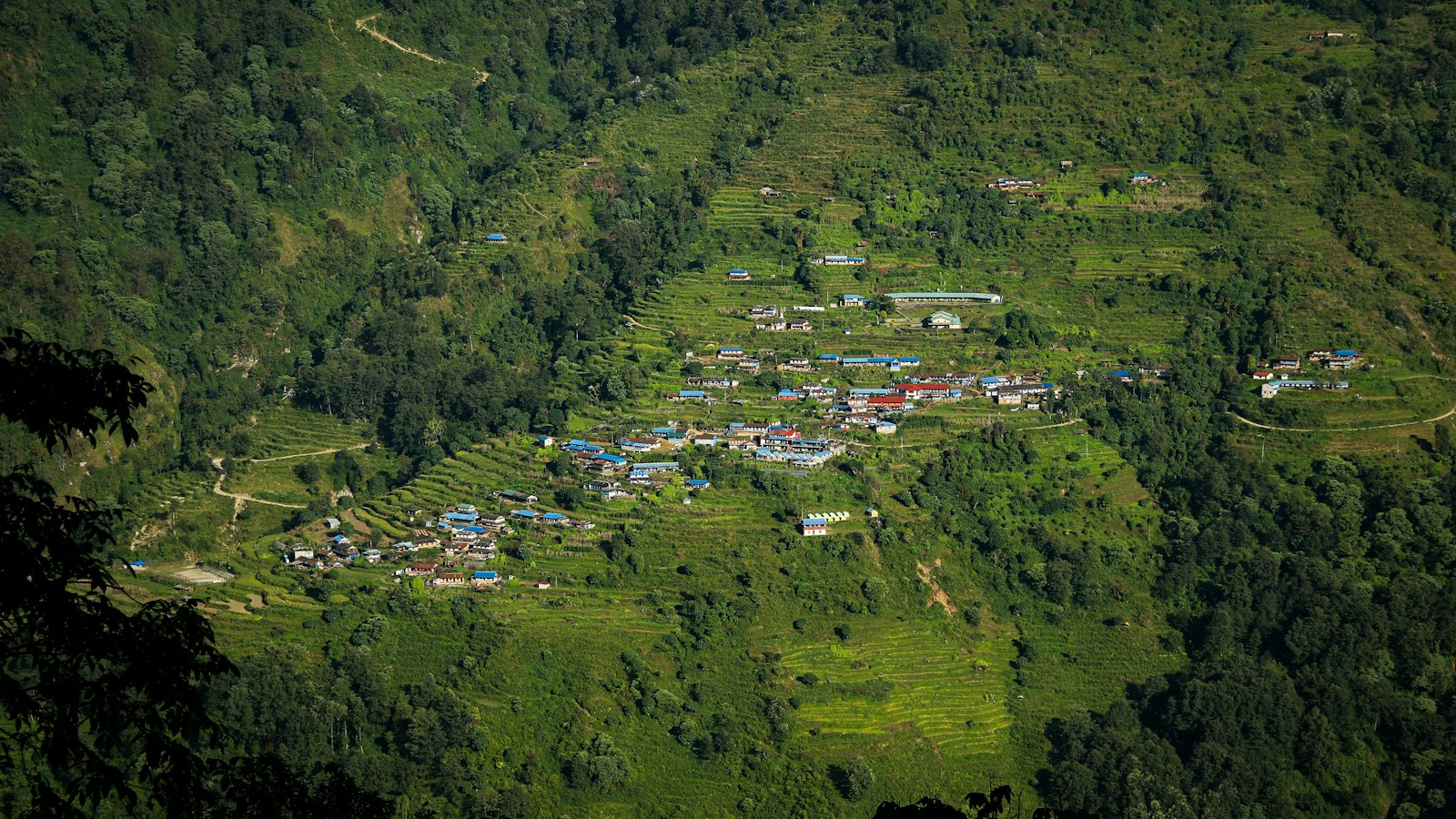
In Nepal, coffee grows in the Mid-Hills, the middle range between the lowlands and the Himalayas. According to a November 2024 report, the NTCDB says it is grown commercially in 43 districts. In July 2026 the daily newspaper Kantipur also cited 43 districts and more than 30,000 farming families.
A report based on information from the authority names 13 districts. In the west these are Gulmi, Arghakhanchi, Palpa, Syangja, Parbat and Baglung. In the centre are Kaski, Tanahu, Lamjung and Gorkha. Around Kathmandu, Lalitpur, Kavre and Sindhupalchok are added. One exporter also names Ilam and Panchthar in the east, which are best known for tea.
Small gardens on steep slopes are typical. In a study across four districts, the coffee plots examined had a median size of 0.5 hectares, with an average slope of 41 per cent. According to an analysis by the agriculture ministry, the scattered small-scale production makes collection and quality control expensive.
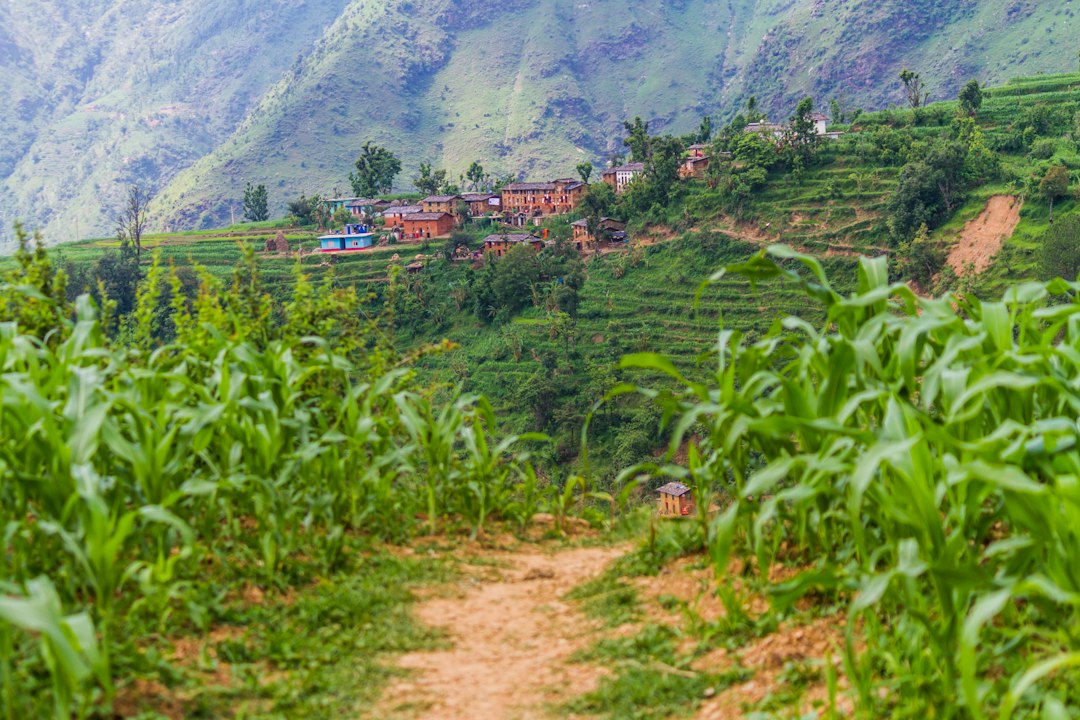
Altitudes: mostly between 800 and 1,600 metres
Growing coffee here has little to do with the high mountains. The gardens lie well below the peaks. Figures on altitude vary by source, and most give 800 to 1,600 metres.
| Source | Altitude | Refers to |
|---|---|---|
| NTCDB study, reported 12/2019 | 800 to 1,800 m | suitable land in 10 districts |
| NTCDB, reported 12/2019 | 1,000 to 1,600 m | actual Arabica cultivation |
| Global Coffee Report, 06/2025 | 800 to 1,600 m | typical farms, risk of frost above that |
| Exporter, Perfect Daily Grind 06/2025 | 1,000 to 2,100 m | most farms (company figure) |
| Lotz et al., 2026 | 525 to 1,275 m | 27 plots examined in 4 districts |
According to the Global Coffee Report, frost becomes a problem from about 1,600 metres. The exporter’s upper limit of 2,100 metres should therefore be read with caution. We found no independent measurements on this.
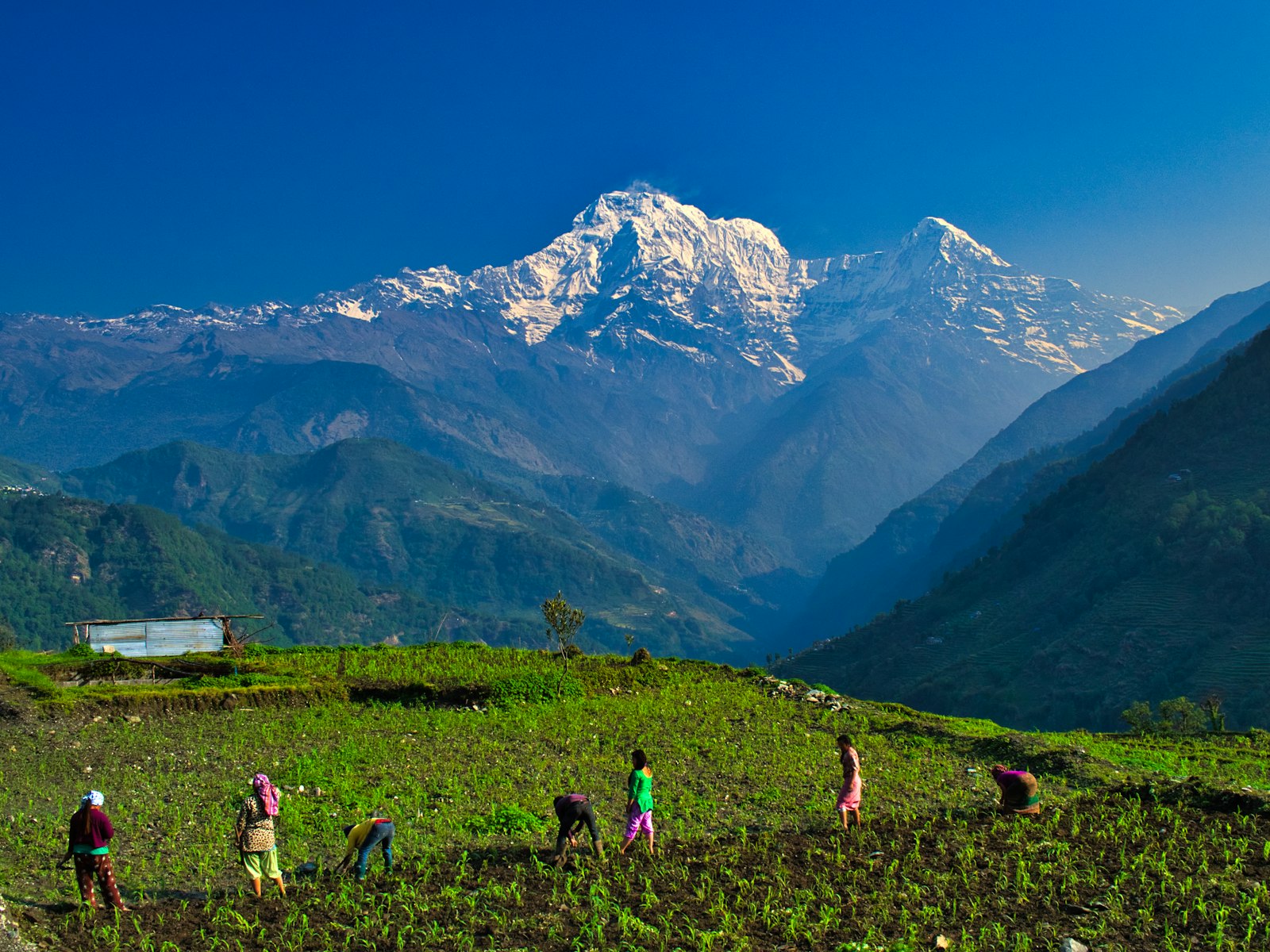
Many gardens grow under trees. On the 27 plots in the 2026 study, the canopy covered 62 per cent on average, and 53 tree species were recorded. Medium shade of around 40 per cent gave the highest yield. That fits what studies from other countries show about coffee under shade trees.
Harvest and area: twice as much as five years ago
According to NTCDB figures, the growing area expanded by around 80 per cent from 2020/21 to 2024/25. Over the same period the crop roughly doubled. Some of the plots are still young, as a shrub bears fruit after three years at the earliest.
| Fiscal year | Area | Green coffee |
|---|---|---|
| 2020/21 | 3,052 ha | 314.5 t |
| 2021/22 | 3,343 ha | 354.9 t |
| 2022/23 | 3,655 ha | 394.4 t |
| 2023/24 | 4,309 ha | 501.3 t |
| 2024/25 | 5,501 ha | 641.9 t |
That works out at around 117 kg of green coffee per hectare (our calculation). The national figure includes young plots, and 654 hectares were added in 2023/24 alone. In the shade study, the plots examined averaged 364 kg per hectare. In 2019 an NTCDB official spoke of around 20 per cent of the crop being lost each year to pests and diseases.
For comparison, the US Department of Agriculture (USDA) expects a world crop of 189.7 million 60 kg bags for 2026/27. That is around 11.4 million tonnes. Nepal’s crop is about 0.006 per cent of that (our calculation, the years differ).
According to an account handed down by the NTCDB, it all began in 1938. A hermit named Hira Giri is said to have brought seeds from Burma to the village of Aapchaur in Gulmi district. In the late 1970s the government brought in seed from India, and the Nepal Coffee Company was founded in Manigram in 1983/84. For 1994/95 the agriculture ministry gives only around 136 hectares.
Varieties and processing: Arabica, mostly washed
Nepal grows only Arabica, according to the NTCDB a mix of Bourbon, Typica and Caturra. An entrepreneur brought Caturra from Papua New Guinea to Nuwakot district in 1990. One exporter also mentions old landraces without a precise name. What sets Arabica apart from Robusta is explained in Arabica or Robusta.
According to one exporter, washed coffee is the most common type. A pulper removes the skin and pulp, then the coffee ferments, is washed and dried. In a survey of 100 farmers in Gulmi, washed coffee was considered more in demand and better paid. What farmers lacked most often were hand pulpers, followed by water and transport routes.
Some farms are now also trying natural, honey and anaerobic fermentation, the Global Coffee Report noted in 2025. How these methods change the flavour is explained in Processing: washed, natural and honey. We found no robust tasting studies specifically on coffee from Nepal.
According to an analysis by the agriculture ministry, most farming is done without synthetic inputs, and some is certified organic and Fairtrade. The same analysis names the white coffee stem borer as the main pest. In a trial in Kaski, a coating of red soil and cow dung worked best. Only 11 per cent of the shrubs were infested afterwards, compared with 22 per cent with other treatments.

Exports: a few tonnes, with Germany ahead on value
Only a small part of the crop goes abroad. According to customs and the NTCDB, it was 89 tonnes in the 2023/24 fiscal year, around 17 per cent of the crop. In the first nine months of 2025/26, Nepal exported 33.8 tonnes of coffee. Of this, 97 per cent was unroasted beans.
| Buyer, mid-July 2025 to mid-April 2026 | Volume | Value | per kg, roughly (our conversion) |
|---|---|---|---|
| Germany | 6,505 kg | NPR 16.19 million | €14.35 |
| Switzerland | 8,338 kg | NPR 15.65 million | €10.80 |
| Italy | 4,000 kg | NPR 10.35 million | €14.90 |
| Japan | 6,827 kg | NPR 9.81 million | €8.30 |
| United Arab Emirates | 1,759 kg | NPR 5.70 million | €18.70 |
Switzerland bought more coffee, but Germany paid more in total. Smaller volumes went to the UK, the US, Poland and Taiwan. We calculated the values per kilo from the customs data.
Demand within the country is much greater. A 2024 survey by the NTCDB with the International Coffee Organization put consumption at more than 2,200 tonnes a year. According to the report, around 1,200 tonnes of this enter the country through unofficial channels. By May 2026 the figure being cited was already over 2,800 tonnes.
Imports cover the rest. In the first nine months of 2025/26, Nepal imported 979 tonnes of coffee, almost 30 times as much as it exported. More than half of it was instant coffee.
Prices in euros: dearer than exchange-traded coffee
For the conversion we use the Nepal central bank rate of 12 October 2026. The mid-point between buying (154.48) and selling (155.08) is 154.78 rupees per US dollar. With the ECB rate of 22 October 2026 of 1.1205 US dollars, that gives around 173.4 rupees per euro.
| Green coffee per kg | Original figure | roughly (our conversion) |
|---|---|---|
| Nepal, domestic market (05/2026) | NPR 1,600 to 1,700 | €9.20 to €9.80 |
| Imports from India, domestic market (05/2026) | NPR 1,200 to 1,300 | €6.90 to €7.50 |
| Export price according to a report (11/2024) | around 16 US dollars | €14.30 |
| Exports, average customs value (07/2025 to 04/2026, unroasted) | around NPR 2,140 | €12.35 |
| Arabica exchange, New York (2 October 2026) | 288.75 US cents/lb | €5.68 |
Nepalese green coffee therefore sells for well over twice the exchange price of Arabica when exported. At home it costs around a third more than coffee from India and still finds buyers. In Germany, freight, roasting, packaging and taxes come on top. How the shop price is made up is shown in Why specialty coffee costs so much.
Coffee from Nepal therefore remains a rare origin. The crop is growing, but the home market is growing faster. For Germany that means small lots, which often sell out quickly.
Last updated: 24 October 2026.
Sources
- Ritu Kafle, OnlineKhabar English, with data from the NTCDB and the Department of Customs: Nepal exports premium coffee to the world, yet relies on imports for domestic needs, 11 May 2026.
- Amrit Chimariya, OnlineKhabar English, with data from the NTCDB and the Department of Customs: Nepal’s coffee paradox: imports outweigh exports despite local production, 20 November 2024.
- Deepak Pariyar, Kantipur (English AI translation): Demand exceeds coffee production, leading to high export prices, 3 July 2026.
- Rastriya Samachar Samiti, The Himalayan Times, based on NTCDB information: International demand for Nepali tea and coffee on the rise, 5 November 2024.
- Prahlad Rijal, The Kathmandu Post: Nepalis wake up and smell (Nepali) coffee, 22 July 2019.
- Himendra Mohan Kumar, The Kathmandu Post: Coffee sector performing below potential due to archaic ways, 22 December 2019.
- Global Coffee Report: Regions on the rise: Nepal, 5 June 2025.
- Bhavi Patel, Perfect Daily Grind (sponsored context, information from an exporter): How Nepal is emerging as a specialty coffee origin, 25 June 2025.
- Lotz, S.; Pandit, B. H.; Schmidt, H.-P.; Hölscher, D. et al., Agroforestry Systems 100, 49: Trade-off between yield and carbon storage in Nepali coffee agroforestry, 17 January 2026.
- Paudel, I. H. (Ministry of Agriculture and Livestock Development), Journal of Agriculture and Environment 24: Economic Analysis of Coffee Subsector in Nepal, 2023.
- Paudel, M.; Parajuli, K., International Journal of Applied Sciences and Biotechnology 8(3): Constraints and Determinants of Coffee Processing Methods in Gulmi District, Nepal, 29 September 2020.
- Aryal, L. N.; Basnet, S.; Bhusal, Y. R.; Thapa, K. B., Journal of the Institute of Agriculture and Animal Science 36: Bionomics, Abundance and Management of Coffee White Stem Borer in Nepal, 31 December 2020.
- USDA Foreign Agricultural Service: Coffee: World Markets and Trade, 2 July 2026.
- Uganda Coffee Development Authority: Daily Coffee Market Analysis Report, closing prices of 2 October 2026, 5 October 2026.
- ShareSansar, based on Nepal Rastra Bank: NRB Publishes Monday’s Forex Rates: US Dollar Fixed at Rs. 155.08, 12 October 2026.