Gyokuro needs lots of leaf, little water at just 50 to 60°C and around 2 minutes of steeping time. The second infusion takes only about 30 seconds.Shade and growing regions, step-by-step instructions, iced gyokuro and prices.
Gyokuro is a Japanese green tea that grows in the shade for weeks before harvest. This makes it mild, sweet and rich in umami. To bring that character into the cup, you treat it differently from almost any other tea.
It is drunk from small cups. According to an analysis by Kyoto Prefecture, gyokuro made up only 0.4 per cent of Japan’s tea production in 2011.
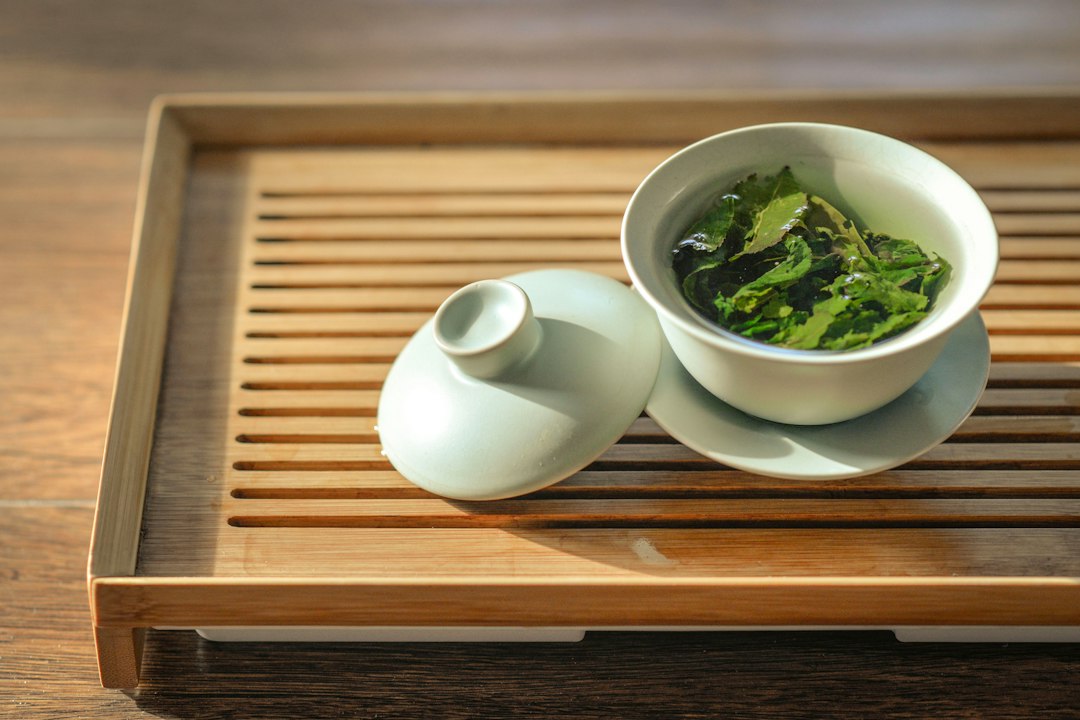
What gyokuro is: around three weeks in the shade
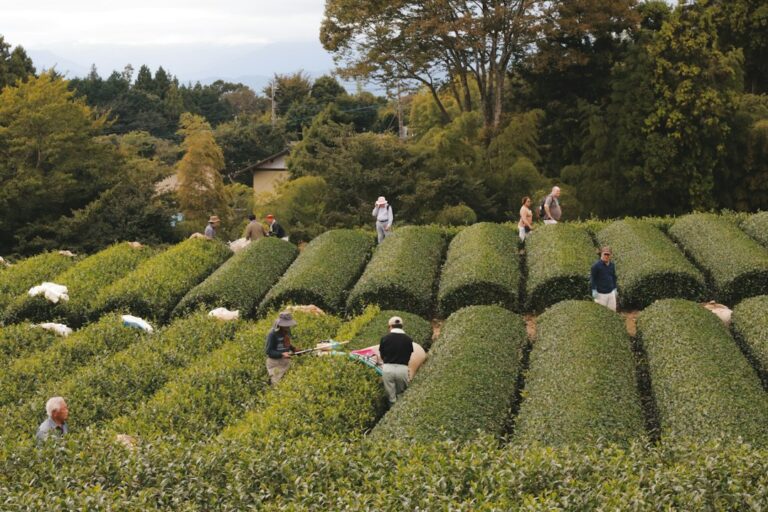
The difference from sencha lies before the harvest. As soon as the first one or two leaves open in spring, the farmer covers the bushes. According to a Tokyo tea merchant, the cover first blocks 70 to 80 per cent of the light. About a week later it blocks 95 to 98 per cent.
A handbook from NARO, Japan’s agricultural research organisation, gives 20 to 30 days under heavily screening material for gyokuro. Traditionally these are mats of reed and straw, today often black nets. Kabuse sencha, by contrast, only gets a short period of shade of 10 to 15 days. It sits between sencha and gyokuro in flavour.
| Tea | Shade before harvest | Processing | Flavour |
|---|---|---|---|
| Sencha | none, full sun | steamed, rolled | fresh and grassy |
| Kabuse sencha | 10 to 15 days, net with about 85 % shade | steamed, rolled | more umami, less astringent |
| Gyokuro | 20 to 30 days, heavily screened | steamed, rolled | lots of umami, hardly bitter |
| Tencha (for matcha) | at least 20 days | dried unrolled, ground | not brewed |
You can read more about steaming levels, harvests and kabuse in sencha: Japan’s everyday green tea. There is no fixed legal minimum period for gyokuro. Most figures are around three weeks.
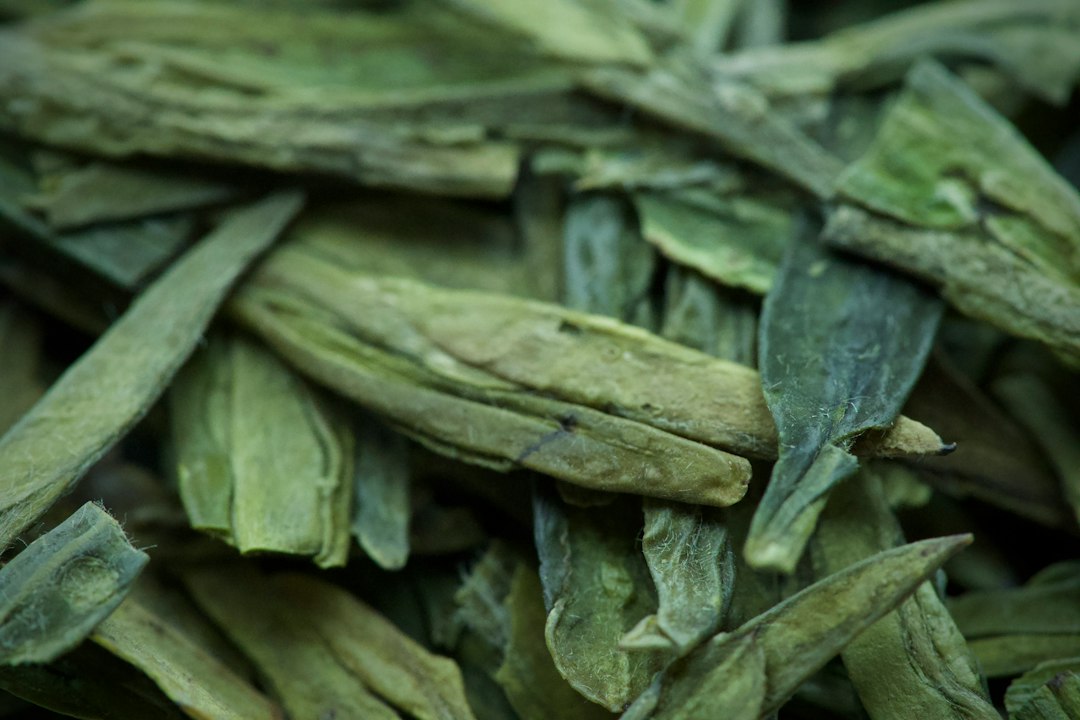
Umami and L-theanine: what shade changes in the leaf
Shade changes the compounds in the leaf. According to NARO, the amino acid L-theanine, other amino acids and chlorophyll rise. The catechins, the tea’s astringent tannins, fall. The tea becomes milder and tastes more strongly of umami.
A Chinese study from 2022 measured this over three weeks with 85 and 95 per cent shade. Theanine and chlorophyll rose, and several catechins fell. Somewhat surprisingly, caffeine increased too. However, the study used only one cultivar in one tea garden.
The Swedish tea expert Per Oscar Brekell describes the first sip of a good Yame gyokuro as an explosion of umami. On top of that comes a fresh, sweet aroma reminiscent of seaweed. In Japan this aroma of shaded teas is called ōika.
Mild doesn’t mean weak, though. The Japanese food composition table measured gyokuro brewed with 10 g of leaf in 60 ml of water at 60°C. The infusion contains 160 mg of caffeine per 100 ml, while normally brewed sencha has only 20 mg. So the 60 ml from the measurement contain just under 100 mg of caffeine (our conversion). How that compares with coffee is shown in caffeine in espresso, filter coffee and cold brew.
Uji, Yame and Okabe: where gyokuro grows
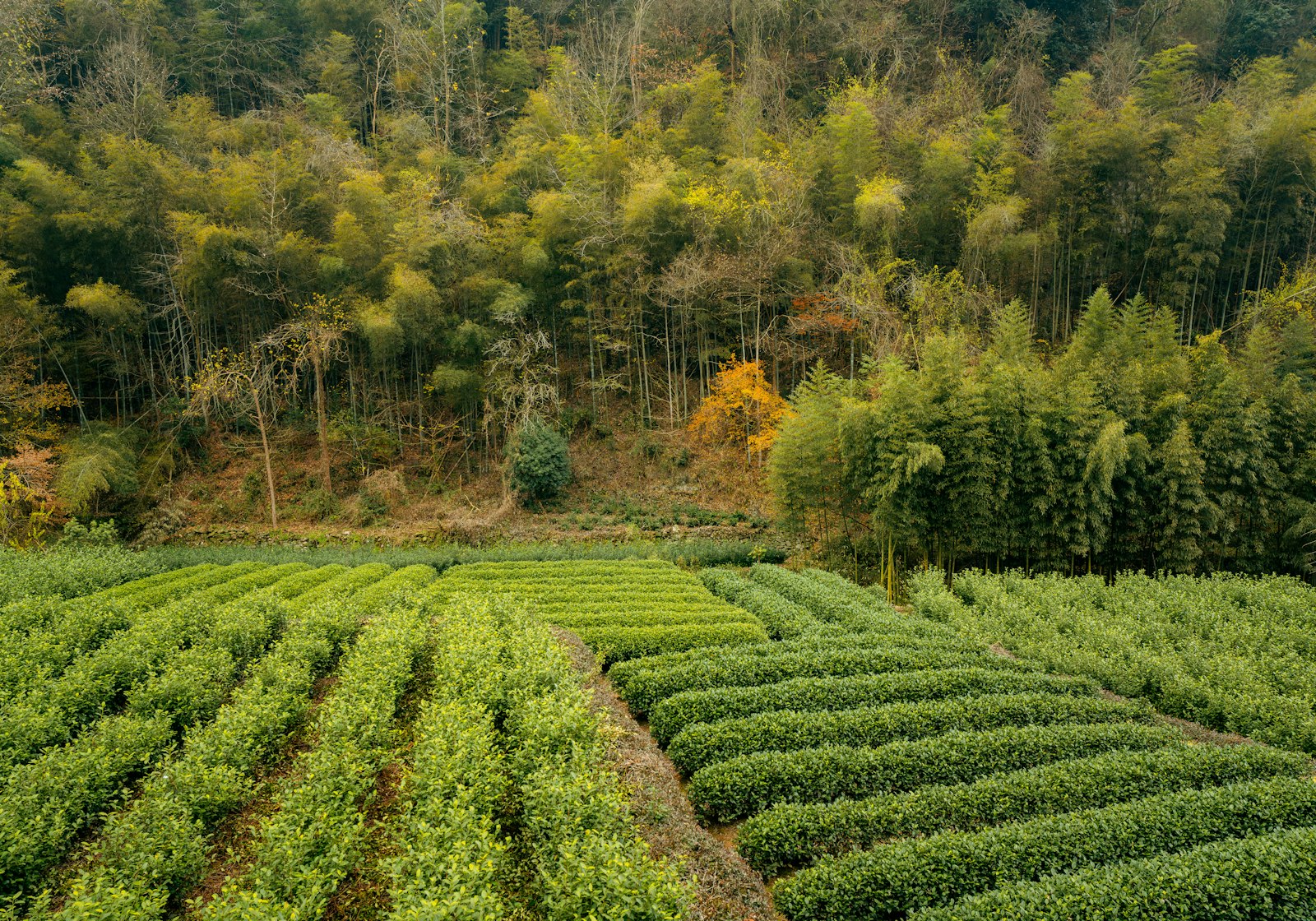
Gyokuro comes mainly from two prefectures. According to Kyoto Prefecture’s analysis, around 56 per cent of the volume in 2011 came from Kyoto, home to the Uji tea area. About 38 per cent came from Fukuoka, where Yame lies. Shizuoka supplied only around 4 per cent.
Yame is on the island of Kyushu. Since 22 December 2015, Yame Dentō Hon-Gyokuro has been registered as a geographical indication with Japan’s Ministry of Agriculture. There the bushes are shaded indirectly over a frame, with rice straw and other natural materials. Picking is done by hand, for more than 110 years according to the registration. The ministry describes the flavour as dense, mild and with very strong umami.
Brekell also explains the mildness of Yame gyokuro with natural shade from mist and wooded slopes. According to him, this results in less astringency and bitterness.
Asahina in Okabe, now part of the city of Fujieda in Shizuoka, is regarded as one of Japan’s three great gyokuro areas. There the bushes spend about 20 days under black cloth before harvest. At the tea house at the Gyokuro no Sato roadside station, the tea is brewed at just 40 to 45°C. In 2021, tea and a sweet there cost 510 yen together, roughly €3.
How to brew gyokuro: step by step
The recipes from Japanese sources are close together. Around 10 g of leaf gets only 50 to 80 ml of water. A German specialist retailer and our tea guide go a little higher at 70°C, but work with much more water.
| Source | Leaf | Water | Temperature | 1st infusion | further infusions |
|---|---|---|---|---|---|
| Shizuoka Prefecture | 10 g for 3 cups | around 20 ml each | 50°C (fine), 60°C (everyday) | 2 to 2.5 min | 2nd infusion 30 s |
| Kyoto tea house | 10 g | 80 ml | 60°C | 90 s | not specified |
| Tokyo tea merchant | 8 g | 50 ml | 40°C | 2 to 2.5 min | 2nd at 50°C, 3rd at 60°C |
| German specialist retailer, teapot | 11 g per litre | 1 l | 70°C | 2 min | not specified |
To start, stick to the Japanese values. Brekell also advises 50 to 60°C, as water that is too hot releases too many bitter compounds. Here is how to do it:
- Weigh: Put 8 to 10 g of gyokuro into a small teapot. That is about two slightly heaped tablespoons.
- Cool the water: Pour boiling water into cups and from there into a second and third cup. This cools it to around 60°C.
- Pour: Pour on 50 to 80 ml of water, just enough to cover the leaves.
- Steep: Wait 90 seconds to 2 minutes without stirring or swirling the pot.
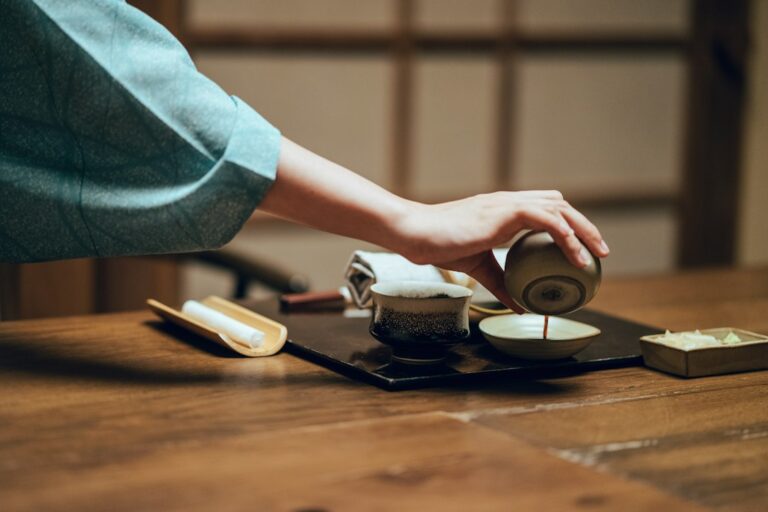
- Pour out: Share the tea among the cups in turn and pour out to the last drop.
- Further infusions: Pour on slightly warmer water and steep for only about 30 seconds. A third infusion at 60°C is also possible.
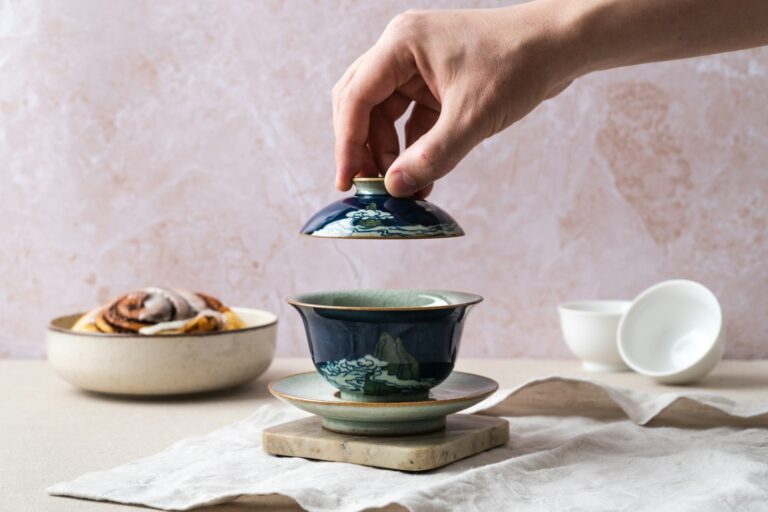
There are special small teapots without handles for gyokuro. A hōhin has a built-in strainer and straight sides like a beaker. A shiboridashi is flatter, more like a bowl, and holds back the leaves only with its lid. Both are meant for one serving. They don’t need a handle because the water never gets really hot.
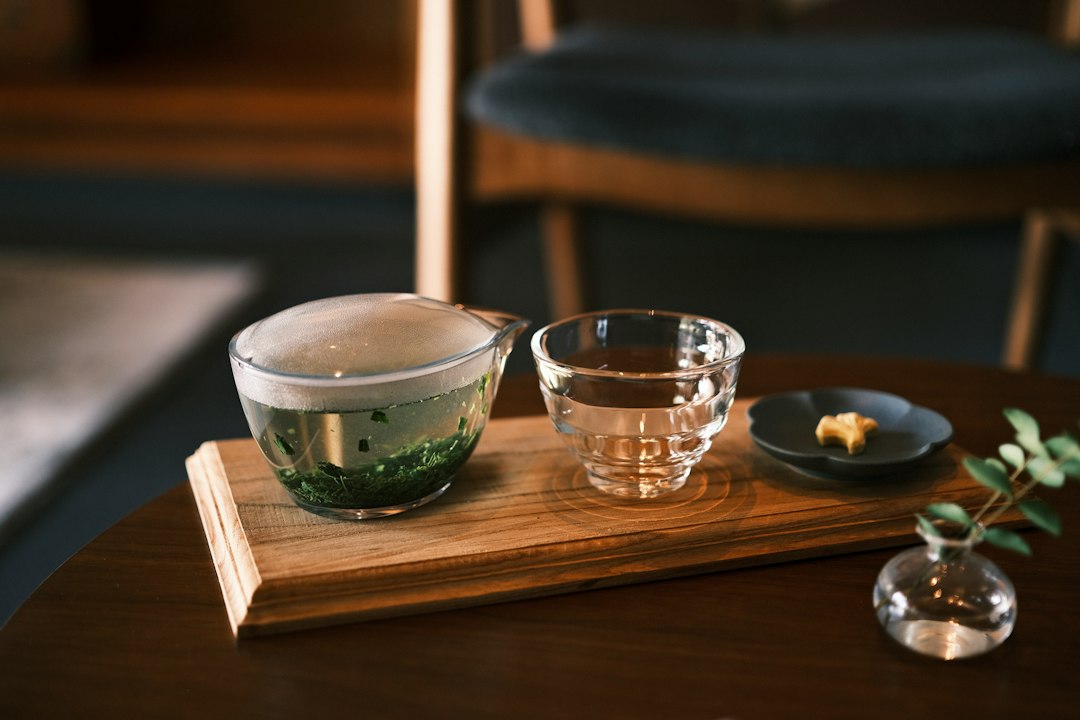
How to get the umami out of your gyokuro:
- Weigh the tea, because the fine needles are hard to measure with a spoon.
- Check the temperature with a thermometer until you have a feel for pouring between cups. How to cool water without a thermometer is explained in brewing tea properly.
- If the tea tastes thin, use more leaf or less water. If it is bitter, lower the temperature.
- Smell the empty cup between infusions, as Brekell recommends.
- Use soft water, because hard water dulls delicate aromas. More on this in water for coffee.
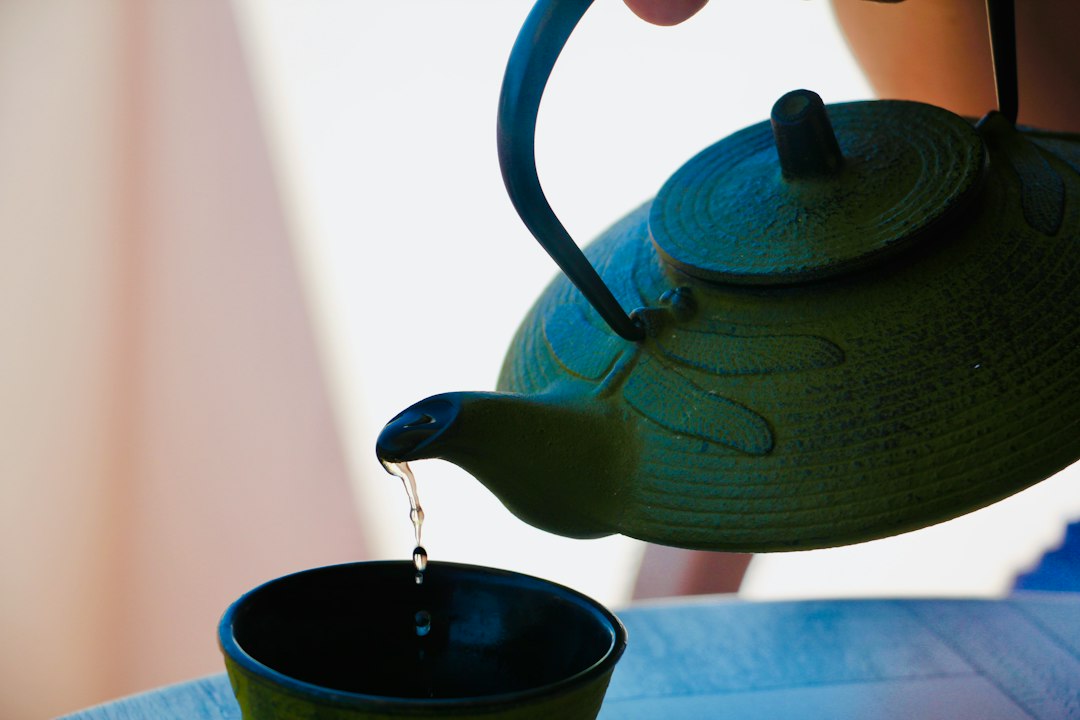
Iced gyokuro: kōridashi and cold brewing
Gyokuro can also be made without any hot water at all. With kōridashi, literally ‘extracted with ice’, you put ice cubes on the leaves and let them melt. An author who specialises in Japanese tea uses 4 g of gyokuro for one cup. He fills a small teapot with ice and waits until it has melted. For him this took about 3 hours.
Cold brewing with water from the fridge is quicker. The Kyoto tea house puts 10 g of leaf in the pot, pours on 210 ml of chilled water and steeps everything for 15 minutes. For iced gyokuro, by contrast, it brews hot and strong, with 210 ml of boiling water for 60 seconds. You then pour the tea over plenty of ice.
| Method | Leaf | Water | Time |
|---|---|---|---|
| Kōridashi (ice melts) | 4 g | small teapot full of ice cubes | about 3 h |
| Cold brewing | 10 g | 210 ml chilled water | 15 min |
| Iced gyokuro | 10 g | 210 ml boiling water, then over ice | 60 s |
For cold gyokuro, Brekell recommends a bottle with a built-in filter, which he says brings out savouriness and sweetness.
Prices: what gyokuro costs
Gyokuro is one of the more expensive leaf teas. A German specialist retailer sells an organic gyokuro from Japan for €34.70 per 100 g. Bought by the kilo, the price drops to €29.50 per 100 g. A Kyoto tea house charges 60 US dollars for 30 g of a competition tea from its premium range. That is roughly €54 (our conversion), or around €178 per 100 g. So a 10 g serving costs around €3.50 from the specialist retailer and around €18 for the competition tea (our conversion).
Each serving gives two to three infusions. When buying, details of region, harvest year and shading help. If the pack says Yame Dentō Hon-Gyokuro, it refers to the protected origin from Fukuoka.
To start, a simple gyokuro and a small teapot are enough. Brew it once following the Shizuoka recipe at 50 to 60°C and once cold with ice. That way you can taste for yourself how much umami is in the leaf.
Last updated: 24 October 2026.
Sources
- Kyoto Prefecture: 京都府茶業の概要 (2011 data) (in Japanese), around 2013, accessed 24 October 2026.
- Yamamotoyama (retailer information): Covered cultivation: gyokuro, kabusecha and tencha, undated, accessed 24 October 2026.
- Yamamotoyama (retailer information): How to brew Gyokuro, undated, accessed 24 October 2026.
- NARO, research consortium project 27015C: 被覆茶安定生産マニュアル (handbook for producing shaded teas) (in Japanese), March 2018.
- Chen, X. et al., Int. J. Mol. Sci. 23(22):14169: Effect of Shading on the Morphological, Physiological, and Biochemical Characteristics as Well as the Transcriptome of Matcha Green Tea, 16 November 2022.
- JETRO, Japan Food & Beverage: Discovering the Delights of Yamecha with Per Oscar Brekell, undated, accessed 24 October 2026.
- MEXT, Standard Tables of Food Composition (8th edition 2023), via calorie.slism.jp: 玉露 浸出液 (gyokuro, infusion) (in Japanese), accessed 24 October 2026.
- MEXT, Standard Tables of Food Composition (8th edition 2023), via calorie.slism.jp: せん茶 浸出液 (sencha, infusion) (in Japanese), accessed 24 October 2026.
- Ministry of Agriculture, Forestry and Fisheries of Japan (MAFF): GI No. 5: 八女伝統本玉露 (in Japanese), registered 22 December 2015, accessed 24 October 2026.
- Rurubu: Michi-no-Eki Gyokuro no Sato, Fujieda (in Japanese), updated 30 December 2021.
- Shizuoka Prefecture: おいしいお茶の入れ方 (how to make good tea) (in Japanese), 11 January 2023.
- Ippodo Tea (retailer information): Standard Gyokuro Brew, undated, accessed 24 October 2026.
- Ippodo Tea (retailer information): Cold Brew Gyokuro, undated, accessed 24 October 2026.
- Ippodo Tea (retailer information): Iced Gyokuro, undated, accessed 24 October 2026.
- Ippodo Tea, product page: Premium Select Gyokuro (30 g), accessed 24 October 2026.
- My Japanese Green Tea, Ricardo Caicedo: Ice Brewing Gyokuro, 23 May 2013, updated 15 December 2013.
- Sazen Tea (retailer information): Shiboridashi vs. Hohin, undated, accessed 24 October 2026.
- TeeGschwendner, product page: Japan Gyokuro Bio (in German), accessed 24 October 2026.