Most of the raw material for Japanese matcha now comes from Kagoshima in the south, around 43 per cent in 2025. Kyoto with Uji and Shizuoka follow with about 14 to 16 per cent each.Tencha volumes by prefecture, climate and cultivation, the history of each region and what origin means for flavour.
Matcha is ground from tencha. This is green tea made from shaded leaves that are steamed and then dried without rolling. So the question of where matcha comes from is mainly a question of where tencha grows.
Uji near Kyoto is seen as the birthplace of shade growing, and its name appears on many expensive tins. Yet the largest volume has long come from the machine-farmed fields of Kagoshima.
Tencha by prefecture: Kagoshima produces the most
According to Japan’s national association of tea producers, the country produced 6,278 tonnes of tencha in 2025. The agriculture ministry MAFF calculates that this is 8.6 per cent of the total crude tea harvest. Its situation report from October 2026 says this was around 3.2 times as much as in 2014.
| Prefecture | Tencha 2025 | Share (our calculation) | Known area |
|---|---|---|---|
| Kagoshima | 2,670 t | around 43 % | including Minamikyushu, Shibushi, Kirishima |
| Kyoto | 989 t | around 16 % | Joyo, Uji |
| Shizuoka | 875 t | around 14 % | conversion from sencha fields |
| Aichi | 463 t | around 7 % | Nishio, Toyota |
| Mie | 398 t | around 6 % | not stated |
| Miyazaki | 304 t | around 5 % | not stated |
| Fukuoka | 280 t | around 4 % | not stated |
| Japan total | 6,278 t | 100 % |
The ministry confirms the order of the top three. Kagoshima ranks first for tencha, Kyoto second and Shizuoka third. According to the prefecture, Aichi comes fourth.
Kagoshima is growing particularly fast. A ministry overview shows the prefecture produced 1,392 tonnes of tencha in the 2022 fiscal year. Three years later, the association’s figures put it at 2,670 tonnes. The figures come from different surveys.
Tencha is also far ahead on price. In 2025 the crude tea averaged 8,562 yen per kilogram over the year, roughly €51 (our conversion). According to MAFF, that is around 4.9 times the price of sencha. How the 2026 auctions went is covered in Matcha is running short.
Uji and Kyoto: where shade growing began
The history of Japanese powdered tea begins in 1191. That year the monk Eisai brought tea seeds back from China and gave them to the monk Myōe at Kōzan-ji temple near Kyoto. From there the tea reached Uji, according to a 2012 brochure from the Yamashiro region.
In the Muromachi period, the Ashikaga shoguns promoted Uji tea. Ashikaga Yoshimitsu had seven tea gardens laid out for his court, and only one of them survives. In the 16th century, Uji’s tea farmers developed growing under cover. Mats of reed and straw protected the young shoots from light and frost.
According to the agriculture ministry, shade growing goes back to the wishes of tea masters such as Sen no Rikyū. Why shade makes matcha less harsh is explained in Matcha: bitter or mild. Today there is a rule of thumb for it. Bushes grown for tencha are shaded for at least 20 days before the harvest.
The name Uji tea now covers more than the town. Under the definition the ministry cites, it grows in Kyoto, Nara, Shiga or Mie. It is then finished by businesses in Kyoto using the Uji region’s method. According to the brochure, tencha grows mainly in Joyo on the floodplain of the Kizu.
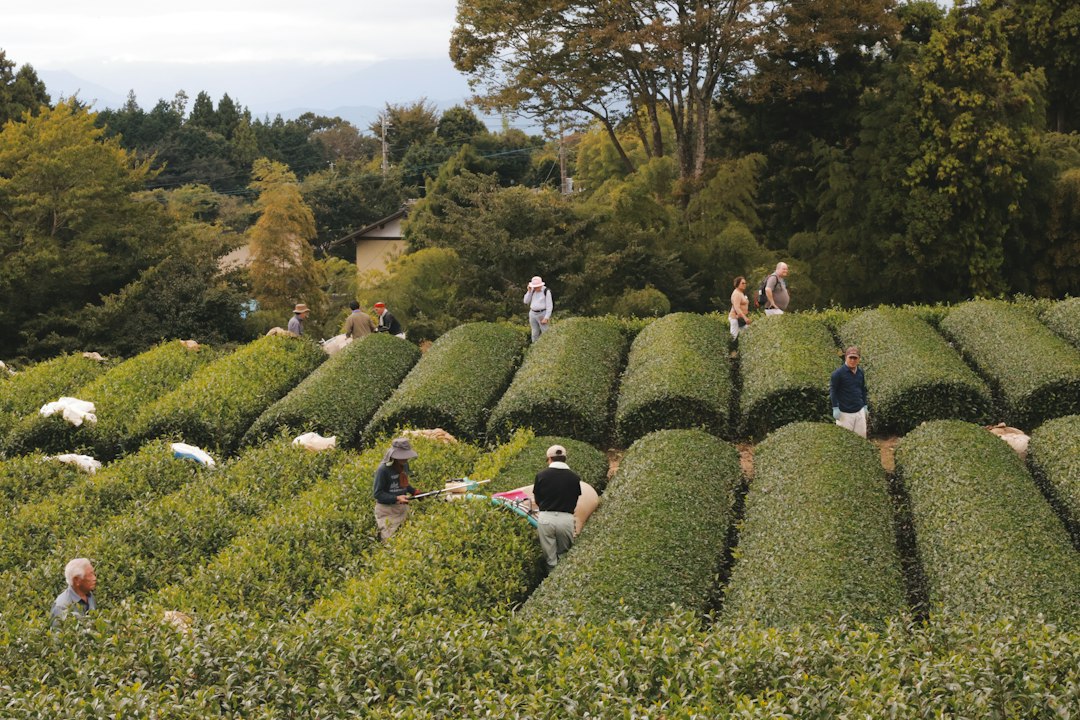
The tea areas lie in river valleys and on hillsides. Day and night temperatures differ sharply there. Mist over the Uji and Kizu rivers protects the shoots from frost. At the first tencha auction in Joyo on 13 May 2026, the average was 13,972 yen per kilogram, roughly €83 (our conversion).
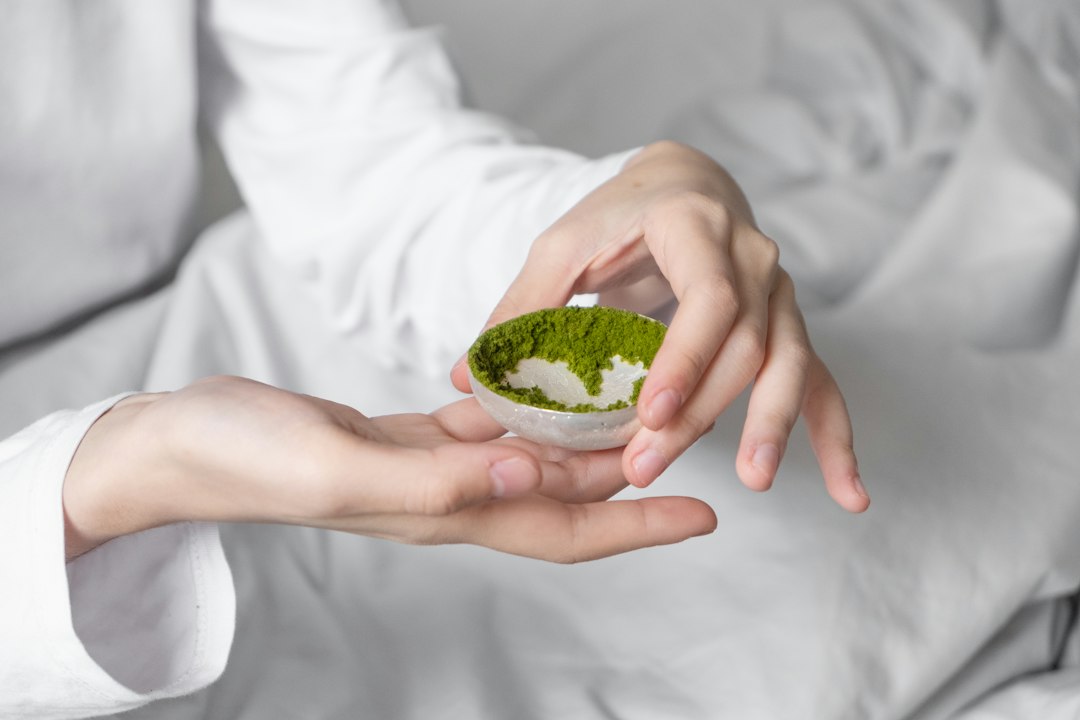
Nishio in Aichi: tencha in the Yahagi delta
Nishio lies in Aichi Prefecture, between Kyoto and Tokyo. Local tradition says the monk Shōichi Kokushi sowed tea seeds at the newly founded Jissō-ji temple in 1271. Serious cultivation only began in the Meiji era. In the late Taishō period, in other words the 1920s, tencha became the main product.
The fields lie in a delta between the Yahagi river and the Yahagi-Furukawa. In 2012 the prefecture named sandy, fertile soil and humid air from river mist as reasons for the good tencha. According to Aichi, it now grows mainly in Nishio and Toyota, with a high share from the first harvest.
Nishio was the only matcha in Japan with a protected geographical indication, listed by the ministry as number 27. According to a 2019 research report from the prefecture, it required trellises. Shade material lay over them for at least 25 days, and covering the bushes directly was forbidden. Grinding was done with granite stones from Okazaki.
On 14 February 2020 the ministry removed the entry at the request of the tea cooperative. Demand was for tea at around 1,000 yen per kilogram, roughly €6 (our conversion). Matcha from Nishio at over 3,000 yen, roughly €18, sold poorly. The cooperative also wanted to be allowed to produce more cheaply.
Kagoshima: big fields, early harvests, lots of machinery
Kagoshima lies at the southern tip of the island of Kyushu. According to legend, warriors of the Heike clan brought tea here around 800 years ago while fleeing. In the Muromachi period, a temple is said to have fetched seeds from Uji. From 1955 to 1964 Kagoshima was an important black tea region, and it switched to green tea after imports were liberalised.
Today Kagoshima harvests more tea than any other prefecture. According to MAFF, it produced around 30,000 tonnes of crude tea in 2025, compared with 24,100 tonnes in Shizuoka. A farm in Kagoshima manages 4.3 hectares of tea on average, compared with 1.7 hectares in Kyoto. The ministry says large machines work large areas.
The warm climate allows early and late cultivars and therefore a long harvest season. Farmers here pick the first new tea of the year as early as late March. At the tencha auction on 14 May 2026, traders paid an average of around 19,000 yen per kilogram, roughly €112 (our conversion).
The prefecture wants to expand further. Its cluster plan from September 2026 puts matcha exports in the 2024 fiscal year at 6.34 billion yen, roughly €38 million (our conversion). It supports new tencha factories, mills and cultivars for matcha. Above all, it wants more farms to shade for longer, because that is seen as a requirement for tencha.
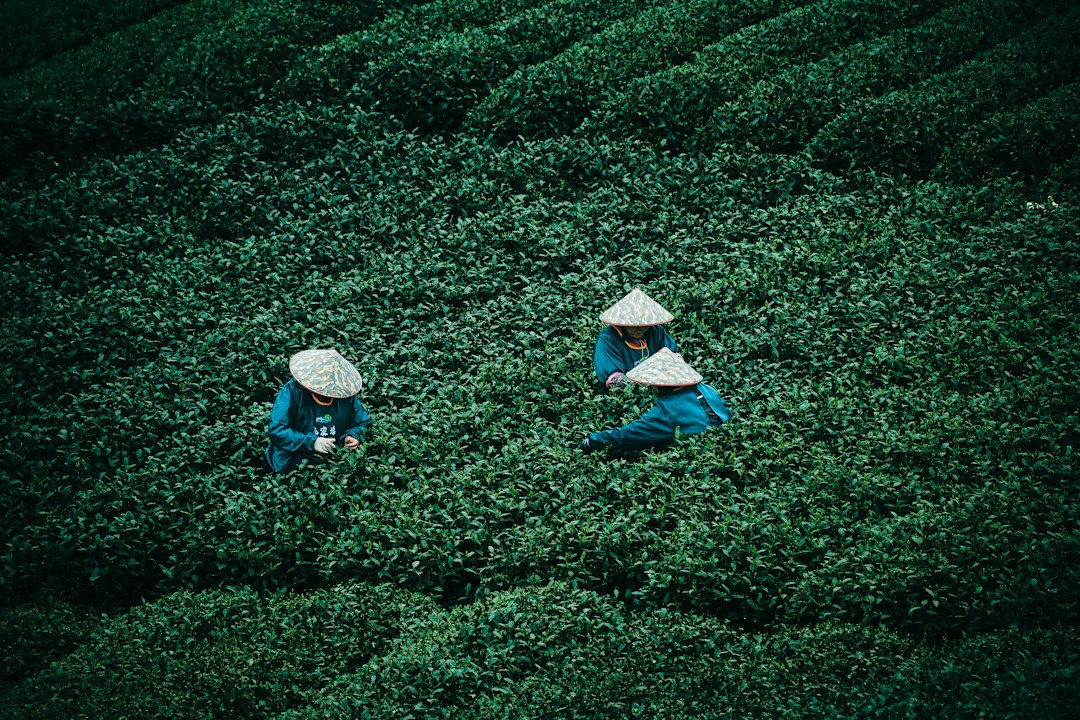
Shizuoka and other areas: from sencha to tencha
With 11,600 hectares, Shizuoka has far more tea land than Kagoshima with 8,040 hectares. It is best known for sencha. According to the regional cooperative federation, farms there have been switching from sencha to tencha very quickly since 2024. A Japanese trade newspaper reported this in June 2026.
In its tea promotion plan for 2025 to 2028, the prefecture gives 3,200 tonnes of matcha and tea powder for 2024. The target for 2040 is 8,600 tonnes.
Smaller volumes come from Mie, Miyazaki and Fukuoka. Fukuoka is home to Yame, best known for shaded leaf tea. You can read more about that tea in How to brew gyokuro. Outside Japan, China above all is expanding, with around 12,000 tonnes of matcha in 2025 according to industry estimates.
The climate differs clearly between the areas. Kagoshima is warmer and much wetter than Kyoto or Nishio. The table shows the 1991 to 2020 averages from the nearest major weather stations.
| Area | Weather station | Annual mean | Rainfall per year | Cultivation |
|---|---|---|---|---|
| Uji, Joyo | Kyoto | 16.2 °C | 1,523 mm | floodplains and slopes, traditionally mats |
| Nishio | Nagoya | 16.2 °C | 1,579 mm | delta, trellises with shade material |
| Shizuoka | Shizuoka | 16.9 °C | 2,327 mm | large sencha areas, conversion |
| Kagoshima | Kagoshima | 18.8 °C | 2,435 mm | large, machine-worked fields |
Origin and flavour: what studies show
We have not found any independent comparisons of Japanese matchas by origin. There is, however, an experiment from China, published in January 2025 in the journal Foods.
The researchers had matcha from the same cultivar processed in the same way at four locations. Two samples tasted fresh and barely bitter, two others harsher and astringent. A matcha from Shizuoka used for comparison received the best score, but it came from a different cultivar.
The study has limits. The paper does not make clear how many samples were tested per location. The location cannot be separated from the work of the individual farms. The authors consider the causes unexplained.
Besides location, other factors shape matcha. These include the cultivar, how long it is shaded, the harvest and the grinding. Under the old rules in Nishio, covering bushes directly was forbidden, because the prefecture says it produces weaker tencha. Kagoshima is currently focusing on longer shading.
For your own comparison, take two powders from different regions and prepare them the same way. A tea house in Kyoto recommends 2 g of powder to 60 ml of water at 80 °C. On the pack, details of prefecture, cultivar, harvest and shading help more than the place name alone.
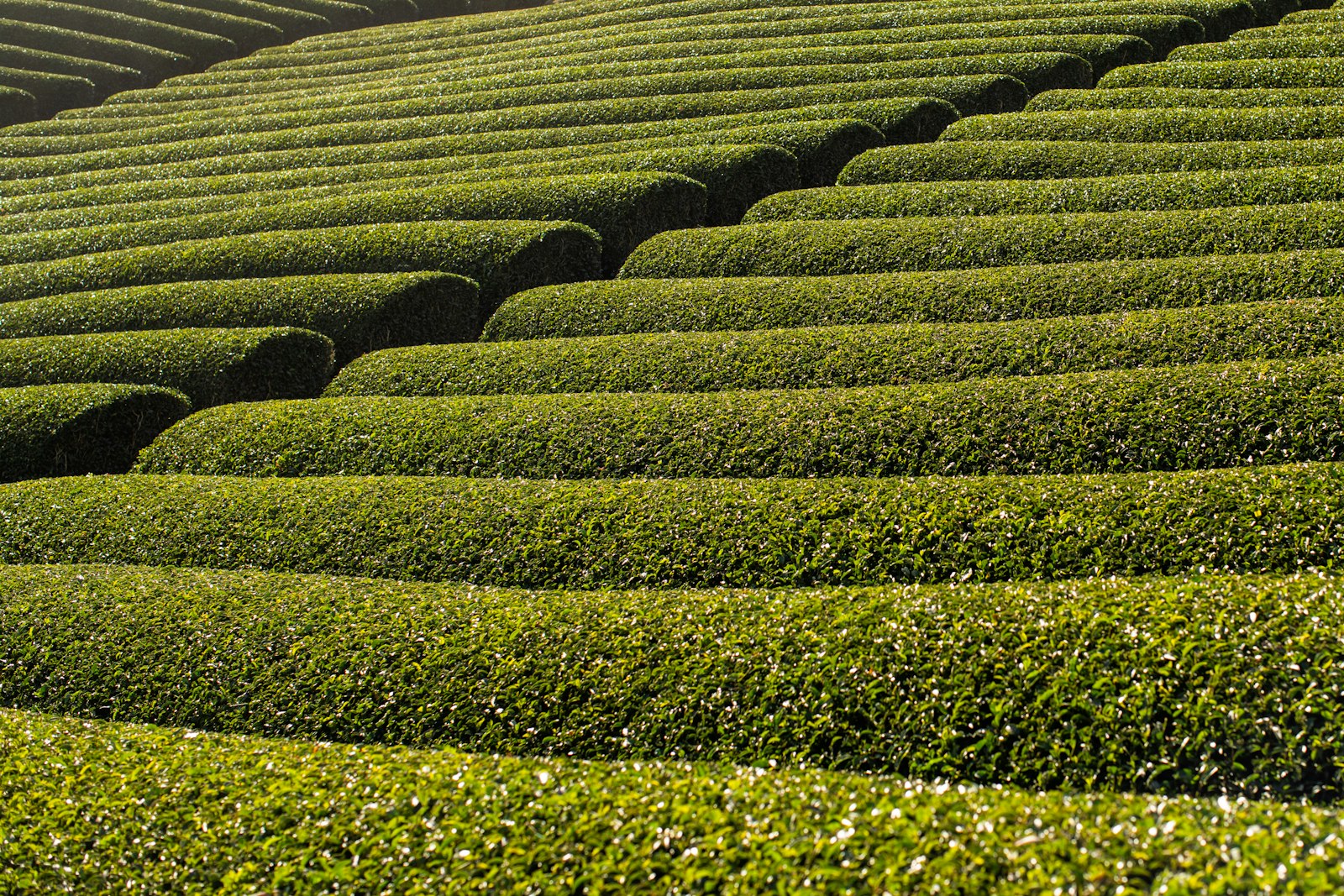
Uji invented shade growing, and Nishio specialised in tencha early on. The largest volume now comes from Kagoshima, and Shizuoka is catching up.
Last updated: 24 October 2026.
Sources
- Japanese Ministry of Agriculture, Forestry and Fisheries (MAFF): 茶をめぐる情勢, tea situation report (in Japanese), October 2026.
- Aichi Prefecture, based on figures from the Zenkoku Cha Seisan Dantai Rengokai (national association of tea producers): 2025年産茶の生産状況, tea production 2025 (in Japanese), 2026, accessed 25 October 2026.
- Japanese Ministry of Agriculture, Forestry and Fisheries (MAFF), Nippon Dentōshoku Zukan: かごしま茶 (Kagoshima tea) (in Japanese), undated, data for the 2022 fiscal year, accessed 25 October 2026.
- Japanese Ministry of Agriculture, Forestry and Fisheries (MAFF), Nippon Dentōshoku Zukan: 宇治茶 (Uji tea) (in Japanese), undated, accessed 25 October 2026.
- Yamashiro Region Executive Committee, Kyoto Prefecture: 宇治茶の歴史と文化 (history and culture of Uji tea) (in Japanese), October 2012.
- NARO, research consortium project 27015C: 被覆茶安定生産マニュアル (manual for producing shaded teas) (in Japanese), March 2018.
- Global Japanese Tea Association: Japanese Tea Report, May 2026, 29 May 2026.
- Tabi-Mag: 実相寺 (Jissō-ji and the beginnings of tea in Nishio) (in Japanese), undated, accessed 25 October 2026.
- Aichi Prefecture: 高品質な茶づくりと抹茶の消費拡大をめざす (a tea farm in Nishio) (in Japanese), 17 February 2012.
- Japanese Ministry of Agriculture, Forestry and Fisheries (MAFF), GI register: Nishio Matcha, Registration No. 27, accessed 25 October 2026.
- Aichi Prefectural Agricultural Research Center: デジタル画像を利用したてん茶被覆法の判別技術を開発 (telling tencha shading methods apart) (in Japanese), 2019.
- Jiji Press: 「西尾の抹茶」取り消し 地理的表示、全国初 (Nishio matcha loses its geographical indication) (in Japanese), 14 February 2020.
- Kagoshima Prefecture: 茶関連産業分野における地域産業クラスター計画の概要 (tea cluster plan) (in Japanese), September 2026.
- Nihon Shokuryo Shimbun: 全国緑茶特集2026 (green tea special 2026) (in Japanese), 22 June 2026.
- Shizuoka Prefecture: 静岡県茶業振興計画(概要)案 (tea promotion plan 2025 to 2028, draft) (in Japanese), undated, accessed 25 October 2026.
- Walker, J., Tea & Coffee Trade Journal: Matcha & Sencha: supply shifts and what they mean for buyers, 17 June 2026.
- Japan Meteorological Agency (JMA): 主な新平年値のデータ表 (new climate normals 1991 to 2020) (in Japanese), 24 March 2021.
- Cui, H.; Zhao, Y.; Li, H.; Ye, M.; Yu, J.; Zhang, J., Foods 14(1):97: Effect of Geographic Regions on the Flavor Quality and Non-Volatile Compounds of Chinese Matcha, 2 January 2025.
- Ippodo Tea, product page (retailer information): Ummon-no-mukashi, preparation, accessed 24 October 2026.