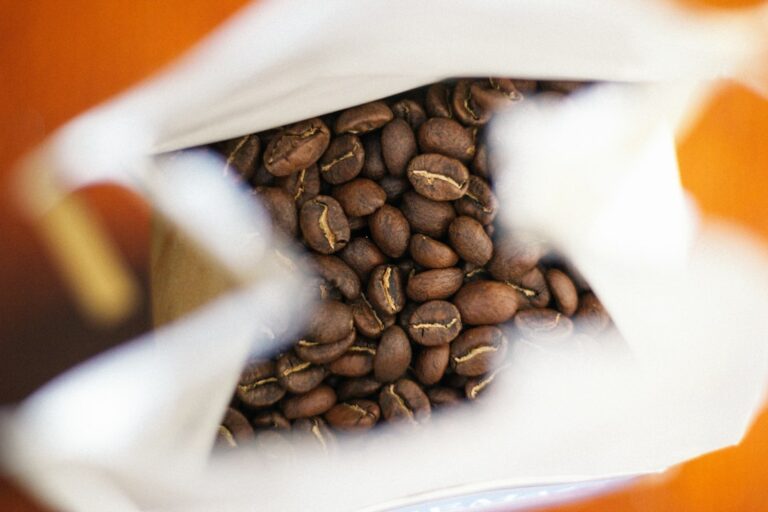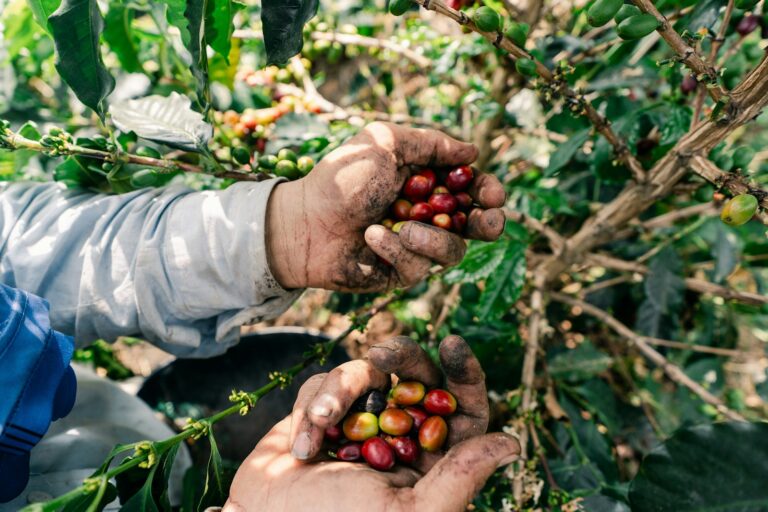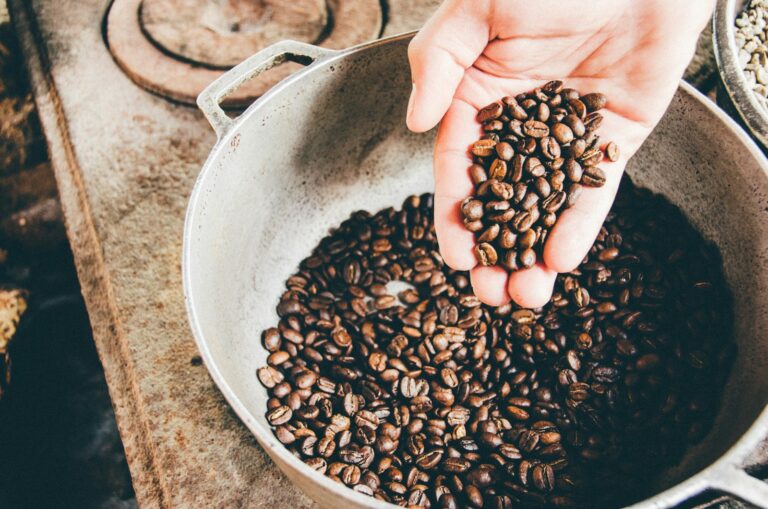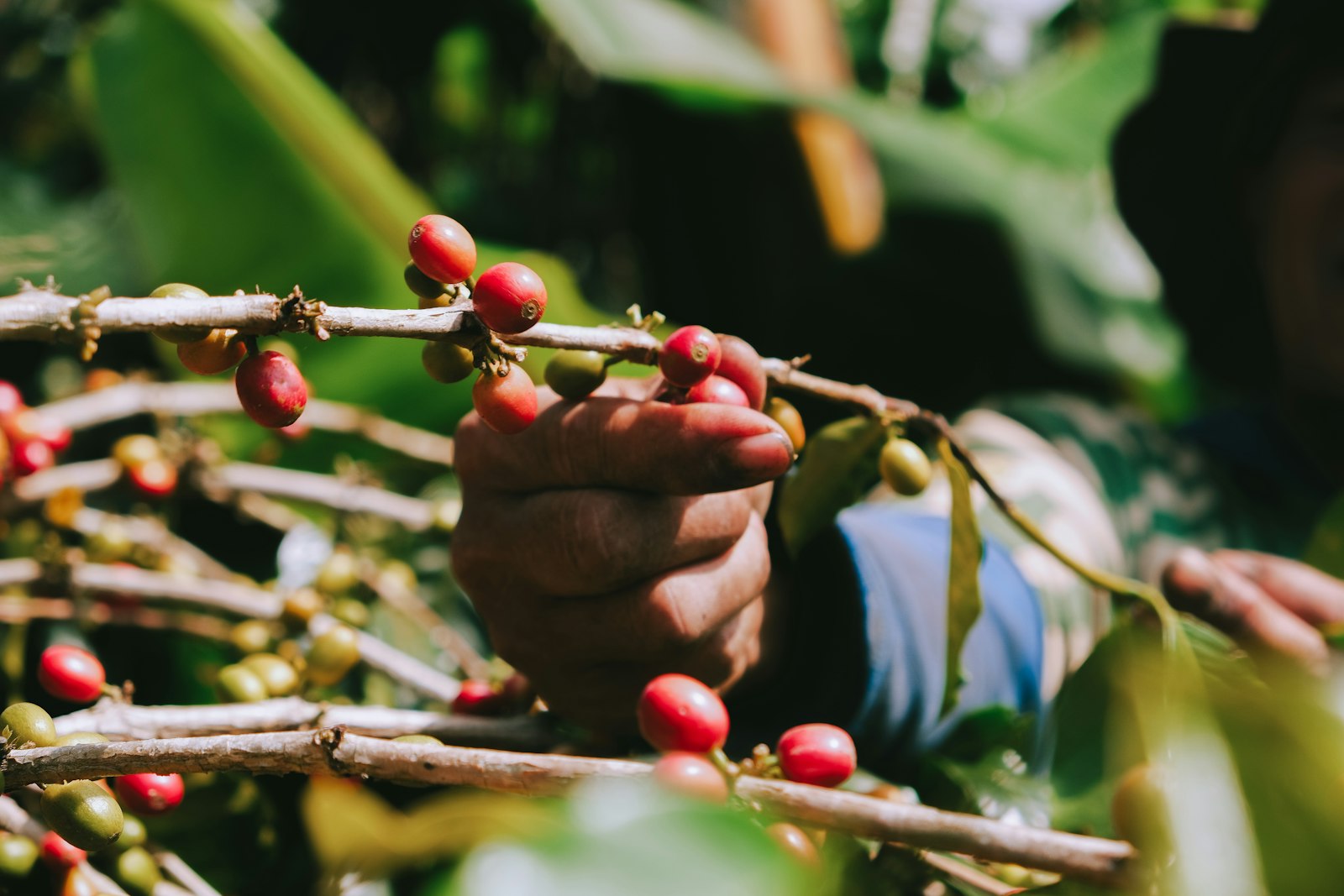
From the shrub to your cup, coffee passes through around ten stages. From flowering to brewing, this takes about eight to 20 months.The stages as a table, harvest, drying and export in jute sacks, roasting, grinding and brewing.
A coffee bean is the seed of a cherry. Before it lands in your grinder, it is picked, dried, sorted and shipped halfway around the world. It is usually only roasted in Europe.
Coffee spends most of its time waiting. It ripens, dries, rests and sits in a container. Roasting, by contrast, takes only minutes.
The stages at a glance: ten steps from shrub to cup
The times in the table are ranges from specialist sources, not fixed deadlines. Weather, producing country and trade route shift them a great deal.
| Stage | Where | How long | What happens |
|---|---|---|---|
| 1. Flowering and ripening | farm in the producing country | 6 to 12 months | the flower becomes a ripe, usually red cherry |
| 2. Harvest | farm | harvest season, picking rounds every 8 to 10 days | picked by hand, stripped or shaken off by machine |
| 3. Processing | farm or wet mill | hours to a few days | the fruit is removed fully, partly or not at all |
| 4. Drying | patio, raised bed or dryer | around 1 to 3 weeks in the sun | moisture drops to 10 to 12 % |
| 5. Resting and storage | warehouse in the producing country | often 6 to 8 weeks | coffee rests as parchment coffee |
| 6. Hulling, sorting, grading | dry mill | part of export preparation, 20 to 45 days | husk removed, sorted by size and defects, filled into sacks |
| 7. Export | port, ship, warehouse in Europe | sea freight 17 to 60 days, customs 7 to 10 days | green coffee travels in a container |
| 8. Roasting | roastery | around 4 to 15 minutes | green beans become brown, aromatic beans |
| 9. Resting after roasting | roastery, shop, kitchen | best fresh 1 to 4 weeks after roasting | beans release carbon dioxide |
| 10. Grinding and brewing | at home or in a café | seconds to a few minutes | aromas pass into the water |
If you add up the ranges, you get about eight to 20 months from flower to cup (our calculation). Ripening on the shrub makes up the largest part. Then come drying, resting, export preparation and sea freight. Longer storage at the importer or in your kitchen cupboard comes on top.
On the shrub: three years to the first harvest
Coffee grows on shrubs or small trees of the genus Coffea. Commercially, two species matter most. How they differ in flavour, caffeine and growing is explained in arabica or robusta.
After planting, a shrub needs patience. According to the US industry body National Coffee Association (NCA), it bears its first cherries after about three years. It reaches full yields after around five years. The French agricultural research centre CIRAD gives two to three years for arabica.
Two to three months after flowering, a small fruit forms. According to CIRAD, it takes six to eight months to ripen for arabica and eight to twelve months for robusta. The NCA speaks of almost a year. Most producing countries have one main harvest a year. Thanks to two flowerings, Colombia has a main and a secondary harvest.
A single shrub does not yield much. According to the NCA, an average coffee tree produces around 10 pounds of cherries a year, about 4.5 kg. That makes around 2 pounds, or 0.9 kg, of green coffee. After roasting loss, around 0.75 kg of roasted coffee remains (our conversion). So one shrub fills about one and a half 500 g packs a year.
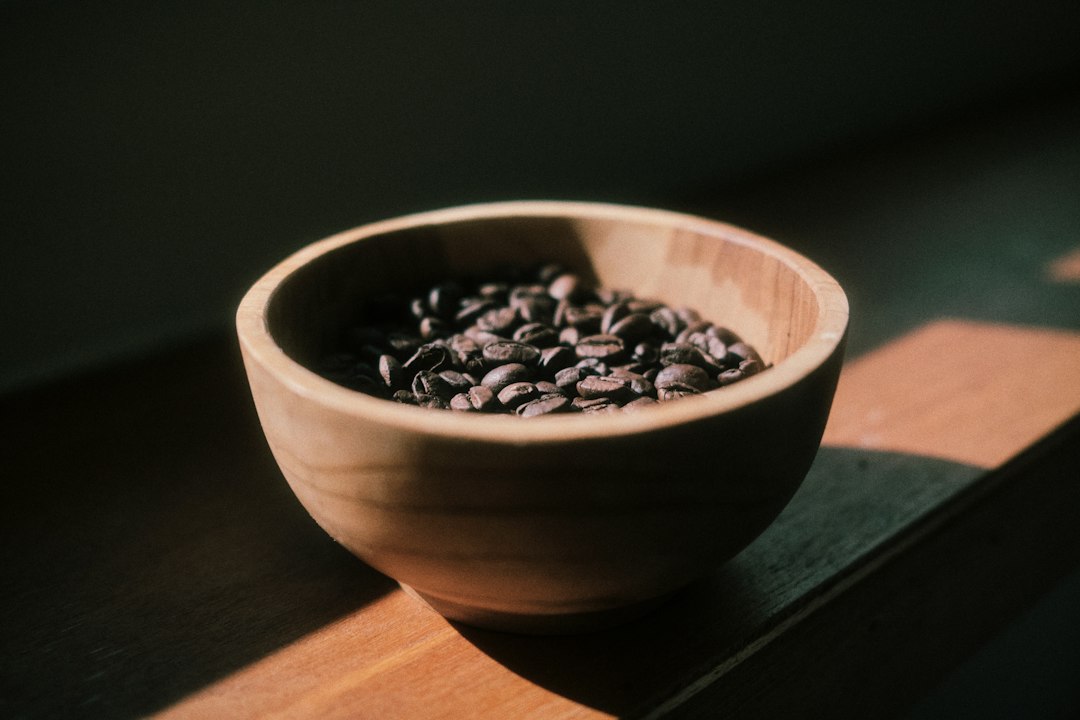
Harvest: picked, stripped or shaken off by machine
The cherries on a branch do not ripen at the same time. This leads to three ways of harvesting, which differ greatly in effort and quality.
| Method | How it works | Effect on quality |
|---|---|---|
| selective hand-picking | only ripe cherries, picking rounds every 8 to 10 days (NCA), four to five passes per season (CIRAD) | evenly ripe lots, very labour-intensive |
| stripping | the whole branch is stripped at once when most cherries are red | ripe and unripe cherries mixed, sorting only at the mill |
| mechanical harvesting | harvesters with rotating rods shake the cherries off | fast, only on flat or gently rolling land |
An Australian roastery describes mechanical harvesting in Brazil. The first machines arrived there in the late 1970s and have been widespread since the early 2000s. Stripped cherries are then sorted in water and at the dry mill, because the fresh fruit spoils quickly.
Processing and drying: the cherry becomes parchment coffee
Processing separates the bean from the fruit. With washed coffee the fruit comes off before drying, with a natural the whole cherry dries, and honey sits in between. How this shapes the flavour is explained in detail in processing: washed, natural and honey.
The aim of drying is the same everywhere. According to Perfect Daily Grind, parchment coffee has 40 to 50 % moisture before drying, and afterwards it should be 11 to 12 %. The SCA gives 10 to 12 % for green coffee. In the sun this takes 6 to 9 days for washed coffee and 10 to 14 days for natural and honey. CIRAD gives around 20 days for whole cherries, and it can take longer in bad weather.
Drying happens on patios, raised beds or in drum dryers. Afterwards the bean is still in a thin husk, the parchment. In this form, coffee rests for 6 to 8 weeks in many producing countries. In Latin America this pause is called reposo.
According to an article in the US trade magazine Roast, the rest has practical reasons. The lots stabilise before cupping and shipping. A shelf life of about 12 months is usual for green coffee. In one importer’s study, lots with reposo still tasted clean 18 to 20 months after harvest. It is a single observation from the trade, not a rule.
Hulling, sorting, export: in jute sacks into the container
Shortly before export, the coffee goes to the dry mill. A machine hulls off the parchment or dried fruit husk. Then it is sorted by size and defects. Screens measure size in 64ths of an inch, from 8/64 to 20/64. That is around 3.2 to 7.9 mm (our conversion), and larger beans usually fetch more money.
In grading, inspectors count defective beans in a sample. Under the protocol of the Specialty Coffee Association (SCA), the sample is at least 350 g. For specialty grade, no primary defect such as a black bean is allowed. There may be no more than five secondary defects such as broken or insect-damaged beans. Ethiopia has its own grades from G1 to G5.
Then it goes into the jute sack. According to Barista Hustle, the 60 kg sack is the standard in trade statistics, while Colombia packs 70 kg and Guatemala 69 kg. Many lots today also come in a plastic inner bag. According to an import table, a 20-foot container usually holds 250 to 320 sacks, around 17 to 19 tonnes (our conversion).
| Origin (examples) | Sack weight | Sacks per 20-foot container (standard) |
|---|---|---|
| Brazil | 60 kg | 320 |
| Ethiopia, Kenya, Indonesia | 60 kg | 300 |
| Guatemala, Honduras, Costa Rica, Peru | 69 kg | 250 |
| Colombia | 70 kg | 250 |
The journey itself takes weeks. A green coffee trading platform reckons on 20 to 45 days from purchase contract to finished container, including dry mill and bagging. Then come 17 to 60 days at sea and 7 to 10 days for customs, usually via Bremen. Roasters therefore buy months in advance, one reason why falling green coffee prices reach the shelf late.
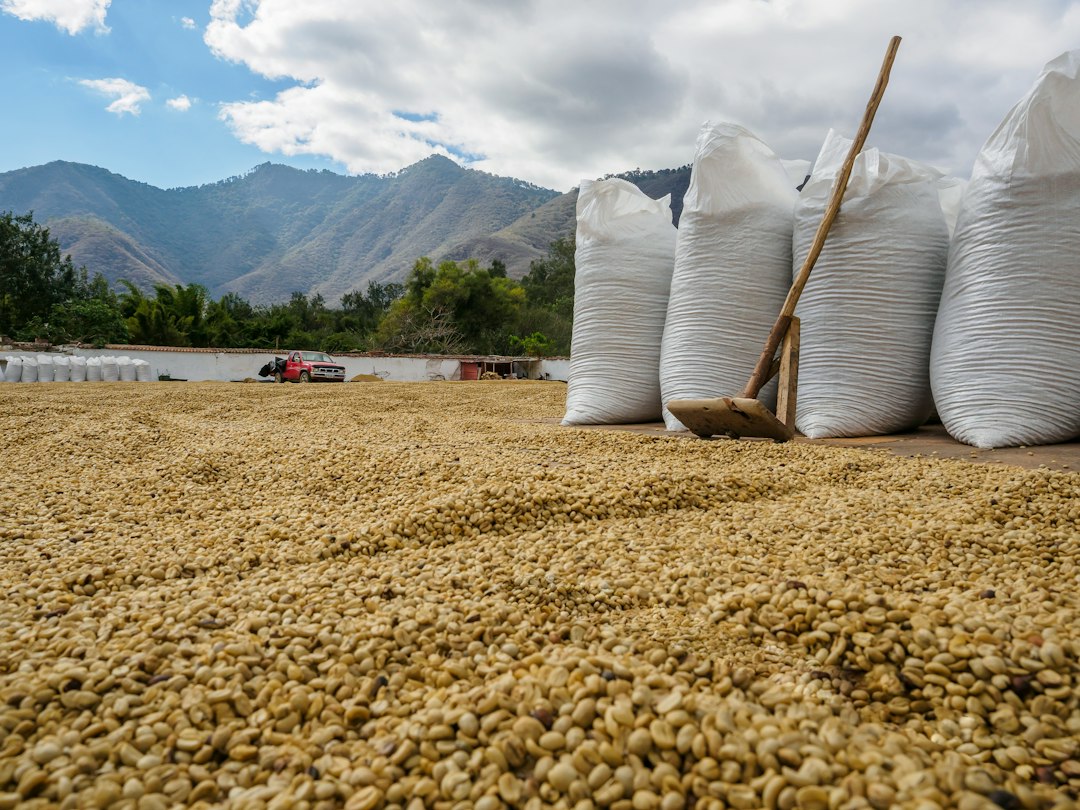
Roasting, grinding, brewing: the last minutes of the journey
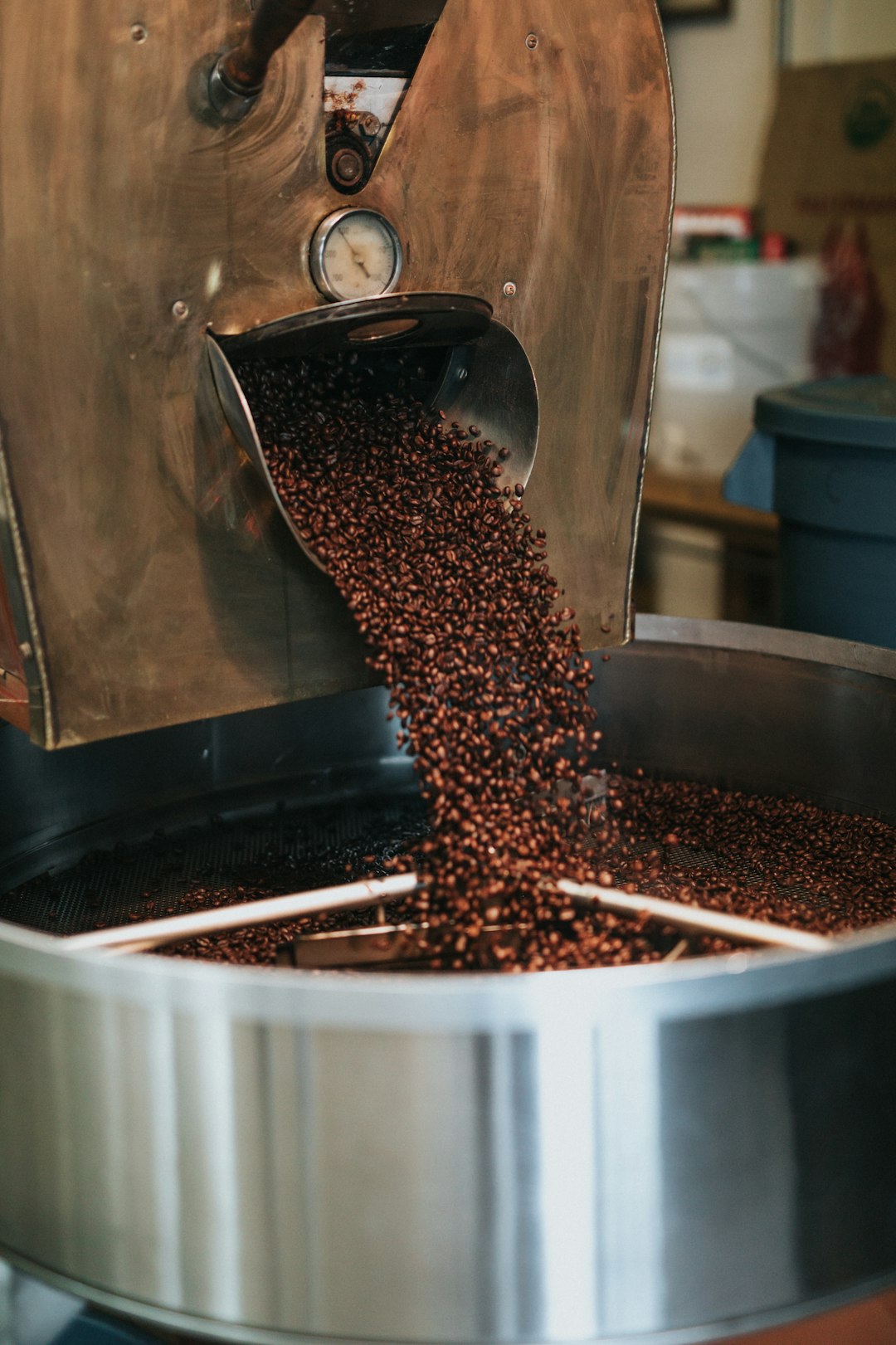
Green coffee is greenish, hard and smells of hay. Colour and aroma only develop during roasting. According to a series of Danish studies, roasting takes around 4 to just under 15 minutes, depending on style. How light and dark roasts taste is explained in light, medium and dark roasts.
In the process the beans lose 14 to 20 % of their weight, mainly water. So one kilo of green coffee becomes a good 800 g of roasted coffee. After that the beans need some time, because they release carbon dioxide. According to the SCA, they taste freshest about one to four weeks after roasting.
The last stage is the shortest. A lot of gas escapes during grinding. In a measurement by the Zurich University of Applied Sciences (ZHAW), it was up to 75 % in the first 90 seconds. Volatile aromas leave with the gas. An espresso then runs for 25 to 30 seconds, a pour-over around 2 to 4 minutes depending on the recipe.
Every pack holds months of work by farmers, mills, traders and roasters. Grinding fresh and brewing carefully is the easiest part of the chain.
Last updated: 24 October 2026.
Sources
- National Coffee Association: What is Coffee?, last modified 6 October 2026.
- National Coffee Association: Lifecycle of Coffee, last modified 6 December 2024.
- CIRAD: Coffee: plant and uses, undated, accessed 24 October 2026.
- Five Senses Coffee: Part III: Unveiling Mechanical Harvesting in Brazil, 4 April 2014.
- Castellano, N., Perfect Daily Grind: A Guide to Coffee Drying, 24 November 2020.
- Stazzone, J., Roast Magazine, issue 135: Reposo’s Impact: Shelf Life and Cellular Stability of Green Coffee, May/June 2026.
- Cropster: Green grading coffee, 11 January 2022, updated 13 December 2024.
- StoneX: Coffee grading (glossary), undated, accessed 24 October 2026.
- Barista Hustle: Knowledge article on green coffee sacks and sack weights, undated, accessed 24 October 2026.
- Royal Coffee: Coffee Weights (sack weights and sacks per container by origin), undated, accessed 24 October 2026.
- Algrano Help Center: How long will I wait to release my coffee from the warehouse after I place an order?, undated, accessed 24 October 2026.
- Münchow, M.; Alstrup, J.; Steen, I.; Giacalone, D., Beverages 6(2), 29: Roasting Conditions and Coffee Flavor: A Multi-Study Empirical Investigation, 8 May 2020.
- Barista Hustle: Knowledge article on weight loss during roasting, undated, accessed 24 October 2026.
- Specialty Coffee Association, Antony Watson, 25 Magazine 4: Preserving Freshness: A Race Against Time, accessed 24 October 2026.
- Smrke, S. et al. (ZHAW), Journal of Agricultural and Food Chemistry: Time-resolved gravimetric method to assess degassing of roasted coffee, 2018.
- Kaffeemacher, Benjamin Hohlmann: Espresso zubereiten: Anleitung, Rezept & Mahlgrad (in German), 16 August 2026.
- Coffee Collective: Brew guide: Kalita Wave, accessed 24 October 2026.
- Verve Coffee Roasters: How To Brew At Home: Chemex, 17 September 2020.