Chinese green tea such as Longjing is usually heated in a hot pan, Japanese green tea is steamed. Pan-fired tea therefore smells more floral and toasty, steamed tea fresher and grassier.Pan and steam compared, Longjing origins and prices, Bi Luo Chun and brewing in a glass.
China is the great green tea country. In 2024 it produced almost 2.1 million tonnes of green tea, around 55 per cent of its total tea harvest. Black tea accounted for only 13.6 per cent.
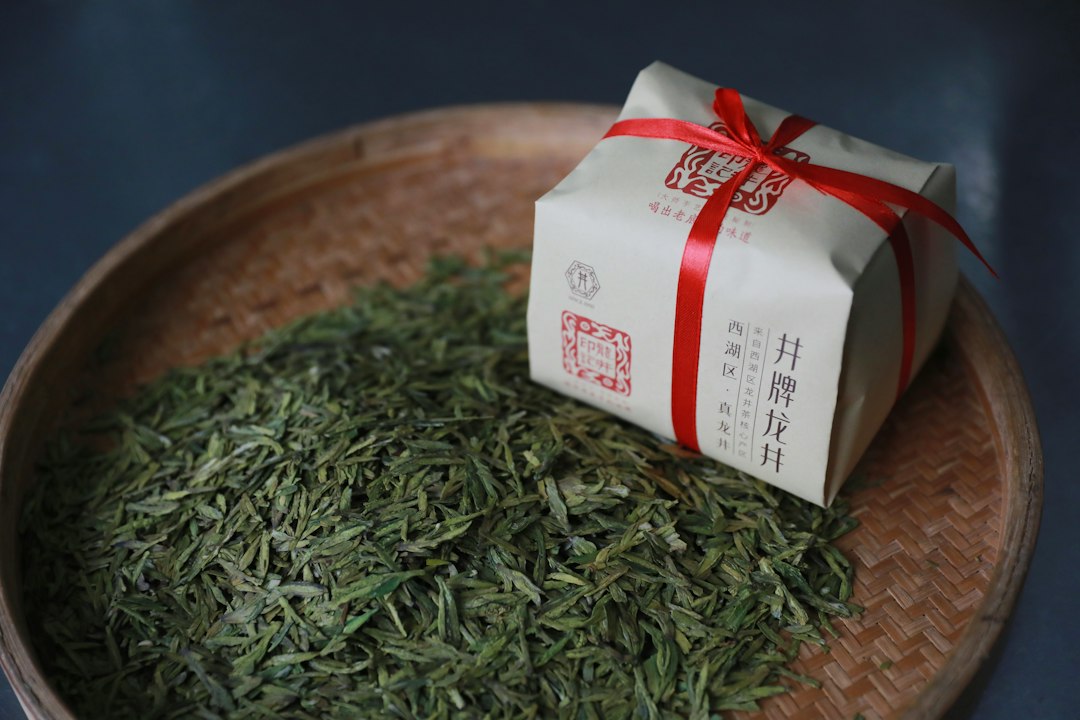
The best-known variety is Longjing from Zhejiang province, often sold in German shops as Lung Ching. The name means Dragon Well. There are also many regional green teas, from the curly Bi Luo Chun to flat and needle-shaped leaves. Almost all of them share the same processing step right after picking.
Pan or steam: how heat shapes green tea
Green tea is made when heat stops the enzymes in the fresh leaf. The leaf then does not oxidise and stays green. With oolong, by contrast, the tea maker lets this oxidation run for a while. In Chinese the heating step is called shaqing, literally killing the green.
There are two ways to do it. The Japanese prefecture of Shizuoka calls steaming the Japanese method and heating in an iron pan the Chinese one. In Japan pan-fired tea is the exception. According to the Japan Tourism Agency, the tea known there as kamairicha makes up only about 1 per cent of green tea. Conversely, Enshi Yulu from Hubei province is considered the only Chinese green tea fixed with steam.
| Chinese green tea | Japanese green tea | |
|---|---|---|
| Heating step | dry heat in a pan or drum | steam |
| Typical leaf shape | flat, curly, twisted or needle-like | mostly thin needles |
| Aroma | floral, often with toasty notes | fresh, grassy, with umami in good quality |
| Examples | Longjing, Bi Luo Chun | sencha, gyokuro |
The difference can be measured. In 2022 Chinese researchers analysed 22 typical pan-fired teas and found 88 aroma compounds. The samples contained most geraniol, which smells of rose, followed by beta-ionone and linalool. Several floral compounds such as geraniol and nerolidol were mostly higher in the pan-fired teas than in steamed, baked and sun-dried green teas.
Retailers also like to describe Longjing as having toasty notes reminiscent of sweet chestnut. That is a tasting impression, not a measurement. How steamed tea is made in Japan and how it tastes is explained in sencha: Japanese green tea.
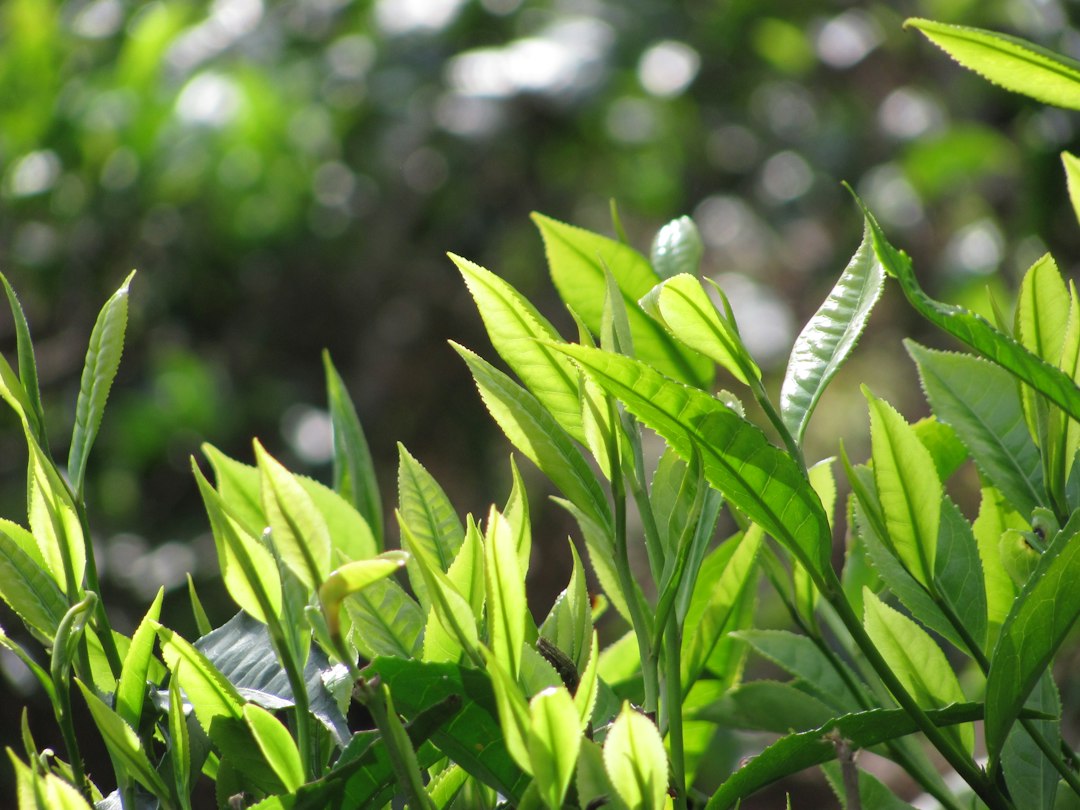
Longjing from the wok: pressed flat in two pans
You can recognise Longjing by its shape. The best leaves are flat, smooth, straight and pointed. The product specification for the protected designation of origin sets out exactly how they are made. Picking starts as soon as there are 10 to 15 suitable buds per square metre. The leaf must be in processing no later than 4 hours after picking.
| Step | Temperature | Duration | What happens |
|---|---|---|---|
| light withering | not specified | short | leaf loses some water |
| first pan (qingguo) | 90 to 100°C, hotter at first | 12 to 14 min | enzymes stopped, around 70 % of the water evaporates |
| cooling | room temperature | rest | moisture spreads through the leaf |
| second pan (huiguo) | 60 to 70°C | 15 to 20 min | leaf is pressed flat and finishes drying |
For top quality, the first pan holds only 100 to 150 g of leaf, and up to 250 g for simpler grades. In the second pan two of these portions are combined. The finished tea may contain no more than 6.5 to 7 per cent water.
The specification recognises six quality grades, from the special grade to grade V. The higher the grade, the more delicately green the infusion and the longer the fragrance lasts. Lower grades turn yellowish green and taste rather neutral. Additives, artificial colouring and admixtures are prohibited.
Xihu, Qiantang, Yuezhou: where Longjing grows and what it costs
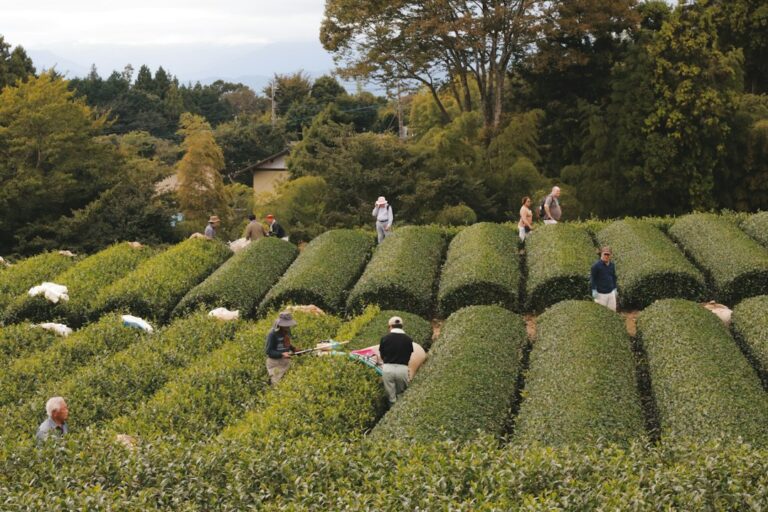
Longjing may only come from three areas in Zhejiang, and the area must be stated on the packet. Xihu is the area around West Lake in Hangzhou. Qiantang covers further districts and counties around Hangzhou, including Fuyang, Tonglu and Jiande. Yuezhou lies around the city of Shaoxing. Only tea picked and processed at West Lake is called Xihu Longjing.
So the famous name stands for the smallest quantity. According to a March 2026 report in the newspaper Chao News, only about 2 per cent of Longjing comes from Xihu. The tea gardens there cover around 23,000 mu, which is about 15 km² (our conversion). Only three cultivars are approved at West Lake, including Longjing 43.
| Area | Location | Share of Longjing | Price at the start of the 2026 harvest |
|---|---|---|---|
| Xihu | West Lake, Hangzhou | about 2 % | from 1,500 yuan per 500 g, roughly €195 (our conversion) |
| Qiantang | counties around Hangzhou | just over 30 % | from 400 yuan per 500 g, roughly €52 (our conversion) |
| Yuezhou | around Shaoxing | about 65 % | not specified |
Handwork pushes the price up further. According to China Daily, hand-processed Xihu Longjing cost over 10,000 yuan per 500 g in 2026, roughly €1,300 (our conversion). Machine-processed tea was 4,000 to 6,000 yuan, roughly €520 to €780. According to Chao News, top lots fetch much higher prices still.
To fight counterfeits, Hangzhou issues origin labels to the producers in the protected area. Unused labels must be returned after the spring season and are destroyed at the end of the year. According to Chao News, that came to 260,000 labels last year. In Germany the label is of little help, because repacked tea no longer carries it.
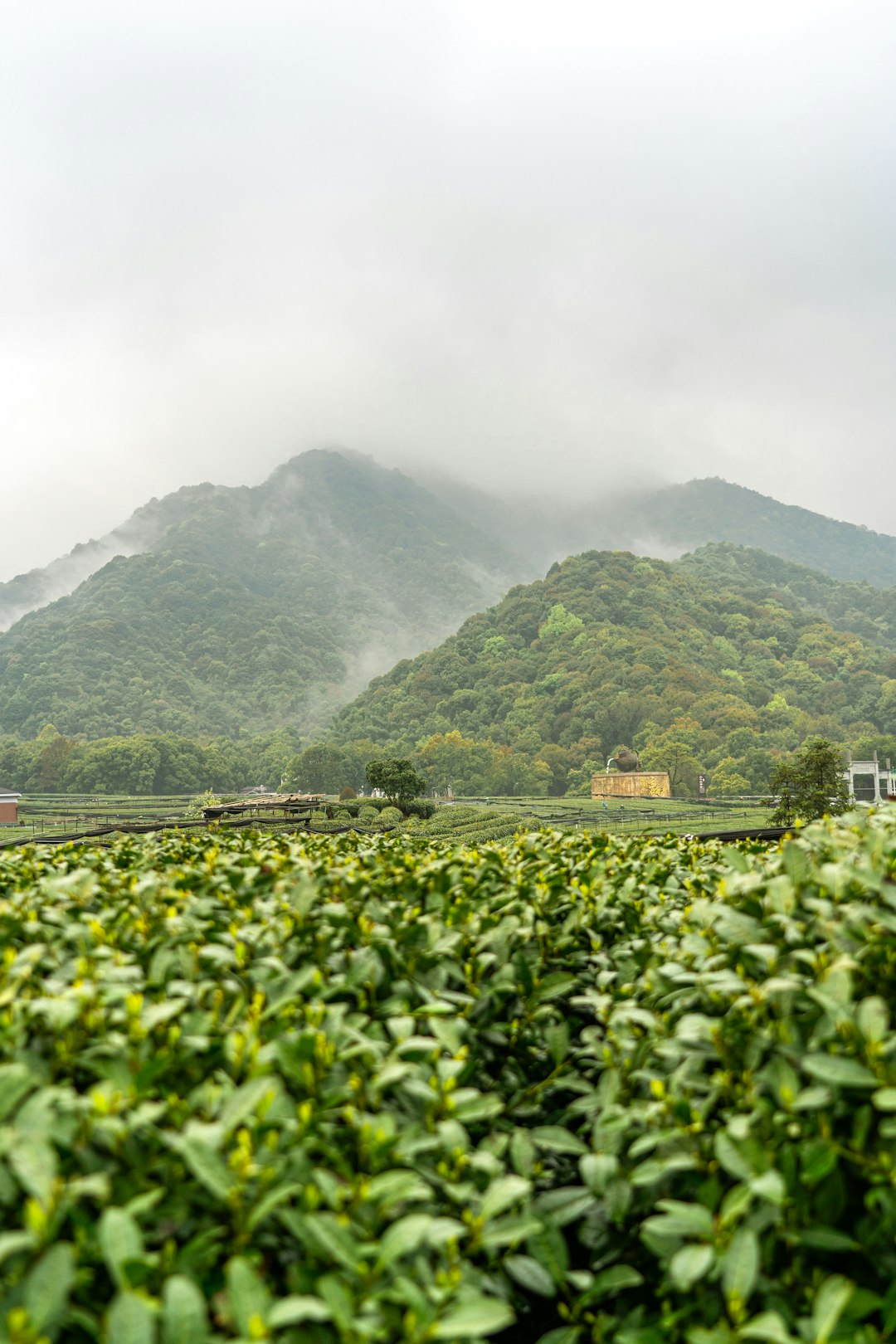
Harvest time: what mingqian on the packet means
Many Longjing packets carry the note mingqian, before Qingming. Qingming is one of the 24 solar terms of the Chinese calendar and begins in early April. Mingqian tea comes from the very first spring harvest with very young buds. The specification sets no such cut-off date. It only quotes an old poem that recommends buds from before Guyu, the solar term around 20 April.
When the harvest starts depends on the weather and the cultivar. At West Lake the first Longjing of 2026 was picked on 17 March, and the official start for Longjing 43 was 19 March. The old landrace grown from seed followed at the end of March. The early cultivar Wuniuzao was harvested in large quantities in Qiantang and Yuezhou a week earlier. It may not be sold as Xihu Longjing.
So mingqian tells you something about timing, but little about location and plant.
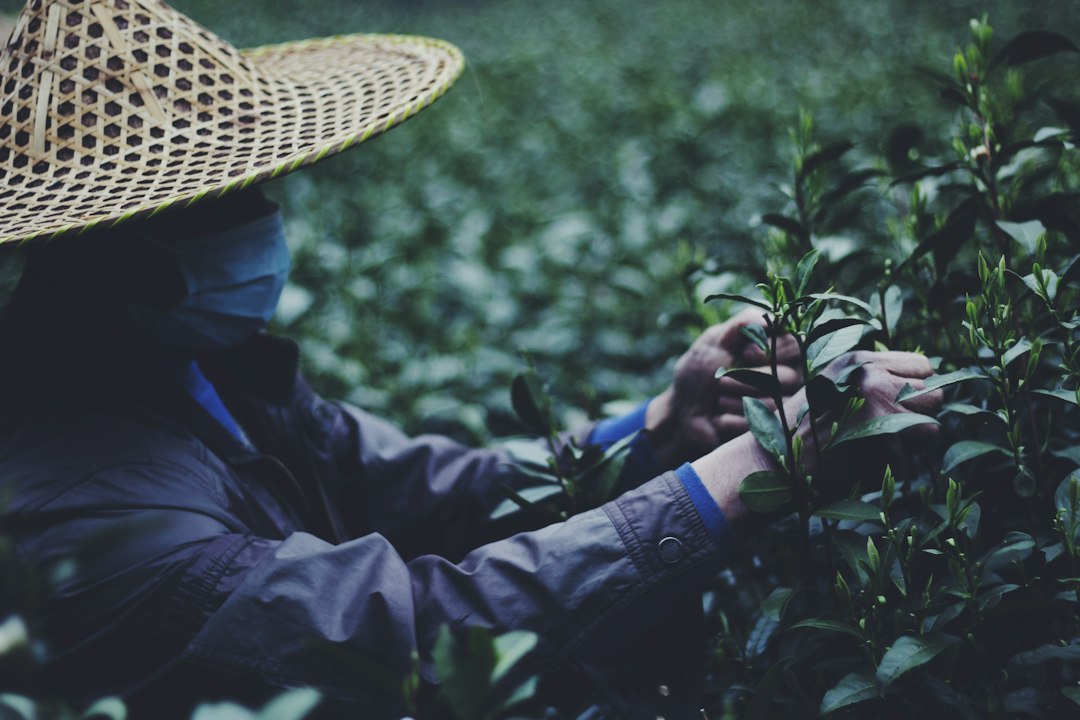
Bi Luo Chun: rolled instead of pressed flat
Bi Luo Chun shows how much the work after the pan shapes the tea. It grows on Dongting Mountain by Lake Tai, west of Suzhou in Jiangsu province. It too is fixed with intense heat. After that, however, the leaf is kneaded while hot, rolled into small balls and dried over gentle heat.
The result is thin, tightly curled leaves reminiscent of snail shells. The Chinese name means green snail spring. According to the China National Intellectual Property Administration, the tea has a long-lasting, delicate fragrance and a sweet aftertaste. Picking runs from the March equinox to Guyu in April.
Mixed cultivation is typical of the area. Forest and fruit trees cover 25 to 35 per cent of the gardens, with the tea bushes growing in between.
Brewing: in a glass, a gaiwan or a teapot
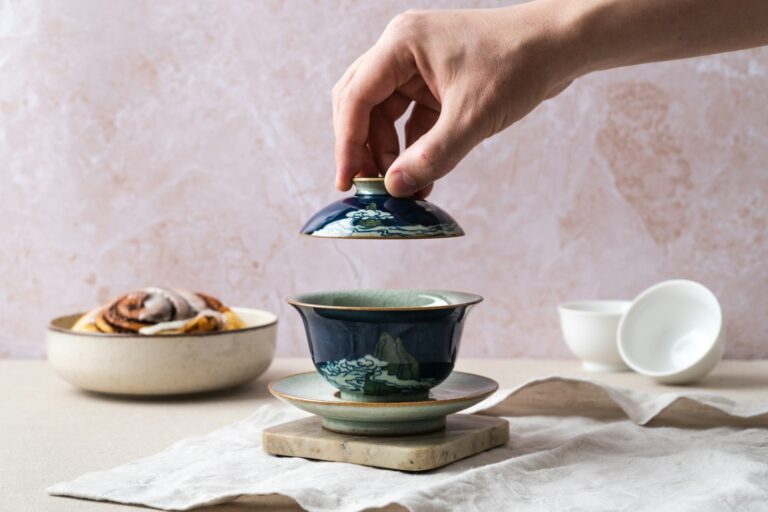
In China green tea is often brewed in a tall glass. In it you can watch the leaves open and slowly sink. A gaiwan, a lidded bowl, works just as well for several short infusions.
Retailers’ recommendations differ. A German specialist tea retailer gives 85°C for small vessels for its Lung Ching, and 80°C for a teapot. In his video, a Canadian retailer works with boiling water and advises going cooler if you then prefer the taste. He measures by ratio and judges when to pour off by the colour of the infusion.
| Vessel | Leaf and water | Temperature | Steeping time |
|---|---|---|---|
| Glass or gaiwan (producer information from the German retailer) | 4 g to 150 ml | 85°C | 1 min, several infusions |
| Teapot (German retailer) | 12 g per litre | 80°C | 2 min |
| Gaiwan (Canadian retailer) | 1 g to 30 ml, about 3 g to 90 ml | boiling, cooler if needed | 60 to 120 s, then 10 to 20 s longer each time |
| Glass (Canadian retailer) | 1 g to 100 ml, about 3 g to 300 ml | boiling, cooler if needed | 60 to 120 s, then 10 to 20 s longer each time |
To start with, 80 to 85°C is a safe range. If the tea turns bitter, use slightly cooler water or shorten the time. If it tastes thin, add more leaf. In a gaiwan, pour off each infusion completely, otherwise the rest keeps steeping. How to cool water without a thermometer is explained in how to brew tea properly.
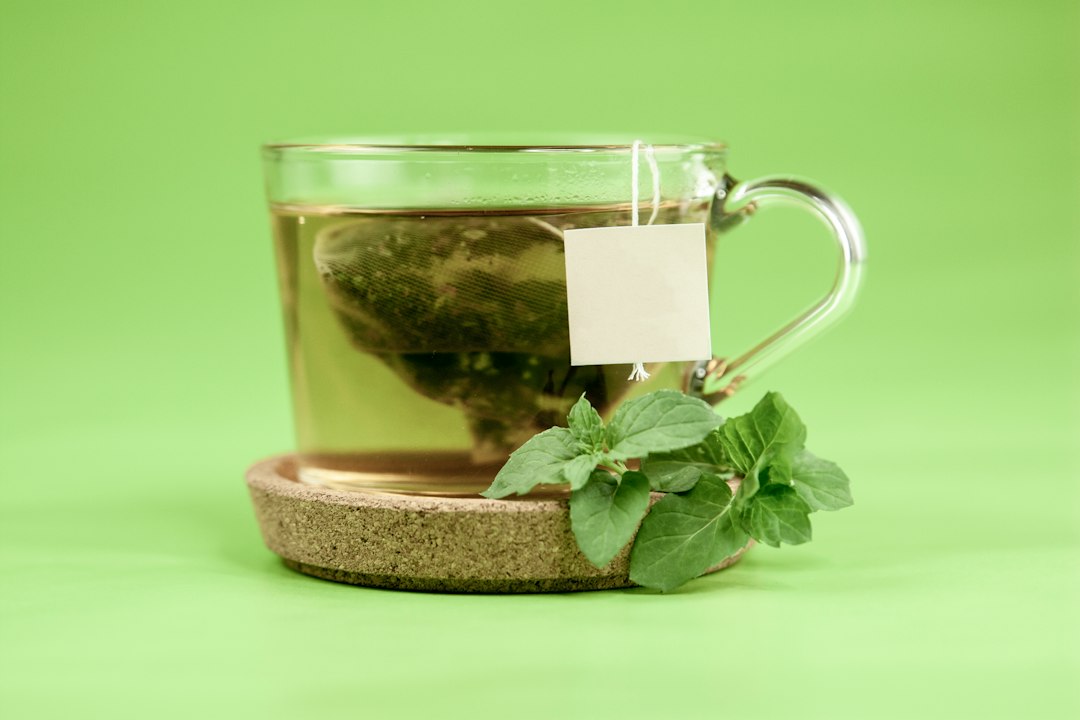
To get started, pick a Longjing with a clear statement of origin and a Bi Luo Chun. Brew them one after the other in a glass at 80°C and compare the leaves. A sencha alongside shows you what difference pan and steam make.
Last updated: 24 October 2026.
Sources
- Jason Walker, Tea & Coffee Trade Journal: Changing Consumption Patterns Spur Green Tea Growth, 28 August 2025.
- Shizuoka Prefecture: お茶の種類と効用 (types of tea and their effects) (in Japanese), 11 January 2023.
- Japan Tourism Agency, multilingual explanatory text database: Kamairicha (Tea), fiscal year 2018.
- Gui, A. et al., Foods 13, 3968: Analysis of the Changes in Volatile Components During the Processing of Enshi Yulu Tea, 9 December 2024.
- Current Research in Food Science: Characterisation of the volatile compounds profile of Chinese pan-fried green tea in comparison with baked green tea, steamed green tea, and sun-dried green tea using approaches of molecular sensory science, January 2022.
- UK register of protected names: Product Specification on Longjing Cha, undated, accessed 24 October 2026.
- Chao News (潮新闻): Report on the start of the 2026 Xihu Longjing harvest (in Chinese), 13 March 2026.
- eHangzhou / China Daily: First batch of Longjing Tea harvested in Hangzhou, 19 March 2026.
- eHangzhou: Report on the 2024 Longjing harvest and origin labels, 18 March 2024.
- China National Intellectual Property Administration (CNIPA): Dongting (Mountain) Biluochun Tea, 10 April 2019.
- TeeGschwendner, product page (retailer information): China Qiandao Lung Ching Bio, accessed 24 October 2026.
- Phil Rushworth, ZhenTea (retailer information): How to brew Long Jing green tea, 16 November 2018, updated 1 February 2022.