Good matcha tastes mild because it comes from shaded, early-harvested leaf and is fresh. Cheap or old powder tastes astringent and bitter.Flavour compounds, shade and harvest, measurements by price bracket and tips on buying and preparation.
Matcha is ground green tea. You drink the whole leaf, and with it everything it contains. With leaf tea, some of the astringent compounds stay in the pot, but with matcha everything ends up in the bowl. That is why you can clearly taste how the leaf was grown and how old the powder is.
A sample by Japanese researchers shows how far apart powders can be. In autumn 2014 they bought 25 powdered teas in the USA, most of them online. Prices ranged from 4.30 to 160 US dollars per 100 g, roughly €3.80 to €143 (our conversion). In the lab the teas differed so much that the authors called for an international definition of matcha.
Umami versus astringency: which compounds shape the flavour
Free amino acids give matcha its roundness. The most important is L-theanine. According to the Kyoto Prefecture tea research institute, it makes up over 40 per cent of the free amino acids. It is the main source of umami.
On the other side are the catechins, the tea’s tannins. They taste bitter and astringent, meaning they make your mouth pucker. Caffeine also adds to the bitterness. A Japanese tea producer sees this positively, however: a slight bitterness gives the tea body and depth.
| Group of compounds | Main representative | Taste | Effect of more |
|---|---|---|---|
| free amino acids | L-theanine, over 40 % of free amino acids | umami, round | milder, fuller-bodied matcha |
| catechins | EGCG and other tannins | bitter, astringent | harsher, scratchier matcha |
| caffeine | caffeine | bitter | more bitterness and body |
What many people describe as sweetness in good matcha is mainly this balance. Plenty of umami meets little astringency.
Shade and harvest: more theanine, fewer catechins
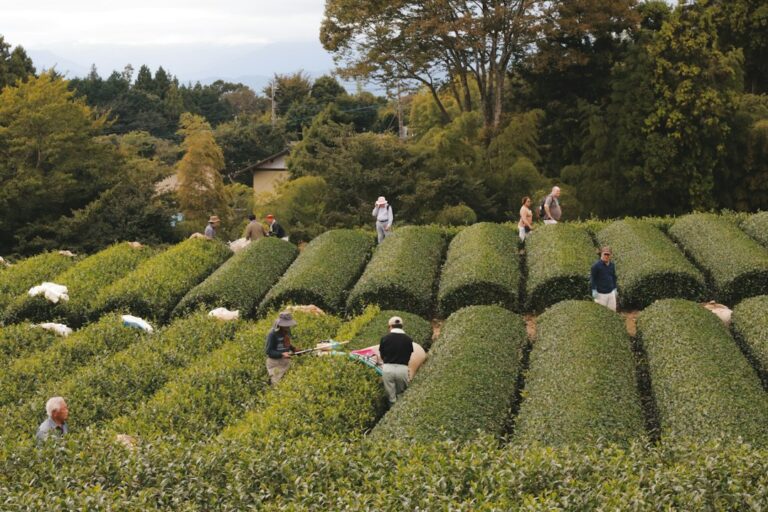
The field has the biggest influence on this balance. Matcha is ground from tencha. Before the harvest, the bushes are kept in shade for at least 20 days, according to a handbook from NARO, Japan’s agricultural research institute. Theanine and chlorophyll rise, while the astringent catechins fall.
The tea research institute in Kyoto explains why. The bush produces theanine in its roots and sends it to the leaves. There, sunlight converts it into catechins. The cover blocks the light and keeps the leaf cooler, and both slow down the conversion.
Shade does not make matcha lower in caffeine. In a 2022 Chinese study, a matcha tea garden was shaded at 85 and 95 per cent for three weeks. Theanine and chlorophyll rose, and caffeine even increased. However, only one cultivar at one site was tested. More on caffeine and theanine per bowl is in how much caffeine does matcha have?.
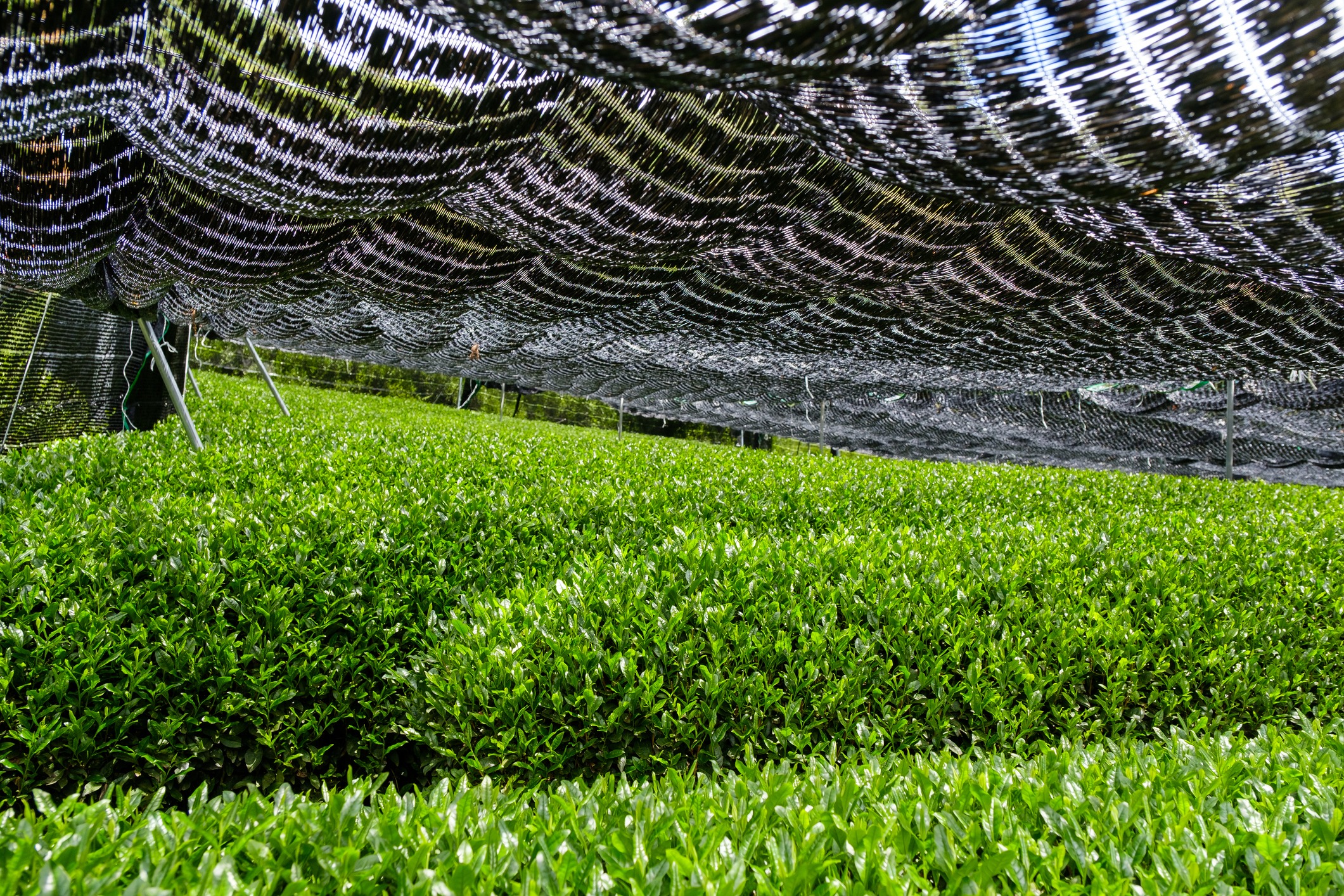
The timing of the harvest matters too. High-quality matcha usually comes from the first harvest in spring. The leaves then grow slowly and have stored nutrients over the winter. The second harvest follows about 45 days later.
Gyokuro is shaded for a similar length of time, but it is rolled and brewed as a leaf tea. More on this in how to brew gyokuro.
From leaf to powder: tencha and the stone mill
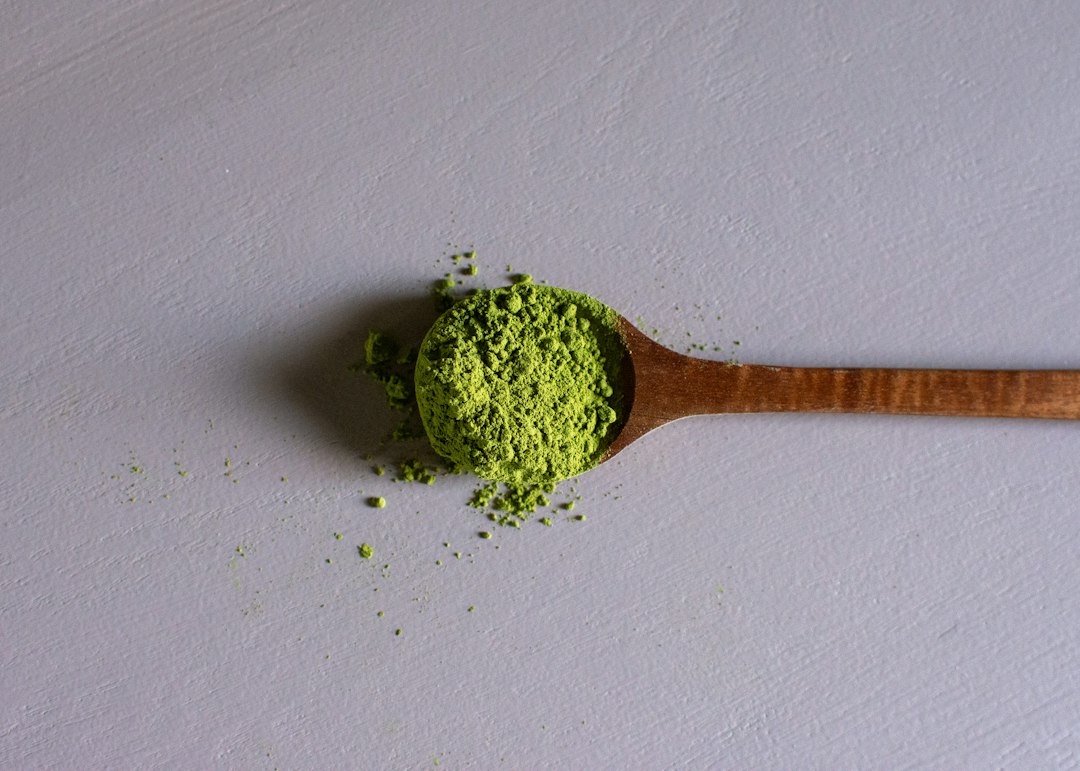
After the harvest the leaves are steamed. Unlike sencha and gyokuro, tencha is dried without rolling. Only this loose, dried leaf is ground into matcha. According to NARO, shaded young shoots and this processing give matcha its bright green colour and full flavour.
Traditionally a stone mill grinds the leaf. It is slow work: a tea house from Uji gives around 40 g of powder per hour. A US tea retailer arrives at the same amount for a hand mill. If it turns too fast, too much heat builds up, the leaf oxidises and the powder becomes too coarse.
Machine-milled powder may differ slightly in colour and fineness. According to the tea house, however, the quality of the tencha matters more for the flavour.
Price and quality: what measurements of matcha show
In the 2014 US sample, price showed above all in the amino acids. Powders over 50 US dollars per 100 g had more than 15 mg of theanine per gram. Powders under 25 US dollars had less than 7 mg. That is roughly €45 and €22 per 100 g (our conversion). For arginine the gap was even wider.
| Value per gram of powder | over 50 US dollars per 100 g | under 25 US dollars per 100 g |
|---|---|---|
| L-theanine | over 15 mg | under 7 mg |
| arginine | over 3.3 mg | under 1 mg |
| chlorophyll a | over 3.7 mg | under 1.2 mg (powders under 20 US dollars) |
| chlorophyll broken down to pheophytin | under 30 % | over 50 % (powders under 20 US dollars) |
All teas over 30 US dollars came from Japan and were mostly sold as ceremonial grade. One exception did not fit the pattern. An organic ceremonial matcha from Japan cost 100 US dollars per 100 g. It had fewer amino acids and less chlorophyll than other powders in this price bracket. The authors suspect that scarce organic supply drives the price.
Labels are of little help here. A Japanese tea retailer writes that Japan has no official or regulated grading system for matcha. Ceremonial grade is meant to taste good on its own with water. Culinary grade is more astringent and intended for lattes and baking. Since April 2022, the technical report ISO/TR 21380 has provided an internationally agreed definition. It is based on plant, cultivation and production, and contains no limit values. Building on it, NARO wants to achieve a standard with ranges for the key compounds.
Colour and freshness: how to spot good powder
Fresh matcha is a vivid green. Over time chlorophyll breaks down into pheophytin, an olive-brown pigment. In the US sample, this was much further advanced in cheap powders than in expensive ones. A dull, yellowish or olive powder is therefore a warning sign.
A tea house in Kyoto sets the best-before date at around 5 to 6 months after packing. According to the tea house, you should use opened tea within about a month. An unopened pack can go in the freezer, but it then needs around 5 hours at room temperature before opening.
Good matcha is not cheap at the moment. According to a June 2026 report in the Yomiuri Shimbun newspaper, tencha cost about six times as much in 2025 as in 2024. Newly planted bushes only yield a harvest after around five years. A tea house in Kyoto shows how far prices range. A 20 g tin there costs 1,400 to 5,000 yen, roughly €8 to €30 (our conversion).
| Matcha (20 g) | Price | per 100 g, our conversion | per 2 g bowl, our conversion |
|---|---|---|---|
| entry-level variety, Kyoto tea house | 1,400 yen | around €41 | around €0.80 |
| rich variety with plenty of umami, Kyoto tea house | 5,000 yen | around €148 | around €3 |
Preparation: amount and temperature keep astringency down
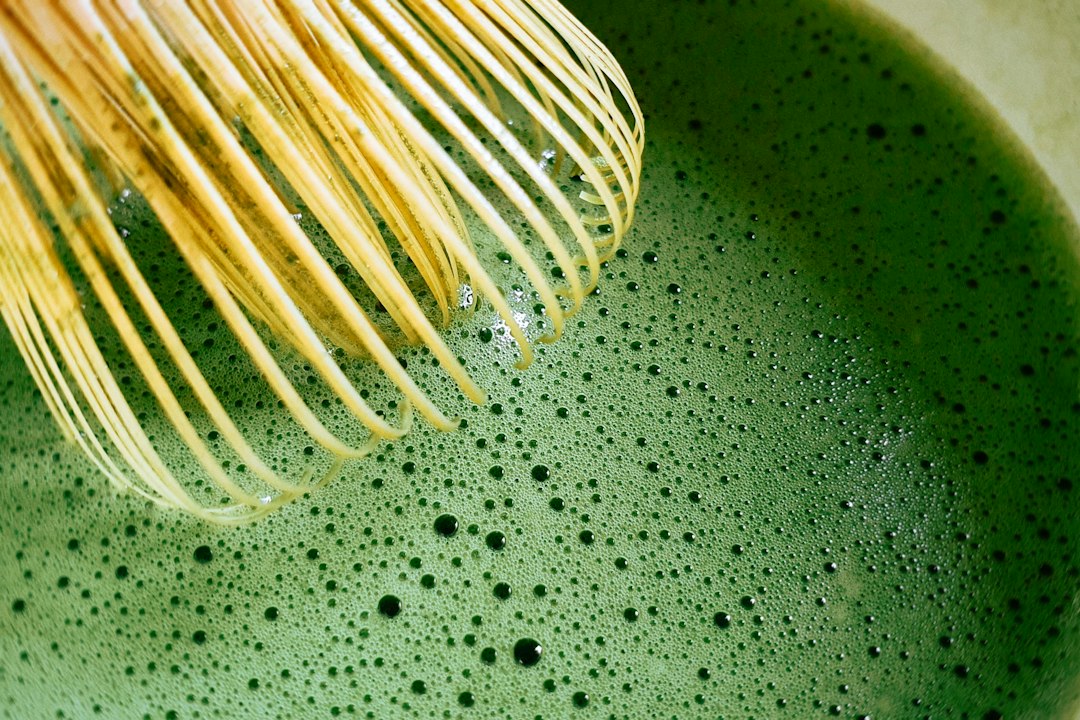
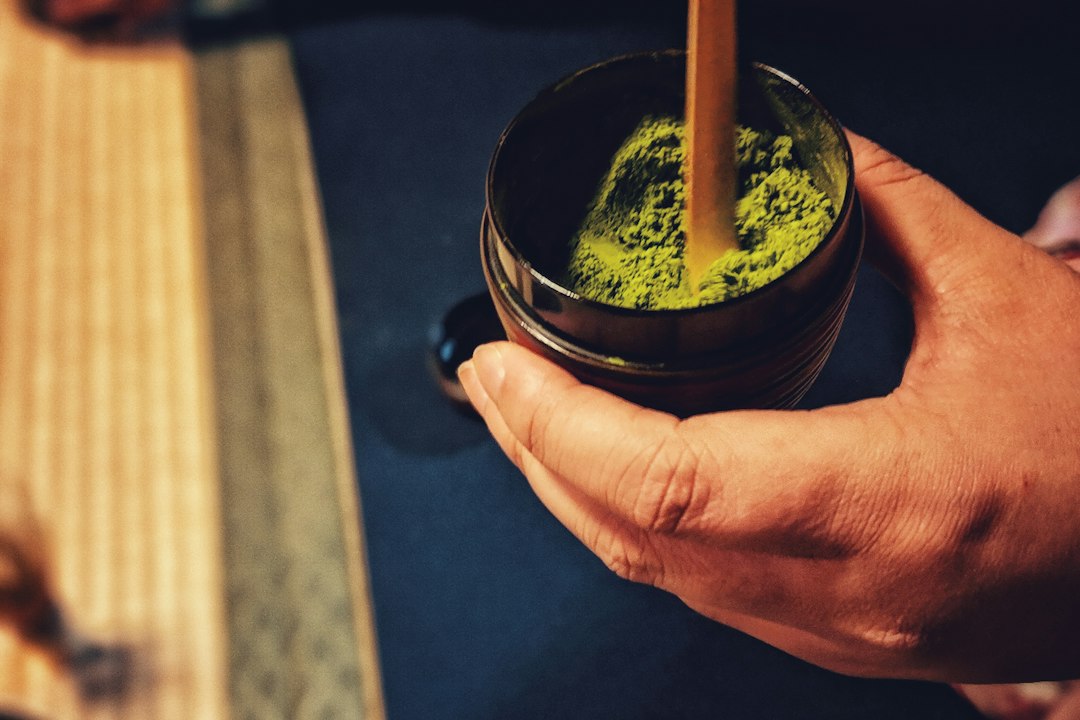
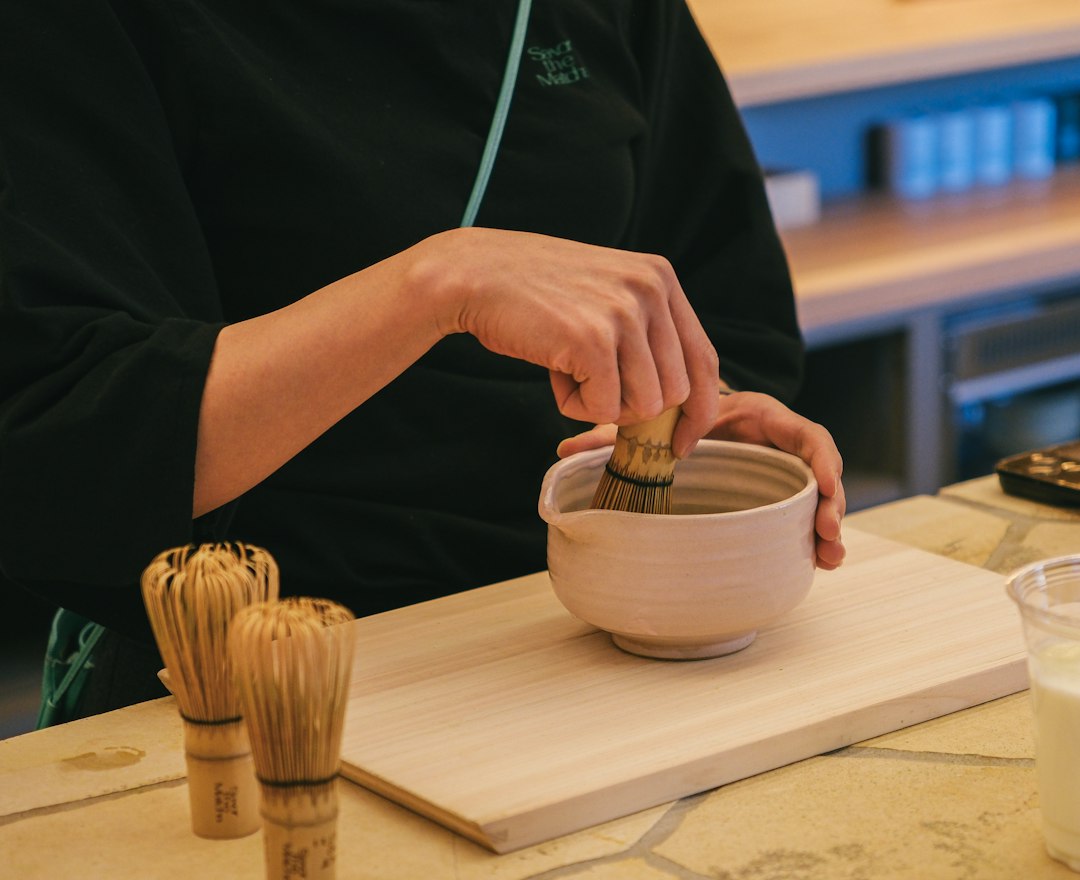
The bowl itself also plays a part. A tea house in Kyoto gives 2 g of powder to 60 ml of water at 80°C for usucha, the thin matcha. You whisk it vigorously for around 15 seconds. For koicha, the thick tea of the tea ceremony, it uses 4 g to just 30 ml and stirs slowly.
| Preparation | Powder | Water | Technique | Suitable for |
|---|---|---|---|---|
| usucha | 2 g, about 1 level tsp | 60 ml, 80°C | whisk vigorously for 15 s | everyday, simpler powders too |
| koicha | 4 g | 30 ml, 80°C | stir slowly for 15 s | only very good, mild powders |
| matcha latte | 3 g | 100 ml, 80°C, plus 100 ml milk | whisk, milk last | culinary grade is fine |
Because you drink the whole leaf, you cannot control bitterness through steeping time as with leaf tea. More powder always means more catechins and caffeine in the bowl. Let boiling water cool to about 80°C, as the tea house recommends. How to cool water without a thermometer is explained in how to brew tea properly.
Koicha shows every weakness of the powder, so use only very good matcha for it. A simpler, more astringent powder works better in milk. The recipe and tips against lumps are in matcha latte at home.
So a mild matcha is made long before it reaches your bowl: in the shade, in the spring harvest and in the mill. Freshness, the right amount and water at about 80°C make sure as much of it as possible arrives. If your powder still tastes astringent, use it for lattes.
Last updated: 24 October 2026.
Sources
- Horie, H.; Ema, K.; Nishikawa, H.; Nakamura, Y., JARQ 52(2), 143 to 147: Comparison of the Chemical Components of Powdered Green Tea Sold in the US, 2018.
- Kyoto Prefectural Tea Industry Research Institute: テアニン (theanine in tea) (in Japanese), undated, accessed 24 October 2026.
- Yamamotoyama (retailer information): Covered cultivation: gyokuro, kabusecha and tencha, undated, accessed 24 October 2026.
- NARO, research consortium project 27015C: 被覆茶安定生産マニュアル (handbook on producing shaded teas) (in Japanese), March 2018.
- Chen, X. et al., Int. J. Mol. Sci. 23(22):14169: Effect of Shading on the Morphological, Physiological, and Biochemical Characteristics as Well as the Transcriptome of Matcha Green Tea, 16 November 2022.
- Ricardo Caicedo, My Japanese Green Tea: Green Tea Harvests in Japan, 3 July 2012, updated 28 January 2018.
- NARO: ISO technical report on matcha published, 2022.
- Nakamura Tokichi Honten (retailer information): How Matcha Is Made: A Gentle Comparison of Stone-Milling and Machine-Milling, 9 June 2025.
- Mizuba Tea, Lauren Purvis (retailer information): The Ishi Usu: What using a stone matcha mill is all about, 18 January 2018.
- Ikkyu Tea, Bloise Aldo (retailer information): Ceremonial vs. Culinary Matcha: Why ‘Ceremonial Grade’ Isn’t a Japanese Classification, 5 November 2025.
- ISO: ISO/TR 21380:2022 Matcha tea, Definition and characteristics, 11 April 2022.
- Ippodo Tea, customer service (retailer information): How long will my tea be fresh after opening?, accessed 24 October 2026.
- Higuchi, A., The Yomiuri Shimbun, via Asia News Network: Matcha boom still simmering, but record-high exports bring Japanese tea farmers challenges, 2 June 2026.
- Ippodo Tea, product page: Ikuyo-no-mukashi 20g Box, accessed 24 October 2026.
- Ippodo Tea, product page: Ummon-no-mukashi 20g Box, preparation and price, accessed 24 October 2026.
- Ippodo Tea (retailer information): Matcha Latte Recipe, undated, accessed 24 October 2026.