From 30 December 2026, companies must prove that coffee and cocoa fields were not cleared after 2020. Small companies follow on 30 June 2027.Cut-off date and geodata, deadlines as of October 2026, duties by role and effects on farming and prices.
The EU Deforestation Regulation, or EUDR for short, is Regulation (EU) 2023/1115. It covers seven commodities, including coffee and cocoa. Its start has been postponed twice, in December 2024 and December 2025. In May 2026, the European Commission reviewed the rules once more and left the text unchanged.
For you as a coffee drinker, nothing changes on the bag for now. Behind the bag, however, every lot of green coffee and cocoa must be traceable back to the field. This article explains the legal situation in general terms and is not legal advice.
The three conditions: deforestation-free, legal, declared
Coffee and cocoa may only be sold in the EU or exported from it if three things come together. The goods come from land that was not deforested after 31 December 2020. They were produced under the laws of the country of origin. And the company that first brings them into the EU has submitted a due diligence statement for them.
The rules cover green and roasted coffee as well as cocoa beans and products made from them, up to chocolate. Instant coffee will be added later. A delegated regulation of 13 July 2026 adds it, and according to the European Commission the EUDR applies to it from 30 December 2027. Product samples, certain packaging and waste, on the other hand, fall outside the scope.
A label on the bag does not replace the due diligence statement. Certified goods need the same evidence as any other. The regulation does not require a ‘deforestation-free’ label.
Geolocation: coordinates for every plot
The most demanding part is the geodata. For every plot of farmland, the due diligence statement needs latitude and longitude with at least six decimal places. That equals an accuracy of about 10 centimetres (our conversion). For plots up to 4 hectares, a single point is enough, while larger plots need a polygon, meaning the outline of the field.
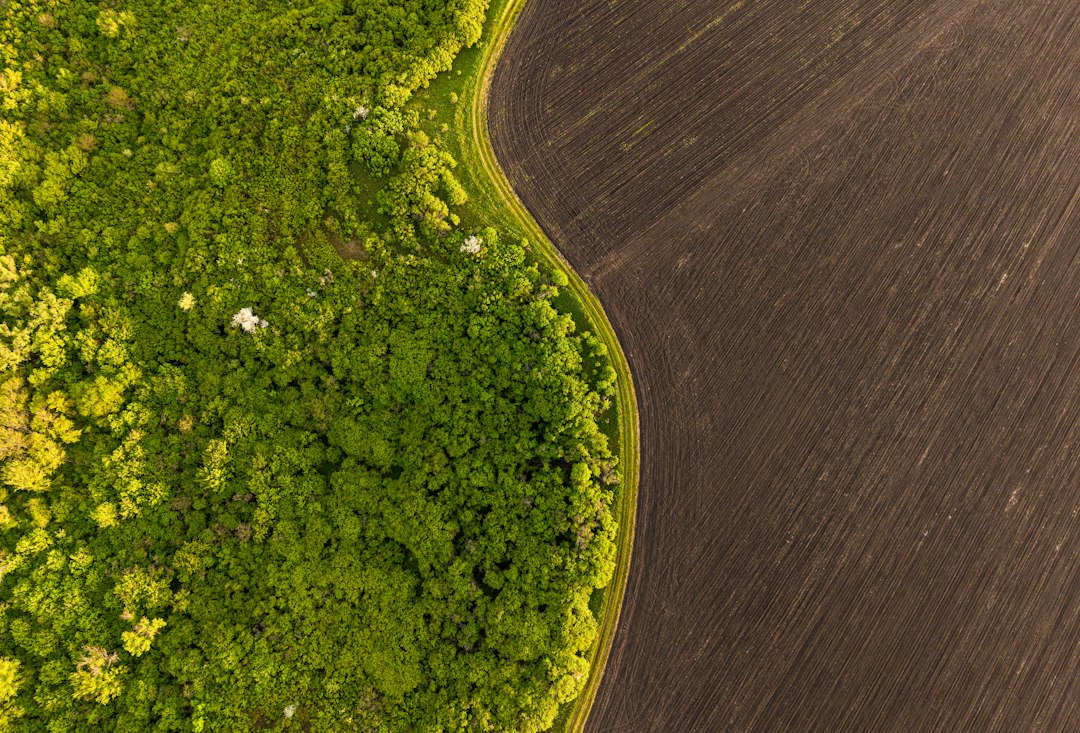
With this data, the land can be compared with satellite images from the end of 2020. Every sack must stay linked to a plot for this. That makes mixing coffee from many farmers at a collection point harder, because the origin of every share must be documented.
Deadlines: as of October 2026
The current dates are set out in amending Regulation (EU) 2025/2650. It was published in the Official Journal on 23 December 2025 and entered into force on 26 December 2025. The Commission was to check by 30 April 2026 whether the rules could be simplified further. Its package of 4 May 2026 contains a report, new guidance and draft technical acts, but no proposal to amend the text of the regulation.
| Date | What applies |
|---|---|
| 31 December 2020 | cut-off date: land deforested after this is excluded |
| 26 December 2025 | amending Regulation (EU) 2025/2650 in force, deadlines postponed, supply chain duties simplified |
| 4 May 2026 | Commission simplification package: report, guidance, FAQ, no change to the text |
| Sept. 2026 | Delegated Regulation (EU) 2026/2102 on the product list published |
| 30 December 2026 | duties apply to large and medium-sized companies |
| 30 June 2027 | duties apply to micro and small companies founded by 31 December 2024 |
| 30 December 2027 | instant coffee and other newly added products |
The Commission estimates that the simplifications cut companies’ annual costs by about 75 per cent compared with the original version. That is a Commission estimate, not a measured figure. According to a check of EUR-Lex on 17 October 2026, there was no proposal to postpone the dates again.
In Germany, the Bundesanstalt für Landwirtschaft und Ernährung (Federal Office for Agriculture and Food) and the state authorities will carry out checks. The German implementing act had its first reading in the Bundestag on 8 October 2026 and has been with the agriculture committee since. The draft provides for fines of up to €100,000, and up to 4 per cent of EU-wide annual turnover for larger companies. Confiscation of the goods and exclusion from public contracts come on top.
Duties by role: importer, roastery, café
The regulation asks who first places a product on the EU market. That is usually the green coffee importer. The importer collects the geodata, assesses the risk, mitigates it if needed and submits a due diligence statement in the EU information system before selling. In return, it receives a reference number. If a small roastery imports its green coffee directly from a cooperative, it carries this duty itself.
Since the 2025 amendment, there is a separate group, the downstream operators. It includes a roastery buying from an importer in the EU, or a chocolate maker using cocoa mass from the EU. They submit no due diligence statement of their own. Only the first business after the importer must record its reference number.
| Role | Example | Duties |
|---|---|---|
| operator | importer, roastery importing directly | geodata, risk assessment, due diligence statement, reference number |
| first downstream business | roastery buys from an importer in Hamburg | record the importer’s reference number, suppliers and customers |
| further stages and traders | café sells beans in bags | record suppliers and business customers |
| all | keep records for at least 5 years; companies above SME size register in the information system |
If you run a roastery or café, here is how to prepare:
- Clarify your role. If you import from a country outside the EU yourself, you carry the full due diligence duty.
- Check your size. Micro and small companies founded by the end of 2024 have until 30 June 2027.
- Agree with your importer that every invoice states the reference number of its due diligence statement.
- Set up a simple register: supplier, lot, reference number, business customer. Keep it for 5 years.
- Ask direct trade partners for geodata early, before the first harvest for 2027 is shipped.
Country list: low, standard and high risk
How much work an importer has depends on the country of origin. Implementing Regulation (EU) 2025/1093 sorts countries into three groups. Only Belarus, North Korea, Myanmar and Russia count as high risk. All countries not named are standard risk.
| Classification | Coffee and cocoa countries (selection) | Consequences | Minimum checks per year |
|---|---|---|---|
| low | Vietnam, India, Kenya, Costa Rica, Rwanda, Papua New Guinea, Ghana | simplified due diligence, geodata still required | 1 % of companies |
| standard | Brazil, Colombia, Ethiopia, Honduras, Peru, Uganda, Indonesia, Guatemala, Mexico, Tanzania, Côte d’Ivoire, Ecuador, Cameroon, Nigeria | full risk assessment | 3 % of companies |
| high | none of the major producing countries | full due diligence, stricter checks | 9 % of companies and 9 % of volume |
For goods from low-risk countries, risk assessment and risk mitigation are not required. In cocoa, this creates a difference between two neighbours. Ghana is in the low-risk group, Côte d’Ivoire in the standard group. In coffee, most origins are standard risk, with Vietnam as the big exception. The role Vietnam plays as a Robusta country is explained in Arabica or robusta: flavour, caffeine, growing and price.
Smallholders, prices and what you notice in the shop
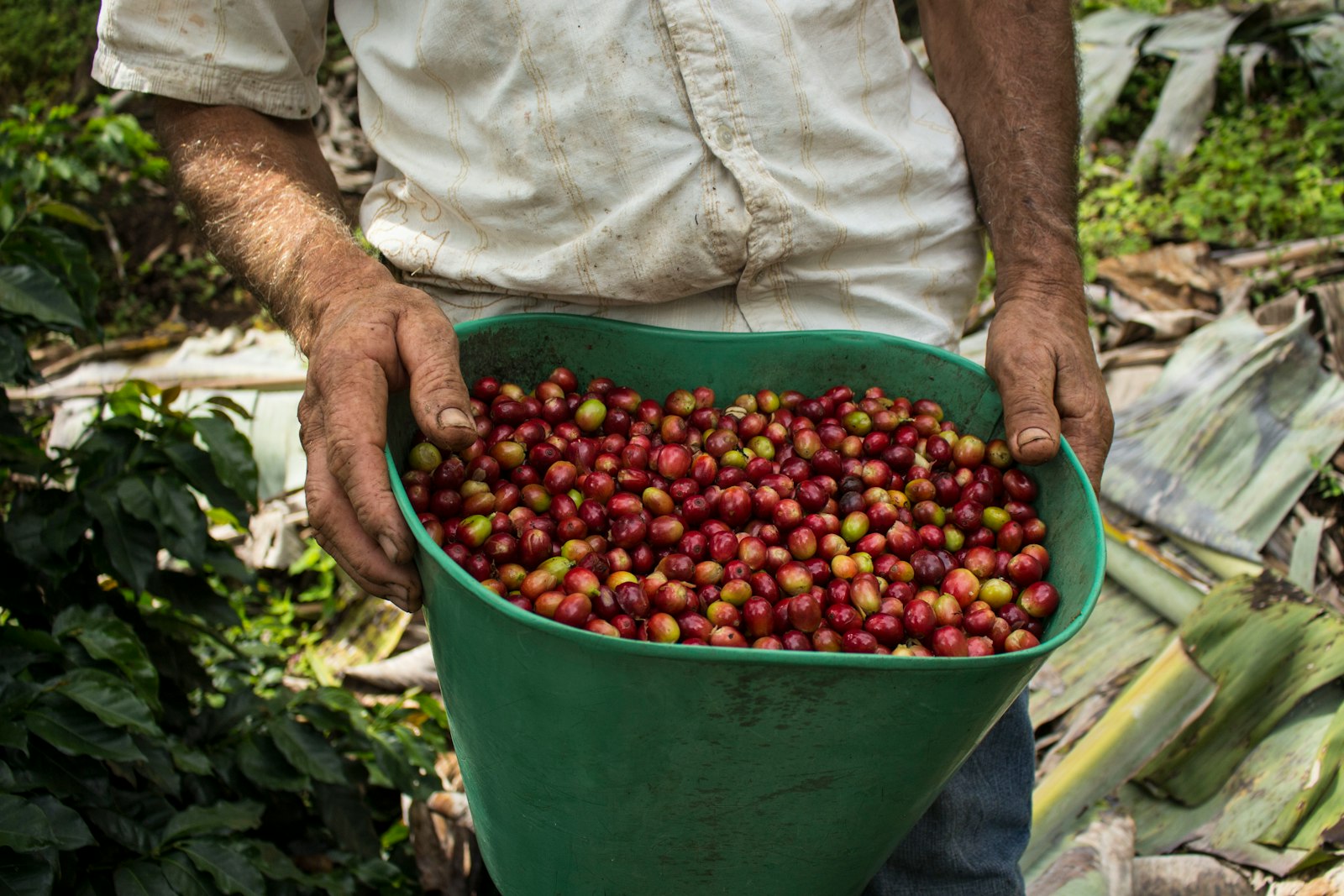
Coffee comes mostly from small farms. According to the Coffee Barometer 2026, around 12.5 million households grow coffee worldwide, about 95 per cent on less than 5 hectares. Farms under 2 hectares supply around 60 per cent of the world harvest. Cocoa looks similar. A case study from Côte d’Ivoire describes cooperatives with around 3,000 farmers, each farming 1 to 4 hectares.
The farmers themselves are usually not obliged. Cooperatives, buyers and exporters collect their data. Micro and small producers in low-risk countries who bring their own crops into the EU submit a simplified declaration only once. Instead of coordinates, they may give the postal address of their land. This relief does not apply to farmers in standard-risk countries such as Ethiopia or Colombia.
The Coffee Barometer sees a risk that origins without reliable field data drop out of supply chains. The reason would then be missing data, not deforestation. Exclusion is not inevitable, though, and depends on how companies handle the duties. How many farmers will actually drop out cannot be shown before the start.
On prices, there are first signs from the trade. A market report from August 2026 notes a premium of about 50 US dollars per tonne for EUDR-compliant Robusta from Vietnam. That is roughly €45 per tonne, or around 4.5 cents per kilo of green coffee (our conversion).
Nobody has yet reliably calculated what reaches the shop price. The Commission has only estimated the costs for companies. With specialty coffee, many costs arise beyond the green coffee anyway, more on that in why specialty coffee costs so much. What matters most for you is that roasteries with direct links to their farms often have the data already.
From the end of 2026, the EUDR requires proof down to the individual field. For roasteries buying from an importer, it mostly comes down to clean record-keeping. The real work lies with importers, cooperatives and exporters in the producing countries.
Last updated: 24 October 2026.
Sources
- Official Journal of the EU: Regulation (EU) 2025/2650 amending Regulation (EU) 2023/1115, 23 December 2025.
- European Commission: Regulation on Deforestation-free Products, accessed 24 October 2026.
- European Commission, Transition Pathways: Commission publishes simplification review of EU Deforestation Regulation, 4 May 2026, page of 13 July 2026.
- EUR-Lex: Delegated Regulation (EU) 2026/2102 amending the list of relevant commodities and products, 13 July 2026.
- Fairtrade: Geolocation data requirements EUDR, 16 April 2026.
- Polygon One (software provider): EUDR country risk: every country and its classification, 18 October 2026.
- Polygon One (software provider): EUDR current status: delay, latest news and deadlines, 17 October 2026.
- Deutscher Bundestag: Neuregelung des Rechts über entwaldungsfreie Produkte (Drucksache 21/8278) (in German), 8 October 2026.
- Panhuysen, S.; de Vries, F.: Coffee Barometer 2026, June 2026.
- EUDR Community of Practice, European Forest Institute: Case Study Summary, Session 3, 29 June 2026.
- Alexis Rubinstein, StoneX: EUDR Compliance Begins to Command a Premium in Vietnam’s Coffee Market, 26 August 2026.