Not yet. The lab membrane removes about half the caffeine from brewed coffee, and decaf in the shops is still treated green coffee.The state of research, earlier approaches, the four established methods and the limits in the EU and Germany.
Coffee has been decaffeinated for over a hundred years, almost always as a green bean before roasting. In the early 20th century a coffee merchant in Bremen still removed the caffeine with benzene. Today the plants work with dichloromethane, ethyl acetate, water or carbon dioxide.
In September 2026 a research group from Sydney and Okayama reported a different route. A very thin membrane is meant to filter caffeine directly out of the finished drink. So far these are lab results.
The graphene oxide membrane: half the caffeine in the lab
The membrane is made of graphene oxide. These are carbon sheets one atom thick, stacked in layers. Tiny channels remain between the layers, through which water and dissolved molecules travel. According to the research centre involved, the group placed sodium alginate between the sheets and cross-linked it with calcium. That changes the channels and so which molecules get through.
According to the research centre, the best membrane removed about half the caffeine. The variants were judged on three criteria: caffeine removal, retention of selected compounds and water flow. Four compounds could still be detected after filtering, namely trigonelline, N-methylpyridinium, choline and hydroxymethylfurfural. According to a trade magazine, a membrane that held back more caffeine also removed too many other compounds.
The researchers themselves admit that a lot of work remains. Coffee components settled on the membrane and slowed the water. As next steps the centre names taste and nutrition tests, cleaning, service life and trials on a larger scale. It mentions recovering caffeine as a by-product only as a possibility.
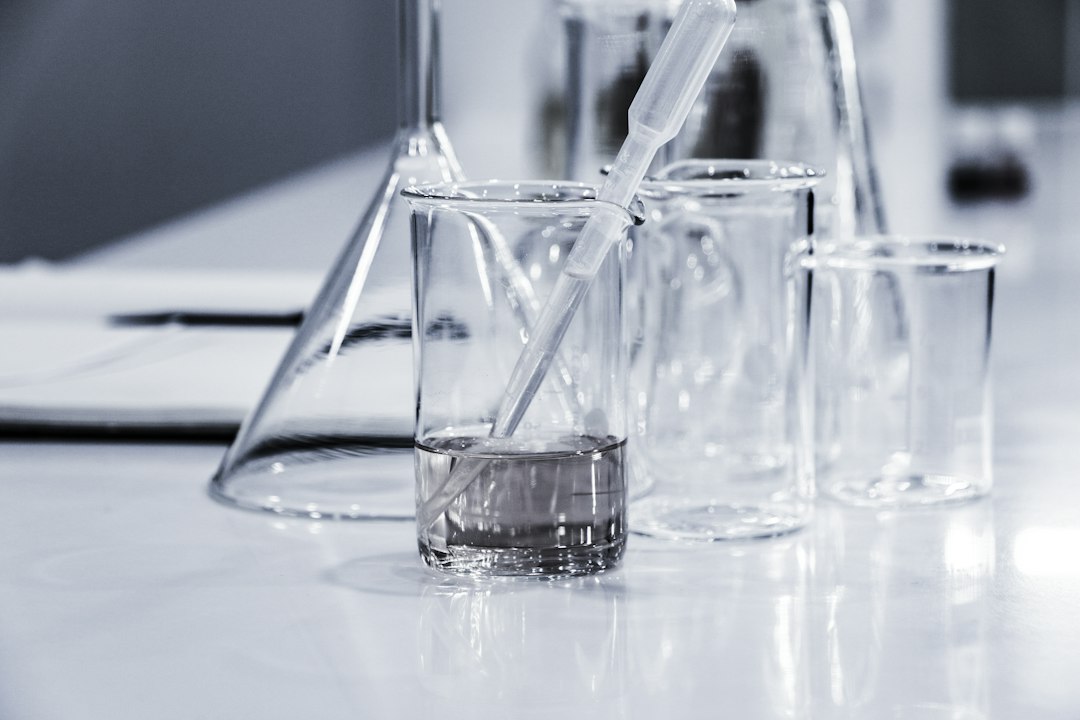
Filtering out caffeine: an old idea with little success
In 1977 a US food company applied for a patent on a membrane whose pores are filled with an oil. The caffeine passes through the oil into a layer of water on the other side. A 2011 conference study used sunflower oil in hollow fibres and achieved 45 to 55 % caffeine removal per pass.
For home use, a start-up in Seattle most recently offered a pouch of mineral beads. It works without a membrane, as the beads bind the caffeine. According to the company’s founder, up to 80 % should disappear after eight minutes. The 2022 report cited no independent measurements. Five pouches cost 8 US dollars, roughly €7 (our conversion). In September 2026 a trade magazine described the company as no longer active.
| Approach | Year | Caffeine removal | Type of evidence |
|---|---|---|---|
| Graphene oxide membrane with alginate | 2026 | about 50 % | research, journal paper and research centre announcement |
| Membrane with oil-filled pores | 1977/78 | no figure in the claim | US patent held by a food company |
| Hollow fibres with sunflower oil | 2011 | 45 to 55 % per pass | research, conference paper |
| Pouch with mineral beads | 2022 | up to 80 % in 8 minutes | company figure, no independent measurement |
After brewing, any coffee could be treated, including rare lots. According to the trade magazine, however, no method that only starts after roasting has caught on so far.
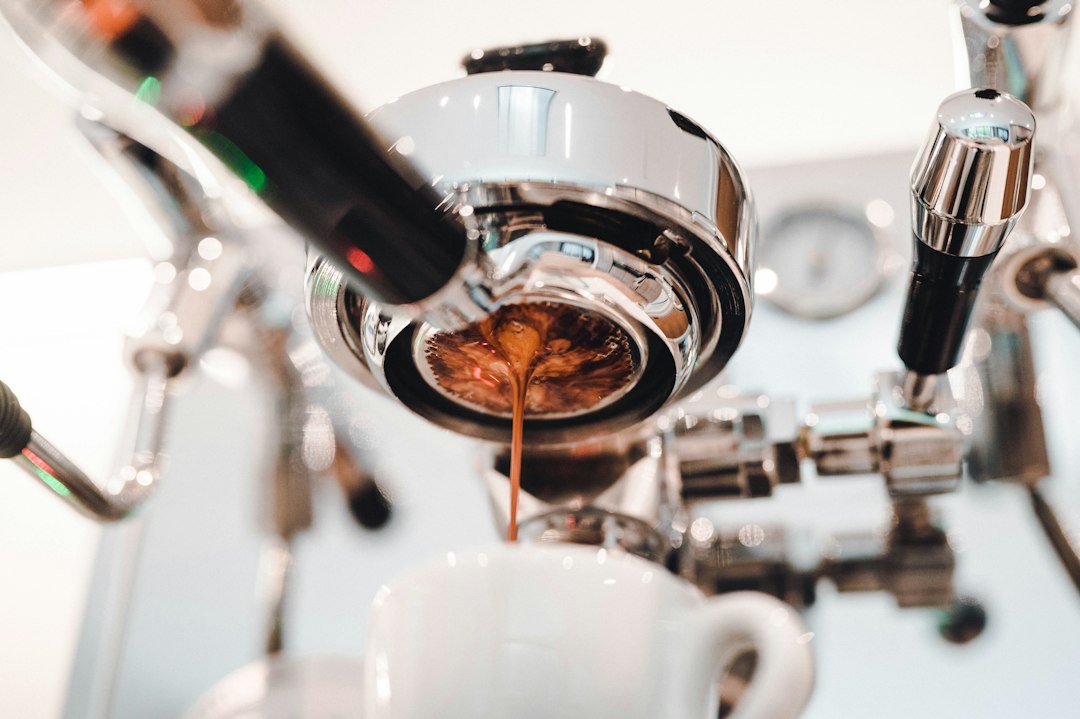
How decaf is made today: four methods applied to green coffee
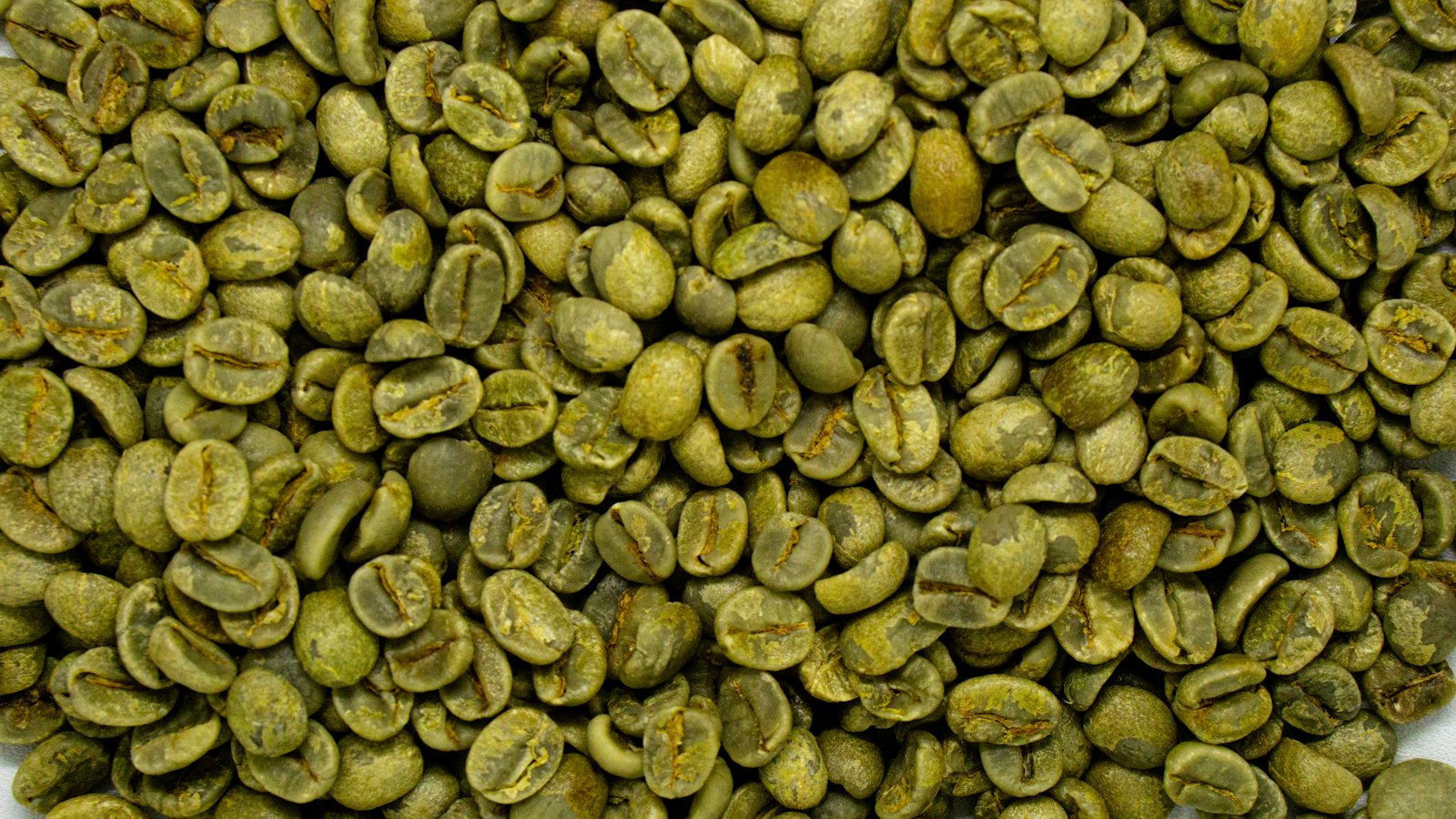
The established methods follow the same basic pattern. The green coffee is pretreated with steam and water and swells to about twice its volume. A solvent then draws out the caffeine. After that the solvent is removed, and the beans dry back to 10 to 12 % moisture. Only then does the coffee go to the roaster, just as you know from roasting coffee at home.
| Method | Agent | Conditions | Caffeine removal | Evidence |
|---|---|---|---|---|
| Dichloromethane | chlorinated hydrocarbon | 60 to 99°C, 2 to 14 bar, around 9 h | around 97 % | 1971 patent, information from a decaffeinator |
| Ethyl acetate | ester, often from sugar cane | around 30 min of steam, then around 8 h | no company figure | process diagram from a Colombian plant |
| Water | caffeine-free green coffee extract, activated carbon | 50 to 100°C according to a 1980 patent | from 2.05 to 0.10 % caffeine | patent; companies publish no figures |
| Supercritical carbon dioxide | CO2 above 31°C and 73.8 bar | industrially 250 to 300 bar, 60 to 80°C | around 97 % | 2017 life cycle assessment, information from a decaffeinator |
According to a Swiss roastery, dichloromethane is considered fairly selective and removes little else. Ethyl acetate is said to be somewhat less selective and to take longer. In the water process, the green coffee sits in an extract that already contains all soluble compounds except caffeine. So mainly the caffeine leaves the bean, and activated carbon then removes it from the extract. The Canadian supplier says it uses neither chlorinated solvents nor esters.
Kurt Zosel discovered the carbon dioxide method in 1967 at the Max Planck Institute for Coal Research in Mülheim an der Ruhr. He applied for a patent in 1970. According to the Max Planck Society, around 100,000 tonnes of green coffee a year are decaffeinated this way worldwide. The Swiss roastery could not trace the often quoted ‘99.9 % caffeine-free’ for the water process to any primary source.
The difference from the membrane lies in where the process starts. The four methods treat the whole bean before roasting and reach levels that count as decaffeinated. The membrane filters the finished drink and so far manages half.
What EU law requires: solvents, residues and caffeine
Which solvents are permitted for food is governed by EU Directive 2009/32/EC. Carbon dioxide and ethyl acetate are listed in Annex I without restriction and without a maximum level. Dichloromethane is only approved for removing caffeine, irritants and bitter compounds from coffee and tea.
| Rule | Limit | Legal basis |
|---|---|---|
| Dichloromethane in roasted coffee | no more than 2 mg/kg | Directive 2009/32/EC, Annex I |
| ‘decaffeinated’ for coffee extract (EU) | no more than 0.3 % caffeine in dry matter | Directive 1999/4/EC, Art. 2 |
| ‘decaffeinated’ for roasted coffee (Germany) | no more than 1 g caffeine per kg dry matter, i.e. 0.1 % | Coffee Regulation (Kaffeeverordnung), § 2 |
| ‘decaffeinated’ for coffee extract (Germany) | no more than 3 g per kg dry matter | Coffee Regulation (Kaffeeverordnung), § 2 |
| Dichloromethane in decaffeinated coffee (US) | no more than 10 mg/kg | US law, according to a trade publication |
There is no EU-wide caffeine limit for decaffeinated roasted coffee, only for extracts such as instant coffee. In Germany, roasted coffee may retain no more than 0.1 % caffeine in dry matter. Arabica naturally contains around 1 %, Robusta around 2 %, as explained in Arabica or Robusta. So around 90 to 95 % of the caffeine has to go for the label (our calculation). Halving it, as the membrane does, falls far short of that.
A 2024 study measured how much dichloromethane actually remains. In 34 decaffeinated coffees from six EU countries, the median was 0.06 mg/kg and the highest value 0.82 mg/kg. With filter coffee a median of 27 % of it passed into the drink, with the French press (cafetière) 43 %. The study was co-funded by the coffee association and a decaffeinator.
The International Agency for Research on Cancer classifies dichloromethane as probably carcinogenic. In December 2023, environmental and health organisations in the US petitioned for its food approval to be revoked. The US Food and Drug Administration (FDA) again collected comments until 29 June 2026. By early September 2026 it had not made a decision. The Swiss roastery found no comparable initiative in the EU.
What this means for your cup: little caffeine, but not zero
Decaffeinated coffee still contains some caffeine. A 2006 US measurement found 8.6 to 13.9 mg in a large 473 ml cup of filter coffee. For a decaf espresso, measurements give 3 to 15.8 mg. How much a regular espresso or filter coffee contains is explained in Caffeine in espresso, filter coffee and cold brew.
For flavour, the method matters, but so do the green coffee and the roast. We found no robust comparative tastings of the four methods. The best approach is to taste two decafs side by side yourself, for example using the method from cupping at home.

The nanofilter is an interesting lab finding, not a product. Before it can decaffeinate coffee enough to carry the label, it would have to almost double its result. Until then, choose your decaf by method and flavour.
Last updated: 24 October 2026.
Sources
- Jane Su, ARC Centre of Excellence for Carbon Science and Innovation: Sieving the day: filtering caffeine from your coffee, 18 September 2026.
- Tian, Y.; Lin, T.; Nishina, Y.; Ren, X.; Joshi, R., Journal of Membrane Science: Multi-criteria evaluation of graphene oxide nanofiltration membranes for decaffeination (full text not viewed), 2026.
- Zac Cadwalader, Sprudge: Scientists Have Created A Coffee Filter That Removes Half The Caffeine, 25 September 2026.
- Saul N. Katz, General Foods Corp.: US Patent 4,113,886: Membrane decaffeination, filed 28 September 1977, granted 12 September 1978.
- Md M. Hossain, Wei E. Chong, World Congress on Engineering: A New Approach for Removal of Caffeine from Coffee using Sunflower Oil, 2011.
- Howard Bryman, Daily Coffee News: This Teabag-Like Decaf Pouch Is Tackling Decaffeination One Cup at a Time, 7 December 2022.
- Philipp Schallberger, Kaffeemacher: Wie wird Kaffee entkoffeiniert? Die vier Verfahren im Vergleich (in German), 1 September 2026.
- Swiss Water Decaffeinated Coffee: Our Process, undated, accessed 24 October 2026.
- Maren Emmerich, Max-Planck-Gesellschaft: Kaffee auf Entzug (in German), 12 August 2014.
- European Union: Richtlinie 2009/32/EG, Anhang I: Extraktionslösungsmittel (in German), 23 April 2009, accessed 24 October 2026.
- European Union: Richtlinie 1999/4/EG, Artikel 2: Kaffee-Extrakte (in German), 22 February 1999, accessed 24 October 2026.
- Federal Office of Justice (Bundesamt für Justiz): Kaffeeverordnung, § 2 (in German), accessed 24 October 2026.
- Fabian, M.; Süße-Herrmann, O.; McGaffin, G.; Hielscher, J., Proceedings 109(1), 33: Mass Transfer of Dichloromethane from EU Retail Roast and Ground Decaffeinated Coffee into Prepared Beverages, 14 October 2024.
- Daily Coffee News: FDA Weighs Next Steps on Decaf Solvent Rules Following New Comments, 30 June 2026.