A single origin shows you where a coffee comes from, while a blend is designed for consistent flavour. Which one you choose depends on brew method and taste.Terms from country to microlot, a comparison table, reading the pack and the myth of the inferior blend.
Many coffee packs show either a place or a name. A place such as Huila, Sidamo or the name of a farm points to a single origin. An invented name such as house blend or Espresso Classico usually stands for a blend, a mix of several coffees.
Both can be very good coffee. With a single origin, you should be able to taste the origin in the cup. With a blend, the coffee should taste the same today as in three months.
Single origin: from country to microlot
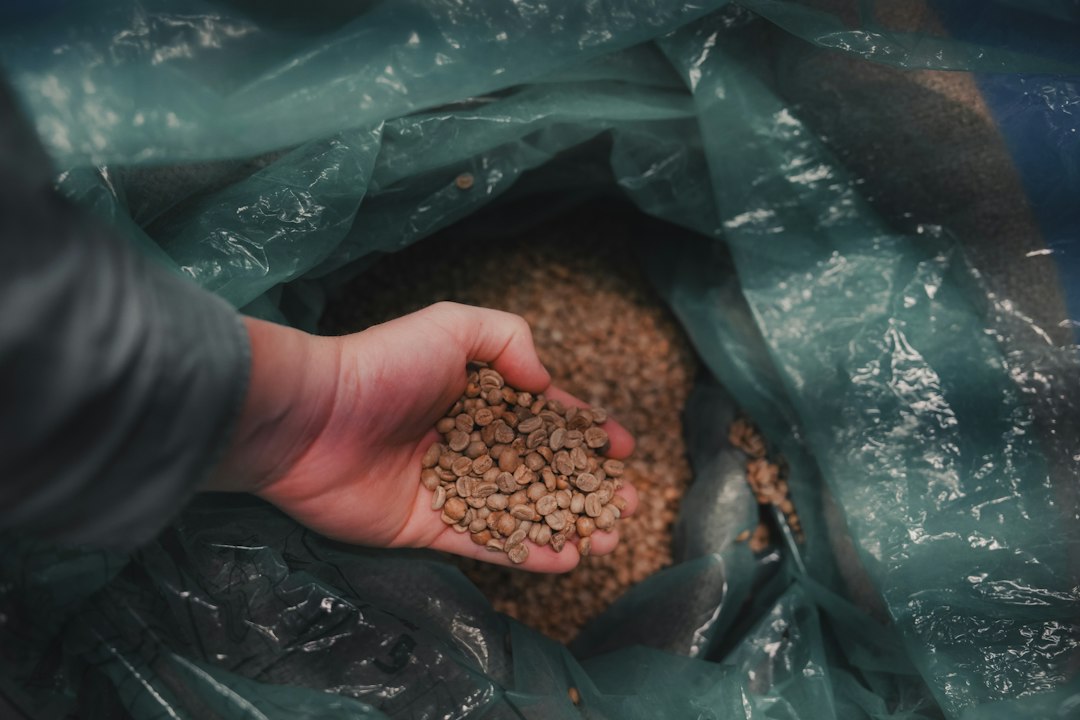
Single origin simply means that a coffee comes from one place. Nobody defines how big that place is. A US guide to coffee labels points out that the scope of the term is neither regulated nor agreed across the industry.
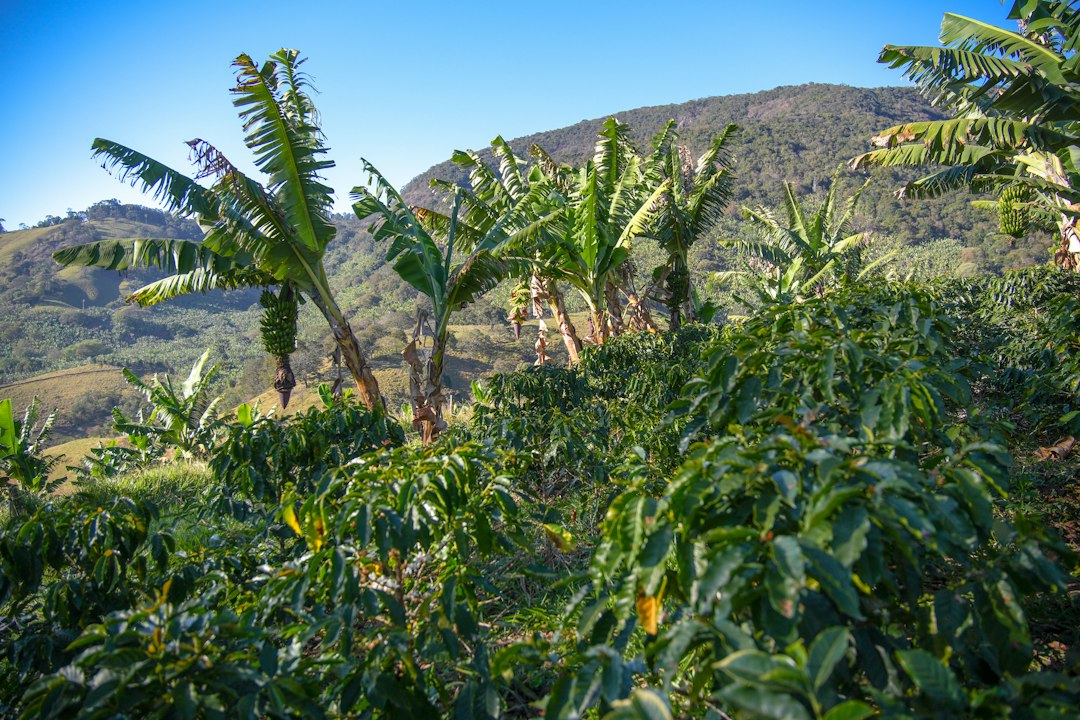
In practice, the range runs from a whole country to a patch of hillside. A specialist coffee magazine sorted the levels in 2018. The narrower the origin, the smaller the quantity usually is.
| Level | What it means | Typical quantity |
|---|---|---|
| Country | for example Brazil, coffee from many farms and regions | no limit |
| Region | for example Huila in Colombia, roughly narrows down climate and altitude | no limit |
| Farm or estate | coffee from a single farm | depends on the farm |
| Microlot | coffee from a single plot on a farm, processed separately | up to 40 bags of 60 kg at one exporter; usually 7 to 50 bags according to a specialist magazine in 2026 |
| Nanolot | like a microlot, only even smaller | 1 to 2 bags of 60 kg at one exporter |
The quantities are figures from individual businesses and not a standard. A cooperative sits between region and farm. It processes the coffee of many smallholders together, so the bag contains the harvest of many families.
An online auction in Panama in August 2025 showed how much a single lot can be worth. A washed Gesha from Hacienda La Esmeralda fetched 30,204 US dollars per kilogram there, roughly €27,000 (our conversion). Only 20 kilograms were auctioned. Prices like these are exceptions, but they show how much a clearly named origin counts at the top end.
Blend: several coffees, one fixed flavour goal
A blend mixes coffees from different origins. These can be countries, farms in one region or two species such as arabica and robusta. An Australian specialty roastery simply defines a blend as a mix of two or more single origins. Its goal is a particular profile of flavour, body and acidity.
According to a US coffee merchant, the best-known blend, Mocha Java, goes back to two early export ports in Yemen and on Java. The mixing was probably done more out of necessity than for flavour.
Many classic espresso blends contain a share of robusta. It brings more body, more bitterness and more caffeine to the cup and helps the crema. The differences between the two species are explained in arabica or robusta.
Single origin and blend side by side
The split between filter and espresso is a tendency, not a rule. There are good single-origin espressos too.
| Single origin | Blend | |
|---|---|---|
| Origin | one country, region, farm or plot | two or more origins |
| Roastery’s goal | make origin and processing tastable | a fixed profile of flavour, body and acidity |
| Flavour over time | changes with lot and harvest | stays as constant as possible for months |
| Availability | lots often last only weeks to a few months | components are replaced, the blend stays |
| often suits | filter coffee, espresso drunk black | espresso, cappuccino and other milk drinks |
| Information on the pack | country, region, farm, variety, processing, altitude | components with origin, ideally with proportions |
The Australian roastery roasts its blends for espresso and expects them to be drunk with milk. For black coffee it prefers to offer single origins, because it likes the way they change. It explicitly calls this a preference.
A Swiss roastery recommends longer-roasted coffees for espresso and lighter roasts for filter, where roast notes stay in the background. Some specialty roasteries still deliberately keep their espresso blends light. How roast level shows in the flavour is explained in light, medium and dark roasts.
On an espresso machine, you dial in every new pack afresh, a blend included. With a blend, though, you already know the target flavour from the last bag. With a new single origin you start more from scratch. How to go about it is shown in how to dial in espresso: grind size and shot time.
How a roastery puts a blend together
Coffee is an agricultural product. Every lot runs out at some point, and the next harvest tastes a little different. A blend is meant to even this out. The Australian roastery describes the process like this:
- Set the goal: First it is decided what the blend is for and how it should taste. Origins, proportions and roast level follow from that.
- Choose the coffees: Individual coffees are cupped and chosen for what they add to the profile.
- Roast separately: Each component gets its own roast profile, matched to bean size and density.
- Blend after roasting: Only once all components have cooled are they combined in fixed proportions.
- Replace components: When a lot runs low, a coffee with similar origin, variety and processing follows. At this roastery that happens one to three times a year.
A specialist article from 2023 explains why the coffees are roasted separately. Coffees differ in density and size. Mixed while green, they roast unevenly.
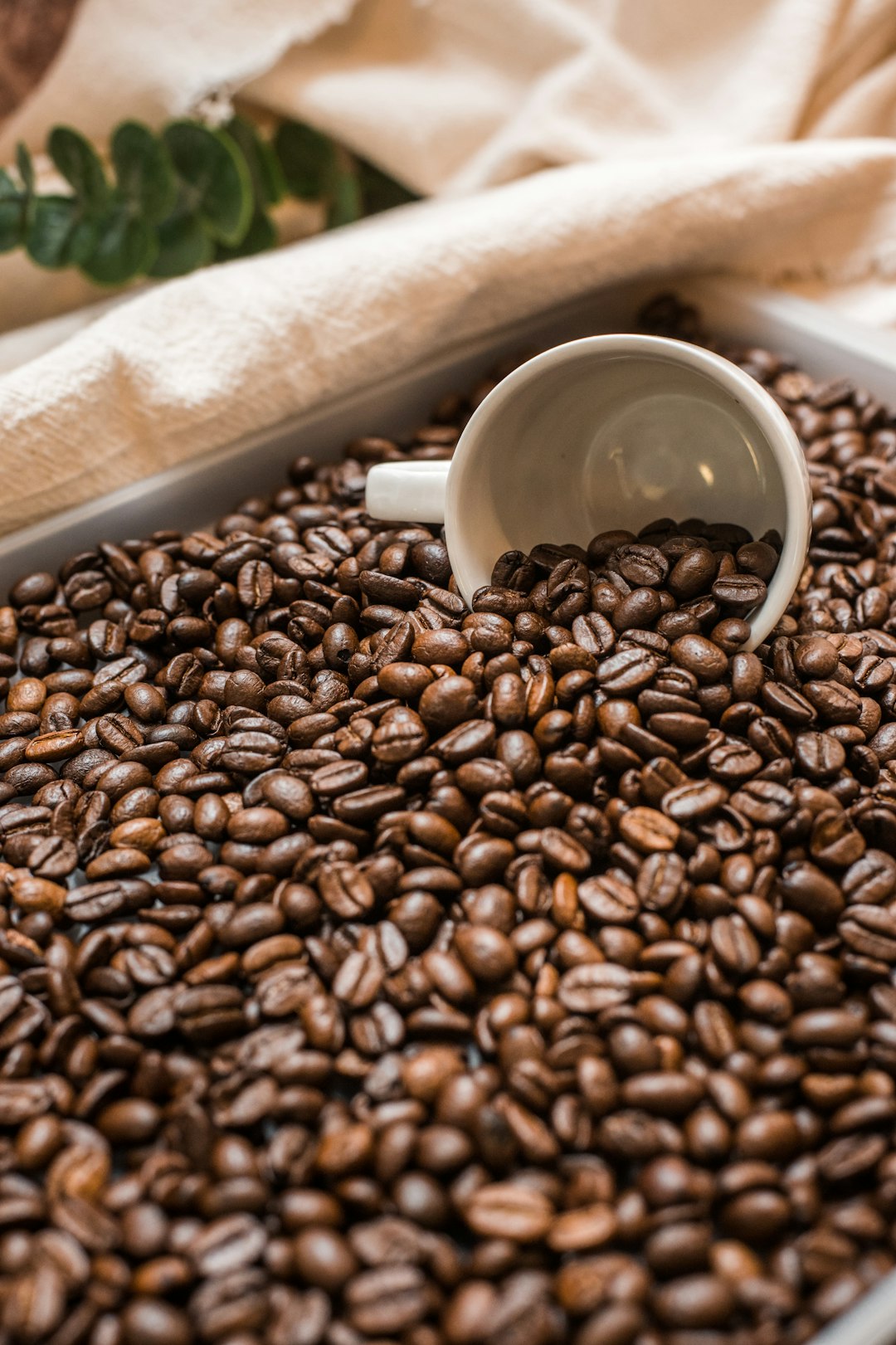
Even with separate roasting, one limit remains. In the grinder all components end up together and get the same grind size. If they dissolve differently well, the cup tastes under- and over-extracted at the same time. So the components need to be similarly soluble. Grinding them separately is considered too much effort in a café.
According to a specialist article from 2026, a good blend actually takes more work than a single origin. This means sourcing, cupping, roast profiles and quality control. This is how a roastery in Taiwan has kept its house blend of Guatemala and Colombia stable for 12 years.
Reading the pack: origin, variety, processing, altitude
A Swiss roastery lists the information that belongs on a good coffee pack. For a blend, the proportions and the origins of the components should be on it. According to the roastery, lot number and altitude are not essential, but interesting.
| Information | Example | What it tells you |
|---|---|---|
| Origin | country, region, producer, cooperative or mill | how narrowly the origin is defined |
| Variety | for example Bourbon, Caturra, Gesha | which plant the coffee came from |
| Processing | washed, natural, honey, experimental | rough direction from clean to fruity |
| Altitude | for example 1,800 m | a hint about growing conditions, not proof of quality |
| Composition | single origin or blend with proportions | what is in the bag |
| Roast date | day of roasting | how fresh the coffee is |
Processing has a strong influence on flavour. Washed coffees usually taste clean and bright, naturals fruity and full-bodied, and honey sits in between with more sweetness. The methods are explained in detail in processing: washed, natural and honey.
Altitude deserves a second look. A study from Central America in 2004 found larger, heavier beans as altitude rose, and the cups tended to score better. But good farm management also produced very good coffees at medium altitude. A study from Ethiopia in 2024 measured a lower pH at higher altitudes, meaning more acidity. So altitude is a hint, nothing more.
Myths: a blend does not mean inferior
The suspicion that blends are meant to hide weak beans has a grain of truth. According to a specialist article from 2015, mass-market brands blend mainly to cut costs and mask fluctuations in flavour. Specialty roasteries blend mainly for a consistent profile. A former buyer at a US roastery says good blends simply come from good coffees, not from a secret recipe.
Even world championships use blends. The 2023 World Barista Champion, Boram Um, used a Gesha from Panama for his espresso. For the milk drinks he blended 70 % Gesha from Panama with 30 % Pink Bourbon from Brazil. At the Global Coffee Awards Asia 2026, a Taiwanese roastery won the overall ranking with its long-standing house blend.
Conversely, a single origin is no proof of quality. The term only tells you how narrowly the origin is defined. Quality depends on growing, processing, roasting and, in the end, your cup.
To get started, it is best to buy two packs from the same roastery, an espresso blend and a single origin. Drink both once black and once with milk. Then you will know which side you enjoy more day to day.
Last updated: 24 October 2026.
Sources
- FoodPrint: The basics of coffee labeling, 18 October 2023, updated 1 October 2026.
- Angie Katherine Molina Ospina, Perfect Daily Grind: Understanding Single Origin, Single Farm & Micro/Nano Lot Coffee, 25 October 2018.
- Tasmin Grant, Perfect Daily Grind: Micro lots get the glory, but blends build loyalty, 22 September 2026.
- Sample Coffee Roasters (company information): Blends: Frequently Asked Questions, 22 August 2024.
- Dan Wood, Sweet Maria’s Coffee Library (retailer information): Moka Java: Constructing the World’s Oldest Blend, 13 March 2024, updated 9 August 2024.
- Benjamin Hohlmann, Kaffeemacher: Welcher Kaffee schmeckt am besten?, 1 December 2019.
- Elizabeth Sturges, Perfect Daily Grind: Post-grind blending: An impractical or novel way to blend coffees?, 30 October 2023.
- Ana Pipunic, Perfect Daily Grind: Everything You Need to Know About Coffee Blends, Part 1, 6 October 2015.
- Alpizar, E.; Bertrand, B., ASIC, 20th International Conference on Coffee Science: Incidence of elevation on chemical composition and beverage quality of coffee in Central America, conference October 2004, proceedings 2005.
- Jimma University, Beverage Plant Research (press release): How the environmental factors influence bean quality in Ethiopian Arabica coffee, study 17 June 2024, release 15 August 2025.
- The Roasters Pack: World Barista Champion 2023: Boram Um, 28 July 2023.
- Sprudge: A Panama Gesha Broke Price Records (Again), 12 August 2025.