The biggest gains come from fast scales that read to 0.1 g, a needle tool for distribution and a tamper that fits your basket exactly.Evidence for each accessory, tamper sizes, a convenience check and a ranking with five places.
There are dozens of tools for the espresso machine, from scales to a metal screen on the puck. Independent research on them is rare. Most of the data comes from experiments by roasteries, retailers and machine makers that sell accessories themselves. That does not make it worthless, but you should know how the tests were done.
Our guide How to dial in espresso: grind size and shot time explains how to set dose, yield and time, and where the WDT needle technique comes from. This article asks which tools help in a measurable way and which mainly make everyday brewing more convenient.
Scales: no recipe without grams
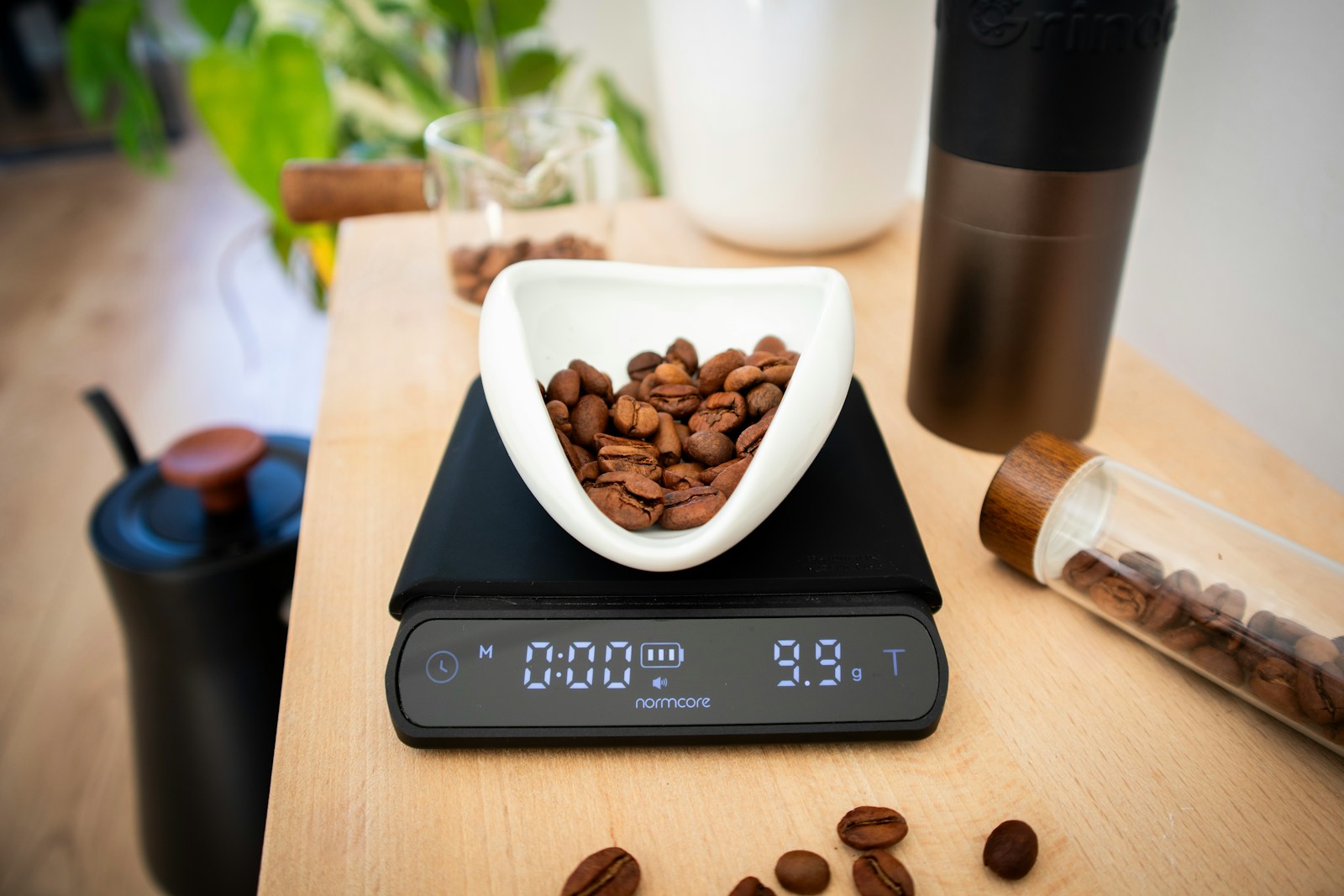
Scales offer the clearest benefit. According to the roastery Kaffeemacher, 1 g more coffee in the basket lengthens the shot time by around 4 seconds. If you want the time to vary by less than a second, you need to dose to within about 0.25 g. Without knowing the amount of coffee, Kaffeemacher says, you cannot set a recipe at all.
You don’t need a special device for this. Any kitchen or letter scales with tenth-of-a-gram readings will do, as long as they respond quickly. A timer only saves you counting. A US retailer warned clearly against slow scales in 2026. In its view they are worse than none, because they show wrong values at the end of the shot.
| Scales | What they do | Verdict |
|---|---|---|
| Kitchen scales reading to 1 g | too coarse, 1 g equals around 4 s | not suitable |
| Precision scales reading to 0.1 g, fast display | dose and yield accurate enough | enough for espresso |
| Coffee scales with timer | as above, timer starts automatically | convenience |
| Scales with Bluetooth and app | the shot plotted as a curve | convenience, no proven taste benefit |
Needle tool: what WDT measurably does
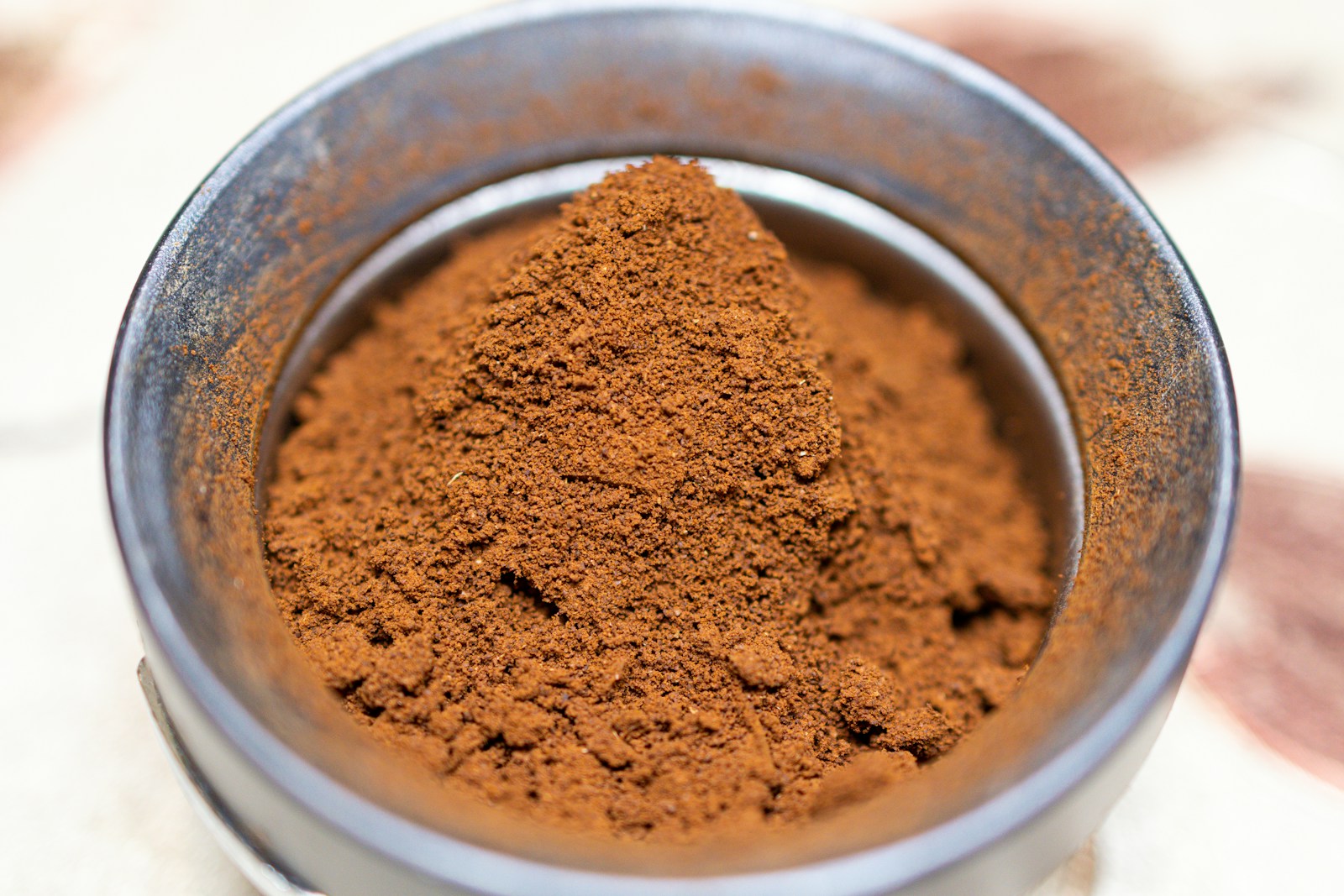
With a needle tool, you stir the grounds in the basket with fine needles. Clumps break up and the coffee lies at a similar density everywhere. According to Kaffeemacher, this helps whenever your grinder produces clumps, and also with dark roasts and dry room air. How much a grinder clumps also depends on the burrs.
The needles have to be thin. According to Barista Hustle, anything over 1 mm in diameter is counterproductive, so a toothpick won’t do. Kaffeemacher recommends 5 to 8 thin needles. Start with small circles in the lower layers and work towards the middle, then go over the surface once more.
Stirring right down to the bottom does a little more than just raking the surface. The physicist Jonathan Gagné measured higher and, above all, more even resistance in the puck with deep stirring. The founder of the machine maker Decent, however, considers the advantage over raking to be small. Matt Perger points out that WDT is hard to perform the same way every time by hand.
In Decent’s experiment, needles of 0.4 mm performed best, combined with gentle vertical tapping before tamping. A densely packed needle tool with 95 points then raised the extraction yield once more, to 22.7 % in the best shot. Good shots sometimes happened without any distribution, just not reliably. That is the real benefit of WDT: fewer shots go wrong.
Tamper: size matters more than force
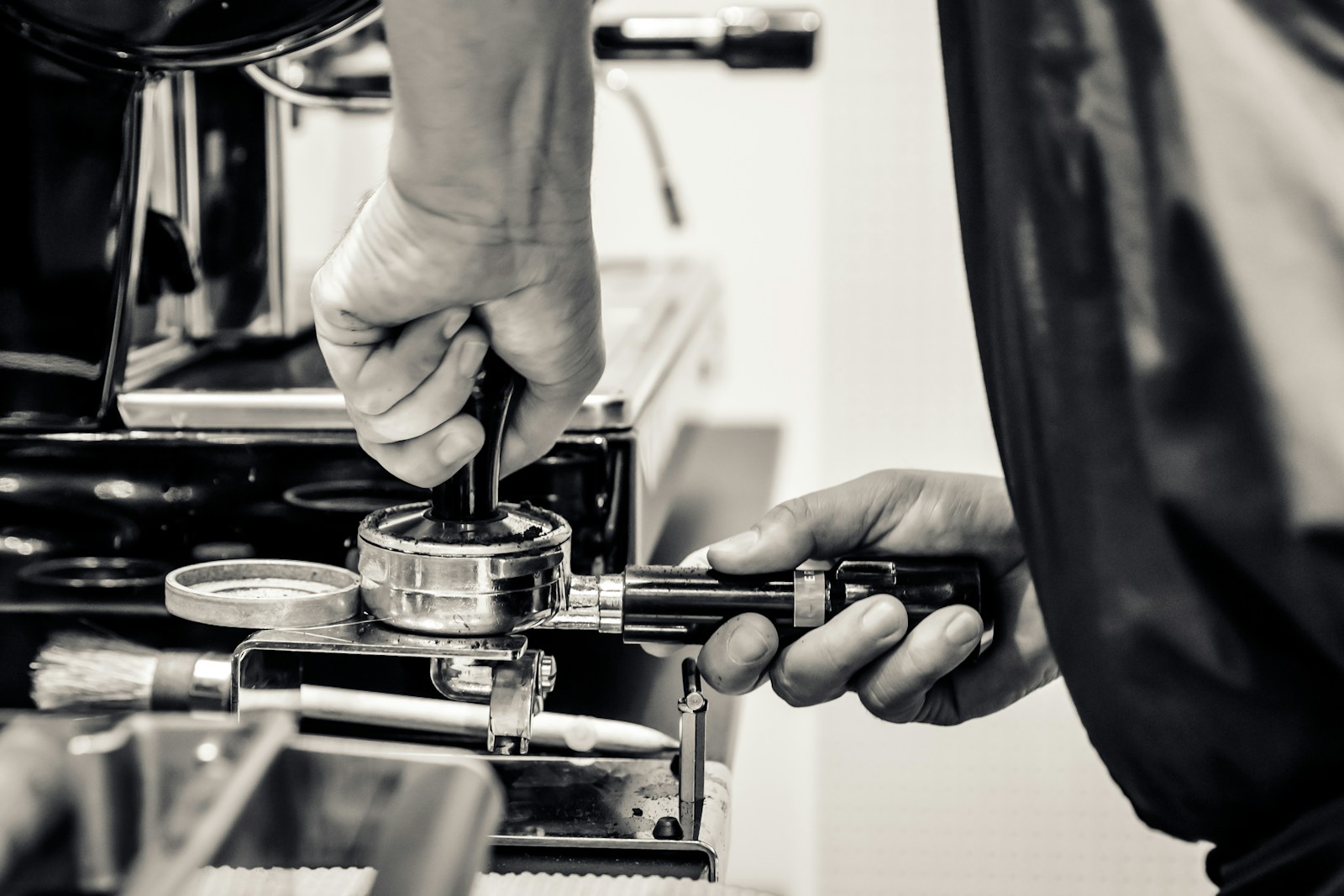
Many people press as hard as they can when tamping. In measurable terms, this does little. In 2025, Kaffeemacher pulled around 150 espressos with an automatic tamper, 50 each at 10, 15 and 20 kg. Neither the shot time nor the concentration differed in a statistically robust way.
| Tamping pressure | Average shot time | Average TDS |
|---|---|---|
| 10 kg | 24.24 s | 8.05 % |
| 15 kg | 23.54 s | 8.00 % |
| 20 kg | 24.20 s | 7.98 % |
The experiment did not test taste, and a missing proof is not evidence of no effect. Nothing below 10 kg was measured. The roastery advises at least 6 kg, about 10 kg for everyday use and not much below 8 kg. It matters more that you press straight and the surface ends up level.
The diameter is what counts. According to Kaffeemacher, baskets labelled 58 mm often measure 58.8 to 58.9 mm inside. A tamper of exactly 58 mm therefore leaves a ring at the edge that is never compressed cleanly. For 58 mm baskets, the roastery recommends 58.4 or 58.5 mm. Check first whether your basket has a ridge inside, as such a wide tamper may not fit.
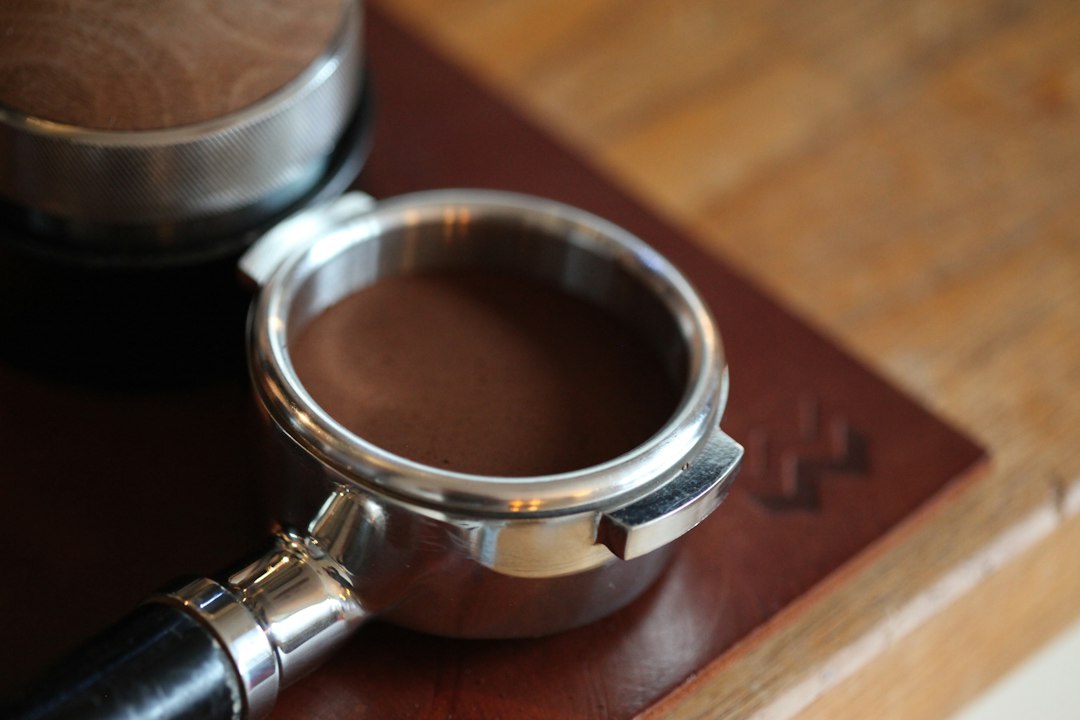
Decent also tested the shape of the base. In 2019, a rippled base extracted a little more from the coffee, 19.0 to 19.3 % instead of 18.2 to 18.7 % yield. But the espressos tasted more astringent and less acidic. The tasters gave them 4 to 5 out of 10 points, and the flat base 6 to 7. So more dissolved solids do not automatically mean better flavour.
Calibrated tampers with a spring always press with the same force. Decent used one in its experiments to keep the pressure constant. That does not prove a taste benefit for you at home. In 2026, the US retailer even explicitly advised saving money on the tamper, because pressure hardly matters with a well-prepared puck.
How to get consistent espresso with few accessories:
- Set your grind size and dose first, then buy accessories.
- Weigh beans and espresso to 0.1 g and use scales that respond instantly.
- Stir the grounds right to the bottom with needles under 1 mm.
- Measure the inside of your basket and choose the tamper to match, so 58.4 to 58.5 mm for 58 mm.
- Press straight with about 10 kg, as pressing harder made no difference in the measurements.
Puck screen and precision basket: fine-tuning with limits
A puck screen is a thin metal mesh that you place on the puck after tamping. In a 2021 experiment at Decent, the edge of the puck was extracted much less than the centre without a screen. At the edge, the yield was around 16 to 17 %, in the centre around 25 %. With a screen, it rose to around 22 to 23 % at the edge.
The total yield rose by 2 to 3 percentage points, to 24 % in each case. However, the test used only one machine, one grinder, one water and one recipe. In 2026, the US retailer also saw more even extraction, especially in the first few seconds, but not with every shot. According to the basket maker IMS, you use about 0.5 g less coffee with a screen to leave room.
Precision baskets have holes of equal size that are cleanly made. The benefit sounds plausible, but measurements are missing. In 2023, the US retailer wrote that there was hardly any difference in taste between two well-known precision brands. It also sees baskets as wearing parts and, in its experience, replaces them every 12 to 14 months.
Double-walled baskets are clearly worth avoiding. According to Kaffeemacher, they hide the feedback you need for dialling in. A good basket is cylindrical, cleanly punched and has no double bottom.
| Accessory | What the evidence shows | Limits |
|---|---|---|
| Puck screen | edge +5 to 7 percentage points, total +2 to 3 (Decent 2021) | one set-up, no statistics |
| Precision basket | holes of equal size according to the maker | no measured taste benefit |
| Rippled tamper base | +0.5 to 1 percentage point yield | tasted worse (Decent 2019) |
| Tamping pressure 10 to 20 kg | no measurable difference (Kaffeemacher 2025) | taste not tested |
Leveller, knock box, milk jug: convenience and ritual
A leveller, also called a distribution tool, is a disc with angled blades that you turn on the grounds. Kaffeemacher usually advises against it. If it is set too deep, the blades often touch the coffee unevenly before tamping. The roasting expert Scott Rao sees most of these tools as tampers in disguise, because they hardly redistribute the grounds.
In the US retailer’s 2026 comparison, the leveller made the surface flatter and shot times slightly more even. In terms of taste, it did less than WDT. All the tools together produced the most consistent shots, but hardly more than WDT with a puck screen. Tapping the side sometimes helped and sometimes hurt, while gentle vertical tapping after stirring helped at Decent.
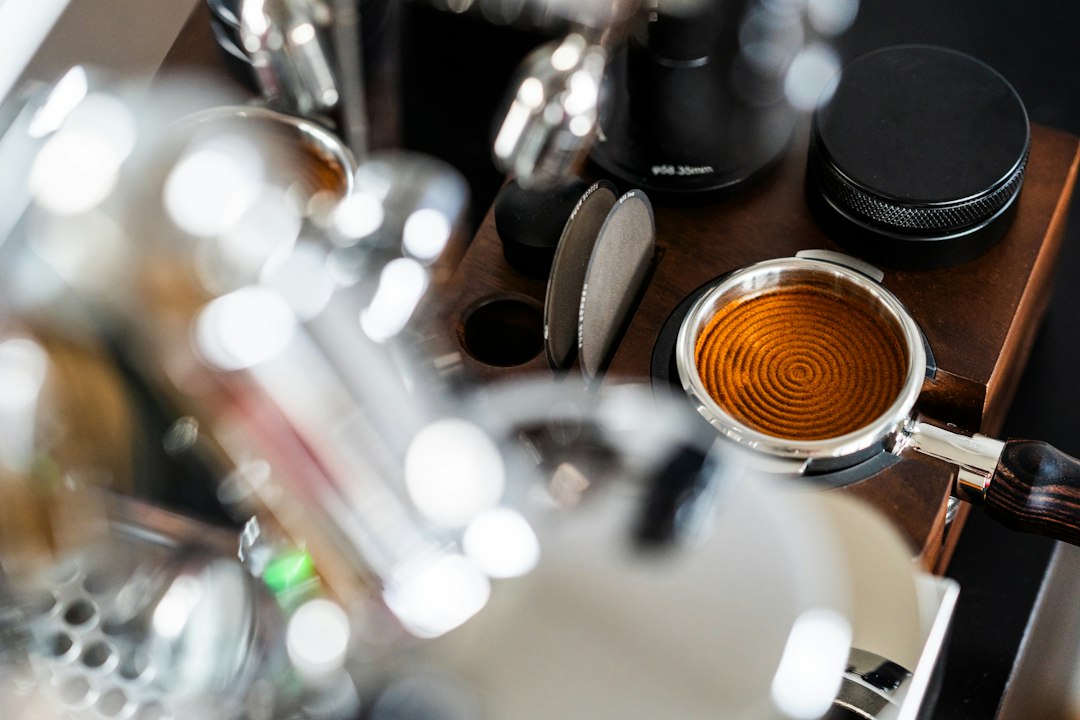
A knock box does not change the espresso. It keeps the kitchen clean and spares your bin, and there are no measurements on it. A dosing funnel on the basket falls into the same category. It stops grounds spilling over the edge while you stir, so it pairs well with a needle tool.
For milk drinks, you need a jug of the right size. A German roastery names 350 ml for one cappuccino and 600 ml for two. How to steam milk in it is explained in Milk foam for cappuccino.
| Accessory | Does it improve flavour? | Verdict |
|---|---|---|
| Leveller | hardly, mainly a more even surface | optional, set it carefully |
| Dosing funnel | indirectly, no grounds are lost | handy with WDT |
| Knock box | no | convenience |
| Milk jug | only for milk drinks | needed if you steam milk |
| Bluetooth scales | not proven | convenience |
Ranking: what to buy first
The ranking is based on the experiments and specialist articles mentioned, and we have not tested any of these ourselves. We rated how well the benefit is proven and how much it delivers for the price. Each example model stands for its type, and there are equivalent alternatives for all five. The five models come from five different manufacturers. There are no paid placements.
What to buy first
No. 1 · around €43
Coffee scales: Timemore Black Mirror Basic 2
Pros: No recipe without scales, and 1 g more dose lengthens the shot by around 4 seconds.
Cons: At 15.2 × 13 cm, it does not fit on every drip tray.
No. 2 · around €25
WDT tool: KM Nadeltool
Pros: Same needle thickness as in the best Decent experiment, and the largest single effect in the 2026 US comparison.
Cons: Mainly helps if your grinder clumps, not dishwasher-safe.
No. 3 · around €25
Tamper 58.4 mm: Motta Profi-Tamper 8102/M
Pros: Within the recommended range of 58.4 to 58.5 mm and inexpensive.
Cons: The base is not dishwasher-safe and only fits 58 mm baskets.
No. 4 · around €20
Precision basket: IMS Competition E61 double basket
Pros: Holes of equal size, and suitable for tampers up to 58.5 mm according to the retailer.
Cons: No taste benefit has been measured, and baskets wear out over time.
No. 5 · around €14 to €15
Milk jug: Rhinowares milk jug 360 ml
Pros: The right size for one cappuccino, and the fill lines prevent overfilling.
Cons: Changes nothing about the espresso, and for two cups you need the 600 ml version.
Nos. 1 and 2 are the two tools that the US retailer put at the very top in 2026. The scales make your recipe repeatable, and the needle tool means fewer shots go wrong. Together they cost less than €70.
No. 3 only counts if your current tamper is too small. If your basket measures around 58.8 mm inside and your tamper 58 mm, switching to 58.4 or 58.5 mm does more than pressing harder. If it already fits, you can skip this purchase.
Nos. 4 and 5 are fine-tuning and everyday use. We did not rank the puck screen, although it helped at Decent and for the US retailer. It changes your recipe by about 0.5 g of dose, so add it only once the first three places are sorted. According to the experiments, it is then the next sensible step.
So three things are enough to start with. Weigh every shot, stir the grounds with fine needles and check whether your tamper fills the basket right to the edge. Puck screen and precision basket come only after that.
Last updated: 24 October 2026.
Sources
- Benjamin Hohlmann, Kaffeemacher: Espresso zubereiten: Anleitung, Rezept & Mahlgrad (in German), 16 August 2026.
- Benjamin Hohlmann, Kaffeemacher: Welchen Einfluss hat der Anpressdruck auf den Espresso? (in German), 19 August 2025.
- Barista Hustle: Should we all be using the Weiss Distribution Technique again?, undated, accessed 24 October 2026.
- Decent Espresso, experiments by Stéphane Ribes: Which puck preparation technique is best?, June 2020.
- Decent Espresso, experiments by Stéphane Ribes: Effects of a puck screen on extraction, April 2021.
- Decent Espresso, experiments by Stéphane Ribes: Effects of a rippled tamper base on espresso extraction, November 2019.
- Sean Jemison, Clive Coffee: Extraction Showdown: Which Puck Prep Is Actually Boosting Your Espresso?, 15 February 2026.
- Clive Coffee: Espresso Accessories That Actually Improve Your Shot, 14 July 2026.
- Sean Jemison, Clive Coffee: VST and IMS Precision Baskets: Why You Should Upgrade, 18 July 2023.
- IMS (manufacturer information): IMS Puck Screens, undated, accessed 24 October 2026.
- Coffee Circle: Timemore Black Mirror Basic 2 (42,70 €), accessed 24 October 2026.
- Kaffeemacher (shop): Nadeltool / WDT zur Espressozubereitung (24,90 €) (in German), accessed 24 October 2026.
- Arne Preuss, Coffeeness: The Ultimate Espresso Tamper Guide, 13 March 2025.
- Arne Preuss, Coffeeness: Best Espresso Accessories: 10 Essential Barista Tools, 24 February 2025.
- Espresso International (shop): Motta Profi-Tamper 58,4 mm, Art. 8102/M (24,90 €) (in German), accessed 24 October 2026.
- Kaffeemacher (shop): IMS Competition E61 Doppelsieb (19,90 €) (in German), accessed 24 October 2026.
- Coffee Circle: Rhinowares Milchkännchen 360 ml (15,00 €), accessed 24 October 2026.
- Rösthof (shop): Rhino Pro Milk Pitcher 360 ml (13,79 €) (in German), accessed 24 October 2026.