Ruby chocolate is pink without any colouring or berries. Barry Callebaut unveiled it in Shanghai on 5 September 2017 as the ‘fourth type’ after dark, milk and white.How the colour comes about, the ingredients, the legal classification and tips on buying and storage.
Ruby tastes neither bitter nor milky but fruity and tangy. The manufacturer describes the flavour as a tension between berry fruitiness and creamy smoothness. Since the launch, pink bars, pralines, ice cream and couverture have been on sale. Behind the colour, however, there is no new cocoa plant but a special processing method.
Shanghai 2017: how the fourth type took the stage
The Swiss chocolate maker Barry Callebaut presented Ruby at an event in Shanghai. The press release states explicitly that no berries, berry flavouring or colouring are added. According to the company, development took more than a decade. In 2018, a manager spoke of almost 15 years of research.
The first big brand launch followed quickly. In January 2018, Nestlé released a KitKat with a Ruby coating in Japan and South Korea. In April 2018, the pink KitKat also arrived in the UK and Germany. By the end of 2019, according to Barry Callebaut, more than 60 brands worldwide were using Ruby.
Pink without colouring: what beans, acid and a patent have to do with it
The exact process is a trade secret. Patents owned by Barry Callebaut offer a clue, such as EP 2237677 from 2012. They describe treating unfermented beans, or beans fermented for three days at most, with an acid. This turns them red to purple. Germany’s consumer advice centre (Verbraucherzentrale) cites a 2009 patent application as the basis.
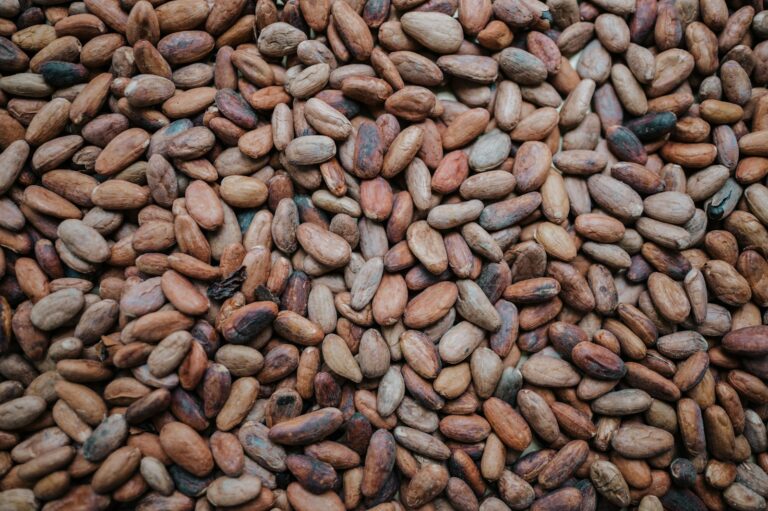
Fermentation plays the main role here. It turns the originally pale cocoa beans brown and creates many typical chocolate flavours. How strongly this shapes the taste is explained in Cocoa fermentation: how it shapes the flavour of chocolate. With Ruby, this step is apparently shortened or skipped.
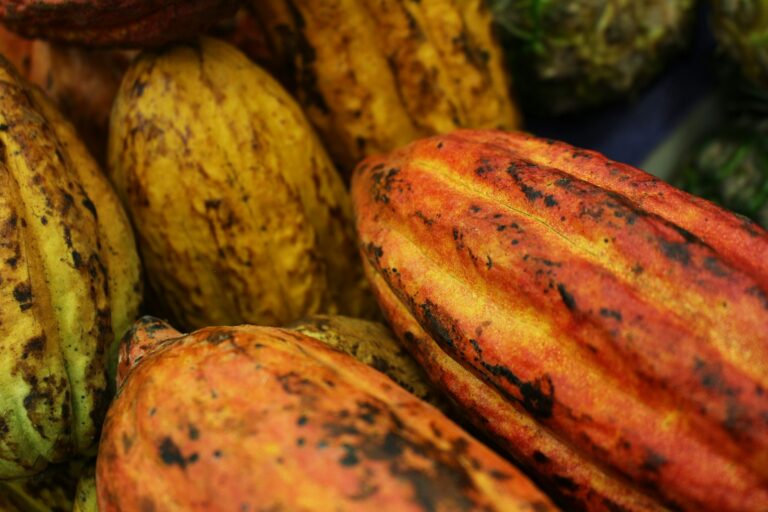
There is no separate Ruby plant. According to Lebensmittelklarheit, a consumer portal run by the Verbraucherzentrale, the beans come from known varieties such as Criollo, Trinitario and Forastero, selected by testing. You can read more about these groups in Criollo, Forastero, Trinitario: how the cocoa varieties differ. For its RB1 couverture, Callebaut blends beans from Côte d’Ivoire, Ghana and Ecuador.
What’s inside: cocoa, milk and citric acid
For its well-known Ruby couverture RB1, Callebaut states at least 26.3 per cent milk solids. For cocoa solids, the product sheets differ, giving at least 33.6 or 47.3 per cent. The fat content is 35.9 per cent. The Verbraucherzentrale Bayern (Bavaria’s consumer advice centre) gives around 50 per cent sugar. This makes Ruby about as sweet as white chocolate.
One ingredient stands out: citric acid. It appears in ingredient lists as an acidity regulator or acidifier. According to Lebensmittelklarheit, Ruby always contains it, while it is unusual in other chocolate. It stabilises the colour and underlines the fruity note. The cocoa content of bars also varies, with recipes from 32 to 47 per cent on sale.
| Item | Ruby RB1 | For comparison: EU minimum for milk chocolate |
|---|---|---|
| Cocoa solids | min. 33.6 to 47.3 % (depending on data sheet) | min. 25 % |
| Milk solids | min. 26.3 % | min. 14 % |
| Total fat | 35.9 % | min. 25 % |
| Special ingredient | citric acid | not a usual ingredient |
Chocolate or not? EU law and the US interim solution
The EU has no separate legal category for ‘Ruby’. The cocoa directive 2000/36/EC covers chocolate, milk chocolate and white chocolate, among others. For milk chocolate, it requires at least 25 per cent cocoa solids and 14 per cent milk solids. Ruby RB1 clearly exceeds these values.
Our assessment is therefore that, by composition, Ruby corresponds to a milk chocolate. In German shops it is usually simply called ‘Ruby Schokolade’ (Ruby chocolate). We found no explicit statement from an EU or German authority on its classification.
The situation is different in the US. The Food and Drug Administration (FDA) granted Barry Callebaut a temporary marketing permit in 2019, which was extended in 2021. So there is still no final standard for ‘ruby chocolate’. The permit applies until a decision on the manufacturer’s petition. Requirements include citric acid, at least 12 per cent milk ingredients and no added colouring.
Light is the enemy: storing and working with Ruby
The pink colour is delicate. Callebaut writes that light, air, moisture and high temperatures can change Ruby’s colour. It recommends 12 to 20°C, no more than 70 per cent humidity and light-proof, airtight packaging. So an opened bar should not sit uncovered on the windowsill.
For melting, the manufacturer says the couverture should be kept liquid at 40 to 50°C. Too much heat harms colour and flavour. In our view, Ruby is only partly suitable for drinking chocolate: the acidity and the pale pink quickly get lost in a lot of milk. How to turn dark couverture into a drink is explained in Hot chocolate made with real chocolate: ratio, temperature and four recipes.
How to get the best out of Ruby:
- Store it cool at 12 to 20°C, dark and airtight, or the pink will fade.
- Read the ingredients list: citric acid belongs there, colouring or berry flavouring do not.
- Taste Ruby plain at room temperature, when its fruity acidity comes through best.
- Pair it with pistachio, matcha or sparkling wine; strong roasted flavours overpower it.
- Melt Ruby gently and don’t let it go above 50°C.
Ruby on the shelf: bars, couverture and prices
In our spot check, a 100-gram bar of Ruby costs around €4 to €6.50 in German online shops. That is more than standard milk chocolate but in line with many craft bars. For confectionery and baking, Ruby comes as couverture in drops. How bars are made by small chocolate makers is explained in Bean-to-bar: how chocolate is made from bean to bar.
Our recommendations
Couverture · around €23 per kg
Callebaut Ruby RB1 Callets
Pros: The original from its inventor: easy to measure and melt, for coating, moulding and mousse.
Cons: Sensitive to light and air; store opened bags dark and airtight.
Ruby is not a miracle bean but clever processing: little fermentation, acid, milk and sugar. Try it as a fruity change, and keep it in the dark so the pink stays.
All prices are guide prices and may change. We have not tested the products ourselves.
Last updated: 24 October 2026.
Sources
- Barry Callebaut: Barry Callebaut reveals the fourth type in chocolate: Ruby, 5 September 2017.
- Confectionery Production: Barry Callebaut reveals origins of ruby chocolate, 21 June 2018.
- Barry Callebaut via Business Wire: Ruby baking chip for North America, 12 April 2023.
- Barry Callebaut: FDA advances Ruby as the fourth type of chocolate, 25 November 2019.
- Federal Register (FDA): Ruby Chocolate Deviating From Identity Standard; Temporary Permit for Market Testing, 3 September 2021.
- Wikipedia: Ruby chocolate, accessed 23 October 2026.
- Lebensmittelklarheit (Verbraucherzentrale): Rosa Schokolade (in German), accessed 23 October 2026.
- Verbraucherzentrale Bayern: Was ist Ruby-Schokolade? (in German), 15 December 2022.
- Callebaut: Ruby RB1 Callets, product information, accessed 23 October 2026.
- Callebaut: Create with Ruby RB1, accessed 23 October 2026.
- EUR-Lex: Directive 2000/36/EC relating to cocoa and chocolate products, 23 June 2000.
- Walter Cordes: Tafelschokolade Ruby (in German), accessed 24 October 2026.
- Anjas Schokostübchen: Ruby Schokoladentafel pur 100 g (in German), accessed 23 October 2026.
- jamon.de: Chocolate Ruby, Clavileño, 100 g (in German), accessed 23 October 2026.
- Pati-Versand: Callebaut Ruby, price accessed 23 October 2026.
Image credits
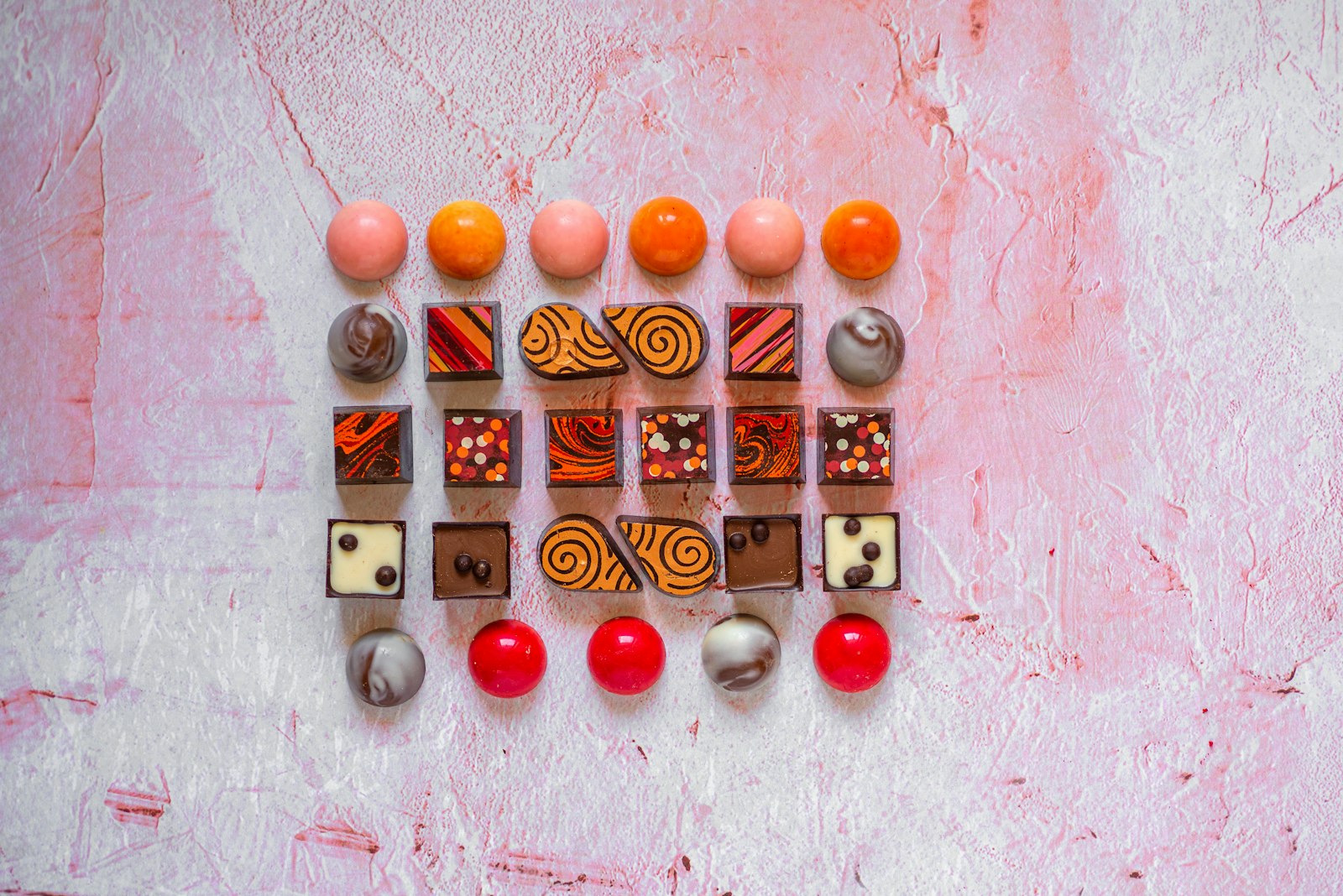
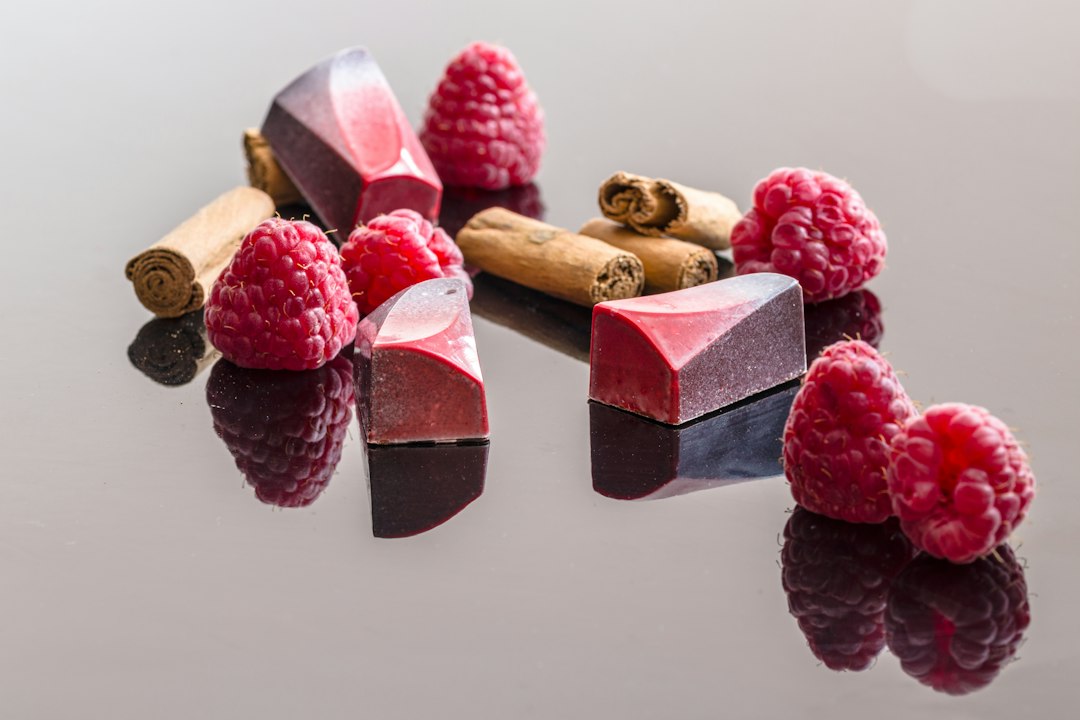
- Pralines with raspberry and cinnamon – Photo: Massimo Adami / Unsplash
Our selection is editorial, there are no paid placements. Links marked * are affiliate links to Amazon Germany (amazon.de): if you buy through them, we receive a small commission at no extra cost to you. We have not tested the products ourselves; pros and cons are based on manufacturer information and retailer descriptions. Prices are guide prices from German shops as of October 2026, and prices and availability on Amazon may differ.