Bean-to-bar means that a small maker turns cocoa beans into bars itself, from sorting and roasting to winnowing, fine grinding and tempering.Every step with temperatures and times, the difference from industry and tips for reading the wrapper.
The term comes from the USA. The glossary of the Fine Chocolate Industry Association describes bean-to-bar as chocolate that a maker produces itself, from the cocoa bean to the finished bar. The focus is on quality and flavour. According to the glossary, the expression became known from the mid-1990s, and its meaning is still evolving.
The beans arrive at the workshop already fermented and dried. Everything after that happens under one roof, usually in small batches and with a lot of manual work. The individual steps hardly differ from those in a factory. What differs are the machines, the batch sizes and the freedom to adjust the process for each type of bean.
At origin: fermentation and drying on the farm
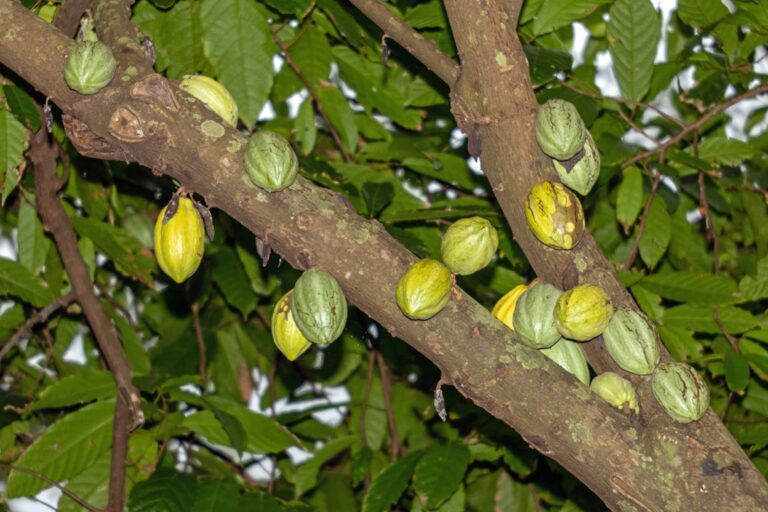
Before a bean reaches a chocolate maker, it has already been through two important steps. Straight after the harvest, the pulp around the beans ferments. According to the International Cocoa Organization (ICCO), this takes about 5 days for Forastero and 2 to 3 days for Criollo. In the first 48 hours the temperature rises to 40 to 45°C.
The beans are then dried slowly. Their moisture content falls from around 60 per cent to about 7.5 per cent. A 2008 review from the University of Strathclyde gives 6 to 8 per cent moisture as the target. Fermentation creates the precursors of the later aroma, and roasting builds on them.
Which bean ferments also shapes the result. We explain the differences between the cocoa varieties Criollo, Forastero and Trinitario in a separate article. It is similar with coffee, where processing after the harvest determines a large part of the flavour.
Production at a glance: eight steps from farm to bar
The table shows the whole journey. The figures come from scientific literature and from makers’ own descriptions. Industry and small makers often work with very different times, so the ranges are wide. We have converted temperatures given in degrees Fahrenheit in US sources.
| Step | Where | What happens | Typical values |
|---|---|---|---|
| Fermentation | farm | the pulp ferments, aroma precursors form | Forastero around 5 days, Criollo 2 to 3 days |
| Drying | farm | the beans lose water and can be stored | from around 60 % to 6 to 8 % moisture |
| Sorting | maker | foreign matter and bad beans are removed | often by hand in small businesses |
| Roasting | maker | roast aromas develop | 120 to 150°C, 5 to 120 min according to the literature |
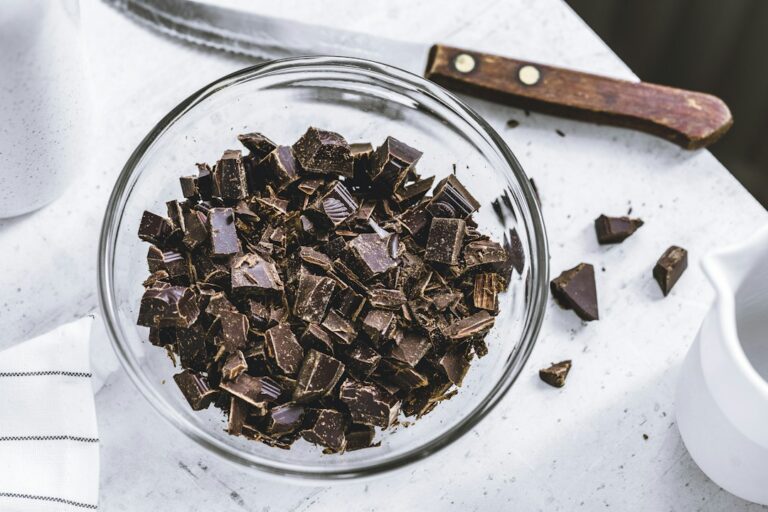
| Cracking and winnowing | maker | the beans are cracked, an air stream separates the shells | what remains are the nibs |
| Grinding with sugar | melanger or roller mill | nibs and sugar become a fine paste | particles below around 30 µm |
| Conching | melanger or conche | stirring with heat rounds off the flavour | 24 to 72 hours at small makers |
| Tempering | maker | controlled cooling for gloss and snap | dark: 55 to 58, then 28 to 29, then 31 to 32°C |
The first two steps take place on the farm, and the maker takes over from sorting onwards. With tree-to-bar, both are in the same hands. CBI, the Dutch Centre for the Promotion of Imports, describes this subgroup as bean-to-bar where the maker also owns the cocoa farms.
Sorting, roasting, winnowing: from bean to nibs
It all starts with sorting. Stones, fibres and broken or spoiled beans are thrown out. A Californian chocolate maker shows in a 2015 behind-the-scenes report how it picks through beans by hand. In large businesses, machines do this job.
Roasting creates the typical roast aromas through the Maillard reaction, which you also know from bread crust. The Strathclyde review gives temperatures of 120 to 150°C and times of 5 to 120 minutes. Small makers often roast lighter to keep the fruit of an origin. One US maker, for example, describes its roast as very light.
A trial at the University of Copenhagen with beans from Ghana shows how closely roasting and later processing are linked. The researchers roasted at 100, 120 and 150°C and then conched for 6 to 10 hours at 80°C. Hotter roasts produced more aroma compounds, and long conching broke some of them down again. It was a small trial with a single origin.
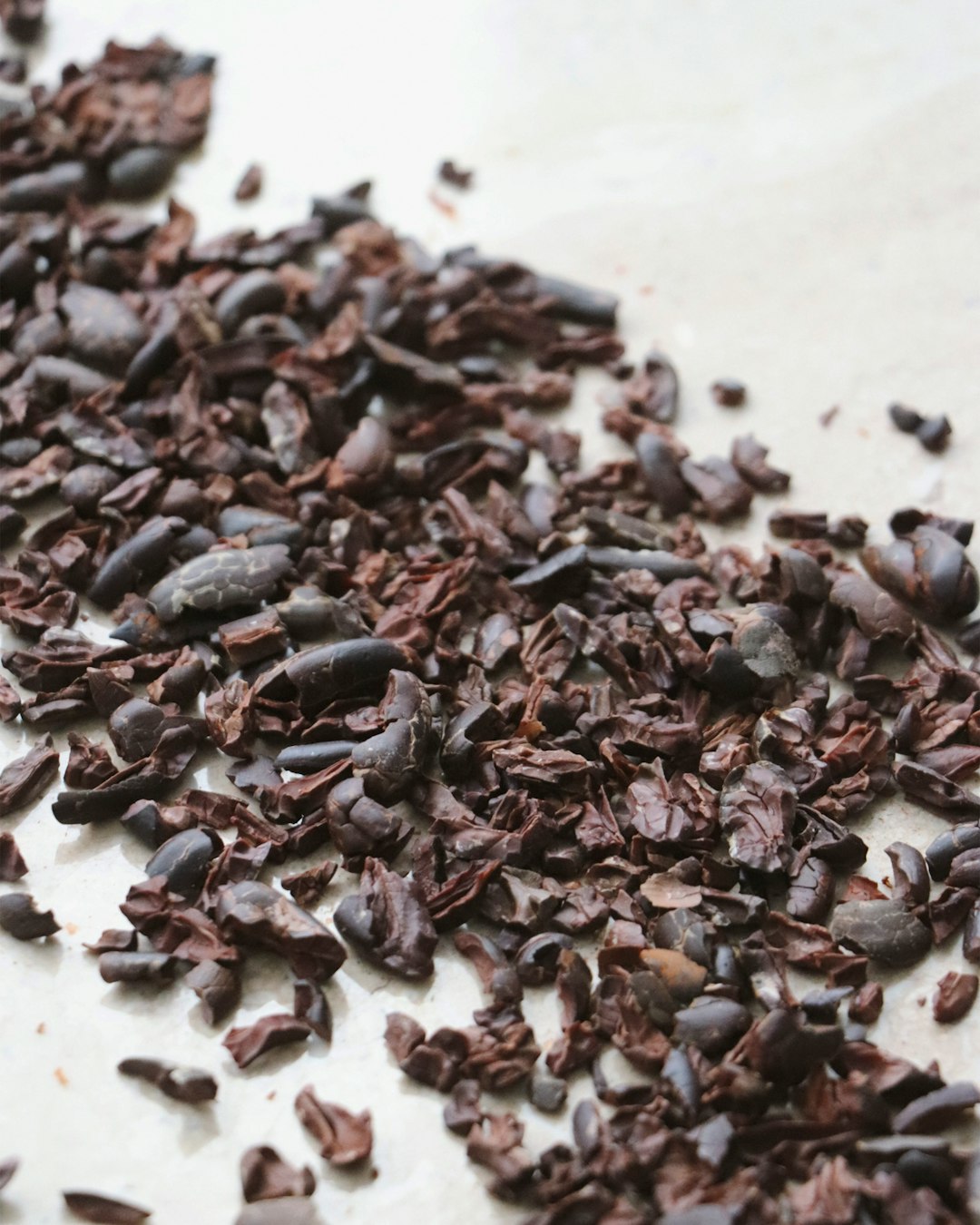
Once cooled, the beans are cracked. An air stream blows away the light shells, a process called winnowing. What remains are the nibs, small pieces of cocoa without shell. Similar roasting processes take place with coffee, more on this in light, medium and dark roasts.
Melanger and conche: how chocolate becomes smooth
Many small makers grind the nibs in a melanger, a grinder with granite stones. After about an hour, the nibs have turned into liquid cocoa mass. Then the sugar goes in. This is how a Californian maker describes the process for its test batches.
For a bar with 70 per cent cocoa, it gives 700 g of nibs to 300 g of sugar. In its small test machines, a batch ran for around 14 to 17 hours. Larger makers grind with roller mills. One US maker states a particle size of 10 to 15 µm for its three-roll mill.
Fineness decides the mouthfeel. According to a 2016 white paper from the measuring instrument maker Malvern Panalytical, the tongue perceives particles from about 30 µm as gritty. More finely ground chocolate feels creamier.
Conching means long stirring with heat and air. It rounds off the flavour and makes the mass smoother. According to the Strathclyde review, industry conches dark chocolate at 70 to 82°C. One US maker conches every batch for 72 hours in a longitudinal conche dating from 1915.
In a melanger, grinding and conching often happen at the same time. A US specialist blog for home chocolate makers gives 48 to 72 hours as a common rule of thumb. The author rarely runs his melanger for longer than 24 hours and can hardly taste a difference between 24 and 48 hours. He mostly works at 130 to 135°F, which is around 54 to 57°C (our conversion).
Tempering: gloss and snap for the bar
Cocoa butter can set in several crystal forms, but only one of them gives gloss and a clean snap. That is why tempering first melts the chocolate completely, then cools it and finally warms it slightly. This leaves only the desired crystals. A French chocolate maker gives this temperature curve.
| Chocolate | Melt | Cool to | Work at |
|---|---|---|---|
| dark | 55 to 58°C | 28 to 29°C | 31 to 32°C |
| milk | 45 to 50°C | 27 to 28°C | 29 to 30°C |
| white | 45 to 50°C | 26 to 27°C | 28 to 29°C |
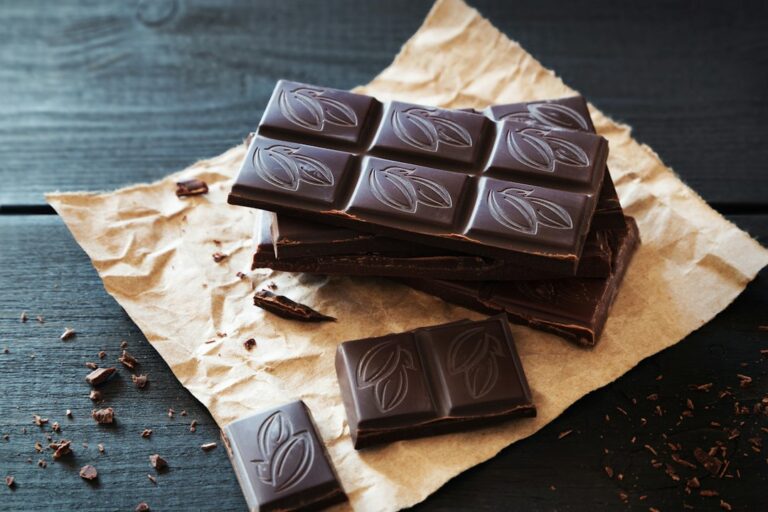
Other makers give slightly different values, and the figures on the packet are what count. After tempering, the chocolate is poured into moulds and cooled. One US maker then stamps the harvest year, batch number and best-before date on every wrapper.
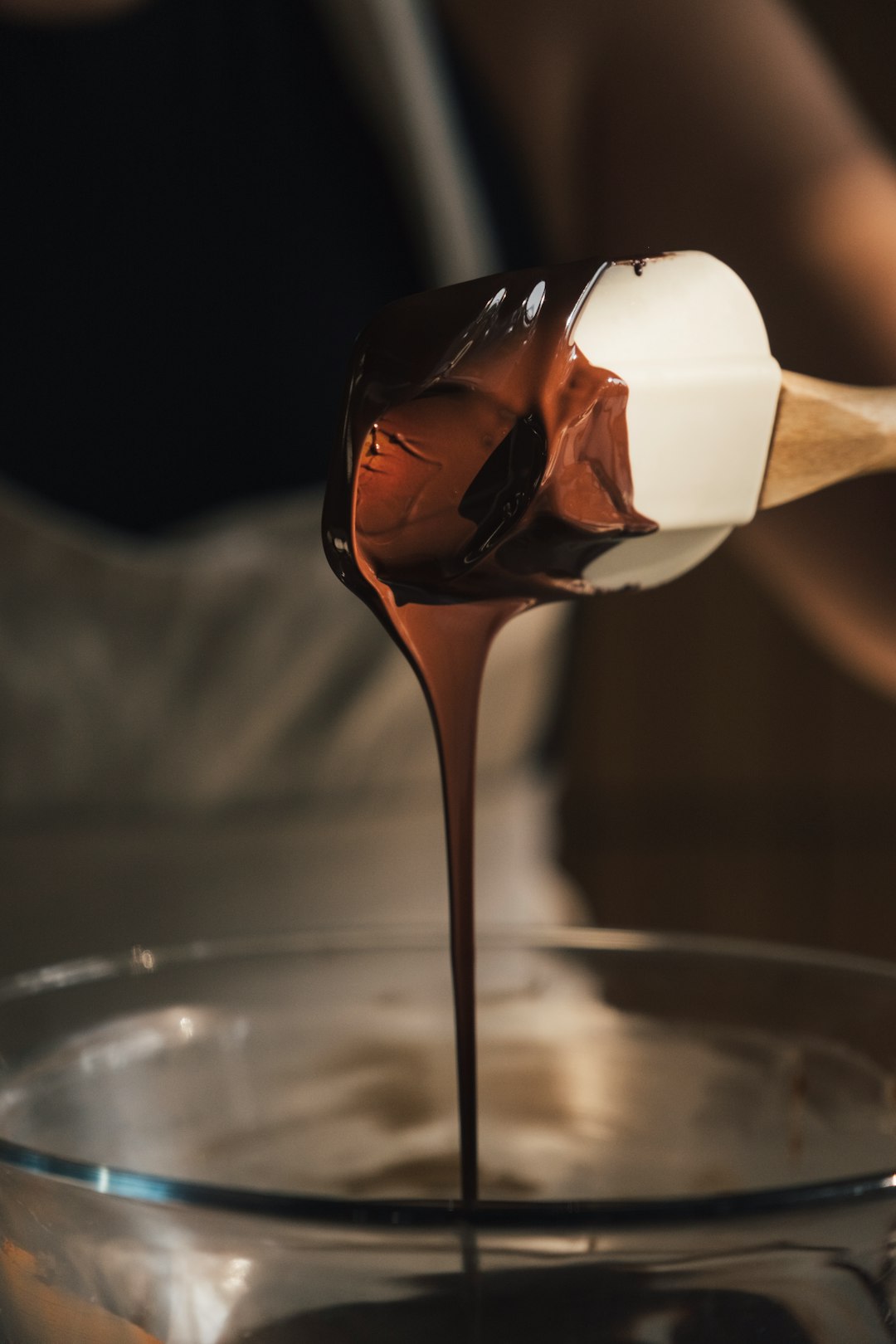
At home, you only need to temper if the chocolate is meant to set again. For hot chocolate made from couverture you don’t need to, because you drink it liquid.
Bean-to-bar or industry: couverture, trade body and wrapper
Large manufacturers often start with ready-made cocoa mass and work largely automatically. This is how the South Tyrol consumer advice centre described it in 2024. Many chocolatiers, on the other hand, buy couverture and turn it into pralines or bars. Under the EU cocoa directive, couverture must contain at least 31 per cent cocoa butter.
The Fine Chocolate Industry Association is a US trade body founded in 2007. At the start of 2021 it had over 300 members, around a third of them bean-to-bar makers and a third chocolatiers. The rest are farms, cocoa traders and specialist retailers. The association offers training and publishes a glossary of technical terms.
Nobody knows exactly how many bean-to-bar makers there are. In 2017 the US author Clay Gordon estimated around 500 worldwide, about 300 of them in the Americas. According to CBI, 49 per cent of all craft chocolate companies are now based in Europe. The centre gives no figure for Germany, but says there are fewer makers here than in France or the UK.
On the wrapper, the law only helps you so far. The German Cocoa Regulation (Kakaoverordnung) requires chocolate to state ‘cocoa solids: … % minimum’. Under the EU directive, chocolate needs at least 35 per cent total dry cocoa solids. The term bean-to-bar does not appear in these labelling rules. It is a claim made by the maker itself.
Bean-to-bar describes a way of working and is not a quality label. The flavour depends on the bean, the roast and the care taken at every step. So try bars from different origins side by side and remember which maker you like.
Last updated: 24 October 2026.
Sources
- Rogan, M.; Rogan, T., FCIA Fine Chocolate Glossary: Bean to Bar, 28 November 2022, checked 14 September 2023.
- ICCO: Harvesting & Post-harvest, last updated 14 September 2021.
- ICCO: Processing Cocoa, last updated 14 September 2021.
- Afoakwa, E. O.; Paterson, A.; Fowler, M.; Ryan, A., Critical Reviews in Food Science and Nutrition 48(9), 840 to 857: Flavor Formation and Character in Cocoa and Chocolate: A Critical Review, October 2008.
- Owusu, M.; Petersen, M. A.; Heimdal, H., University of Copenhagen: Influence of roasting and conching conditions on aroma volatiles of chocolate (Poster, 9. Wartburg-Symposium), 2010.
- Gore, M., Dandelion Chocolate (maker’s information): How Chocolate Bars Come to Be, 1 June 2015.
- Ritual Chocolate (maker’s information): Our Chocolate Making Process, undated, accessed 24 October 2026.
- Chocolate Alchemy: Ask the Alchemist #105, 26 February 2015.
- Malvern Panalytical: Analytical characterisation of mouthfeel in chocolate, 5 September 2016.
- Chocolat Michel Cluizel (maker’s information): How to Temper Chocolate, 17 October 2023.
- Verbraucherzentrale Südtirol: Bean-to-Bar-Schokolade (in German), 4 November 2024.
- Directive 2000/36/EC, Annex I, via gesetze.legal: Kakao- und Schokoladeerzeugnisse: Verkehrsbezeichnungen und Anforderungen (in German), directive of 23 June 2000, accessed 24 October 2026.
- Kakaoverordnung, § 3, Bundesamt für Justiz: § 3 KakaoV Kennzeichnung (in German), regulation of 2003, accessed 24 October 2026.
- Barston, N., Confectionery Production: Fine Chocolate Industry Association flies the flag for premium artisan ranges, 25 January 2021.
- Gordon, C., The Chocolate Life: The State of Bean-to-Bar Chocolate 2017, Part 1, 20 November 2017.
- CBI, Dutch Ministry of Foreign Affairs: The European market potential for tree-to-bar chocolate, last updated 22 December 2025.