Many cocoa farmers in West Africa earn too little to live on. This encourages child labour on the farms and the clearing of forest for new fields.Incomes and prices, child labour in figures, forests and EU rules, labels and buying tips.
Almost every second cocoa bean in the world comes from two countries. According to statistics from the International Cocoa Organization (ICCO), Côte d’Ivoire and Ghana together harvested around 2.12 million tonnes in 2023/24. The world total was 4.37 million tonnes, so that is just under 49 per cent (our calculation).
Poverty, child labour and forest clearing are linked. Foreign currencies are converted at the ECB rate of 22 October 2026. The West African CFA franc is pegged to the euro, with €1 equal to 655.957 CFA francs.
Small farms, low incomes: the heart of the problem
In West Africa, cocoa grows almost entirely on family farms. In 2018, the cocoa researcher Kristy Leissle estimated on US television that 90 to 95 per cent of producers are smallholders. In 2024, a study commissioned by Fairtrade surveyed 704 certified farmers in Côte d’Ivoire. Their median cocoa area was 3 hectares, and a typical household had 7 people.
Only 7 per cent of these households reached a living income. This means enough money for food, housing, school, healthcare and small savings. The median household earned around €2,500 a year, while €6,678 would have been needed. That is about 37 per cent of what was needed, measured for the 2023/24 harvests.
One reason lies in how the money is shared along the chain. In 2020, the French institute BASIC broke down the price of a dark chocolate bar from 2018 for the FAO and partners.
| Stage | Share of the retail price of a dark chocolate bar, France 2018 |
|---|---|
| Cocoa farmers | 11.3 % |
| Producing countries in total, including collection and export | 18.6 % |
| Processing the beans (grinding) | 5.8 % |
| Chocolate makers | 37 % |
| Retail | 37 % |
For milk chocolate, the farmers’ share was 7.3 per cent. The figures apply to France before the price crisis, not to every bar.
Prices in 2026: a record on the exchange, a crash at the farm gate
In Côte d’Ivoire and Ghana, the state sets the price farmers receive for a kilo of cocoa. It is based on advance sales of part of the harvest. This dampens fluctuations but passes on price jumps only with a delay.
In December 2024, cocoa reached a record of 12,906 US dollars per tonne on the futures market, roughly €11,518. After that, the price fell sharply. On 22 October 2026, it stood at around 5,600 US dollars per tonne, roughly €5,000. You’ll find more on the price trend in cocoa price 2026.
Côte d’Ivoire had still paid 2,800 CFA francs per kilo for 2025/26. On 1 September 2026, the Coffee and Cocoa Council cut the price for the 2026/27 main crop to 1,200 CFA francs, roughly €1.83. That is a drop of 57 per cent. In the new season, Ghana pays 42,400 cedis per tonne, or 42.4 cedis per kilo.
A comparison helps to put this in context. Fairtrade calculates a living income reference price, LIRP for short. It converts the family income needed, based on a realistic farm size and yield, into a farmgate price per kilo. For Côte d’Ivoire, it assumes 2.8 hectares of cocoa and a yield of 597 kilos per hectare.
| 2026/27 season | State farmgate price | Fairtrade reference price (LIRP 2026) | Farmgate price as % of LIRP |
|---|---|---|---|
| Côte d’Ivoire | 1,200 CFA francs/kg, around €1.83 | 1,758 CFA francs/kg, around €2.68 | around 68 % |
| Ghana | 42.4 cedis/kg | 45.4 cedis/kg | around 93 % |
All percentages are our own calculations. When Fairtrade reviewed the figures in 2025, both state prices were still well above the reference price. With the price cut, the Ivorian gap is back. Ivorian farmers receive about 37 per cent of the futures price of around €5 per kilo. Transport, levies and export costs lie in between, however.
Child labour: 1.56 million children according to the NORC report
The most important survey comes from the NORC institute at the University of Chicago. It was funded by the US Department of Labor and published in October 2020.
Light, age-appropriate help on the farm does not count. Child labour means work that is too much for the child’s age or gets in the way of school. Work with machetes, carrying heavy loads or handling pesticides, for example, counts as hazardous.
| Cocoa-growing areas in Côte d’Ivoire and Ghana | 2008/09 | 2018/19 |
|---|---|---|
| Children in child labour in cocoa farming | not reported | around 1.56 million |
| of whom in hazardous work | not reported | around 1.48 million (about 95 %) |
| Share of child labour among children from farming households | 31 % | 45 % |
| Share of hazardous child labour | 30 % | 43 % |
The shares rose markedly in ten years, while the two countries’ harvest grew by 62 per cent to 3.1 million tonnes. The data are six years old.
Following the Harkin-Engel Protocol of 2001, governments, the US Department of Labor and industry set a goal in 2010. They aimed to cut the worst forms of child labour by 70 per cent by 2020. According to the NORC data, the share of hazardous child labour rose instead.
Today, many companies and cooperatives rely on monitoring and remediation systems, CLMRS for short. Trained staff visit families, record cases and organise support. According to the 2024 annual report of the International Cocoa Initiative (ICI), such systems covered around 1.17 million households by September 2024. 26 per cent of the children identified were in child labour. Of these, 44 per cent were no longer affected after two follow-up visits.
Deforestation: where forest makes way for cocoa
In 1960, Côte d’Ivoire had around 16 million hectares of forest. According to UN-REDD, a United Nations programme, around 2.5 million hectares were left in 2018. The country has thus lost almost 85 per cent of its forests. Cocoa is considered the main direct driver of deforestation there.
Once again, income is behind this. Old trees and exhausted soils yield less, and there is no money for fertiliser or replanting. On top of that comes the swollen shoot virus. According to data from the cocoa authority, 81 per cent of the cocoa area in Ghana’s Western North region was infected in 2024. Nationwide, the figure was around 26 per cent.
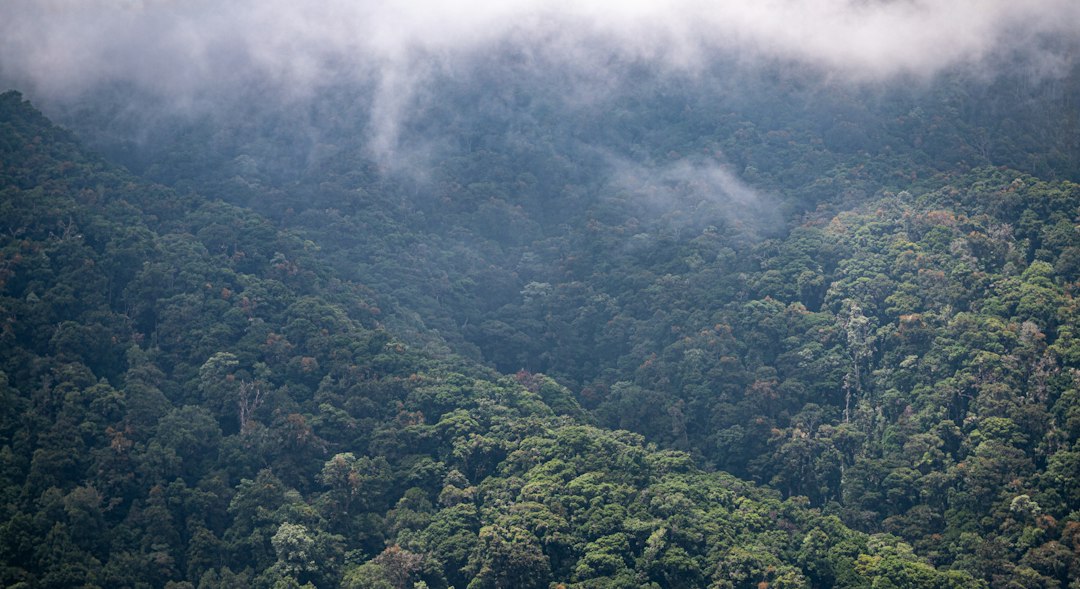
The EU Deforestation Regulation is meant to change this. Cocoa and chocolate may then only be sold in the EU if the beans come from land not deforested after 31 December 2020. Under the amending Regulation (EU) 2025/2650, the obligations apply to large and medium-sized companies from 30 December 2026.
Micro and small companies follow on 30 June 2027. There was no proposal for a further delay as of mid-October 2026. Our article on the EU Deforestation Regulation for coffee and cocoa explains how due diligence statements and the country list work.
Labels and premiums: what they achieve and what they don’t
Fairtrade raised its cocoa prices on 1 September 2026. In Côte d’Ivoire, there is a minimum price of €3,200 per tonne, plus a premium of €250 per tonne. In Ghana, the minimum price is 3,500 US dollars and the premium 275 US dollars, roughly €3,124 and €245. From 1 October 2026, 40 per cent of the premium must be paid in cash to cooperative members.
Per kilo of cocoa, the Ivorian premium comes to 25 cents. It doesn’t close the gap to the reference price. For cocoa, Fairtrade also allows mass balance. The manufacturer then buys as much certified cocoa as it sells, but an individual bar may also contain other cocoa. This doesn’t exist for coffee.
You’ll find what the labels cover for coffee and where they reach their limits in Fairtrade, Rainforest Alliance and direct trade. Some manufacturers go further. They voluntarily pay up to the reference price, buy traceably and sign contracts over several years.

In the end, the farmgate price decides. If it is below what a family needs, there is no money for workers, school and healthy trees. Bean-to-bar: how chocolate is made shows how a bean becomes a bar and where costs arise along the way.
Last updated: 24 October 2026.
Sources
- ICCO: Production, Quarterly Bulletin of Cocoa Statistics Vol. LI No. 2, 30 May 2025.
- Fairtrade: Cocoa household income study 2025 (survey July/August 2024), 2025.
- PBS NewsHour Weekend: The challenging lives of the world’s cocoa growers (interview with Kristy Leissle), 1 April 2018.
- BASIC for FAO and partners: Cocoa value chain in France, Executive Summary (2018 data), June 2020.
- Trading Economics: Cocoa Futures Hover Around $5,600, 22 October 2026, accessed 24 October 2026.
- Africa24: Côte d’Ivoire cocoa: CFAF 1,200/kg for the 2026/2027 season, 6 September 2026.
- Ghana News Agency: Ghana opens 2026/27 cocoa season with producer price of GH¢42,400 per tonne, September 2026.
- Fairtrade International: Living income reference prices cocoa Ghana and Côte d’Ivoire, explanatory note 2026, April 2026.
- NORC, summary by the Swiss Platform for Sustainable Cocoa: NORC Report Information (2018/19 survey), 19 October 2020.
- U.S. Department of Labor, ILAB: Assessing Progress in Reducing Child Labor in Cocoa-Growing Areas of Côte d’Ivoire and Ghana, undated, accessed 24 October 2026.
- International Cocoa Initiative: Annual Report 2024, accessed 24 October 2026.
- UN-REDD: On the path to sustainable cocoa and forest restoration in Côte d’Ivoire, 29 May 2018.
- The Cocoa Post, based on ICCO and COCOBOD: Major Ghana cocoa region 81% infected with bean disease, 22 July 2024.
- Official Journal of the EU: Regulation (EU) 2025/2650 amending Regulation (EU) 2023/1115, 23 December 2025.
- Fairtrade International: Fairtrade boosts support for cocoa farmers amid continuing market uncertainty, 11 December 2025, corrected 7 September 2026.
- Fairtrade Deutschland: Rückverfolgbarkeit in Fairtrade-Lieferketten (in German), undated, accessed 24 October 2026.