Without fermentation, cocoa does not taste of chocolate but bitter and astringent. Only a few days of fermenting on the farm lay the foundation for chocolate flavour.Process and microbes, methods on the farm, drying, the cut test and typical defects.
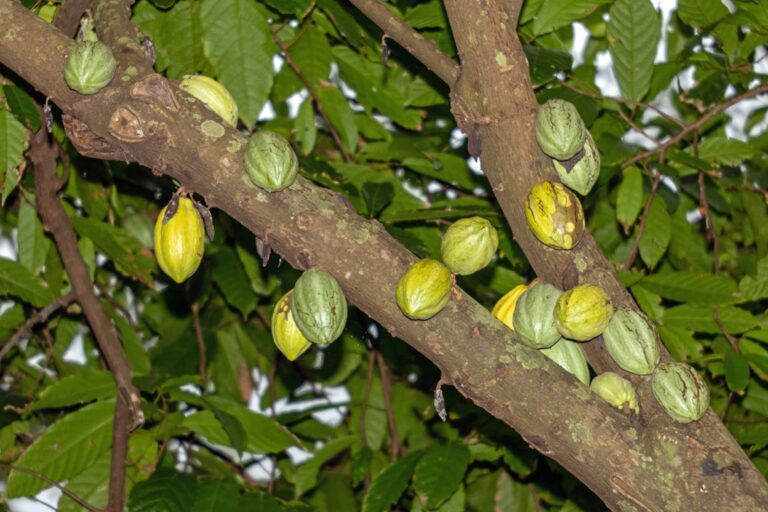
After the harvest, farmers split open the cocoa pods and remove the beans. A white, sugary flesh, the pulp, clings to them. Beans and pulp go into a heap, a box or a basket. There, yeasts and bacteria from the surroundings ferment the pulp, without any added culture.
The quality requirements of the European cocoa and chocolate associations describe how important this is. According to them, unfermented beans produce an extremely bitter and astringent cocoa mass, meaning one that makes your mouth pucker and feel furry. According to a review from the University of Strathclyde, unfermented beans develop hardly any chocolate aroma when roasted.
The process: yeasts, lactic acid and acetic acid bacteria
Three groups of microbes work in the pulp one after another. At first the pulp is very acidic, with a pH of about 3.0 because of its citric acid. Yeasts dominate first. In the tightly packed heap with little air, they ferment the sugar into alcohol. They also break down pectin, so the pulp turns liquid and drains away as juice.
Lactic acid bacteria start growing early on as well. They break down the citric acid and form lactic acid. Once the juice drains and air reaches the beans, the acetic acid bacteria take over. They turn the alcohol into acetic acid and release a lot of heat in the process. This is how the Belgian microbiologists Luc De Vuyst and Frédéric Leroy describe it in a 2020 review.
| Time | Microbes | What happens | Temperature in the heap |
|---|---|---|---|
| Start | yeasts | sugar becomes alcohol, the pulp liquefies | 25 to 30°C |
| first 24 to 48 h | yeasts, lactic acid bacteria | citric acid is broken down, lactic acid forms | rises to 35 to 40°C |
| from about 48 h | acetic acid bacteria | alcohol becomes acetic acid, heat is produced, the germ dies | 40 to 45°C after 48 h |
| from day 3 to the end | mainly acetic acid bacteria | the bean’s enzymes form aroma precursors | 45 to 50°C, sometimes higher |
Figures from De Vuyst and Leroy, the ICCO and the Strathclyde review. According to De Vuyst and Leroy, a well-managed fermentation is finished after 4 to 6 days. Depending on the variety and the farm, 2 to 10 days occur.
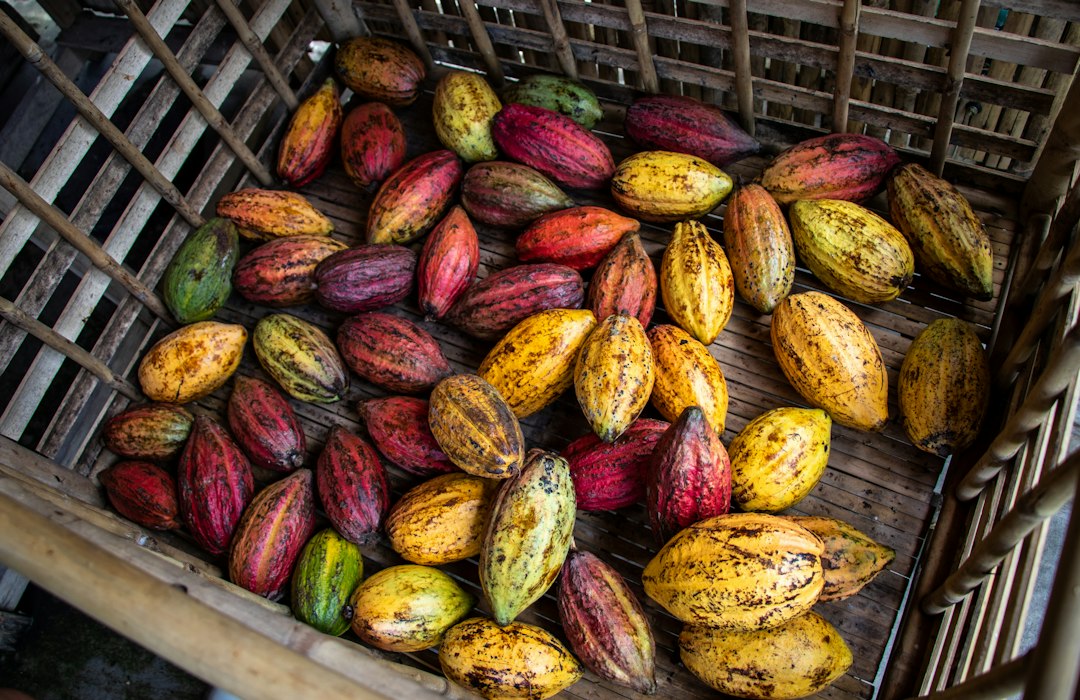
Inside the bean: how the aroma precursors form
The microbes stay in the pulp, but their products move into the bean. Acetic acid, alcohol and heat kill the germ. Inside, the pH falls from about 6.5 to 4.8.
Now the bean’s own enzymes get to work. They break proteins down into small fragments and amino acids and split sugars. These substances are the aroma precursors. Only during roasting do they react in the Maillard reaction to form the typical chocolate aromas. What happens next at the maker is explained in bean-to-bar: how chocolate is made.
At the same time, the polyphenols, the bean’s tannins, change. The purple pigments leach out, and other polyphenols oxidise and bind together. Bitterness and astringency decrease, and the inside of the bean turns brown. According to the Strathclyde review, they make up 15 to 20 per cent of fresh Forastero beans and around 5 per cent after fermentation.
More acidity is not automatically better. According to the Strathclyde review, chocolate from beans with a medium pH of 5.2 to 5.5 tasted most strongly of chocolate. If the pH drops quickly below 4.5, fewer aroma precursors form.
A trial from Australia shows how much depends on the yeasts. In 2014, researchers at the University of New South Wales suppressed the yeasts with an antifungal agent. The beans stayed purple, and the chocolate made from them tasted more acidic and less of chocolate. The tasters clearly preferred the normally fermented beans.
Duration by variety: from two to more than seven days
How long fermentation lasts depends heavily on the variety. According to the ICCO, Forastero beans need about 5 days and Criollo beans 2 to 3 days. Criollo has pale beans without purple pigments and is therefore often fermented for a shorter time. The differences between the varieties are explained in Criollo, Forastero, Trinitario.
In practice, the times vary widely. The 2008 Strathclyde review compiled typical figures from various countries. They are based on experience, not fixed rules.
| Origin and variety | Fermentation |
|---|---|
| Criollo in general (ICCO) | 2 to 3 days |
| Forastero in general (ICCO) | about 5 days |
| Ecuador, Nacional (Arriba) | 2 days |
| Venezuela, Trinitario | 2 days |
| Ghana, Forastero | 5 days |
| Malaysia, Forastero and Trinitario | 6 days |
| Trinidad, Trinitario | 7 to 8 days |
| Grenada, Trinitario | 8 to 10 days |
Heaps, boxes, baskets: how fermentation works on the farm
According to the ICCO, the beans are collected in heaps or boxes, and the heaps are covered with banana leaves. On small farms in West Africa, the heap is the simplest and most common method. An Italian research team wrote this in the journal Foods in 2023.
| Method | Set-up | Quantity | Turning |
|---|---|---|---|
| Heap | on banana leaves, covered with leaves and jute sacks | no fixed size | mix after 24 to 48 h of rest |
| Wooden box | perforated base, larger quantities in boxes arranged in steps | around 25 to 100 kg | by hand or by tipping into the next box |
| Small box (India) | 45 x 30 x 20 cm, with banana leaves and a lid | 15 to 20 kg | every other day, 6 days |
| Basket | lined and covered with banana leaves | 5 to 10 kg (India), 30 kg (Ghana trial) | every 48 h, 6 days |
The figures for the small box and basket come from the Indian plantation crops research institute CPCRI. The 30 kg basket comes from a 2013 Ghanaian trial.
Turning brings air into the mass. According to the ICCO, it increases the activity of the bacteria, especially the acetic acid bacteria, which need oxygen. The associations, however, name incorrect turning and very deep boxes as causes of overly acidic beans.
Drying: slowly down to around 7 per cent moisture
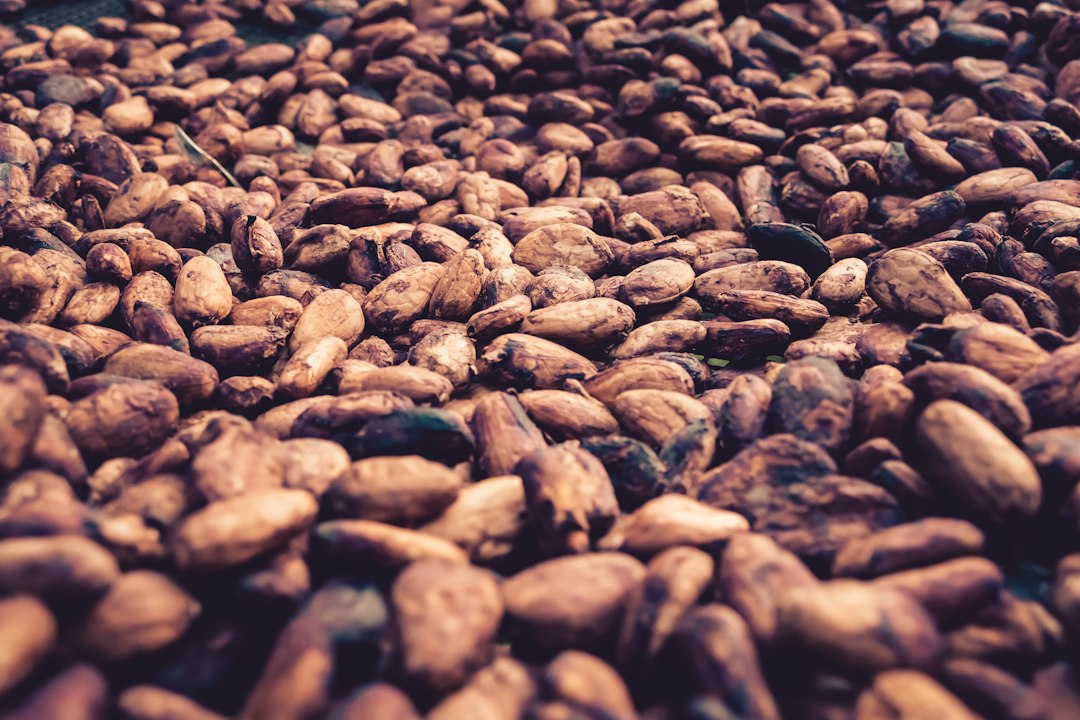
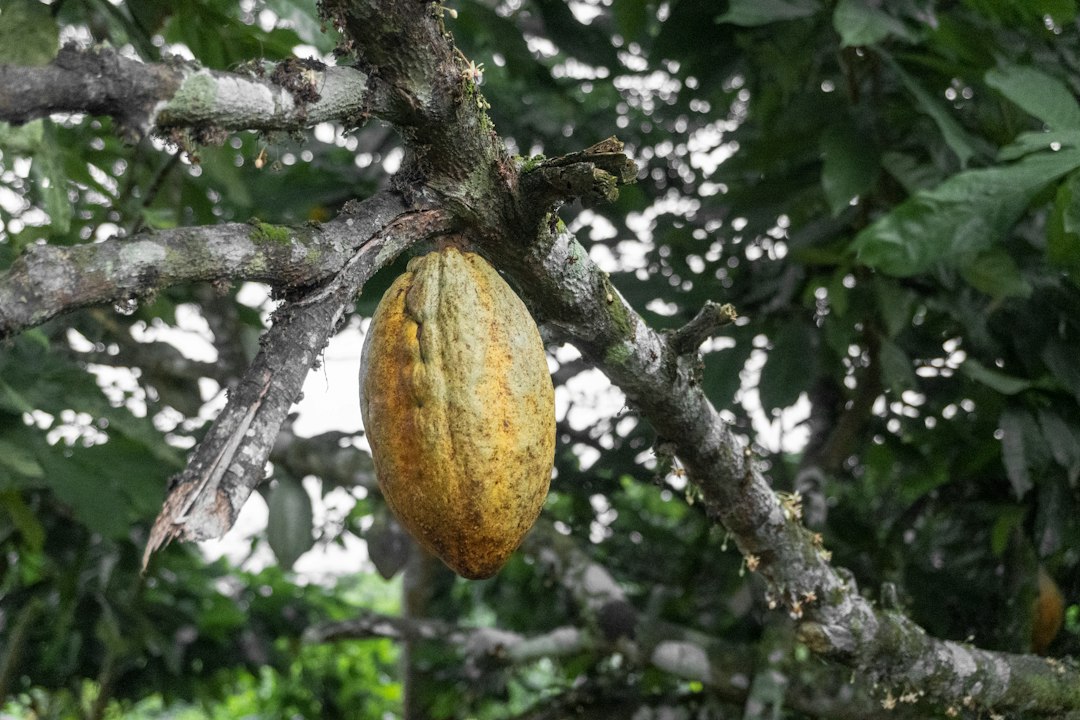
After fermentation, the beans are wet and spoil quickly. According to the ICCO, drying lowers their moisture content from around 60 per cent to about 7.5 per cent. The associations want around 7 per cent, 8 per cent at most. Below 6.5 per cent the shell becomes too brittle and the beans break.
Drying usually takes place in the sun. In the Ghanaian trial, the beans lay on raised racks for 7 days and were turned four times a day. Dryers are also possible, but according to the ICCO the bean should not get warmer than 65°C.
| Drying mistake | Result |
|---|---|
| too fast | beans stay acidic and bitter |
| too slow or too damp | mould and off-flavours |
| over an open wood or diesel fire | smoky taste and pollutants from the smoke |
| too dry, below 6.5 % | brittle shell, breakage |
Inside the bean, the work continues during drying. The Strathclyde review describes how aroma and brown colour keep developing. Sun-dried beans did better in tastings than beans dried in the shade or in an oven. With coffee, processing after the harvest decides the flavour just as much, more on this in processing: washed, natural, honey.
The cut test: brown, purple or slaty
The cut test shows how well a batch has fermented. According to the Ghanaian team from 2013, 300 beans are cut lengthwise and examined in daylight. Each colour and each defect is given as a percentage.
| Colour inside | Meaning | Effect on flavour |
|---|---|---|
| brown | well fermented | many aroma precursors, little bitterness |
| pale purple | not a defect, darkens further in storage | the trade accepts 30 to 40 % |
| purple | fermentation stopped too early | bitter and astringent |
| slate grey | not fermented | little cocoa aroma, very astringent |
| mouldy inside | defect | musty, from as little as 3 % of the beans |
According to the Ghanaian team, a batch counts as good if more than 60 per cent of the beans are fully brown. The international standard ISO 2451 from 2017 sets limits for defects. In the top grade, no more than 3 per cent of the beans may be slaty and 3 per cent mouldy. According to the associations, more than 3 per cent slaty beans usually make a chocolate too astringent.
Fermenting for too long is also a defect. If it runs beyond about 4 days, according to De Vuyst and Leroy, bacilli grow that produce off-flavours such as ammonia. Moulds can produce mycotoxins. The associations describe over-fermented beans as very dark, with putrid, ammonia-like or soapy notes.
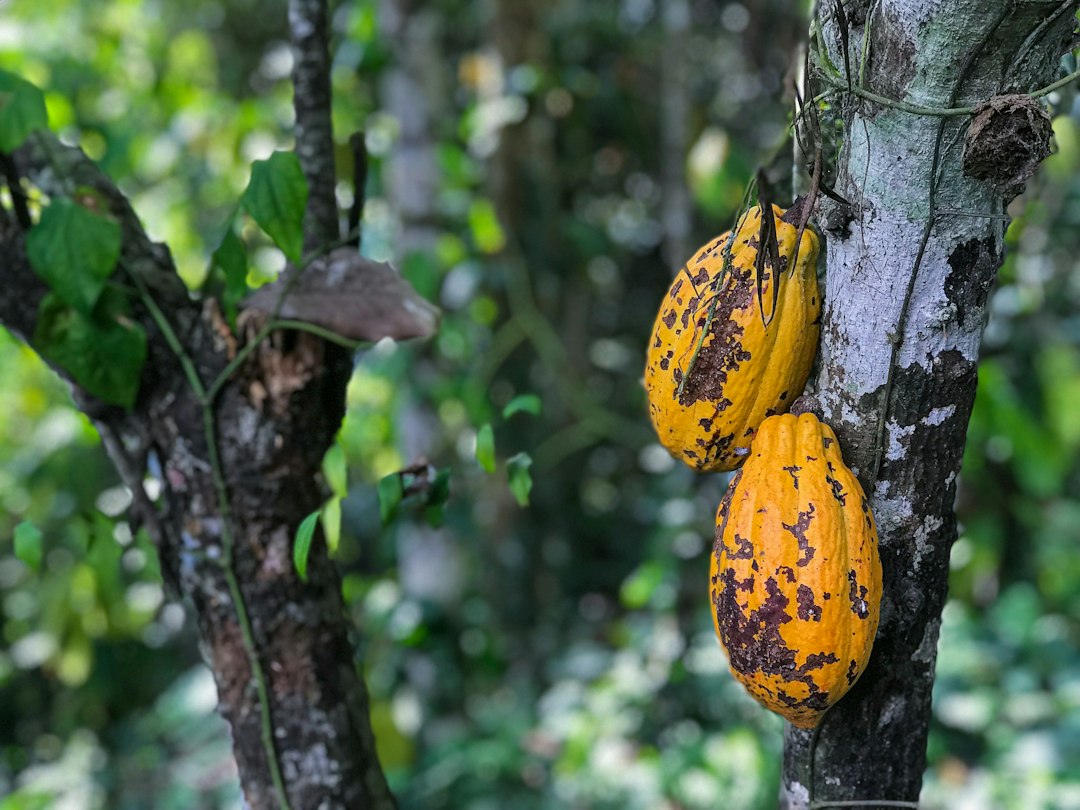
So far, fermentation is spontaneous almost everywhere. In 2025, after taking measurements on three farms in Colombia, a team at the University of Nottingham put together a starter culture of nine strains. In the lab, it produced chocolate with the characteristics of fine cocoa. It has not yet been tested on farms at large scale.
So part of the flavour develops in a warm heap under banana leaves. Try two bars of the same origin from different makers side by side and pay attention to acidity, bitterness and astringency.
Last updated: 24 October 2026.
Sources
- De Vuyst, L.; Leroy, F., FEMS Microbiology Reviews 44(4), 432 to 453: Functional role of yeasts, lactic acid bacteria and acetic acid bacteria in cocoa fermentation processes, 18 May 2020.
- ICCO: Harvesting & Post-harvest, last updated 14 September 2021.
- Afoakwa, E. O.; Paterson, A.; Fowler, M.; Ryan, A., Critical Reviews in Food Science and Nutrition 48(9), 840 to 857: Flavor Formation and Character in Cocoa and Chocolate: A Critical Review, October 2008.
- End, M. J.; Dand, R. (eds.), CAOBISCO/ECA/FCC: Cocoa Beans: Chocolate and Cocoa Industry Quality Requirements, September 2015, April 2016 version.
- Ho, V. T. T.; Zhao, J.; Fleet, G., International Journal of Food Microbiology 174, 72 to 87: Yeasts are essential for cocoa bean fermentation, 17 March 2014.
- Ghisolfi, R. et al., Foods 12(10), 2024: Bacterial and Fungal Communities Are Specifically Modulated by the Cocoa Bean Fermentation Method, 17 May 2023.
- ICAR-Central Plantation Crops Research Institute (CPCRI): Fermentation Methods, undated, accessed 24 October 2026.
- Kongor, J. E.; Takrama, J. F.; Budu, A. S.; Mensah-Brown, H.; Afoakwa, E. O., Journal of Food Science and Engineering 3, 625 to 634: Effects of Fermentation and Drying on the Fermentation Index and Cut Test of Pulp Pre-conditioned Ghanaian Cocoa Beans, 2013.
- ISO, preview via iTeh Standards: ISO 2451:2017 Cocoa beans: Specification and quality requirements, November 2017.
- Gopaulchan, D. et al., Nature Microbiology 10, 2130 to 2152: A defined microbial community reproduces attributes of fine flavour chocolate fermentation, 18 August 2025.