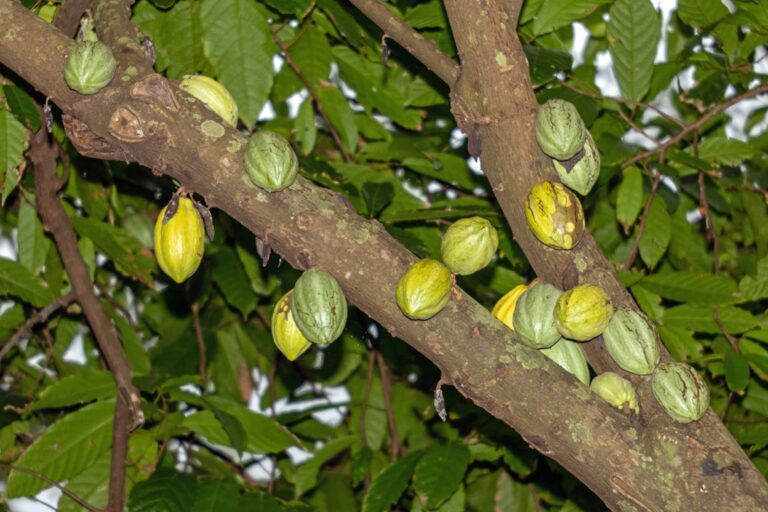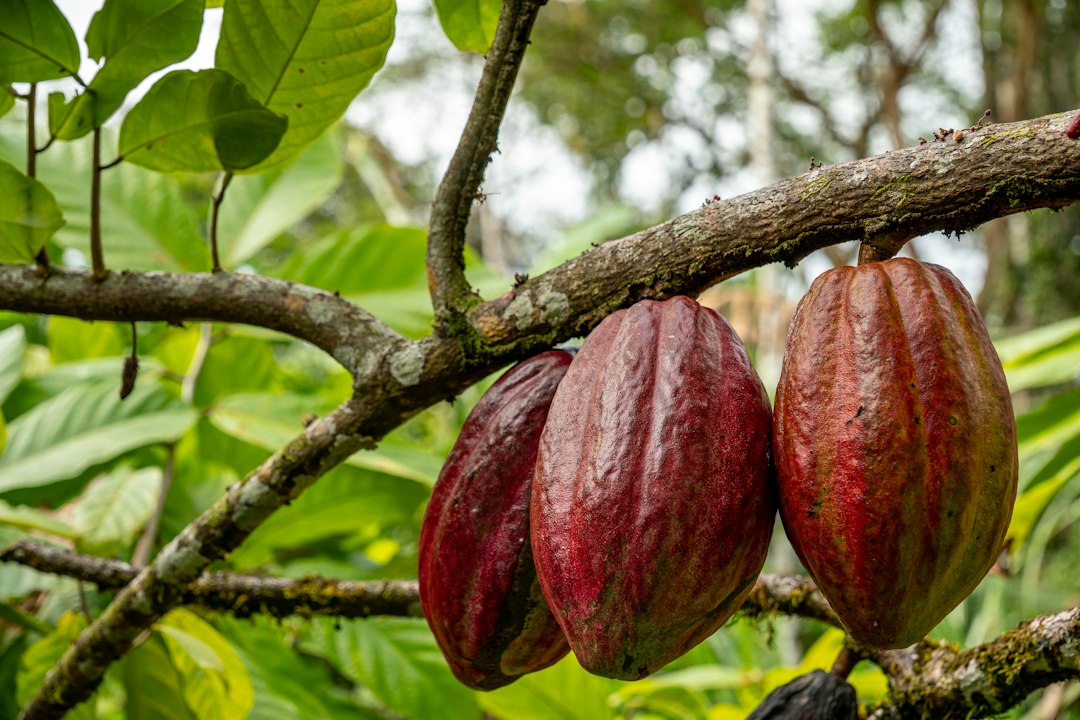
Criollo is a rare, mild cocoa with pale beans and Forastero the robust standard cocoa with a strong chocolate flavour. Trinitario is a cross of the two, often with fruity notes.The three groups compared, Nacional and CCN-51, fine flavour cocoa according to the ICCO and the state of genetics.
The three names date from colonial times and originate in Trinidad. According to the Cocoa Research Unit of the University of the West Indies, a ‘blast’ destroyed almost all of the island’s cocoa in 1727. The cause is thought to be a hurricane or a plant disease, but nobody knows for sure even today. In 1757 cocoa from Venezuela came to the island, and the planters called it Forastero.
Criollo roughly means ‘native’, while Forastero means ‘foreign’. The new trees crossed with the surviving Criollo trees. The hybrids were named after the island: Trinitario. The three names still appear on many bars today, even though research has long made finer distinctions.
Cocoa varieties compared: origin, beans and flavour
A rough guide is enough when you buy chocolate. Criollo is rare and mild, Forastero supplies most of the world harvest and Trinitario sits in between. Then there is Nacional from Ecuador, which fits none of the three categories. The table summarises the information from the scientific literature and the trade.
| Criollo | Forastero | Trinitario | Nacional | |
|---|---|---|---|---|
| Origin | Central America, Venezuela | Amazon basin, today mainly West Africa | Trinidad, cross of Criollo and Forastero | Ecuador |
| Inside of the bean | pale to white | dark purple | mixed | not stated in the sources |
| Typical flavour | mild, little bitterness | strong basic cocoa flavour, few fine aromas | fruity notes | floral, little bitterness |
| Share of world harvest | around 5 % | around 80 % | no reliable figure | no separate figure, Ecuador overall just under 10 % |
| Cultivation | prone to disease, low vigour | robust, high-yielding | more robust than Criollo | traditionally on the coast of Ecuador |
| Trade classification | mostly fine flavour cocoa | mostly bulk cocoa | mostly fine flavour cocoa, exception Cameroon | fine flavour cocoa |
The shares for Criollo and Forastero come from a 2017 analysis by Purdue University and the agricultural research centre CIAT. Other sources give 70 to 90 per cent for Forastero. We calculated the figure for Ecuador from ICCO statistics, and it also includes the clone CCN-51. The flavour descriptions are tendencies, and growing and processing shift them considerably.
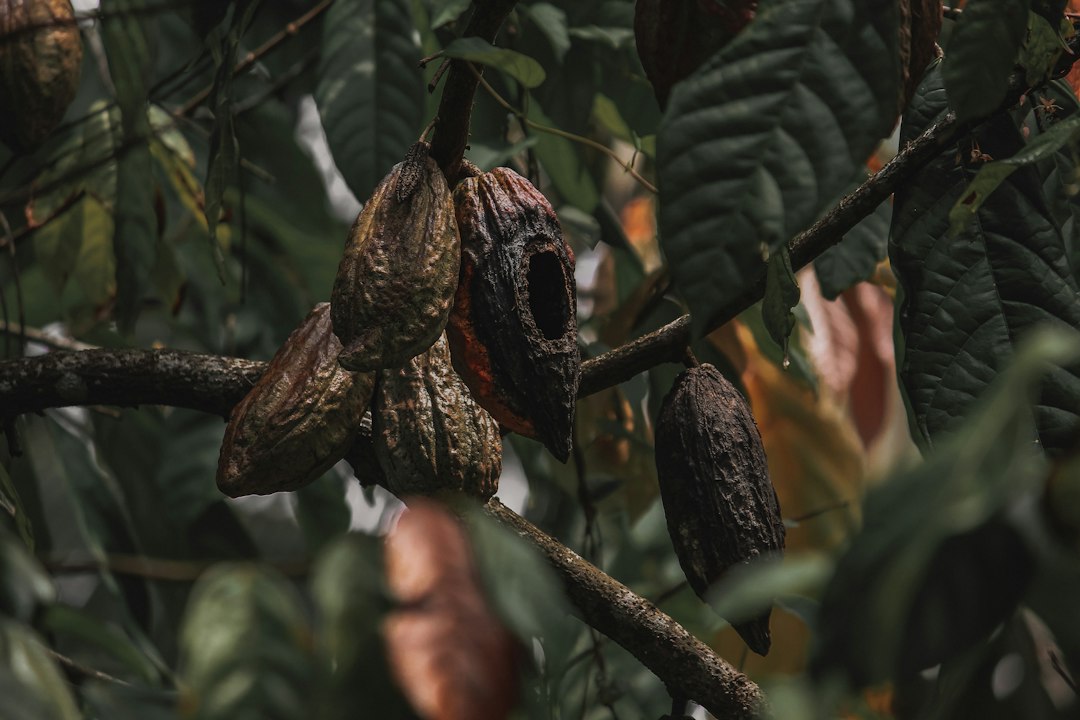
Criollo and Porcelana: mild and rare
Criollo beans are pale to white because they lack the purple pigments called anthocyanins. This is how Daniel Kadow describes them in a 2020 review. In flavour, Criollo is considered mild and less astringent and bitter than other cocoas. According to the Purdue and CIAT analysis, it tastes little of classic chocolate but has many fine secondary notes.
The downside is cultivation. In 2021 a research group including the French agricultural research centre CIRAD described Criollo as very prone to disease and low in vigour. That is why it is hardly grown any more. According to the 2017 estimate, it accounts for around 5 per cent of the world harvest.
A well-known Criollo line is Porcelana from the south of Lake Maracaibo in Venezuela, on the Catatumbo and Escalante rivers. In 2011 Venezuelan agronomists described white cotyledons and a smooth, thin pod husk under 5 mm. A 2002 genetic analysis classified their collection material as ancient Criollo. However, ‘Porcelana’ or ‘Criollo’ on a bar is not a protected term and not a verified genetic statement.
Forastero and Trinitario: the cocoa in most bars
Forastero beans are dark purple and turn dark brown during fermentation and drying. According to Kadow, most of them lack fine aromas and have a strong basic cocoa flavour. Purdue and CIAT describe it as often bitter. In return, the trees are robust and bear a lot.
Most of this cocoa grows in Africa today. According to the ICCO, around 3.1 million of 4.4 million tonnes came from Africa in the 2023/24 season. By our calculation, that is about 71 per cent. Côte d’Ivoire and Ghana alone supplied almost half of the world harvest between them.
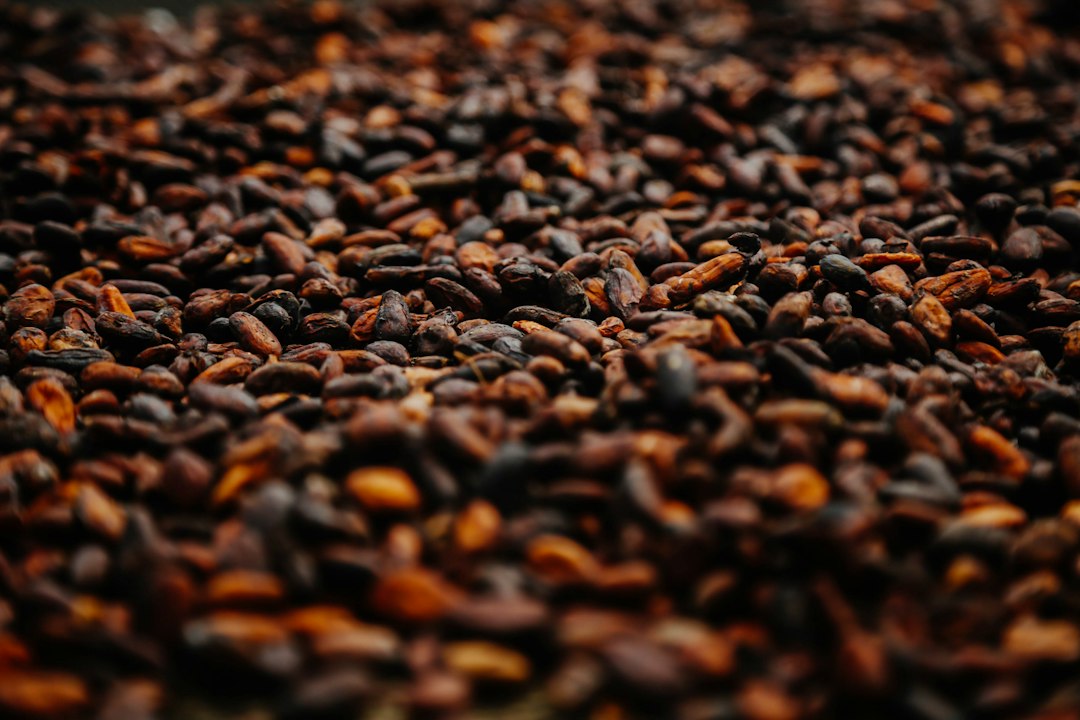
Trinitario arose from Criollo and cocoa from the Amazon region. Its beans therefore often show a mix of pale and dark colours. Kadow links Trinitario with fruity notes. It usually counts as fine flavour cocoa, but the ICCO names one exception: Trinitario from Cameroon is so far classed as bulk cocoa.
Because Trinitario is a family of crosses, its genetic make-up varies widely. Depending on which parent dominates, a tree ends up in different genetic groups. A Trinitario from Trinidad can therefore taste quite different from one grown in Cameroon or South East Asia.
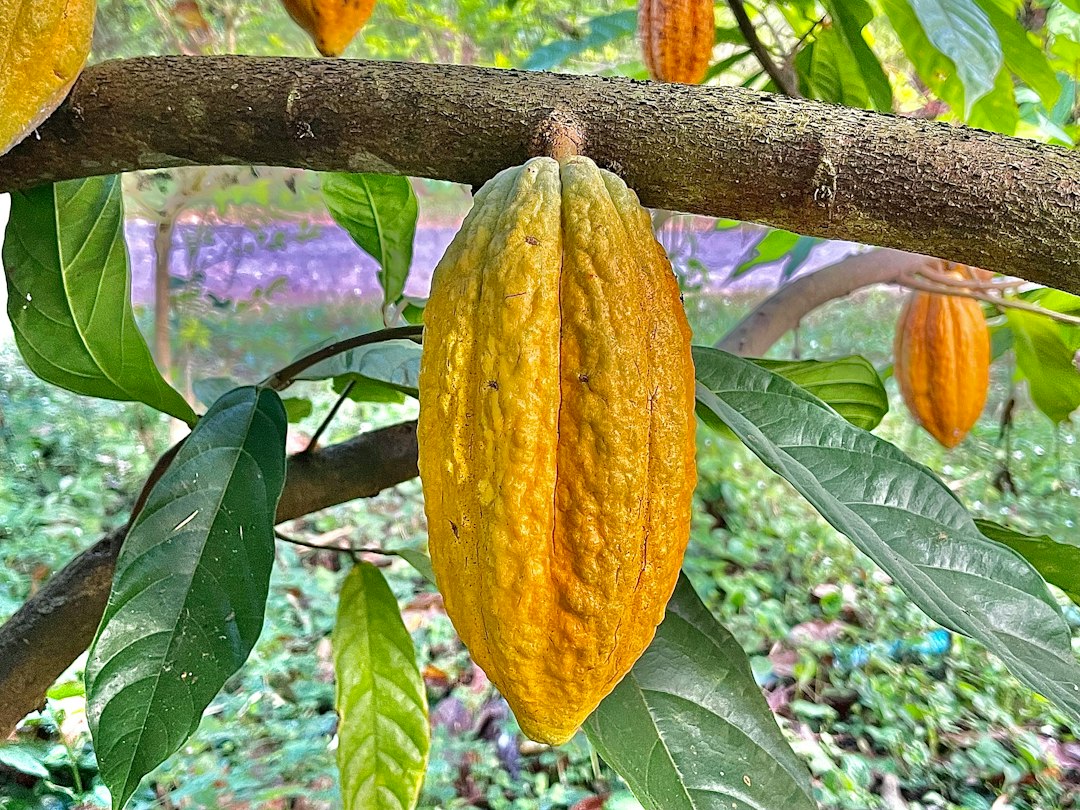
Nacional and CCN-51: two cocoas from Ecuador
Nacional is the traditional cocoa of Ecuador’s coast, often known in the trade as Arriba. For a long time it was considered a Forastero type. Even so, the International Cocoa Organization (ICCO) classes it as fine flavour cocoa. It is known for its floral aroma, along with woody notes and little astringency and bitterness.
A 2021 study of 152 Nacional trees confirms that the floral note is strongly rooted in the genes. The researchers found two metabolic pathways that produce aroma compounds such as linalool. The exact genes still need to be confirmed.
The counterexample grows in the same country. Homero Castro Zurita bred the clone CCN-51 around 1960 in Guayas province, in response to the fungal disease witches’ broom. According to a 2022 review, it yields around 1300 to 1800 kg per hectare. High-yielding Nacional clones in one collection reached 200 to 590 kg.
Trained tasters describe CCN-51 as strongly acidic and bitter. On top of that come astringency and green off-notes. The ICCO lists it as bulk cocoa. According to Ecuador’s statistics office, it covered around 70 per cent of the country’s cocoa area in 2018. The ICCO rates 75 per cent of Ecuador’s exports as fine flavour cocoa.
| Nacional | CCN-51 | |
|---|---|---|
| Origin | traditional cocoa of the coast | cross, bred around 1960 |
| Yield | 200 to 590 kg per hectare (high-yielding clones) | around 1300 to 1800 kg per hectare |
| Flavour | floral and woody, little bitterness | strong acidity and bitterness, few fine aromas |
| ICCO classification | fine flavour cocoa | bulk cocoa |
Fine flavour cocoa according to the ICCO: what ‘fine or flavour’ means
In the trade, the variety name matters less than a second classification. The ICCO distinguishes fine or flavour cocoa from bulk cocoa. According to the ICCO, the difference lies in flavour, not in other quality characteristics. Notes of fruit, flowers, herbs, wood, nuts and caramel on a rounded chocolate base are what buyers look for.
As a rough rule of thumb, fine flavour cocoa comes from Criollo and Trinitario trees and bulk cocoa from Forastero. Nacional and Cameroon show that this is not always true. That is why an ICCO expert panel decides what share of a country’s exports counts as fine flavour cocoa. Its criteria include genetics, flavour, fermentation, drying and off-flavours.
| Fine flavour share of exports | Countries according to the ICCO, as of May 2024 |
|---|---|
| 100 % | Brazil, Costa Rica, El Salvador, Grenada, Jamaica, Madagascar, Trinidad and Tobago |
| 75 to 80 % | Ecuador, Colombia, Nicaragua, Papua New Guinea, Peru, Vietnam |
| 60 % | Dominican Republic |
| 10 % | Haiti, Indonesia |
| no percentage yet | Ghana, Cameroon, Malaysia, Venezuela |
How big the market is overall depends on the source. The ICCO estimates fine flavour cocoa at about 12 per cent of world cocoa bean exports, 90 per cent of it from Latin America. Kadow gave around 8 per cent of production in 2020, and an EU representative spoke of only 5 per cent in 2015. The ICCO itself admits that some of its criteria are subjective.
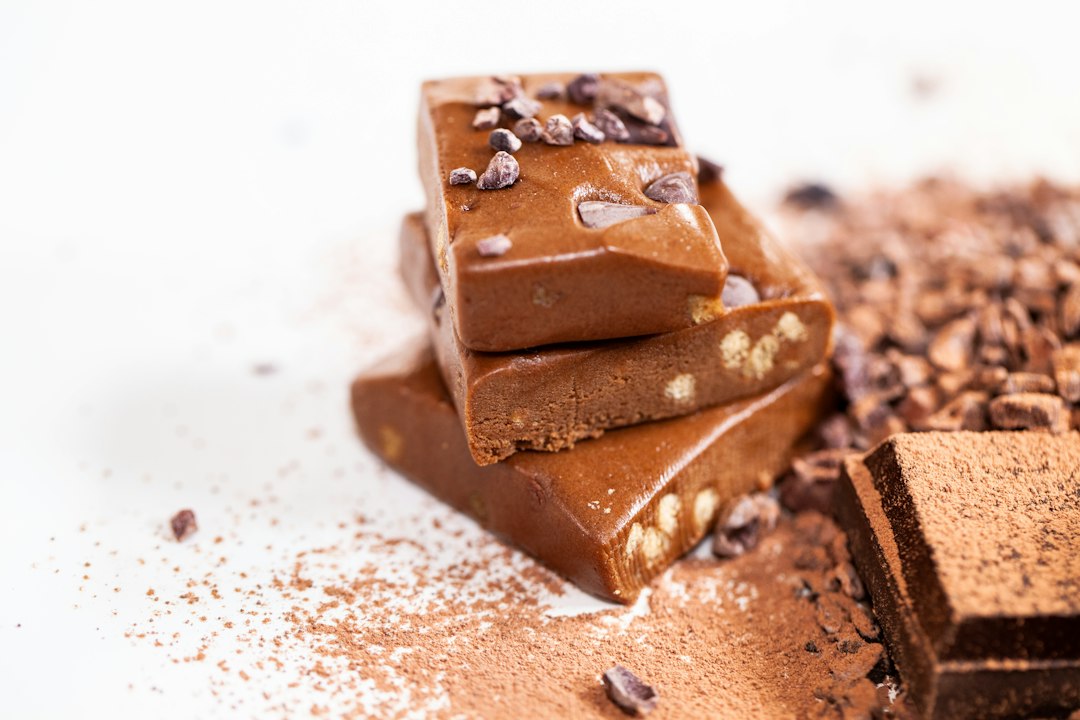
You can taste the difference in a cup too. Our recipe shows how to make hot chocolate from good couverture.
Modern genetics: ten groups according to Motamayor 2008
The three old names are based on what people could see: the pod, the bean colour and the origin. In 2008 a team led by the geneticist Juan Carlos Motamayor examined the genetic make-up more closely. It studied 1241 cocoa trees from collections and wild populations with 106 genetic markers. After removing wrongly identified trees, 952 remained for the analysis.
This revealed ten genetic groups, most of them named after rivers and regions in South America. Criollo and Nacional are among them. Forastero, by contrast, is spread across several groups, and Trinitario, as a cross, is not a group of its own. The researchers propose classifying cocoa by these ten groups in future.
| The ten groups according to Motamayor et al. 2008 |
|---|
| Marañón, Curaray, Criollo, Iquitos, Nanay |
| Contamana, Amelonado, Purús, Nacional, Guiana |
The group alone says little about flavour. According to Kadow, genetics only determine which aromas a bean can develop. Fermentation and drying, and later roasting, decide how much of that reaches the bar. Fine flavour cocoa is usually fermented for a shorter time and roasted more gently to keep the floral notes.
It is similar with coffee, where processing after the harvest also shapes the flavour strongly. When you buy chocolate, the variety name is therefore only a starting point. Origin, processing and, in the end, your own palate tell you more.
Last updated: 24 October 2026.
Sources
- Bekele, F. L., Cocoa Research Unit, The University of the West Indies: The History of Cocoa Production in Trinidad and Tobago, 2004.
- Purdue University, CIAT (for USAID and USDA): An Analysis of the Supply Chain of Cacao in Colombia, 15 June 2017.
- Kadow, D., Journal of Applied Botany and Food Quality 93, 300 to 312: The biochemistry of cocoa flavor: A holistic analysis of its development along the processing chain, 2020.
- Colonges, K. et al., Frontiers in Plant Science 12, 681979: Two Main Biosynthesis Pathways Involved in the Synthesis of the Floral Aroma of the Nacional Cocoa Variety, 24 September 2021.
- Chacón de Ramírez, I.; Ramis, C.; Gómez, C., Revista de la Facultad de Agronomía (LUZ) 28, Supl. 1: Descripción morfológica de frutos y semillas del cacao Criollo Porcelana (Theobroma cacao L.) en el sur del Lago de Maracaibo (in Spanish), 2011.
- ICCO, Quarterly Bulletin of Cocoa Statistics LI, No. 2: Production of cocoa beans, 30 May 2025.
- Jaimez, R. E. et al., PeerJ 10, e12676: Theobroma cacao L. cultivar CCN 51: a comprehensive review on origin, genetics, sensory properties, production dynamics, and physiological aspects, 2022.
- ICCO: What is Fine Flavour Cocoa?, last updated 15 May 2024.
- ICCO: Revision of Annex ‘C’ of the International Cocoa Agreement (ICA), 2010, 15 May 2024.
- UWI Today, The University of the West Indies: Report on the cocoa conference in March 2015, April 2015.
- Motamayor, J. C. et al., PLOS ONE 3(10), e3311: Geographic and Genetic Population Differentiation of the Amazonian Chocolate Tree (Theobroma cacao L.), 1 October 2008.