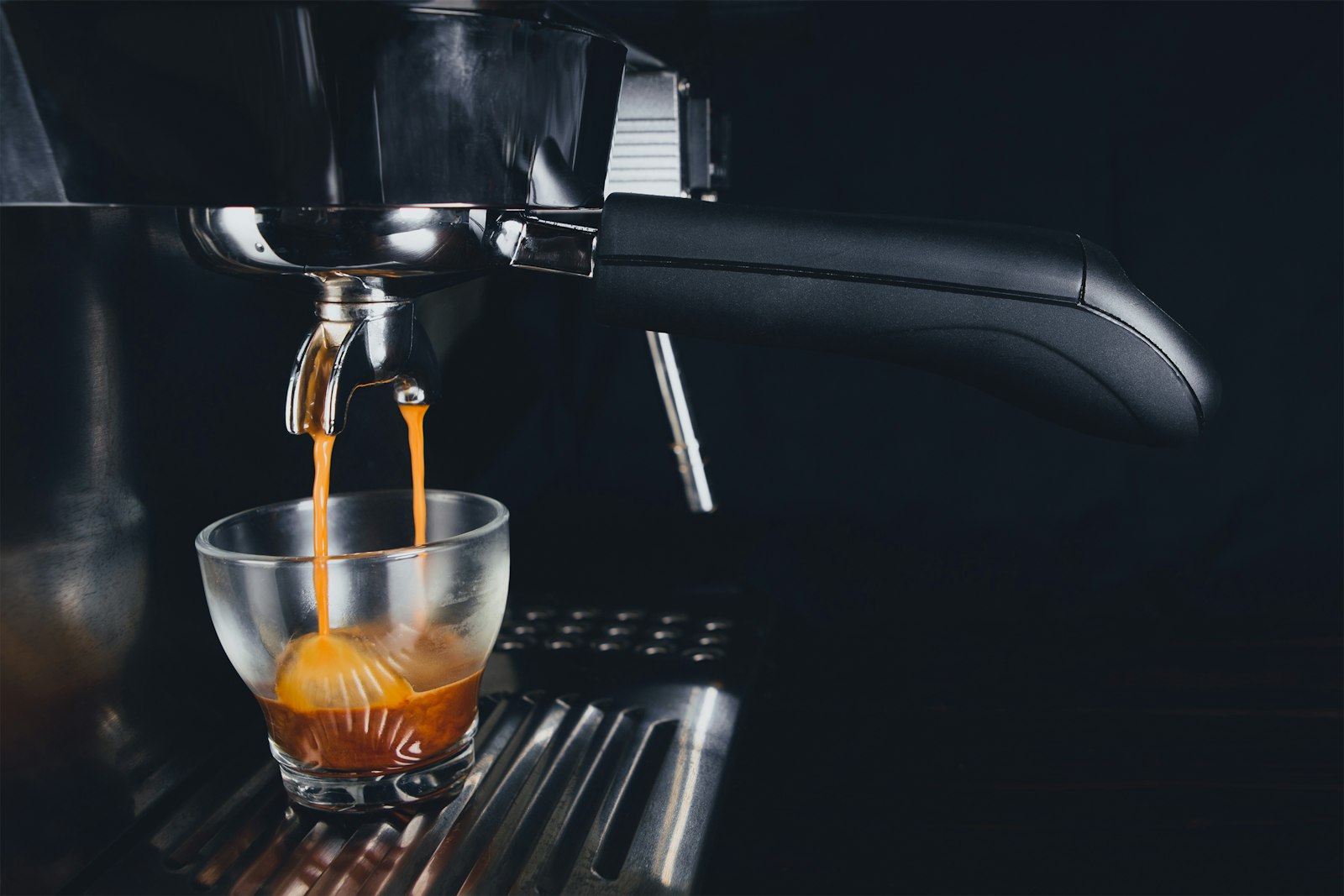
Start with 18 g of coffee in a double basket, 36 to 45 g of espresso and 25 to 30 seconds. Change only the grind size at first.Starting recipe by basket size, grind size in three shots, faults and fixes, and tips against channelling.
An espresso can be described with three numbers. The dose is the ground coffee in the basket, the yield is the espresso in the cup. Then there is the time from pressing the button to the end of the shot. You dial in your espresso using these three values.
With every new bag of beans, you start partly from scratch. That sounds tedious, but with scales and a timer it is quick. You usually need three shots until the grind size is right.
Our selection is editorial, there are no paid placements. Links marked * are affiliate links to Amazon Germany (amazon.de): if you buy through them, we receive a small commission at no extra cost to you. We have not tested the products ourselves; pros and cons are based on manufacturer information and retailer descriptions. Prices are guide prices from German shops as of October 2026, and prices and availability on Amazon may differ.
The starting recipe: dose, ratio and time
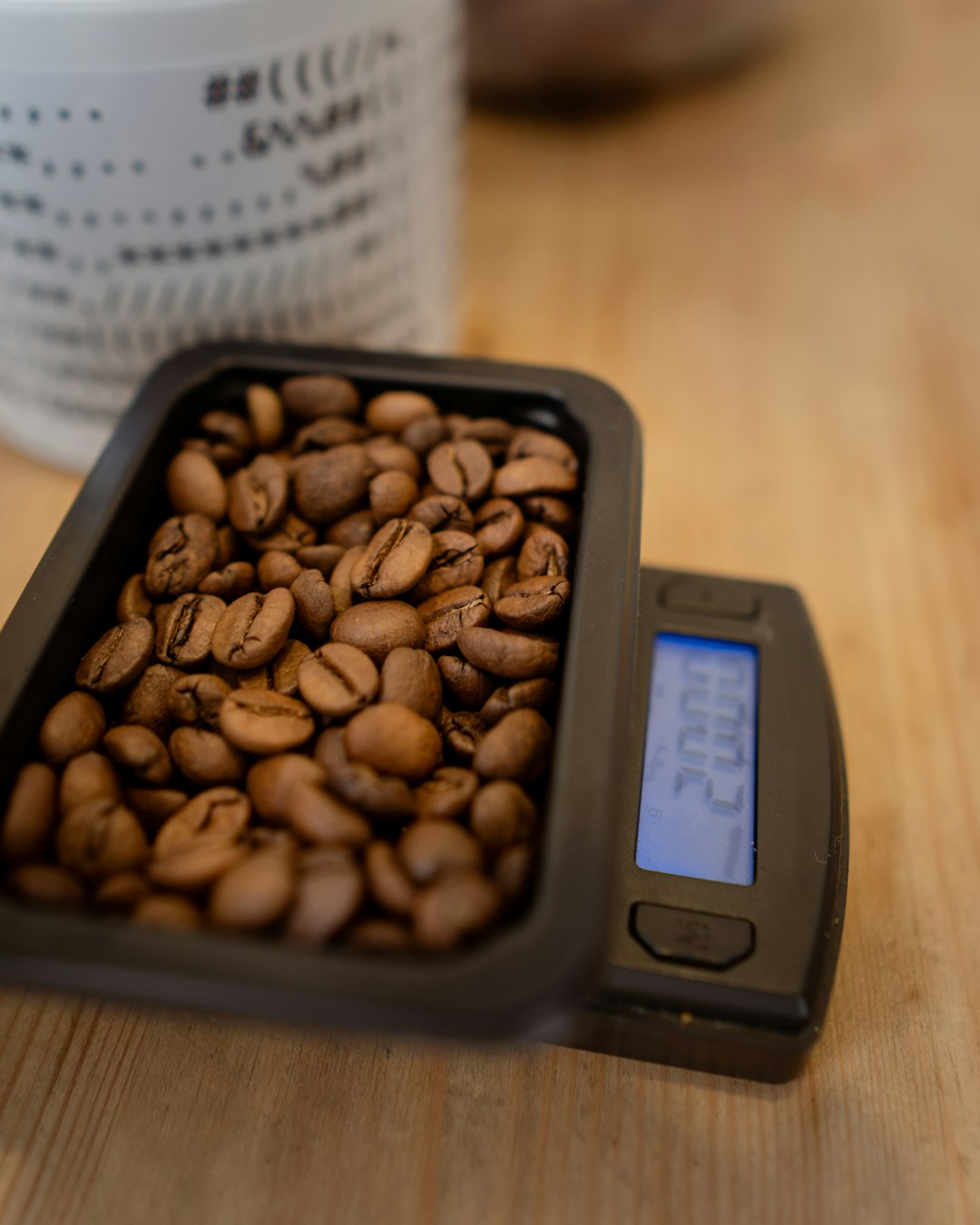
The dose depends on your basket. The roastery Kaffeemacher gives 14 to 18 g for double baskets. If the basket is marked with a weight in grams, use that amount plus or minus 1 g.
| Basket | Dose according to Kaffeemacher |
|---|---|
| double basket in general | 14 to 18 g |
| 58 mm, for example E61 group head | about 17 to 18 g |
| 51 mm, for example DeLonghi Dedica | 14 to 16 g |
| basket marked in grams | marked weight plus or minus 1 g |
The ratio of dose to yield is called the brew ratio. Kaffeemacher recommends 1:2 to 1:2.5. So 18 g of ground coffee gives you 36 to 45 g of espresso. You measure in grams on the scales, not in millilitres.
The shot time is 25 to 30 seconds. The clock starts when you press the button or pull the lever. For the brewing temperature, Kaffeemacher gives 91 to 94°C, with a target of 92 to 93°C.
| Value | Starting point |
|---|---|
| Dose | 18 g in a 58 mm double basket |
| Yield | 36 to 45 g (1:2 to 1:2.5) |
| Time | 25 to 30 seconds from pressing the button |
| Temperature | 91 to 94°C, target 92 to 93°C |
Where the guide values come from: the old standard and today’s practice
A definition by the Specialty Coffee Association of America used to apply. It described a single espresso as 7 to 9 g of coffee and 25 to 35 ml in the cup. For a double it was 14 to 18 g. On top of that came 90.5 to 96.1°C, 9 to 10 atm of pressure and 20 to 30 seconds.
In March 2017 the Barista Guild of America asked how professionals work today. 275 baristas replied, three quarters of them from the USA. Two thirds dosed 18 to 20 g, and on average 36.5 g went into the cup. That is a ratio of 1:2.
82 per cent of respondents weighed the yield instead of measuring by volume. Half were at 25 to 30 seconds. The range of ratios went from 1:1.5 to 1:2.5. So the old volume rule has given way to weighing.
Setting the grind size in three shots
You fix the dose and yield, and you control the time through the grind size. Finer grounds make the espresso run more slowly, coarser grounds faster. Only ever change one variable at a time. Otherwise you won’t know what worked.
As a starting point, Kaffeemacher recommends a fine grind at which the first small clumps form. If the espresso runs through in under 20 seconds, grind finer. If it takes over 40 seconds or only drips, grind coarser.
- First shot: Brew with the starting recipe and note the yield and time. It shows you where you stand.
- Second shot: Adjust the grind size a little. Now you can see how many seconds one step makes on your grinder.
- Third shot: Correct in a targeted way until the time is in the target range.
After every adjustment, some coffee from the old setting is still in the grinder. Kaffeemacher advises grinding out this retention. Otherwise you are measuring a mix of both settings.
How to find the right grind size with few beans:
- Weigh the beans to 0.1 g before grinding.
- Put the cup on the scales and start the timer when you press the button.
- Stop at the target weight and write down the time.
- After adjusting, grind out a small amount and throw it away.
- Note dose, yield, time, grind setting and roast date for the next bag.
Our recommendations
Coffee scales · around €43
Timemore Black Mirror Basic 2
Pros: Weighs coffee and shot in 0.1 g steps, and the timer starts automatically. According to the retailer, it also suits espresso.
Cons: At 15.2 × 13 cm it does not fit every drip tray. According to the retailer, do not use it while charging.
Espresso grinder · around €350 to €440
Eureka Mignon Specialità 16CR, matt black
Pros: The grind size adjusts steplessly, so you can hit the shot time even in small steps. Two timers for one and two cups, and according to the retailer it grinds 1.4 to 1.8 g per second.
Cons: At 35 cm tall and 5.6 kg, it needs space on the worktop. The timers dose by time, so you still need scales for the dose.
Tamper · around €19 to €20
Motta Tamper 8100/B, 58 mm, flat
Pros: The flat stainless steel base compacts the coffee evenly, which helps against channelling. According to the retailer made in Italy, with a wooden handle.
Cons: Only fits baskets with a 58 mm diameter, so check your basket first. According to the retailer, not dishwasher-safe.
Our selection is editorial, there are no paid placements. Links marked * are affiliate links to Amazon Germany (amazon.de): if you buy through them, we receive a small commission at no extra cost to you. We have not tested the products ourselves; pros and cons are based on manufacturer information and retailer descriptions. Prices are guide prices from German shops as of October 2026, and prices and availability on Amazon may differ.
Fine-tuning by taste: sour, bitter, thin
Once the time is in the target range, the cup decides. The following overview sums up the recommendations of Kaffeemacher and Barista Hustle.
| Fault | Common cause | What to change |
|---|---|---|
| sour and thin, runs fast | too little dissolved | grind finer or increase the yield |
| bitter and dry, runs slowly | too much dissolved | grind coarser or reduce the yield |
| too strong, too concentrated | too little water in the cup | increase the yield, do not change the dose |
| watery, too weak | too much water in the cup | reduce the yield |
| sour, bitter and dry at once | channelling | check distribution and tamping |
| first drops as clear as water | channelling | rework your basket preparation |
The yield works in two directions. According to Barista Hustle, more yield makes the espresso weaker and at the same time more extracted. Less yield makes it stronger and less extracted.
Temperature helps too. Kaffeemacher recommends around 93°C. Lower temperatures emphasise acidity. If an espresso stays sour, you can go a little above 93°C. If it feels dry in the mouth, Barista Hustle tends to advise a lower temperature.
Channelling: sour and bitter at the same time
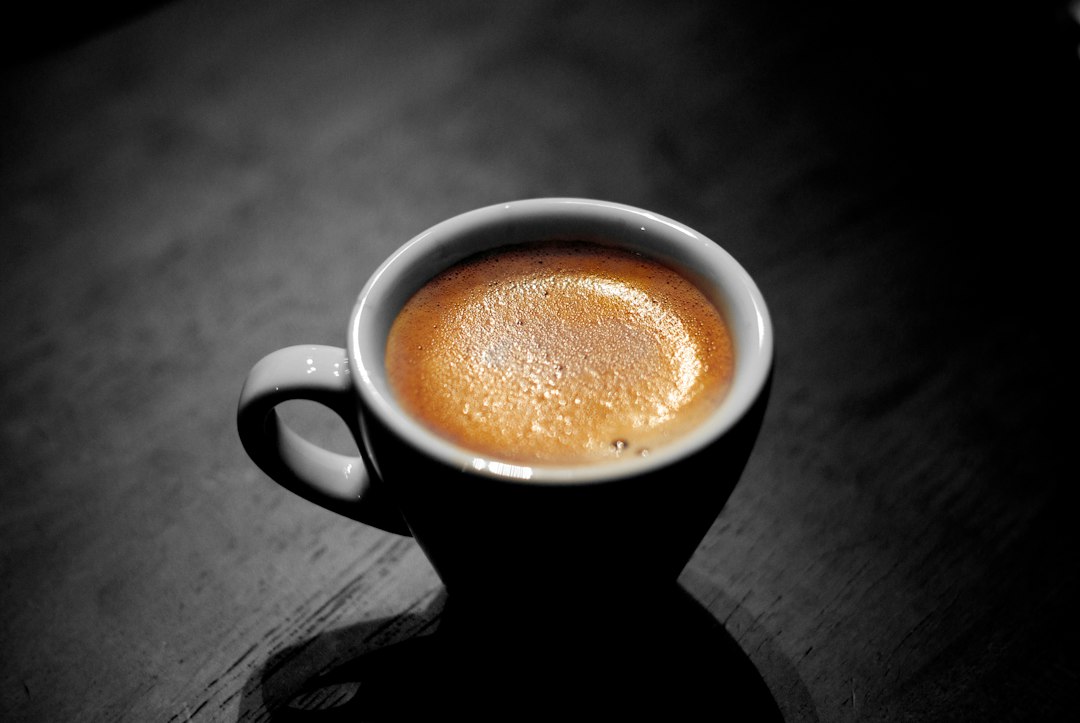
During a shot, the machine forces hot water through the compacted coffee at high pressure. If the grounds are unevenly distributed, the water finds channels. There the coffee is heavily extracted, next to them hardly at all. Both end up in the cup, sour and bitter.
A research team described this in the journal Matter in 2020. Its model predicted that finer grinding always dissolves more. The measurements showed something else. Beyond a certain point the yield fell again, probably because the water flowed unevenly. So finer is not automatically better.
A simple technique helps against unevenly distributed grounds. John Weiss presented it on a coffee forum in December 2005. He taught computer science for around 35 years, including at the South Dakota School of Mines and Technology. His tool was a dissecting needle from his student days, and a cut-off yoghurt pot served as a funnel.
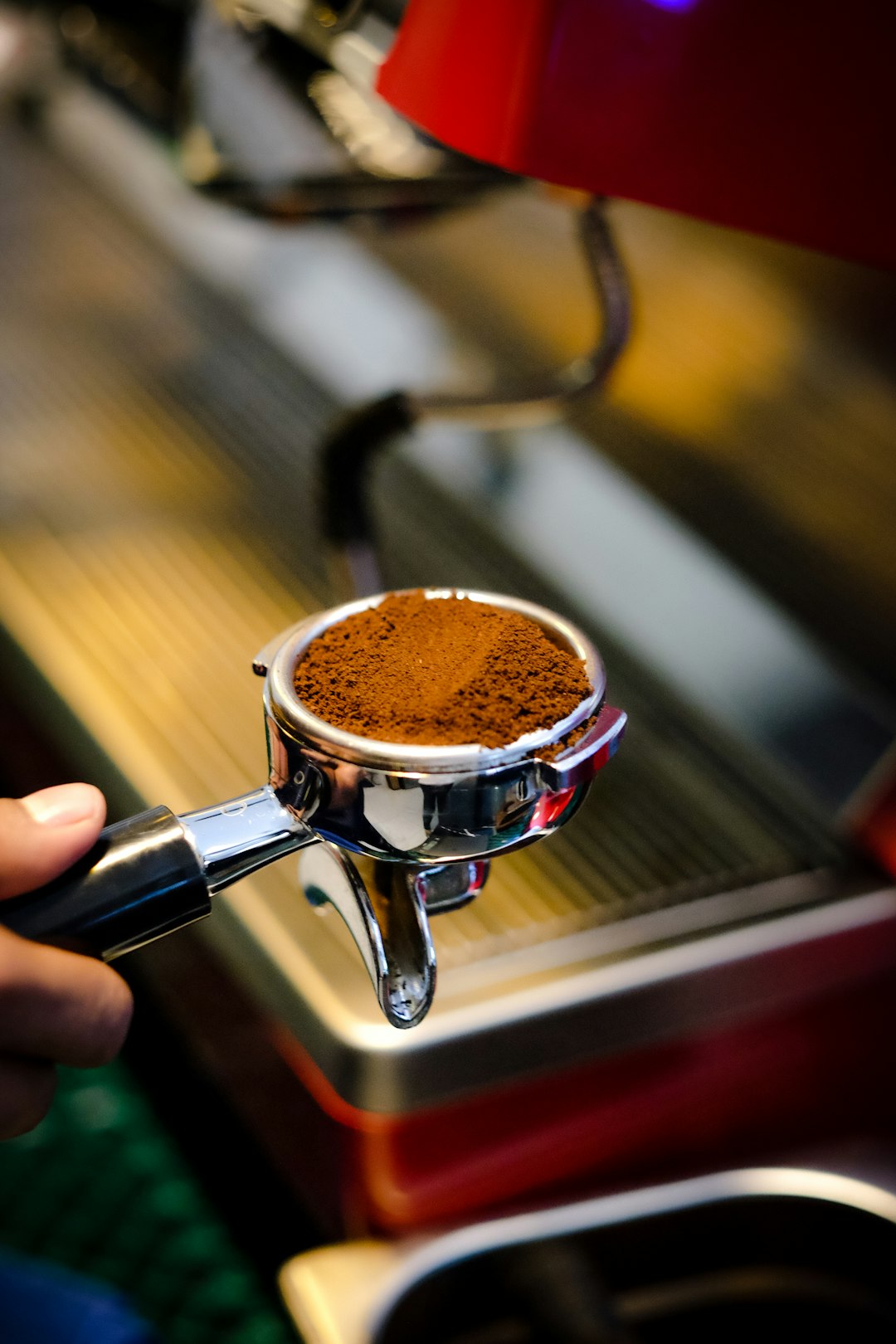
Today the method is called the Weiss Distribution Technique, or WDT for short. You stir the coffee in the basket with fine needles. In tests at the machine maker Decent, 0.4 mm needles performed better than 0.7 mm ones. Gentle, vertical tapping before tamping helped as well.
A US retailer compared several methods in 2026. WDT brought the most benefit, followed by a puck screen, a metal mesh placed on the coffee. Further accessories added little. Kaffeemacher also advises locking in the portafilter without knocking it. Very small doses in large baskets are more prone to channelling, so in a 58 mm basket a double is better than a single.
When it’s not the grind size: beans, roast, limescale
Sometimes the time is right and the espresso still tastes sour. A common reason is coffee that is too fresh. It still contains a lot of carbon dioxide. According to Kaffeemacher, espresso is ready to drink about 2 to 3 weeks after roasting and stays at its best until about two months after. How to store beans well for that long is covered in our guide to storing coffee fresh.
The bean itself matters too. Darker roasts have less acidity but often taste more bitter. Arabica brings more acidity than robusta. According to Kaffeemacher, a certain amount of acidity is part of good espresso. More on this is in our comparison of light, medium and dark roasts.
If an espresso slowly gets more sour over months, limescale in the machine may be behind it. Then descaling helps more than any new grind setting. How much caffeine ends up in your cup is shown in our overview of caffeine in espresso, filter coffee and cold brew.
For everyday use, a fixed order is enough. Set the dose and yield, dial in the time with the grind size and then taste. If it tastes sour and bitter at once, look at the basket first and only then at the grinder.
All product details are based on manufacturer and retailer information. We have not tested the products ourselves.
Last updated: 24 October 2026.
Sources
- Kaffeemacher, Benjamin Hohlmann: Espresso zubereiten: Anleitung, Rezept & Mahlgrad (in German), 16 August 2026.
- Kaffeemacher, Benjamin Hohlmann: Espresso ist sauer? 6 Tipps für weniger Säure (in German), 14 December 2024.
- David Fasman, Specialty Coffee Association, 25 Magazine, issue 3: Defining the Ever-Changing Espresso, survey March 2017, accessed 24 October 2026.
- Barista Hustle: The Espresso Compass, accessed 24 October 2026.
- Barista Hustle: Espresso Recipes: Putting It All Together, 30 January 2017.
- Cameron, M. I.; Morisco, D.; Hofstetter, D. et al., Matter: Systematically improving espresso: insights from mathematical modeling and experiment, 22 January 2020.
- Howard Bryman, Daily Coffee News: What Is WDT in Espresso? We Talked to Its Creator, John Weiss, 14 December 2022.
- Decent Espresso, experiments by Stéphane Ribes: Which puck preparation technique is best?, June 2020.
- Sean Jemison, Clive Coffee: Extraction Showdown: Which Puck Prep Is Actually Boosting Your Espresso?, 15 February 2026.
- Coffee Circle: Timemore Black Mirror Basic 2 (42,70 €), accessed 24 October 2026.
- espressissimo: Eureka MIGNON SPECIALITA Espressomühle, Schwarz matt 16CR, 2 Timer (349,00 €) (in German), accessed 24 October 2026.
- RKC Froschkönig: Espressomühle Eureka Mignon Specialita 16CR schwarz (439,00 €) (in German), accessed 24 October 2026.
- Ginex Espressomaschinen: Motta Tamper Buche schwarz, 58 mm, 8100/B (19,00 €) (in German), accessed 24 October 2026.
- Espresso Furore: Motta Tamper Edelstahl mit Holzgriff schwarz 58 mm plan (19,99 €) (in German), accessed 24 October 2026.