The V60 gives clear, fruity cups and needs a steady hand. The Kalita Wave is more forgiving and tastes sweeter. The Chemex brews several cups at once.Designs and taste compared, three recipes with grams and times, and tips on paper and grind size.
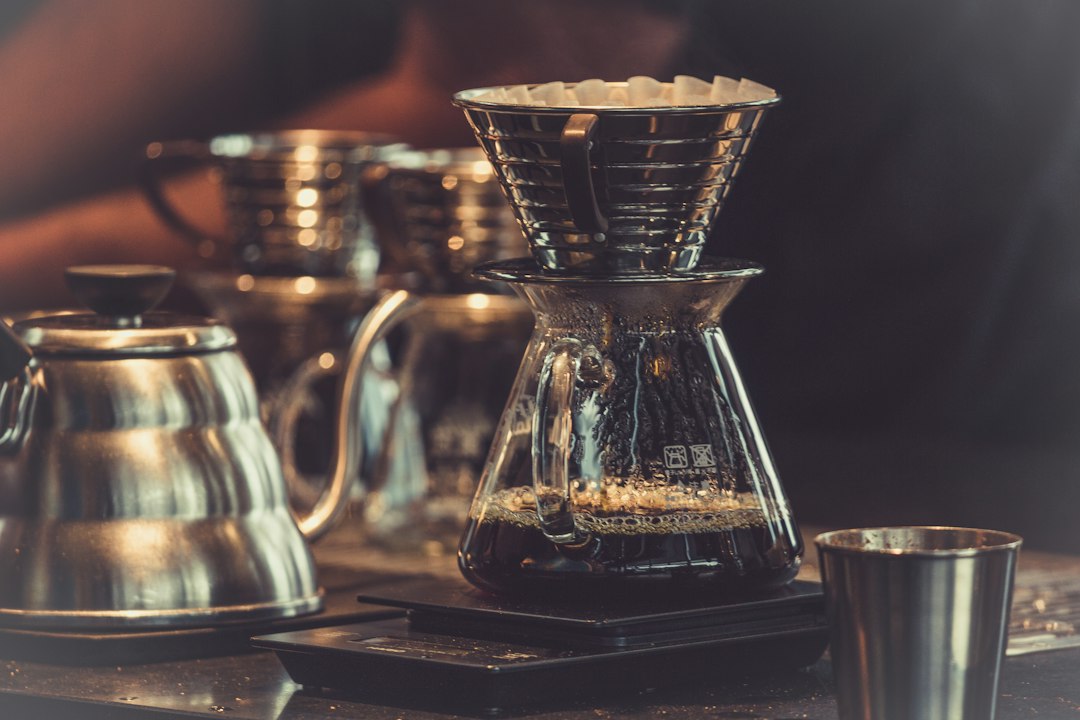
All three drippers work on the same principle. You pour hot water over ground coffee, and a paper filter holds back the grounds. Even so, the cups taste different. That comes down to the shape of the dripper, the size of the opening and the paper.
Which dripper suits you depends on how much coffee you need and how precisely you want to pour.
Our selection is editorial, there are no paid placements. Links marked * are affiliate links to Amazon Germany (amazon.de): if you buy through them, we receive a small commission at no extra cost to you. We have not tested the products ourselves; pros and cons are based on manufacturer information and retailer descriptions. Prices are guide prices from German shops as of October 2026, and prices and availability on Amazon may differ.
Cone or flat bottom: what you taste in the cup
Pour-over drippers come in two basic shapes. The V60 and Chemex are pointed cones, while the Kalita Wave has a flat bottom. The Coffee Center at the University of California, Davis investigated whether you can taste this difference.
The researchers brewed in filter coffee machines with interchangeable baskets, one flat and one semi-conical, under otherwise identical conditions. Each of 45 untrained tasters received three cups, two of them the same. At a medium grind, 25 of them found the odd cup out, or 55.6 per cent. Guessing would have produced one third.
By contrast, the same tasters did not reliably notice a difference of around 25 per cent in particle size. A trained panel of twelve experts described the differences in more detail. The results were preliminary, and the appliance maker Breville co-funded the project.
| Roast | Flat bottom | Cone |
|---|---|---|
| light | more dried fruit, sweetness, floral notes | more citrus, berry, acidity |
| dark | more chocolate, cocoa, wood | much more bitterness |
The study deliberately does not say which shape is better. That is a matter of taste, the researchers write. But the direction helps you choose. If you like light, acidity-led coffees, the cone is the obvious choice. If sweetness and a rounded taste matter more to you, go for the flat bottom. More on roast and acidity is in our comparison of light, medium and dark roasts.
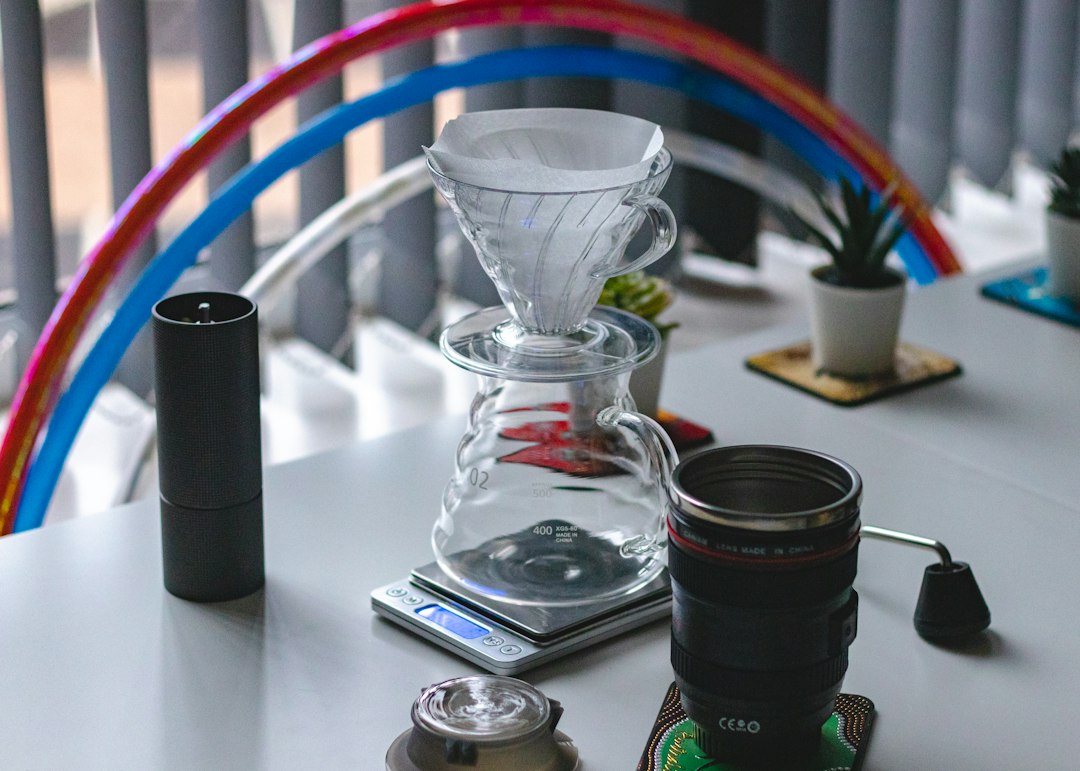
Hario V60: fast, open and dependent on your hand
The V60 carries its angle in its name. Its walls stand at a 60-degree angle, with spiral ribs on the inside. At the bottom it has a single opening of around 2 cm. According to a retailer, this stops the water from pooling at the bottom. Size 02 is designed for 1 to 4 cups.
Because the large opening hardly slows anything down, you control the brew time mainly through grind size and pouring speed. That makes the V60 versatile, but not very forgiving. If you pour unevenly, you taste it sooner than with a flat-bottomed dripper.
Kalita Wave: flat bottom, three holes, fewer mistakes
The Kalita Wave comes from the Japanese manufacturer Kalita. Its bottom is flat and has three small holes. According to Kalita, the coffee settles evenly on the flat bottom, even if you pour unevenly. The holes make sure the coffee does not stand in the dripper.
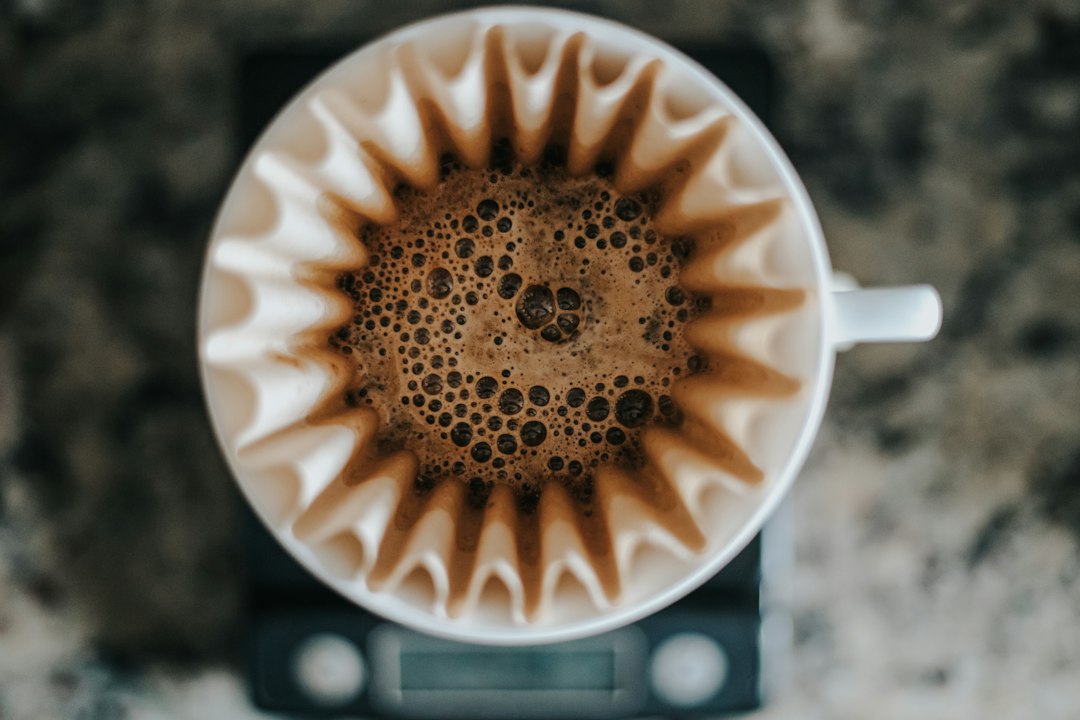
It comes with its own filter with wave-shaped folds. This touches the wall at only a few points, so the water drains quickly. The Wave comes in sizes 155 and 185. Because its design compensates more, it is a good choice for beginners.
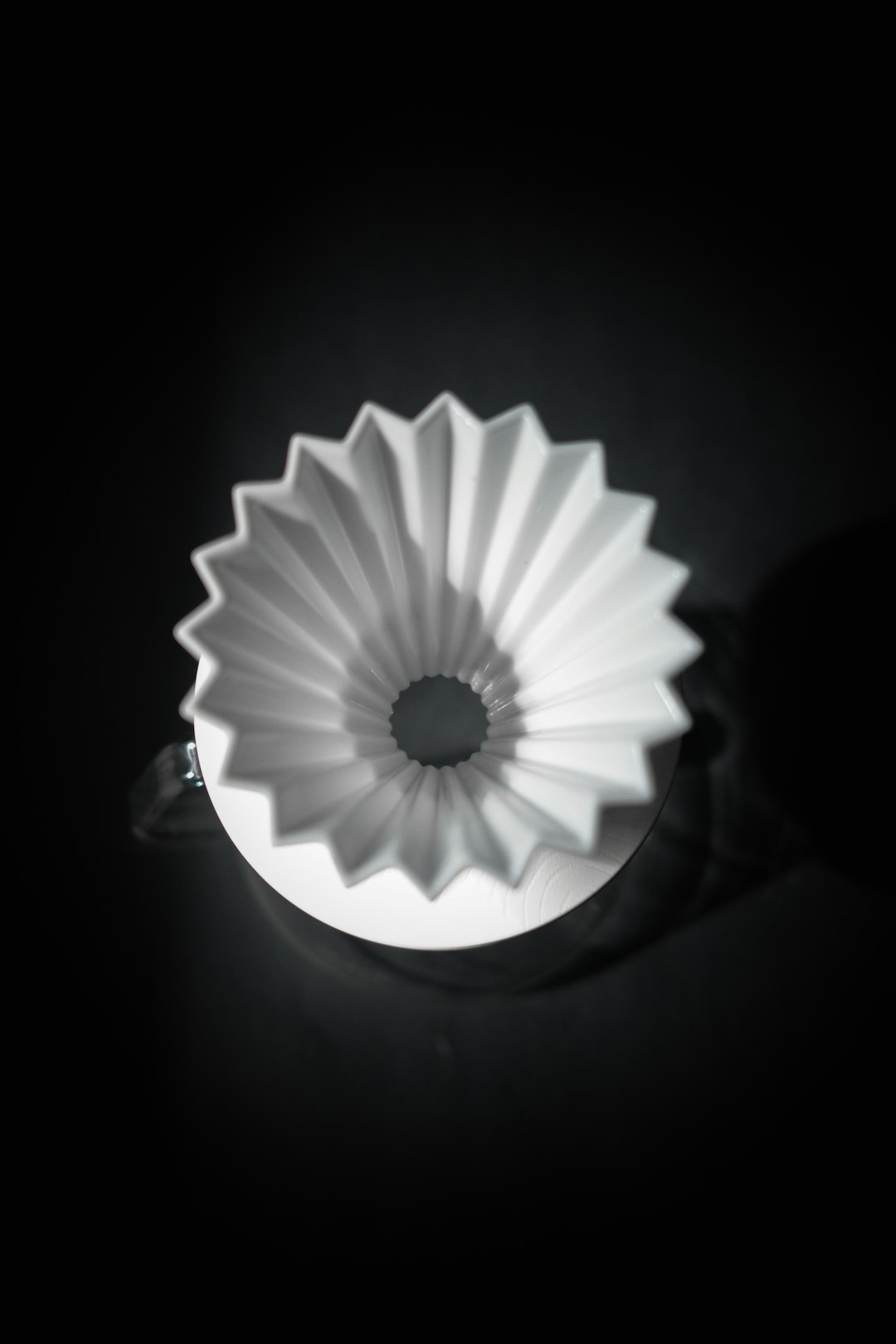
The Origami from Japan offers a middle way. It is made of Mino porcelain and has 20 ribs on the inside. According to a retailer, it takes cone filters like the V60 and Kalita wave filters in size 155. With cone paper the coffee is said to show more acidity, with wave paper more sweetness and body. That matches the result from Davis.
Chemex: glass carafe and thick paper for several cups
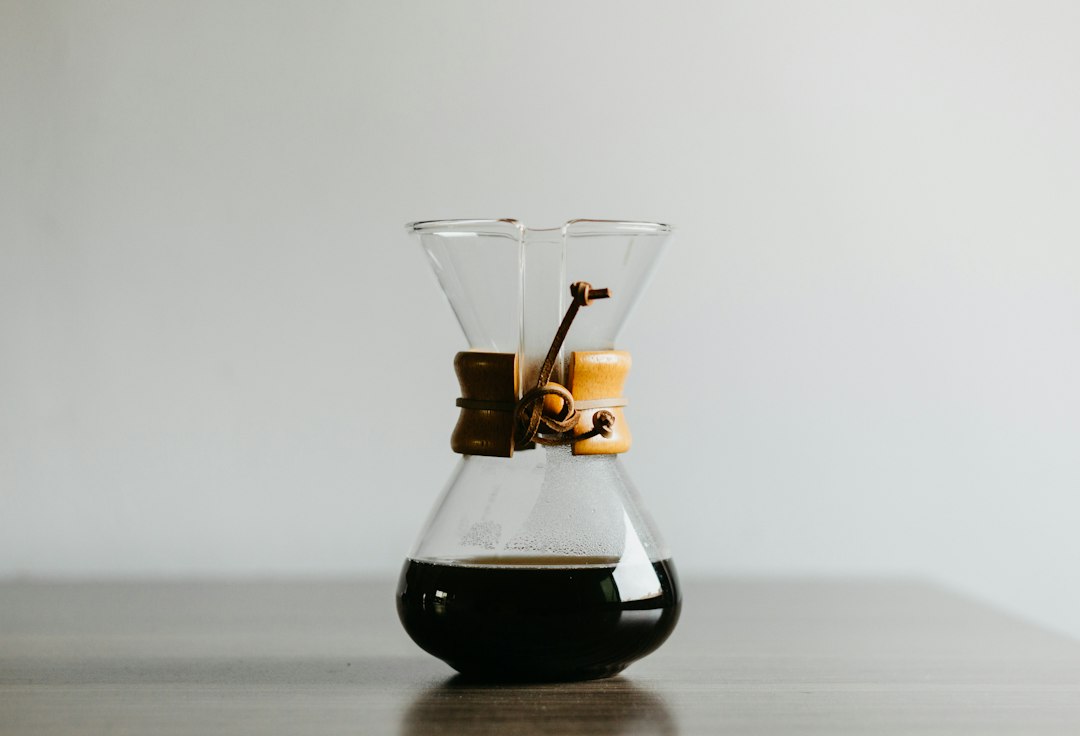
The Chemex was invented by a chemist. Peter Schlumbohm came from Kiel and earned his doctorate in chemistry in Berlin. His model was the Erlenmeyer flask from the laboratory. He turned it into an hourglass of heat-resistant borosilicate glass, with the filter on top and the jug below. He received the US patent in 1941.
In 1942, the Museum of Modern Art in New York already put the Chemex on the cover of a booklet about useful objects in wartime. Today it is part of the museum’s collection. The classic 6-cup carafe holds 900 ml, and a wooden collar with a leather tie sits around its waist.
With the Chemex, the taste is shaped mainly by the paper. According to a retailer, the filters are 20 to 30 per cent heavier than standard filter paper. Their fine pores hold back particles and oils. This makes the cup clearer.
The Chemex shows its strength when you brew for two or more people. For one person there is a smaller version for 1 to 3 cups with 470 ml.
Our recommendations
Coffee maker · around €44 to €55
Chemex Classic, 6 cups (CM-6A)
Pros: Dripper and jug in one, according to the retailer for up to six cups. Dishwasher-safe once you remove the wooden collar and leather tie.
Cons: Needs its own Chemex paper filters, which go in the bin or compost after every brew. For a single cup, the 900 ml carafe is large.
Paper filters · around €11 to €13
Chemex Filter FS-100, white, square, pack of 100
Pros: According to the retailer 20 to 30 per cent heavier than standard filter paper, and the fine pores hold back particles and oils. Compostable and, according to the retailer, also suitable for tea.
Cons: Does not fit the 1 to 3-cup Chemex, which has its own filters. The same shape is available unbleached as FSU-100.
Our selection is editorial, there are no paid placements. Links marked * are affiliate links to Amazon Germany (amazon.de): if you buy through them, we receive a small commission at no extra cost to you. We have not tested the products ourselves; pros and cons are based on manufacturer information and retailer descriptions. Prices are guide prices from German shops as of October 2026, and prices and availability on Amazon may differ.
Three recipes compared: dose, water and time
The following recipes come from published guides. For the V60 we use James Hoffmann’s technique, published by Hario USA. The Kalita recipe comes from the Copenhagen roastery Coffee Collective, the Chemex recipe from Verve Coffee Roasters in California.
| Recipe | Coffee | Water | Grind size | Temperature | Time |
|---|---|---|---|---|---|
| V60 after James Hoffmann | 30 g | 500 g | medium-fine | just below boiling point | done by 3:30 min |
| Kalita Wave after Coffee Collective | 16 g | 250 g | medium | 92 to 95°C | 1:45 to 2:45 min |
| Chemex after Verve | 30 g | 450 g | medium | 205°F, around 96°C | 3:30 to 4:00 min |
Per litre, that is around 60 g of coffee for the V60, 64 g for the Kalita and 67 g for the Chemex (our conversion).
- V60: Pour on 60 g of water and swirl until all the coffee is wet. After up to 45 seconds, pour up to 300 g within 30 seconds. Then pour a little more slowly up to 500 g over another 30 seconds. Stir once in each direction and give it a gentle swirl at the end.
- Kalita Wave: Pour on 30 g of water and wait 30 seconds. Pour the rest slowly in circles, from the centre outwards and back. After about 1:45 minutes, 250 g should be in the dripper. Stir briefly and let the coffee cool a little.
- Chemex: Pour slowly up to 50 g. At 0:40, pour in a slow circle up to 115 g. When the water sinks to the coffee bed, add up to 175 g and finally 450 g for two servings. For one serving, Verve uses 15 g of coffee to 225 g of water.
If the coffee runs through too fast or too slowly, adjust the grind size. Coarser grounds run faster, finer ones more slowly.
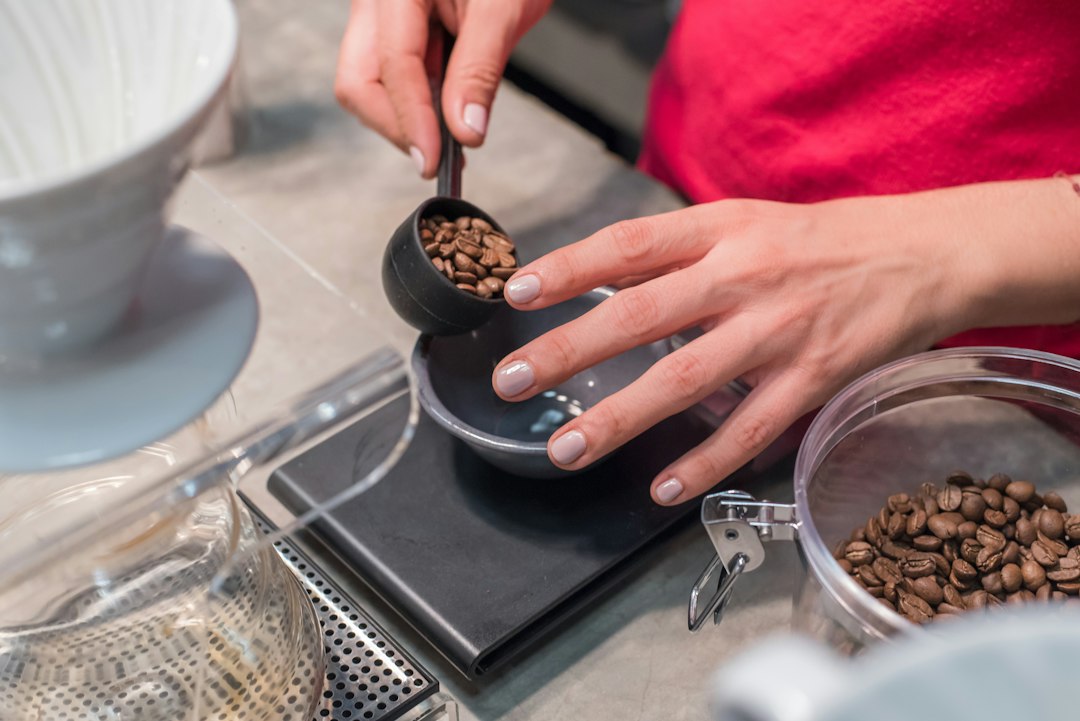
How to get your first brew right with any of the three drippers:
- Rinse the paper with boiling water before brewing and pour the rinse water away.
- Put the dripper and jug on scales and start a timer with the first pour.
- For the bloom, pour on about twice the coffee weight in water, as in the V60 recipe.
- If the coffee tastes bitter and dry, grind coarser. If it tastes sour and thin, grind finer.
- Let the cup cool briefly before you taste. You will taste sweetness and acidity better.
Paper, grind size, water: what to adjust after buying
The paper changes more than it seems. According to Hoffmann, it affects how fast the coffee runs through. If you switch to a different paper, check the brew time again.
For grind size there is a simple order. The Chemex gets the coarsest grounds, the Kalita medium and the V60 medium-fine.
On temperature, the recommendations differ. Hoffmann pours as hot as possible and considers this especially important for light roasts. Coffee Collective gives 92 to 95°C. How long your beans stay fresh is covered in our guide to storing coffee fresh.
To get started, a simple choice is enough. If you mostly brew one cup and want it straightforward, choose the Kalita Wave. If you like to experiment and enjoy light, fruity coffees, choose the V60. For two or more cups at the weekend, the Chemex is the right fit.
All product details are based on manufacturer and retailer information. We have not tested the products ourselves.
Last updated: 24 October 2026.
Sources
- Frost, S.; Guinard, J.-X.; Ristenpart, W. D. (UC Davis Coffee Center), Specialty Coffee Association, 25 Magazine, issue 8: Flat vs. Cone: Basket Shape is as Important as Grind Size in Drip Brew Coffee, 2019.
- Hario USA: James Hoffmann: Ultimate V60 Technique, accessed 24 October 2026.
- Coffee Collective: Brew guide: Kalita Wave, accessed 24 October 2026.
- Verve Coffee Roasters: How To Brew At Home: Chemex, 17 September 2020.
- Kalita Co., Ltd.: Wave Series (in Japanese), accessed 24 October 2026.
- Kaffeezentrale: Hario V60 Handfilter aus Keramik (in German), accessed 24 October 2026.
- The Barn: Origami Dripper, accessed 24 October 2026.
- Lemelson-MIT Program: Peter Schlumbohm, accessed 24 October 2026.
- Coffee Circle: Chemex Kaffeekaraffe (Classic 6 Tassen, CM-6A, 900 ml) (in German), accessed 24 October 2026.
- Coffee Friend: Kaffeekaraffe Chemex Classic, für 6 Tassen (43,99 €, vorher 54,99 €) (in German), accessed 24 October 2026.
- Coffee Circle: Chemex-Filter für 6, 8 und 10 Tassen-Karaffe, FS-100 (10,90 €) (in German), accessed 24 October 2026.
- Coffee Friend: Vorgefaltete Papierfilter Chemex Squares, 100 Stk. (12,49 €, vorher 14,39 €) (in German), accessed 24 October 2026.