Coffee suits soft to slightly medium-hard water with around 3 to 10 °dH total hardness. Dilute hard tap water with distilled water or filter it.SCA guide values, hardness ranges in Germany, filters and recipe water, and tips against limescale.
A cup of filter coffee is almost entirely water. The minerals in it dissolve flavours from the ground coffee and buffer its acidity. Too few make the coffee sharp and sour, too many make it flat. In an espresso machine, hardness also decides how quickly limescale builds up.
You don’t need any chemistry for this. Two values for your tap water are enough to assess it. Both are usually on your water supplier’s website. We did all conversions ourselves, using 1 °dH (one German degree of hardness) = 17.8 mg/l calcium carbonate.
The guide values: how much hardness good coffee can take
There are two key figures for brewing water. Total hardness mainly measures calcium and magnesium. These minerals help dissolve flavour compounds from the grounds. Carbonate hardness, usually called alkalinity internationally, mainly measures bicarbonate. It acts as a buffer and neutralises some of the fruit acids in the coffee.
The trade association Specialty Coffee Association (SCA) published a standard for brewing water in 2009. It focuses mainly on calcium and calls for water without chlorine. Later recommendations from the SCA’s circle give wider ranges for total hardness. International sources calculate in milligrams per litre of calcium carbonate, often written as ppm.
| Value | SCA target | SCA range | converted to °dH |
|---|---|---|---|
| Calcium hardness (2009 standard) | 68 mg/l | 17 to 85 mg/l | around 3.8 (1.0 to 4.8) |
| Total hardness (later SCA figure) | not specified | 50 to 175 mg/l | around 2.8 to 9.8 |
| Alkalinity / carbonate hardness | 40 mg/l | 40 to 75 mg/l | around 2.2 (up to 4.2) |
| Total dissolved solids (TDS) | 150 mg/l | 75 to 250 mg/l | no hardness value |
| pH | 7.0 | 6.5 to 7.5 | no hardness value |
| Sodium | 10 mg/l | around 10 mg/l | no hardness value |
Total hardness should also be higher than carbonate hardness. A Swiss roastery gives even narrower values for home use. For filter coffee it recommends 2 to 3 °dH total hardness and 1 to 2 °dH carbonate hardness. For espresso it is 3 to 6 °dH total hardness and 2 to 4 °dH carbonate hardness.
Hardness and buffer: what magnesium and bicarbonate do
In 2014 a team at the University of Bath worked out why the composition matters. It included the chemist Christopher Hendon and the British barista champion Maxwell Colonna-Dashwood. They used computer models to calculate how strongly magnesium, calcium and sodium bind to typical coffee flavour compounds.
According to their results, plenty of magnesium helped extraction. Plenty of bicarbonate had a bad effect. Sodium-rich water, for example from a water softener, brought no benefit. Hendon summed it up: the type of hardness matters more than the amount. According to the study, there is no water that suits every coffee perfectly.
It was a model calculation, not a tasting. A Swiss roastery tried different waters in its own test. At around 3 °dH total hardness and 2 °dH alkalinity, the acidity dominated and became aggressive. At around 8 °dH total hardness and 5 °dH alkalinity, the coffee tasted balanced and had more body. When both values were high, it turned flat. The roastery itself calls its results mere pointers.
The roast plays a part too. According to Colonna-Dashwood, softer water suits darker roasts and harder water suits light ones. How the roast levels differ in taste is explained in light, medium and dark roast. You taste such differences especially clearly in pour-over, and you’ll find recipes in pour-over with V60, Kalita and Chemex.
Your tap water: hardness ranges and conversion
In Germany, drinking water falls into three hardness ranges. They are set by the Wasch- und Reinigungsmittelgesetz (the German Detergents and Cleaning Products Act). The law calculates in millimoles of calcium carbonate per litre. Your supplier must tell you at least once a year which range your water falls into. Many suppliers also list the values by postcode or district on their website.
| Hardness range | mmol/l | °dH | mg/l CaCO3 |
|---|---|---|---|
| soft | below 1.5 | below around 8.4 | below 150 |
| medium | 1.5 to 2.5 | around 8.4 to 14 | 150 to 250 |
| hard | above 2.5 | above around 14 | above 250 |
The conversion is simple. One millimole per litre equals around 5.6 °dH. One German degree of hardness equals around 17.8 mg/l calcium carbonate. So the SCA range of 50 to 175 mg/l works out at around 2.8 to 9.8 °dH. It stretches from the soft range to just inside the medium range.
For coffee, the hardness range alone is not enough. So ask for the carbonate hardness or the bicarbonate as well. If the analysis only lists bicarbonate, divide the value in mg/l by around 21.8 to get the carbonate hardness in °dH. For mineral water, take the values from the label. Calcium in mg/l times 0.14 plus magnesium in mg/l times 0.23 gives roughly the total hardness in °dH.
Making hard water softer: dilute or filter
The easiest way is to dilute hard tap water with distilled water. Total hardness and carbonate hardness then fall in the same proportion. We calculated an example. Water with 16 °dH total hardness and 12 °dH carbonate hardness drops to 4 and 3 °dH with three times the amount of distilled water. The ratio of hardness to buffer stays the same.
A filter jug with a cartridge mainly lowers carbonate hardness, and total hardness less so. That suits coffee well. The Swiss roastery describes an example. It started with water at 16 °dH total hardness and 12 °dH carbonate hardness. After three passes through a filter jug, it came out at around 5.5 and 1.5 °dH. One pass was not enough.
Stiftung Warentest, Germany’s consumer testing organisation, takes a critical view of filter jugs. In its 2022 test, all eight filters barely softened the water after just a few litres. No model was recommended, and one third-party cartridge even put mould spores into the water. For most households a filter is unnecessary, it said, and at most of interest to tea lovers. How to get tea right with the right water is explained in brewing tea: temperature and steeping time.
Whole-house water softeners often work by ion exchange. They swap calcium and magnesium for sodium. The water becomes softer, but not better for coffee. The hardness minerals are gone, and the sodium content rises above the SCA target.
How to find your coffee water:
- Look up the total hardness and carbonate hardness of your tap water from your water supplier.
- If total hardness is above around 10 °dH, dilute the water with distilled water or filter it.
- If in doubt, measure it yourself: with a drop test, you count the drops until the colour changes.
- Brew the same coffee with two waters and taste both cups side by side.
- Change filter cartridges as the manufacturer specifies, because an exhausted cartridge barely filters.
Recipe water: mix your own or use mineral sachets
The most precise option is water you mix yourself. The education platform Barista Hustle published a simple system for this in 2019. You need distilled water, food-grade bicarbonate of soda and Epsom salt, and precision scales. From the salts you make two concentrates that keep for a long time.
For the buffer concentrate, dissolve 1.68 g of bicarbonate of soda in 1 litre of distilled water. For the hardness concentrate, dissolve 2.45 g of Epsom salt, which is magnesium sulphate heptahydrate, in 1 litre. Each concentrate then has around 1,000 mg/l, calculated as calcium carbonate. So one gram of concentrate in one litre of water adds around 1 mg/l.
| Recipe after Barista Hustle | Buffer concentrate | Hardness concentrate | distilled water | Total/carbonate hardness (our conversion) |
|---|---|---|---|---|
| SCA | 40.1 g | 68.6 g | 891.3 g | around 3.9 / 2.3 °dH |
| Barista Hustle | 40.1 g | 80.7 g | 879.2 g | around 4.5 / 2.3 °dH |
| Hendon | 30.8 g | 99.9 g | 869.3 g | around 5.6 / 1.7 °dH |
Ready-made mineral sachets from the US, which you dissolve in distilled water, are more convenient. The manufacturer offers profiles for light, medium and dark roasts and for espresso machines. Among other things they contain magnesium sulphate and calcium citrate. According to the manufacturer, the light roast profile has around 40 mg/l alkalinity and the espresso profile around 80 mg/l.
Espresso machine and limescale: what to bear in mind
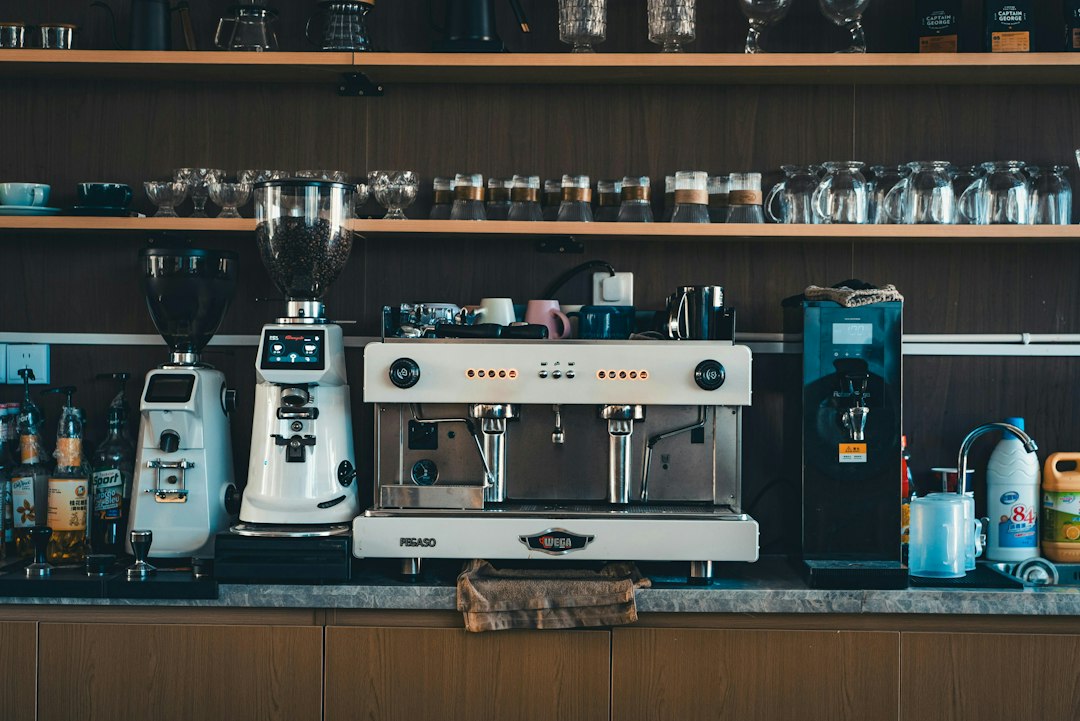
In an espresso machine, the technology matters as well as the taste. When water is heated, calcium and bicarbonate form limescale. It settles in the boiler, the heating element and narrow pipes. A kettle is easy to descale, an espresso machine much harder.
Water that is too soft isn’t good either. Barista Hustle advises against using its own recipes in espresso machines long term. They lack calcium, which forms a thin, protective layer of scale and so guards against corrosion. As a base, the platform recommends filtered tap water or mineral water with some calcium.
Check the machine manufacturer’s specifications before every change of water. The Swiss roastery’s values for espresso, 3 to 6 °dH total hardness and 2 to 4 °dH carbonate hardness, are a good starting point. New water can also change the shot. Then adjust grind size and dose, as described in dialling in espresso: grind size and shot time.
For most households, a look at two values is enough. If your tap water is in the soft range, you can often use it as it is. If it is hard, simply diluting it with distilled water makes a clear difference in the cup. Recipe water is the next step if you want to experiment more precisely.
Last updated: 24 October 2026.
Sources
- Specialty Coffee Association of America, quoted by Open Exam Prep: 15.2 Water Standards for Cupping & Brewing (standard ‘Water for Brewing Specialty Coffee’, November 2009), updated 12 October 2026.
- Coffee BI, Mariano Peluso: Coffee Quality: How Much of it is the Water? (SCA values for total and carbonate hardness), 30 July 2018.
- Wasch- und Reinigungsmittelgesetz, § 9, via LexMea: § 9 WRMG Angaben zum Härtebereich (in German), act of 29 April 2007, accessed 24 October 2026.
- HaustechnikDialog: Wasserhärte (Umrechnung und Härtebereiche) (in German), 26 May 2025.
- Hendon, C. H.; Colonna-Dashwood, L.; Colonna-Dashwood, M., Journal of Agricultural and Food Chemistry 62(21): The Role of Dissolved Cations in Coffee Extraction, 28 May 2014.
- phys.org (University of Bath): The science behind the perfect coffee, June 2014.
- Barista Hustle: DIY Water Recipes Redux, 29 July 2019.
- Kaffeemacher, Benjamin Hohlmann: Das richtige Kaffeewasser: die Kaffeewasser-Anleitung (in German), 25 August 2022.
- Kaffeemacher, Benjamin Hohlmann: Wasser für Kaffee: Ergebnisse und Empfehlungen (in German), 7 October 2015 according to the page.
- Stiftung Warentest: Wasserfilter: Kein einziger ist empfehlenswert (in German), 22 June 2022.
- Third Wave Water: What is IN Third Wave Water?, undated, accessed 24 October 2026.