In June 2026, an analysis of 1,232 cafés in big German cities put the average cappuccino at €3.80 and a latte at €4.33. The milk makes most of the difference.Nine coffee drinks with milk from macchiato to Milchkaffee, where they come from and roughly how much caffeine they contain.
All these drinks follow the same basic formula: coffee plus milk. Three variables set them apart. How much milk goes on the espresso? How much air is in the foam? And does the espresso go into the milk, or the milk into the espresso? Regional habits add to the mix, because a ‘macchiato’ in Milan is not the same as one at a chain in Berlin.
Fixed, internationally binding recipes exist for only a few drinks. The quantities in this article are therefore typical values from specialist sources, not standards. Only the Italian cappuccino has a guardian that sets precise parameters: the Istituto Nazionale Espresso Italiano.
The small ones: macchiato, cortado and Gibraltar
The espresso macchiato has the highest proportion of coffee of all milk drinks. ‘Macchiato’ means ‘spotted’: the espresso gets just a dash of milk or foam, about 1 to 2 teaspoons. In Portugal the idea is called ‘café pingado’, and in Australia you order a ‘mac’.
The cortado comes from Spain and takes its name from ‘cortar’, to cut. The espresso is ‘cut’ with roughly the same amount of warm milk, and there is hardly any foam. In Cuba its little sister is called ‘cortadito’ and is made with sweetened condensed milk.
The Gibraltar was born in the specialty coffee scene of San Francisco. It is named after the 135 ml ‘Gibraltar’ glass made by the US manufacturer Libbey. It holds about 60 ml of double espresso and around 75 ml of milk with little foam. Blue Bottle Coffee is usually credited with starting it, but no exact year is documented.
Flat white: Australia versus New Zealand
The flat white is stronger than a latte and has only a thin layer of microfoam. One specialist source gives a double espresso of around 50 ml, about 130 ml of milk and roughly 5 mm of foam. In Australia the cup holds about 200 ml, in New Zealand more like 175 ml. For the silky foam, the milk is aerated only slightly.
The two countries have argued over its origin for decades. Alan Preston put the flat white on the menu of his Moors Espresso Bar in Sydney in 1985, and he has photos to prove it. A Sydney café review mentioned a ‘flat white coffee’ as early as 1983. New Zealand points to Cafe DKD in Auckland and to a ‘failed cappuccino’ in Wellington in 1989.
Historian Garritt Van Dyk of the University of Newcastle considers Preston’s claim the best documented. Oddly, the Oxford English Dictionary records the term as far back as 1971, and it turns up in a British film in 1963. Starbucks took it to the USA on 6 January 2015.
Cappuccino: Italy’s rules and the specialty version
The Istituto Nazionale Espresso Italiano sets clear values for the ‘Cappuccino Italiano’. A 150 to 160 ml cup takes 25 ml of espresso and around 125 ml of frothed milk. The milk goes into the jug at 3 to 5°C and is heated to about 55°C. It should contain at least 3.2 per cent protein and 3.5 per cent fat.
Another Italian source gives 100 ml of milk and foam for the same standard, 125 ml in total. One thing is certain: the classic cappuccino is small. In specialty cafés it is typically 150 to 180 ml, with roughly one third each of espresso, milk and dense foam. In Italy people drink it almost only until about 11am.
A legend links the name to the Capuchin friar Marco d’Aviano, who is said to have been in Vienna in 1683. There is no evidence for this. Our guide to milk foam for cappuccino shows how to make firm, fine-bubbled foam yourself, even with oat drink.
How to get milk drinks right at home:
- If you want plenty of coffee flavour, choose a cortado or flat white instead of a latte.
- For microfoam, use fresh whole milk with 3.5 to 3.8 per cent fat and don’t heat it above about 60°C.
- Make your cappuccino in a 150 to 160 ml cup, because in a big mug it turns into a latte.
- The caffeine content depends on the number of shots, not on the size of the drink.
- In Italy, order a ‘caffè latte’ and not just a ‘latte’, because that simply means milk.
The big ones: latte macchiato, caffè latte, café au lait, Milchkaffee
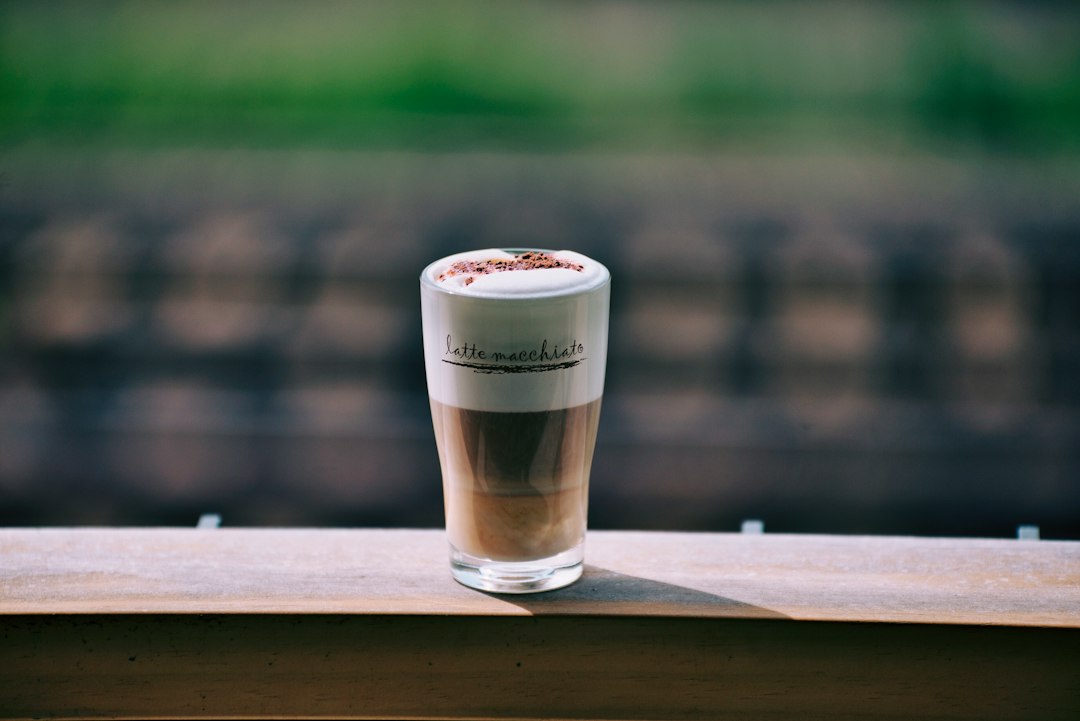
In a latte macchiato, literally ‘spotted milk’, the espresso goes into the milk. Three layers form in the tall glass: milk at the bottom, espresso in the middle and thick foam on top. It contains a lot of milk and often just a single shot.
A caffè latte works the other way round: the milk goes into the espresso, and the coffee comes through more strongly. Typical sizes are 240 to 350 ml with a thin layer of foam. In cafés, both drinks sit at the top end of the price range.
Café au lait and Milchkaffee, its German cousin, are traditionally made with filter coffee instead of espresso. The French café au lait mixes coffee and hot milk at about 1:1 and is served in a bowl. German Milchkaffee is similar, but the proportions vary widely, from 20 to 70 per cent coffee. Some cafés now use espresso as the base.
Our recommendations
Milk jug · around €25 to €30
Motta Europa milk jug 350 ml
Pros: This Italian professional jug with its clearly defined spout is a fixture in many cafés. The size suits one drink.
Cons: The stainless steel handle gets hot; for two drinks the 500 ml version is more practical.
Flat white cup · around €9.50 to €10.50 per cup
Loveramics Egg 150 ml
Pros: 150 ml is the usual size for a flat white or a small cappuccino. According to the manufacturer, it is made from particularly robust porcelain.
Cons: Specialist shops usually sell it without a saucer, which then costs around €5 to €9 extra.
Prices and caffeine: what’s in your cup
In big German cities, you pay an average of €3.80 for a cappuccino, according to the Coffee Friend analysis from June 2026. An espresso costs €2.58, a latte (latte macchiato and caffè latte combined) €4.33. Cologne is the cheapest and Bremen the most expensive, but the gap is no more than 37 cents. A YouGov survey found €3.14 for a cappuccino in 2025, up from €2.24 in 2021.
There is no comparable survey for the flat white and Milchkaffee. For caffeine, only the coffee counts, not the milk. The EFSA works with around 80 mg for a 60 ml espresso and around 90 mg for 200 ml of filter coffee. You’ll find more figures in our article on caffeine in espresso, filter coffee and cold brew.
| Drink | Typical volume | Espresso : milk | Foam | Caffeine (estimate) |
|---|---|---|---|---|
| Espresso macchiato | 40 to 60 ml | espresso + a dash | small cap | 1 shot, around 60 to 80 mg |
| Cortado | 60 to 120 ml | about 1 : 1 | hardly any | 1 to 2 shots |
| Gibraltar | 135 ml (glass) | around 60 : 75 ml | thin | 2 shots, around 120 to 160 mg |
| Flat white | 175 to 200 ml | around 50 : 130 ml | around 5 mm microfoam | 2 shots, around 120 to 160 mg |
| Cappuccino (INEI) | 150 to 160 ml cup | 25 : 100 to 125 ml | dense, fine-bubbled | 1 shot, around 60 to 80 mg |
| Caffè latte | 240 to 350 ml | lots of milk | thin | 1 to 2 shots |
| Latte macchiato | 250 to 350 ml glass | lots of milk, espresso last | thick, layered | usually 1 shot |
| Café au lait / Milchkaffee | 250 to 500 ml bowl | filter coffee : milk about 1 : 1 | little | depends on the amount of coffee |
We derived the caffeine values per drink from the EFSA reference values, so they are rough estimates. How strong a shot turns out depends on the bean, the dose and the preparation. The EFSA considers up to 200 mg at once and 400 mg a day safe for healthy adults.
Whether you choose a cortado or a latte macchiato, the ratio of espresso, milk and foam decides flavour, size and caffeine. Feel free to work your way through the menu, from a small macchiato to a big bowl of Milchkaffee.
All prices are guide prices and may change. We have not tested the products ourselves.
Last updated: 24 October 2026.
Sources
- Il Sole 24 Ore: È #CappuccinoDay, bevanda italiana che piace anche all’estero (in Italian), 8 November 2018.
- Dissapore: La crisi d’identità del cappuccino (in Italian), 30 December 2015, updated 6 March 2023.
- Wikipedia: Caffè macchiato, accessed 23 October 2026.
- Wikipedia: Cortado, accessed 23 October 2026.
- Wikipedia: Flat white, accessed 23 October 2026.
- Wikipedia: Latte macchiato, accessed 23 October 2026.
- Australian Geographic / The Conversation (Garritt Van Dyk): Who invented the flat white?, April 2024.
- Seattle Coffee Gear: Espresso Drinks: A Written and Visual Guide, accessed 23 October 2026.
- Roastmarket: Kaffeespezialitäten mit Milch (in German), 18 September 2016, updated 6 May 2025.
- Coffeeness: Milchkaffee: Das schönste Verhältnis zwischen Kaffee & Milch (in German), 11 September 2022.
- Coffee Friend: Kaffeepreise in Deutschland: Neue Studie für 2026 (in German), 5 August 2026.
- Münster Aktuell: Kaffeepreise 2026: Köln günstig, Bremen am teuersten (in German), 19 September 2026.
- Tageskarte / dpa: Preise für Tasse Kaffee in Europa teilweise über 10 Euro (in German), 27 February 2026.
- EUFIC: Caffeine Q&As, 8 December 2016.
- Coffee Friend: Motta Europa 350 ml (in German), price accessed 23 October 2026.
- Coffee Friend: Loveramics Egg 200 ml (in German), price accessed 23 October 2026.
- Rheinland Coffee: Loveramics Egg Flat White 150 ml (in German), price accessed 24 October 2026.
- Loveramics: Egg 150ml Flat White Cup and Saucer, accessed 24 October 2026.
- Kaffeegold: Loveramics Egg Untertassen (in German), price accessed 24 October 2026.
Image credits
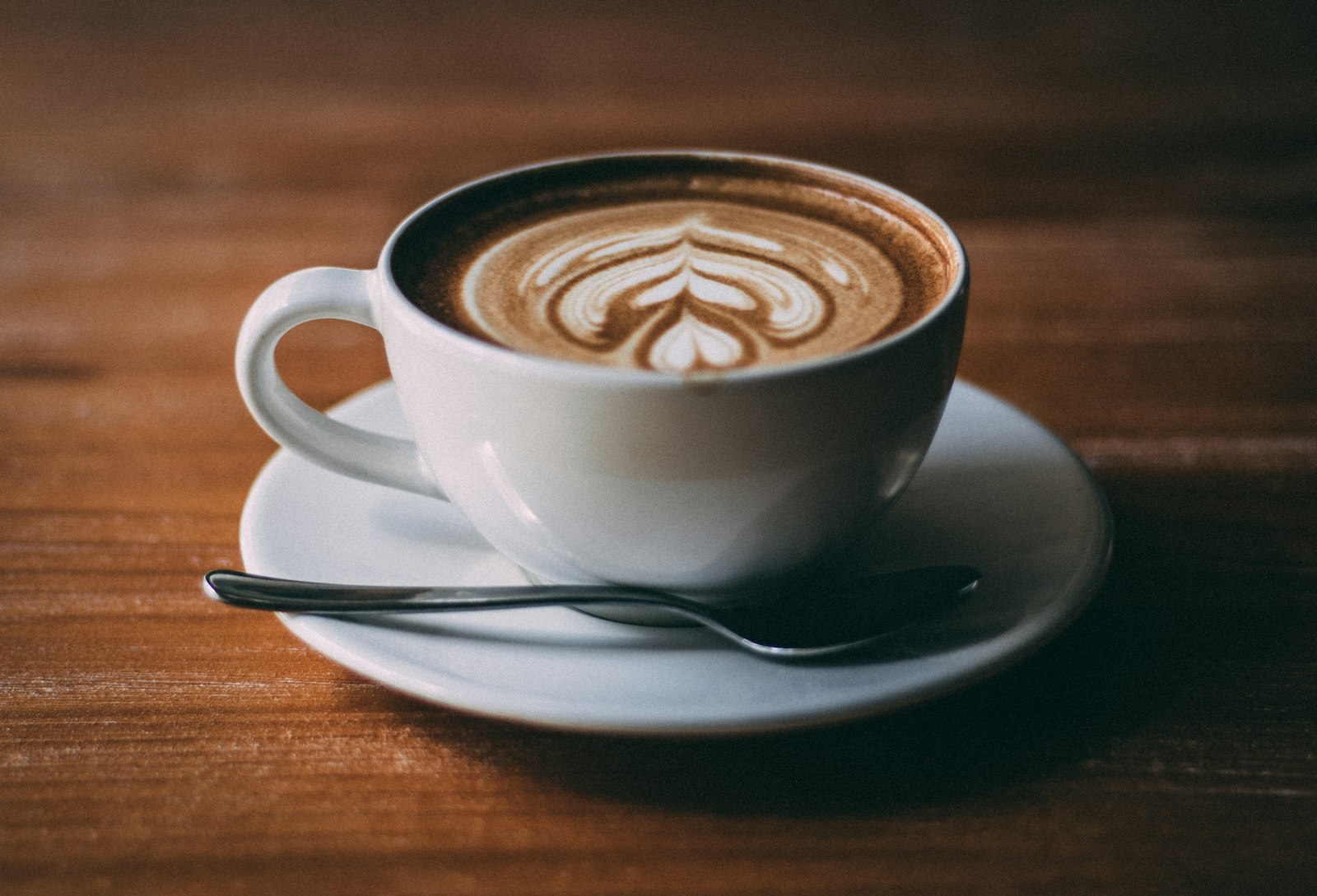
- Latte macchiato in a tall glass – Photo: Andreas Fischinger / Unsplash
Our selection is editorial, there are no paid placements. Links marked * are affiliate links to Amazon Germany (amazon.de): if you buy through them, we receive a small commission at no extra cost to you. We have not tested the products ourselves; pros and cons are based on manufacturer information and retailer descriptions. Prices are guide prices from German shops as of October 2026, and prices and availability on Amazon may differ.