Specialty coffee costs more: the cherries are carefully hand-picked and sorted, and roasteries pay well above the exchange price for this green coffee.A sample calculation for 250 grams, green coffee prices compared, costs on the farm and buying tips.
A bag of specialty coffee often costs you several times as much as supermarket coffee. The difference starts on the farm. It continues with the green coffee, which is traded and paid for as a speciality. Most of the shop price, though, only arises in Germany.
We work it through for a 250 g bag. We converted all dollar prices at the European Central Bank reference rate of 22 October 2026, where €1 equals 1.1205 US dollars. One pound (lb) is 0.4536 kg. Our own calculation steps are marked as such.
Where your money goes in a 250 g bag
German roasteries publish no breakdown of their costs. The table is therefore our own sample calculation. The taxes and the green coffee price at the export port are fixed. For €18 we use the median specialty price from the latest market analysis. For €25 we take the average a Copenhagen roastery paid in 2025.
| Sample calculation (our calculation) | Bag for €18 | Bag for €25 |
|---|---|---|
| green coffee at the export port, around 300 g | around €2.59 (14 %) | around €3.56 (14 %) |
| of which to the farm (70 to 80 % of the port price) | around €1.80 to €2.10 | around €2.50 to €2.85 |
| coffee tax, €2.19 per kg | around €0.55 (3 %) | around €0.55 (2 %) |
| VAT, 7 % | around €1.18 (6.5 %) | around €1.64 (6.5 %) |
| freight, import, roasting, packaging, wages, shipping, retail and profit | around €13.68 (76 %) | around €19.26 (77 %) |
In both cases, the green coffee makes up only around a seventh of the price. The coffee tax is always the same per bag, because it depends on weight. The largest share goes to the roastery and retail. It covers sea freight and import, the roaster and energy, sample roasts, packaging, rent, staff, web shop and shipping.
That is not pure profit. German roasteries do not disclose how much is left over. The figure for the farm is a rough range. It is based on a US importer’s rule of thumb for Latin America and varies by country and contract.
The green coffee: speciality costs more than exchange coffee
The best-known coffee price is set on the New York exchange. Standard-quality Arabica is traded there. On 23 October 2026, a pound cost around 307 US cents, roughly €6.05 per kilo. That is around 24 % less than a year earlier. For specialty coffee, this price is only a reference point.
Roasteries usually buy specialty coffee at negotiated fixed prices. The measure is the FOB price, short for ‘free on board’. It applies to export-ready green coffee loaded at the port of the producing country. It includes processing, storage, transport to the port and export papers, but no sea freight yet.
The Specialty Coffee Transaction Guide shows what this coffee costs. It collects real purchase contracts, most recently over 100,000 of them. The better a coffee scores at tasting, the more expensive it is.
| Green coffee | US dollars per pound | roughly per kg (our conversion) |
|---|---|---|
| Arabica on the New York exchange, 23 October 2026 | 3.07 | €6.05 |
| Fairtrade minimum price washed Arabica from 1 December 2026 | 2.00 | €3.94 |
| specialty, 80 to 83.9 points, median of the 2021/22 to 2023/24 harvests | 2.93 | €5.76 |
| specialty, 84 points and above, median of the same harvests | 4.18 | €8.22 |
| specialty overall, median of the 2025 analysis | 4.39 | €8.64 |
| Basel roastery, average 2025/26, weighted by volume | 4.81 | €9.46 |
| Copenhagen roastery, average 2025 | 6.03 | €11.86 |
| Oslo roastery, average 2024 | 6.37 | €12.53 |
The range at the top is wide. An Australian roastery paid between 2.46 and 27.75 US dollars per pound in the 2024/25 financial year. The Basel roastery averages 5.76 dollars as a simple average, but only 4.81 dollars weighted. Small top lots pull the simple average up, while the large volumes are cheaper.
Auctions sit at the very top. At ‘Best of Panama’ in 2025, a washed Geisha sold for 30,204 US dollars per kilo of green coffee, roughly €26,960. That is a collector’s item and has little to do with everyday prices.
A US importer puts the points in context. Below 84 points, it treats coffees mainly as blend components. From 85 points they are sold as single origins, and from 90 points they are very rare. The Specialty Coffee Association (SCA) has since replaced the 100-point scheme with an assessment form without a total score. The trade still thinks in points, though.
On the farm: manual work makes up most of the costs
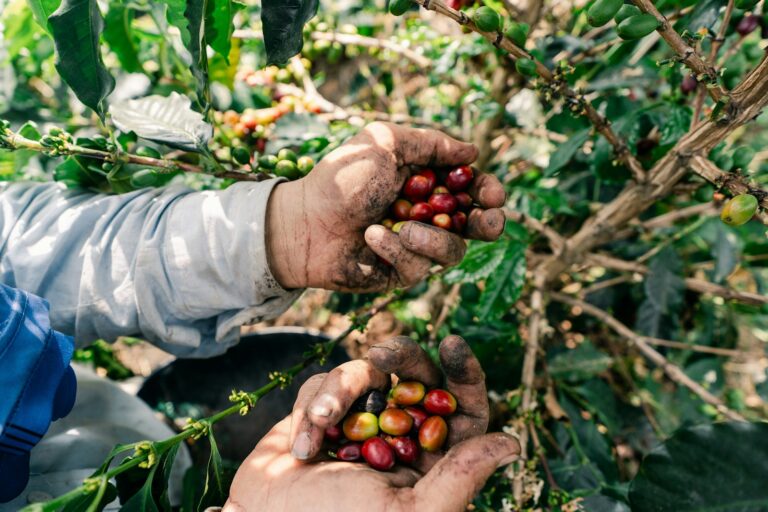
For high scores, only ripe cherries should go into the basket. That mostly means picking by hand, which takes a lot of work. According to a report for the US Department of Agriculture, labour accounts for around 58 % of production costs in Peru.
Fertiliser adds to that, at around 24 % of costs in Peru according to the same report. Fairtrade is therefore raising its minimum price for washed Arabica from 1.80 to 2.00 US dollars per pound on 1 December 2026.
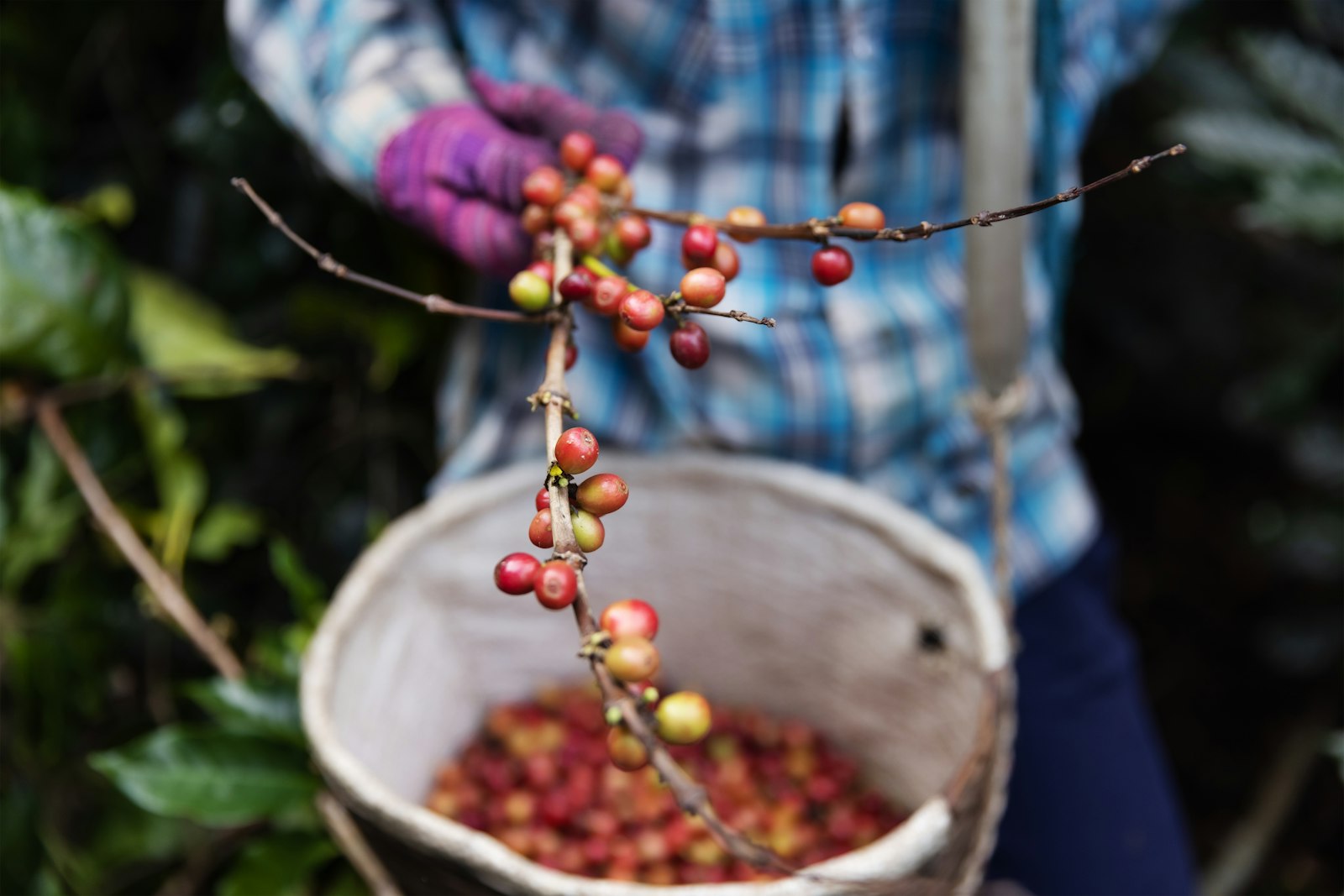
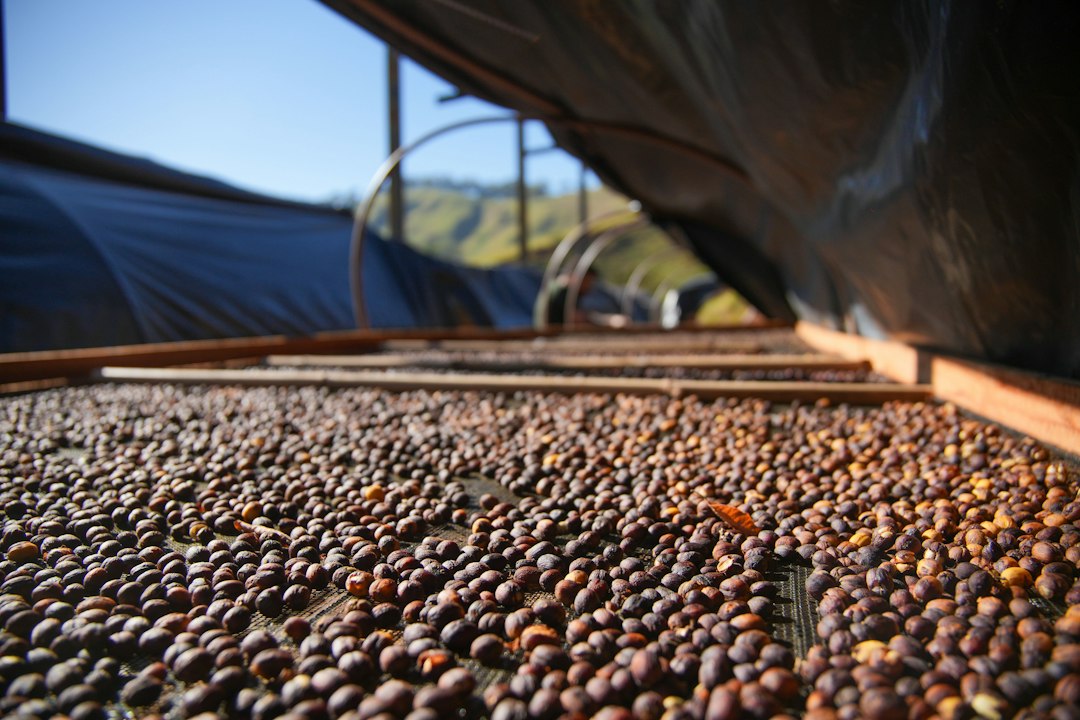
Processing follows the harvest. The cherries are washed or dried, hulled and sorted. Each method needs different amounts of water, space and monitoring, more on that in Washed, natural, honey: how processing shapes coffee flavour. Cooperatives or washing stations often handle this, and an exporter handles the export.
So not all of the FOB price reaches the farm. A US importer gives 70 to 80 % as the usual share for Latin America. An Oslo roastery gives an example from Colombia. It paid 5.75 US dollars per pound FOB, and the producer received 4.75 dollars.
Roasting: around 300 g of green coffee becomes 250 g
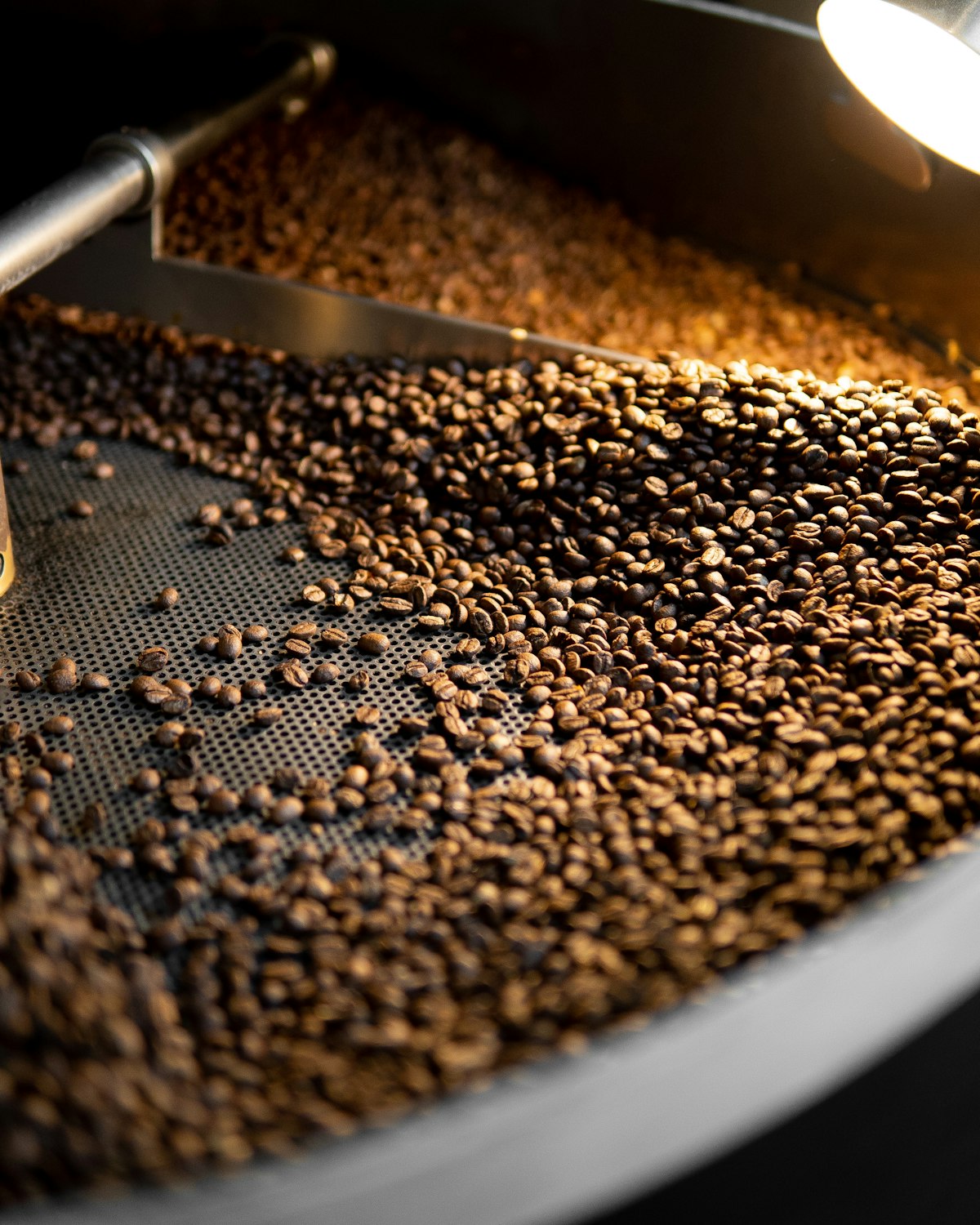
Roasting mainly drives off water. According to Barista Hustle, beans usually lose 14 to 20 % of their weight. Dark roasts lose more than light ones. For a 250 g bag, the roastery therefore needs around 290 to 310 g of green coffee, and we calculate with 300 g.
Specialty roasteries usually roast smaller batches and profile each origin individually. That includes sample roasts and tastings before a coffee goes on sale. This work is spread over fewer bags than at a large industrial roastery. How the roast level changes the flavour is explained in Light, medium or dark roast: flavour, acidity and caffeine compared.
Coffee tax and VAT: the state’s fixed share
In Germany, roasteries pay €2.19 in coffee tax per kilogram of roasted coffee. For 250 g, that is around 55 cents. The tax falls due as soon as the coffee leaves the roastery’s bonded warehouse. For instant coffee, it is €4.78 per kilogram.
Because the coffee tax depends on weight, it costs as much on a top bag as on a cheap one. Its share of the price therefore falls the more expensive the coffee is. On top comes the reduced VAT rate of 7 %. It rises with the shop price.
Pay more, get more: how to recognise a fair price
How much the price rises with the green coffee also depends on the costing. If a roastery adds a percentage mark-up, it automatically earns more on expensive green coffee. The Copenhagen roastery instead adds a fixed amount to its costs. Then the shop price only rises by what the better coffee costs extra to buy.
Exchange prices also reach the shelf with a delay. Green coffee is often bought, shipped and stored months before roasting. Some of the coffee on the shelf therefore comes from purchases at older prices. If the exchange falls, your bag does not get cheaper straight away.
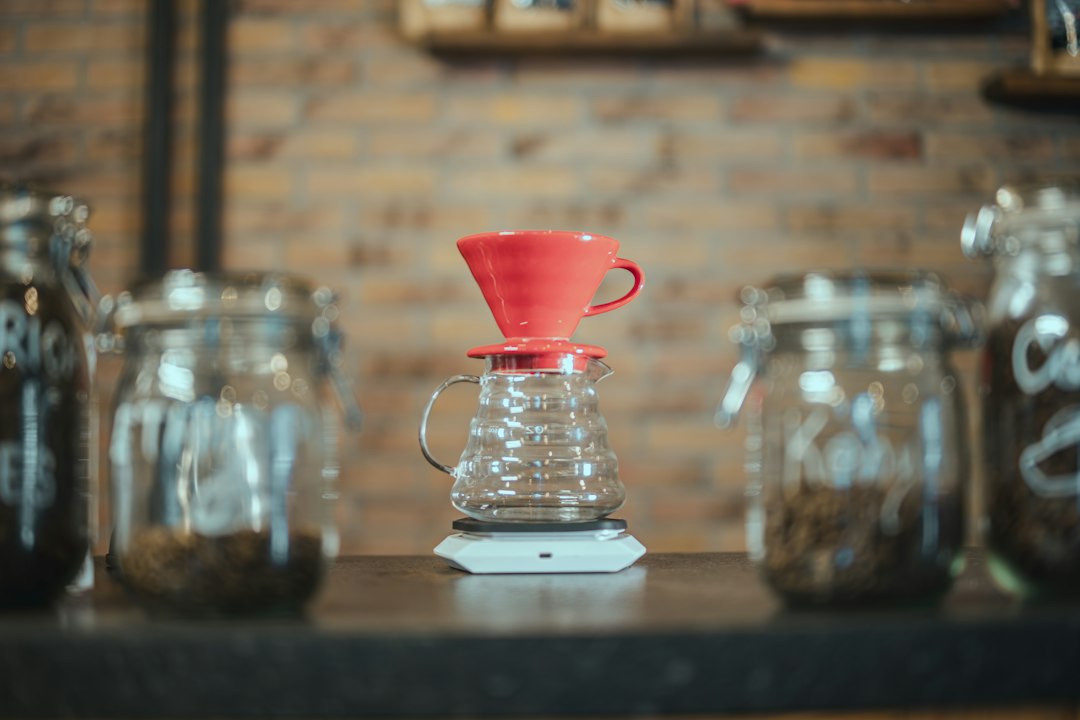
Proper storage helps an expensive coffee keep its aroma, see How long does coffee stay fresh? Roast date, storage and freezing. For brewing at home, pour-over works well, and recipes are in Pour-over drippers compared: V60, Kalita Wave and Chemex.
So a higher price for specialty coffee has its reasons, from the harvest to the small roaster. The price tag alone does not reveal how much of it reaches the green coffee. A roastery that discloses what it paid for its coffee tells you more.
Last updated: 24 October 2026.
Sources
- Trading Economics: Coffee – Price, Chart, Historical Data (Arabica 307.45 US cents/lb, 23 October 2026), accessed 24 October 2026.
- European Central Bank: Euro reference exchange rate, US dollar, rate of 22 October 2026.
- Nick Brown, Daily Coffee News: The 2024 Specialty Coffee Transaction Guide Is Here, 18 February 2025.
- Perfect Daily Grind: Why coffee roasters are explaining price increases, 2 April 2026.
- Kaffeemacher: Transparency Report 2025/26, June 2026, online 6 July 2026.
- Tim Wendelboe: 2024 Transparency Report, undated, accessed 24 October 2026.
- Sample Coffee: Transparency Report 2024/2025, financial year 1 July 2024 to 30 June 2025, accessed 24 October 2026.
- Global Coffee Report: Best of Panama auction sees world record price, 8 August 2025.
- Chris Kornman, Royal Coffee: Scoring Specialty Coffee: What Do the Numbers Mean?, 10 March 2026.
- Jorge Cuevas, Sustainable Harvest: C Market 101: What Is FOB Pricing?, 14 July 2021.
- Daily Coffee News (after the Coffee Annual of the USDA Foreign Agricultural Service): Peru Coffee Report: Production Steady Despite Structural Challenges, 17 June 2026.
- Alexis Rubinstein, StoneX: The New Cost Reality in Coffee, 19 March 2026.
- Fairtrade International: Fairtrade aktualisiert Mindestpreise für Kaffee (in German), 30 July 2026.
- Barista Hustle: Knowledge article on weight loss during roasting, undated, accessed 24 October 2026.
- Wissenschaftliche Dienste des Deutschen Bundestages: Kaffeesteuer (WD 4 – 140/18) (in German), 2018.
- Philipp Schallberger, Kaffeemacher: Die Kaffeesteuer (in German), 3 January 2024.