On the New York exchange, Arabica costs around 287 US cents per pound, roughly €5.67 per kilo of green coffee. That is around 27 per cent less than a year ago.Arabica and Robusta prices in 2026, the drivers from Brazil to the EU deforestation regulation, and supermarket prices.
In February 2025, green coffee was more expensive than ever before. Since then the price has fallen sharply, driven by a record harvest in Brazil. In October 2026, the market briefly turned upwards again. The exchange warehouses hold hardly any coffee, and the El Niño weather pattern is looming. By the end of October, Arabica had given up those gains.
The prices in this article are dated closing prices and monthly averages. We converted foreign currencies using the ECB reference rate of 30 October 2026 (€1 = 1.1172 US dollars). One pound (lb) equals 0.4536 kilograms.
Where things stand this autumn: Arabica gives up its October gains
On 21 October 2026, Arabica for December delivery closed at 316.15 US cents per pound. That was the highest level since the end of August. On 16 October, the price had risen by 3.7 per cent in a single day. After that, it fell for six trading days in a row. On 30 October, Arabica closed at 287.20 cents, about 1.2 per cent below the close of 30 September.
Robusta, the cheaper species used in espresso blends and instant coffee, is traded in London in US dollars per tonne. The January contract closed on 30 October at 3,204 US dollars, which converts to around €2,868 per tonne or €2.87 per kilo. What sets the two species apart is explained in Arabica or robusta: flavour, caffeine, growing and price.
At the closing price of 30 October, a 60 kg bag of Arabica was worth around 380 US dollars, which converts to around €340. That is the exchange price for green coffee, without freight, roasting, tax and trade.
From record to slide: the market year in numbers
Arabica hit its record high of 440.85 cents per pound in February 2025, around €8.70 per kilo at today’s exchange rate. Robusta reached a record of 5,817 US dollars per tonne on 13 February 2025. After that, prices went downhill. In early June 2026, Arabica was trading at just 250 to 255 cents, close to its lowest level since the end of 2024.
| Period | Arabica New York (cents/lb) | Robusta London | ICO composite (cents/lb) |
|---|---|---|---|
| Record February 2025 | 440.85 (high) | $5,817/t (13 Feb 2025) | n/a |
| January 2026 (average) | 334.99 | 180.23 cents/lb, around $3,973/t | 296.89 |
| February 2026 (average) | 288.76 | 166.06 cents/lb, around $3,661/t | 267.57 |
| Early June 2026 | around 250 to 255 | n/a | n/a |
| September 2026 (average) | 280.68 | 154.28 cents/lb, around $3,401/t | 262.18 |
| 30 October 2026 (close) | 287.20 | $3,204/t | n/a |
The monthly averages come from the market reports of the International Coffee Organization (ICO). The conversion of the Robusta figures from cents per pound to dollars per tonne is ours. The ICO composite is a blended price across all types and markets. In September it fell by 8.7 per cent compared with August.
Empty warehouses, full harvest: why Arabica swung in October
The main reason for the mid-October rise lay in the warehouses of the ICE exchange. At the end of October they held just around 240,000 bags of certified Arabica. In September, at 217,646 bags, stocks were at their lowest in 27 years. Traders doubt that Brazilian coffee will reach the warehouses before the December contract expires.
Yet there is actually plenty of coffee around. On 24 September, Brazil’s agricultural agency CONAB estimated the 2026 harvest at a record 67.6 million bags. The US Department of Agriculture expects a record global harvest of 189.7 million bags. Analyst Vicente Zotti therefore sees the October rise mainly as short covering by speculators, not as a real shortage. At the end of October, a weaker Brazilian real and strong exports from Brazil pushed the price back below 300 cents.
The concern is more about the next harvest. El Niño could disrupt the rainy season in Brazil during flowering and depress the 2027/28 harvest. In Vietnam, the Robusta harvest is just starting, and volumes are expected to be roughly in line with last year. Colombia, on the other hand, reported 15 per cent lower production.
Tariffs and the deforestation law: politics in the coffee sack
In 2025, the USA imposed a punitive tariff of 40 per cent on Brazilian food. On 20 November 2025, President Trump exempted coffee, beef, cocoa and fruit again, retroactively from 13 November. On 20 February 2026, the Supreme Court ruled that the IEEPA emergency powers law does not allow tariffs. The Brazil tariffs, however, were not part of the case.
Since 22 July 2026, a new US tariff of 25 per cent has applied to most goods from Brazil. This time it is based on Section 301 of the Trade Act. Coffee is explicitly exempt, including unflavoured instant coffee. So for now, the tariffs no longer play a direct role in the coffee price.
In the EU, the EUDR deforestation regulation takes effect on 30 December 2026 for large and medium-sized companies. Small and micro enterprises follow on 30 June 2027. According to its review of May 2026, the European Commission is not planning any further delay. What the rules mean for roasters and importers is explained in the EUDR and coffee and cocoa.
In the supermarket: what reaches the coffee shelf
The fall is slowly reaching the shops. According to the Federal Statistical Office (Destatis), coffee, tea and cocoa cost 3.3 per cent less in September 2026 than a year earlier. Overall inflation was 3.3 per cent, and food became 0.4 per cent more expensive. The press release gives no separate figure for coffee beans alone.
There are reasons why shelf prices follow the exchange price only slowly and in a weaker form. Roasters often buy and hedge their green coffee months in advance, and coffee tax, roasting, packaging and retail come on top. Our article why cheaper green coffee doesn’t mean cheaper coffee on the shelf shows why green coffee makes up only part of the price. With specialty coffee, the exchange price matters even less, see why specialty coffee costs so much.
How to buy coffee when prices fluctuate:
- Compare special offers in the shops, because falling exchange prices reach the shelf only after a delay.
- Only buy as much as you’ll use within four to six weeks of roasting, as stockpiling coffee hardly pays off.
- With espresso blends, check the Robusta share: on the exchange, Robusta is much cheaper than Arabica.
- Ask your roaster about fixed annual prices or direct trade, because such coffees fluctuate less with the exchange.
- Compare the price per kilo, not per pack, because pack sizes differ.
Our recommendations
Reference book
James Hoffmann: Der perfekte Kaffee für zu Hause
Pros: According to the publisher, it explains how to recognise good beans, which equipment is worth buying and which water suits, including a water recipe. It helps you spend your coffee money more wisely.
Cons: A practical book on brewing: the publisher’s description does not mention growing, the exchange or the coffee trade.
Hand grinder
1Zpresso J, silver
Pros: 25 microns per click, aluminium body, folding handle. With your own grinder, you can buy whole beans and grind only what you need.
Cons: The grind size is set with an internal ring, not from the outside; the retailer lists pour-over as its use, not espresso.
Outlook for 2027: surplus versus El Niño
On paper, a lot points to cheaper green coffee. The ICO estimates a surplus of 3.0 million bags for 2025/26, and the analysis firm Hedgepoint even 8.9 million bags for the new season. Trading Economics expects Arabica at around 267 cents per pound in twelve months, which is less than today. Model forecasts like these are no guarantee.
On the other side are the tight exchange stocks and the weather. A strong El Niño could hit flowering in Brazil and the 2027/28 harvests in Brazil and Vietnam. From 30 December 2026, the EUDR adds new due diligence requirements. That is why the coffee price is likely to stay jittery over the coming weeks.
For you, this means coffee on the shelf is more likely to get cheaper slowly than to get more expensive quickly. Whether the exchange price climbs again depends above all on rainfall in Brazil over the coming weeks.
All product details are based on manufacturer and retailer information; we have not tested the products ourselves.
Last updated: 31 October 2026.
Sources
- Trading Economics: Coffee – Price, Chart, Forecast, accessed 31 October 2026.
- Trading Economics: Coffee Hits 11-week Low, 16 September 2026.
- Business Recorder (Reuters): Arabica coffee touches one-month high, 18 October 2026.
- StoneX: Daily Coffee Report 10/19/26, 19 October 2026.
- Inheritance Coffee: Why Did Arabica Coffee Prices Jump in October?, 20 October 2026.
- Inheritance Coffee: Why Did Robusta Coffee Prices Fall in Late October 2026?, 24 October 2026.
- Yahoo Finance (Barchart): Coffee Prices Fall as ICE Coffee Inventories Rise, 22 October 2026.
- CocoaIntel: December Arabica Falls Again as Later Contracts Recover, 30 October 2026.
- Doanh nghiệp & Hội nhập: Giá cà phê hôm nay 31/10/2026: Giá cà phê trong nước giảm thêm 1.000 đồng/kg, robusta London đảo chiều tăng (in Vietnamese), 31 October 2026.
- Comunicaffe: Coffee markets edge higher in the final stretch of the month, certified stocks still close to historic lows, 1 October 2026.
- StoneX: Coffee Slides to Multi-Month Lows as Record Brazil Crop Weighs on Market, 4 June 2026.
- International Coffee Organization (ICO): Coffee Market Report February 2026, 2026.
- International Coffee Organization (ICO): Coffee Market Report September 2026, 2026.
- Nông nghiệp và Môi trường: Coffee prices on February 13: setting a historic peak, 13 February 2025.
- Daily Maverick (Reuters): Trump signs order to remove tariffs from Brazilian beef, coffee, 21 November 2025.
- WilmerHale: Supreme Court Strikes Down IEEPA Tariffs – What Now?, 20 February 2026.
- The Pig Site (Reuters): US to impose 25% tariff on most Brazilian imports from July 22, 16 July 2026.
- National Coffee Association USA: NCA applauds exemption of coffee from Section 301 tariffs on Brazil, 16 July 2026.
- Coolset: EU Deforestation Regulation: What businesses need to do now, updated 25 September 2026.
- Federal Statistical Office (Destatis): Inflationsrate im September 2026 bei +3,3 % (in German), 13 October 2026.
- European Central Bank: Euro reference exchange rate, US dollar, accessed 31 October 2026.
- ZS Verlag: Der perfekte Kaffee für zu Hause (Hardcover) (in German), accessed 24 October 2026.
- 4barista: 1Zpresso J – Kaffeemühle (in German), accessed 24 October 2026.
- World Bank: World Bank Commodities Price Data (The Pink Sheet), October 2026, 2 Oct 2026; plus the July 2026, April 2026 and February 2026 issues (monthly Arabica and Robusta averages for the chart), accessed 3 Nov 2026.
Image credits
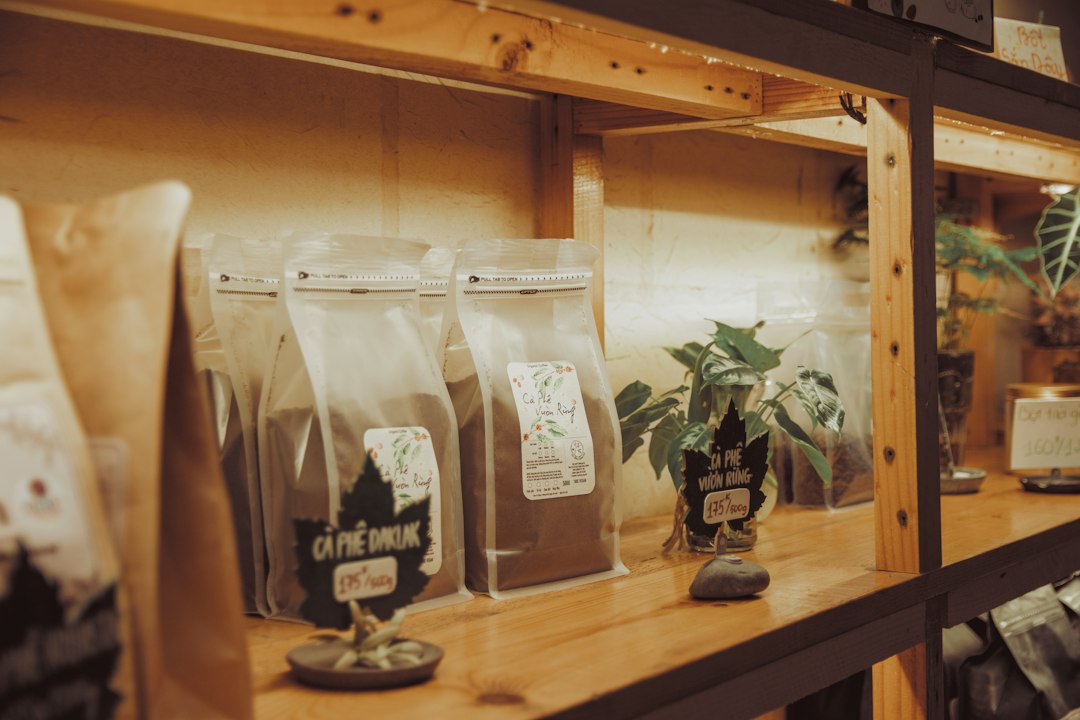
- Bags of coffee beans on a wooden shelf – Photo: Nguyen Phuc Hau / Unsplash
Our selection is editorial, there are no paid placements. Links marked * are affiliate links to Amazon Germany (amazon.de): if you buy through them, we receive a small commission at no extra cost to you. We have not tested the products ourselves; pros and cons are based on manufacturer information and retailer descriptions. Prices are guide prices from German shops as of October 2026, and prices and availability on Amazon may differ.