Brazil harvests from May to September and Ethiopia from October to January. It usually takes three to six months for the green coffee to reach Europe.Harvest times in 17 producing countries, arrival in Europe, what ‘past crop’ means and production volumes.
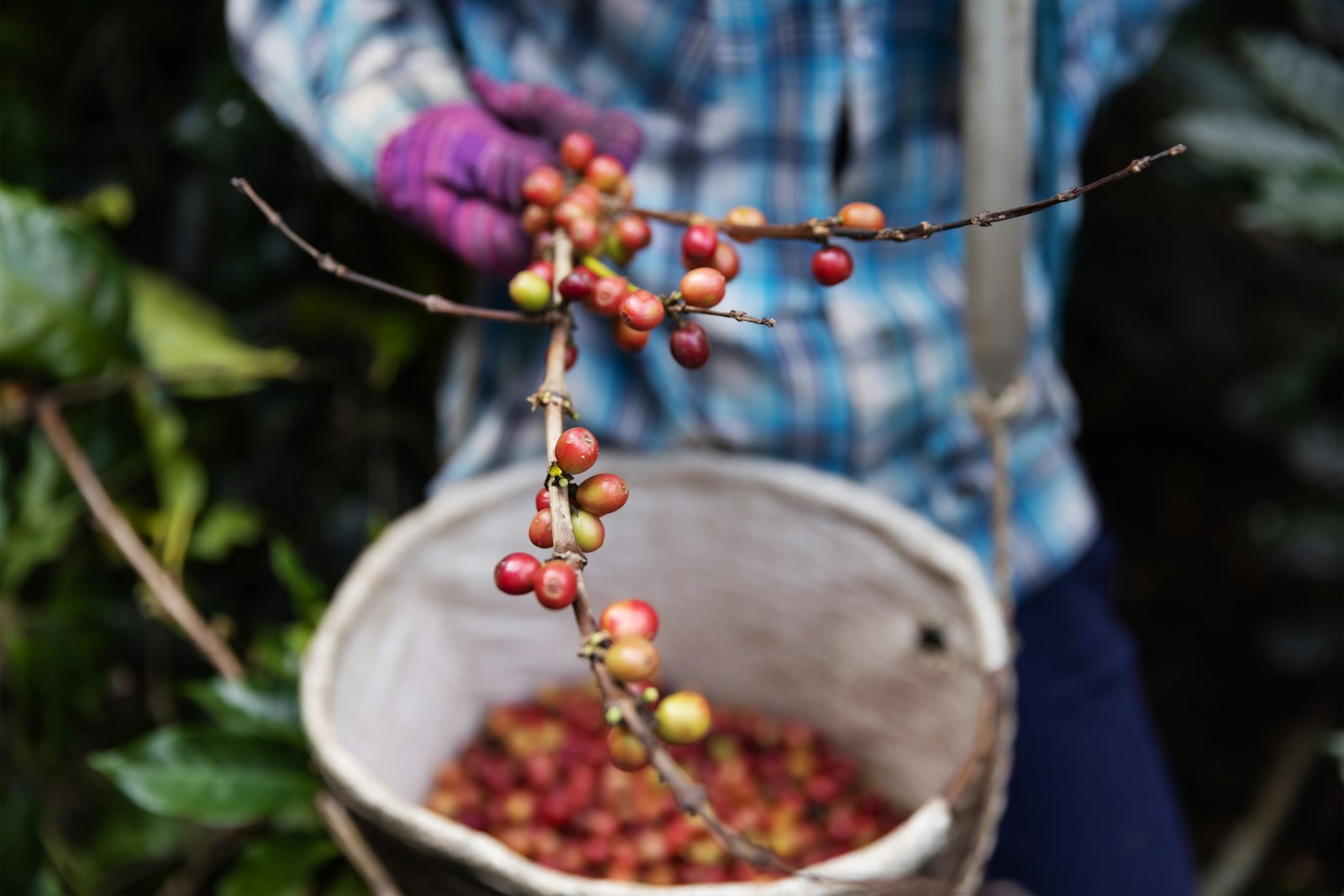
Coffee is a seasonal product, even if the shelf looks equally full all year round. Every region has its own harvest time, depending on latitude, rainy season and altitude. North of the equator, picking usually happens between October and March, south of it more often between May and September. Some countries on the equator have two harvests a year.
For you, this means a Kenyan tastes freshest in summer and a Brazilian around the turn of the year. The calendar below shows when each country harvests. The months are typical windows from importer and market reports, and they shift by a few weeks depending on the year and altitude.
The calendar: when each country picks
The table shows the main harvest (M) and, where there is one, the secondary harvest (S). In Colombia it is called mitaca, in East Africa the fly crop. The last column gives a rough idea of when fresh coffee arrives in Europe.
Show as table
| Country | Jan | Feb | Mar | Apr | May | Jun | Jul | Aug | Sep | Oct | Nov | Dec | Fresh in Europe (approx.) |
|---|---|---|---|---|---|---|---|---|---|---|---|---|---|
| Brazil | · | · | · | · | M | M | M | M | M | · | · | · | Nov to Feb |
| Vietnam | M | · | · | · | · | · | · | · | · | M | M | M | Apr to Jun |
| Colombia (central) | M | · | · | S | S | S | · | · | M | M | M | M | Jan to Mar, mitaca Aug to Sep |
| Indonesia | · | · | · | · | M | M | M | M | M | · | · | · | Dec to Jan |
| Ethiopia | M | · | · | · | · | · | · | · | · | M | M | M | Mar to Jun |
| Honduras | M | M | M | · | · | · | · | · | · | · | M | M | Jul to Sep |
| Uganda | S | · | · | M | M | M | M | M | · | · | S | S | Nov to Jan (estimated) |
| India | M | M | · | · | · | · | · | · | · | · | M | M | until May |
| Peru | · | · | · | · | M | M | M | M | M | · | · | · | Nov to Jan |
| Mexico | M | M | M | · | · | · | · | · | · | · | M | M | May to Jul |
| Guatemala | M | M | M | M | · | · | · | · | · | · | M | M | Jul to Sep |
| Kenya | M | · | · | · | S | S | S | · | · | M | M | M | Apr to May, fly crop from Nov |
| Costa Rica | M | M | M | · | · | · | · | · | · | · | M | M | May to Jul |
| Rwanda | · | · | · | M | M | M | M | · | · | · | · | · | Oct to Jan |
| Burundi | · | · | M | M | M | M | M | · | · | · | · | · | Oct to Jan |
| Panama | M | M | M | · | · | · | · | · | · | · | M | M | May to Jul |
| Yemen | M | · | · | · | · | · | · | · | · | · | M | M | depends on logistics |
Key: M = main harvest, S = secondary harvest (mitaca or fly crop), · = no significant harvest. The Colombia row applies to the central growing regions. In the south, for example in Huila and Nariño, the main harvest tends to fall in the first half of the year. For Uganda, the table shows the main Robusta harvest in the south-west and the fly crop in the centre and east. For Yemen, sources give November to January or October to February.
Two harvests a year: mitaca and fly crop
Colombia lies close to the equator and has two rainy seasons. That is why the trees flower twice and there are two harvests. According to a StoneX market report, the main harvest runs from September to December and the mitaca from April to June. In Huila, picking for the first half of the year starts in May.
Kenya also has two harvests. The main harvest runs from October to January, the smaller fly crop from May to July. In Uganda, the 2025/26 Robusta fly crop ran from late autumn to mid-January, and the main harvest was expected for April to August 2026. Our article from coffee tree to cup shows how the cherries become green coffee after the harvest.
From tree to roaster: three to six months
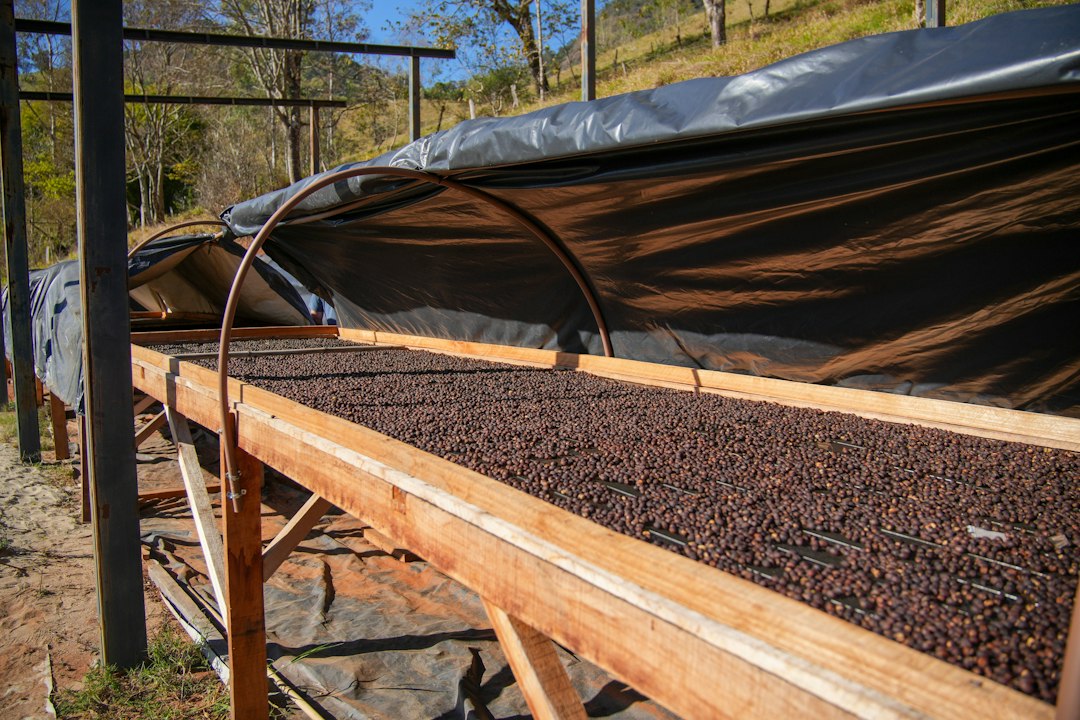
Once picked, the coffee is far from ready to travel. Processing takes 5 to 45 days depending on the method, and drying 5 days to 6 weeks. After that, the green coffee usually rests for 30 to 60 days before it is hulled and sorted. The different methods are explained in washed, natural and honey process.
Then comes the sea freight. A container takes 17 to 25 days from Santos in Brazil to the UK, and 3 to 4 weeks from Central America. From Ethiopia it now takes 6 to 8 weeks instead of the earlier 4 to 5, because many ships avoid the Red Sea. A British roaster therefore expects at least 3 to 5 months from harvest to arrival, or 3 to 6 in a smooth year.
How to buy seasonally:
- In November and December, go for freshly arrived coffees from Brazil, Peru and Rwanda.
- Kenya and Ethiopia are at their freshest from spring to early summer.
- Central America (Costa Rica, Panama, Mexico) arrives fresh from May, Guatemala and Honduras from July.
- Look for the harvest year or arrival date on the pack, not just the roast date.
- If a coffee tastes hay-like or flat, it may be past crop.
Fresh, current or past crop: how green coffee ages
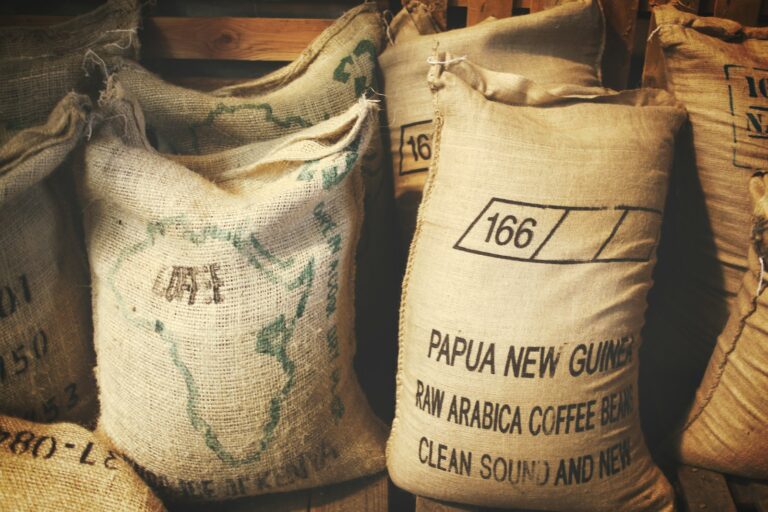
Coffee counts as ‘fresh crop’ or ‘new crop’ when it has just become ready for export. As soon as the next harvest arrives, the previous year's coffee becomes ‘past crop’. The Specialty Coffee Association describes it as still usable but past its peak. Washed green coffee loses its lively grey-green colour and turns pale beige.
Typical notes of aged green coffee are hay-like, straw-like, baggy or simply flat. How fast this happens varies. Some coffees lose their freshness after a few months, while others last 14 to 16 months according to the SCA. Freezing stops ageing almost completely.
According to the US importer Royal Coffee, specialty green coffee stays fresh for around a year if stored well. Jute sacks offer little protection. Hermetic liners such as GrainPro can extend the best phase by months. The recommended conditions are 10 to 24°C and 50 to 70 per cent humidity. Roasted beans follow different rules, which you'll find in storing coffee and the roast date.
Our recommendations
Reference book
James Hoffmann: Der Kaffeeatlas (2nd edition)
Pros: According to the publisher, it profiles 35 countries of origin and covers growing region, variety, harvest, roasting and brewing water. That is exactly the background to the harvest calendar.
Cons: Published in April 2023, so it does not include current harvest and market figures like the ones in this article.
Hand grinder
Kinu M47 Classic
Pros: Stainless steel and aluminium body, stepless adjustment from espresso to French press, travel case included. This lets you grind fresh-crop coffee right before brewing.
Cons: Heavy at 1,150 g and expensive; according to the retailer, it is geared towards espresso, and a filter burr set costs an extra €39.
The big numbers: production in 2025/26 and the 2026/27 forecast
The US Department of Agriculture expects a record harvest of 189.7 million 60 kg bags for 2026/27. That is 10.8 million bags more than the previous year. Brazil makes the biggest jump, with almost 9 million bags more. The figures refer to each country's marketing year, which differs from country to country.
| Country | 2025/26 | 2026/27 (forecast) | Marketing year |
|---|---|---|---|
| Brazil | 63.0 | 71.9 | July to June |
| Vietnam | 31.7 | 32.5 | October to September |
| Colombia | 12.5 | 13.4 | October to September |
| Indonesia | 12.37 | 11.38 | April to March |
| Ethiopia | 11.56 | 12.1 | October to September |
| Uganda | 7.095 | 7.16 | October to September |
| India | 6.43 | 6.14 | October to September |
| Honduras | 5.53 | 6.03 | October to September |
| Peru | 4.764 | 4.78 | April to March |
| Mexico | 4.08 | 4.135 | October to September |
| Guatemala | 3.155 | 3.26 | October to September |
| Costa Rica | 1.16 | 1.2 | October to September |
| Kenya | 0.85 | 0.95 | October to September |
Figures in millions of 60 kg bags, source: USDA FAS, report from July 2026. The report gives no individual figures for Rwanda, Burundi, Panama and Yemen. Uganda mainly produces Robusta: around 6 million of the forecast 7.16 million bags are Robusta. About 73 per cent of Ugandan exports went to the EU in 2024/25.
The harvest calendar is worth a look when you buy coffee. It explains why your favourite coffee is sometimes missing for months, and when it will arrive again in top form. If you ask your roaster about the harvest year and arrival, you'll know exactly what's in the bag.
All product details are based on manufacturer and retailer information; we have not tested the products ourselves.
Last updated: 24 October 2026.
Sources
- Coffee Hunter: Coffee Seasonality, last modified 2 September 2025.
- Ozone Coffee: The Coffee Arrival Calendar, accessed 23 October 2026.
- Cafe Imports: Harvest Calendar, accessed 23 October 2026.
- StoneX (Diana Delgado): Colombia's 2026 mid-crop shows sharp regional divide, 19 January 2026.
- Sucafina: Uganda 2025/26 Robusta fly crop, 19 November 2025.
- Middle East Eye: In pictures: Yemeni coffee farmers gather for harvest season, accessed 23 October 2026.
- Specialty Coffee Association (Laurel Carmichael): Coffee Decoded: What is “fresh crop” coffee?, 4 August, year not stated.
- Sweet Maria's: Past Crop (glossary), accessed 23 October 2026.
- Royal Coffee (Chris Kornman): How long does green coffee last in storage?, 10 March 2021.
- USDA Foreign Agricultural Service: Coffee: World Markets and Trade, 2 July 2026.
- Daily Coffee News: Uganda Coffee Report, 22 June 2026.
- ZS Verlag: Der Kaffeeatlas (Hardcover) (in German), accessed 24 October 2026.
- kaffeemacher: Kinu M47 Classic Handmühle, accessed 24 October 2026.
- die espressonisten: Kinu M47 Classic Premium Handmühle (in German), accessed 24 October 2026.
- ICO: Exports of all forms of coffee by exporting countries to all destinations, February 2024 (Monthly Trade Statistics, Table 1), accessed 3 November 2026.
- World Bank WITS / UN Comtrade: Coffee, not roasted or decaffeinated (HS 090111), exports 2023 and 2022, accessed 3 November 2026.
- INCAH: Statistiques: Exportation (in French), accessed 3 November 2026.
- FAO: Annex 4: Africa Coffee Producing Countries Profiles, 1999 data, accessed 3 November 2026.
- Sucafina: Origins (China, Malawi, Myanmar, Timor-Leste), accessed 3 November 2026.
- Green Coffee Collective: origin guides (including Jamaica, Haiti, Dominican Republic, Venezuela, Thailand, Liberia, Nigeria, Zambia, Zimbabwe), accessed 3 November 2026.
- Lao Coffee Association: Coffee Farming, accessed 3 November 2026.
- Philippine Coffee Board: Philippine Coffee, accessed 3 November 2026.
- Produce Monitoring Board Sierra Leone: Harvest and Post-Harvest, accessed 3 November 2026.
- Ram Bahadur KC, Bhola Kumar Shrestha, Sanjay Dhimal: Coffee as a Niche Crop for Mid-Hills of Nepal, accessed 3 November 2026.
- IPM Centers: Crop Profile for Coffee in Puerto Rico, October 2002.
- Wikipedia: Coffee production in Cuba (citing Reuters, 29 October 2012), accessed 3 November 2026.
- Market Development Facility: Arabica Coffee Value Chain Analysis, Sri Lanka, October 2020.
- Project Origin: Malaysia Liberica, 2025.
- Natural Earth: map data (public domain), via world-atlas.
Image credits
- Coffee drying on raised wooden beds – Photo: David Maillard / Unsplash
Our selection is editorial, there are no paid placements. Links marked * are affiliate links to Amazon Germany (amazon.de): if you buy through them, we receive a small commission at no extra cost to you. We have not tested the products ourselves; pros and cons are based on manufacturer information and retailer descriptions. Prices are guide prices from German shops as of October 2026, and prices and availability on Amazon may differ.