Coffee will grow less often in low, hot areas like Brazil and Vietnam and more often in higher mountains or further from the equator.Modelling studies on growing areas, heat limits for arabica and robusta, the 2026 weather and ways to adapt.
A coffee plant stays in the field for around 30 years. If a farm plants today, the land still has to suit coffee around 2050. That is why climate researchers calculate where coffee will grow well in future.
The models differ in method, but they agree on the direction. Low areas near the equator lose out, while higher and cooler regions gain a little.
Modelling studies: about half of the good land at risk
The studies project today’s growing conditions onto the climate of the future. They assess how suitable a piece of land is, not how much a farm will harvest.
| Study | Design | Result | Limits |
|---|---|---|---|
| Bunn et al., Climatic Change, online 2014, print issue 2015 | machine learning based on known growing sites, several models and emissions scenarios | around 50 % less suitable land, hardest hit at low altitudes and low latitudes | suitability rather than yield, farm management not included |
| Grüter et al., PLOS ONE, 26 January 2022 | suitability model based on the FAO scheme, grid of about 1 km², 14 climate models, three scenarios, period 2041 to 2060 | more than 50 % less highly suitable land in all three scenarios | no irrigation, varieties, pests or extreme weather |
| Moat et al., Nature Plants, June 2017 | climate models for 16 growing regions in Ethiopia, plus three years of interviews with farmers | with unchecked warming, up to 60 % of today’s land unsuitable by the end of the century | one country, scenario without countermeasures |
According to Bunn and colleagues, arabica suffers mainly from higher average temperatures. Robusta is more affected by temperature swings within a season. By their calculation, Brazil and Vietnam could lose a lot of land.
The Swiss group led by Grüter took a closer look at four major producers. In 2018, Brazil, Vietnam, Indonesia and Colombia together supplied 64 per cent of the world’s coffee. There, highly suitable land shrinks by 48 to 97 per cent, depending on country and scenario. The main driver is the rising annual mean temperature.
Heat limits: how much warmth arabica and robusta can take
Textbooks often give an annual mean of 18 to 21°C for arabica and 22 to 26°C for robusta. For a long time, robusta was therefore seen as the heat-tolerant species. How the two differ in other ways is explained in Arabica or robusta.
| Species | Textbook value | Wild habitat (2021 study) | Yield data |
|---|---|---|---|
| Arabica | 18 to 21°C | around 18.1 to 18.7°C (our calculation from the difference) | more sensitive than robusta |
| Robusta | 22 to 26°C | around 23°C | best yields at 20.5°C, around 14 % less for each degree above |
| Stenophylla | no textbook value | 24.9°C | no yield data yet |
The yield data date from 2020. Researchers led by Jarrod Kath compared ten years of harvests from almost 800 robusta farms in Vietnam and Indonesia. The best yields came at 20.5°C, clearly cooler than the textbook value. These are observational data from one region, not experiments.
In 2022, Kath and colleagues also compared decades of production data from the major arabica countries with climate data. The vapour pressure deficit explained the harvests best. It describes how strongly dry, warm air draws water out of the plant.
According to the study, yields fall quickly once this value rises above 0.82 kPa while the fruit develops. Kenya, Mexico and Tanzania have already crossed the threshold. With 2 to 3°C of warming, countries producing 81 per cent of the arabica harvest become clearly more vulnerable, including Brazil, Colombia and Ethiopia.
The study works with national averages and applies only to arabica. According to the authors, irrigation helps only to a limited extent when the air is very dry.
Heat can already be measured today. Climate Central analysed the years 2021 to 2025 in 25 growing countries. On average, they had 47 more days a year above 30°C than expected without human-caused climate change. In Brazil the figure was 70 days, in Vietnam 59 and in El Salvador 99.
The analysis only counts hot days and did not calculate crop losses. Arabica often suffers at 25 to 30°C already.
Where coffee can grow in future: higher, further south, often in forest
According to Grüter and colleagues, some areas will become suitable by 2050. They include southern Brazil, Uruguay, Argentina, Chile, the USA, East Africa, South Africa, China, India and New Zealand. Above all, nights in the coldest month become milder there, so the risk of frost falls.
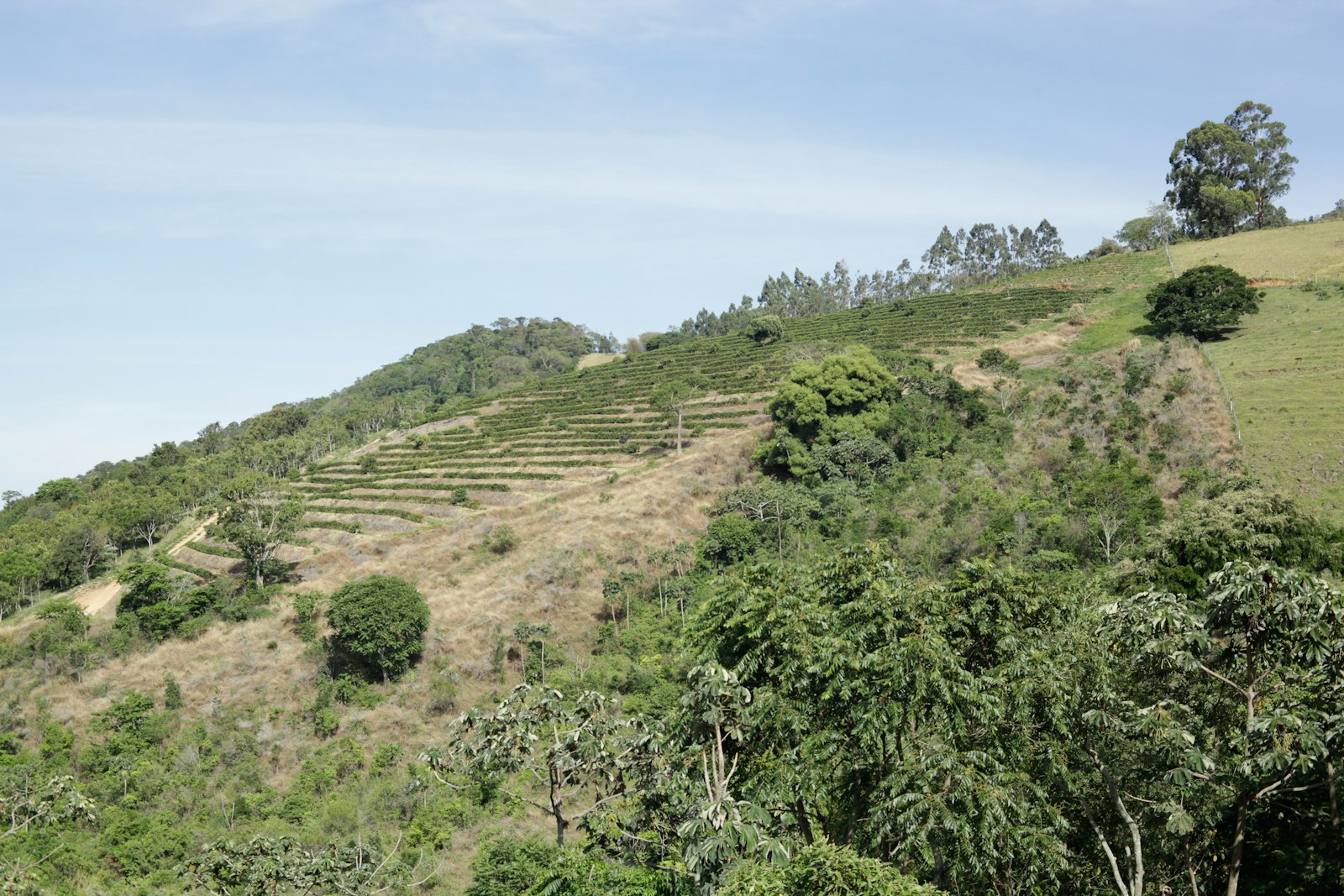
Ethiopia shows how fast this would have to happen. Coffee grows there today at 1,200 to 2,200 m. According to Moat and colleagues, growing would have to move up by around 32 m per decade to keep pace with warming. With timely planning, their calculation suggests the area could even grow.
Many of these higher areas are forested, though. Back in 2015, Bunn and colleagues pointed out that new suitable land in East Africa and Asia partly lies in forest. Clearing it would release greenhouse gases in its own right. For coffee sold into the EU, land deforested after 31 December 2020 is off limits.
Paraná 1975: how one frost redrew the coffee map
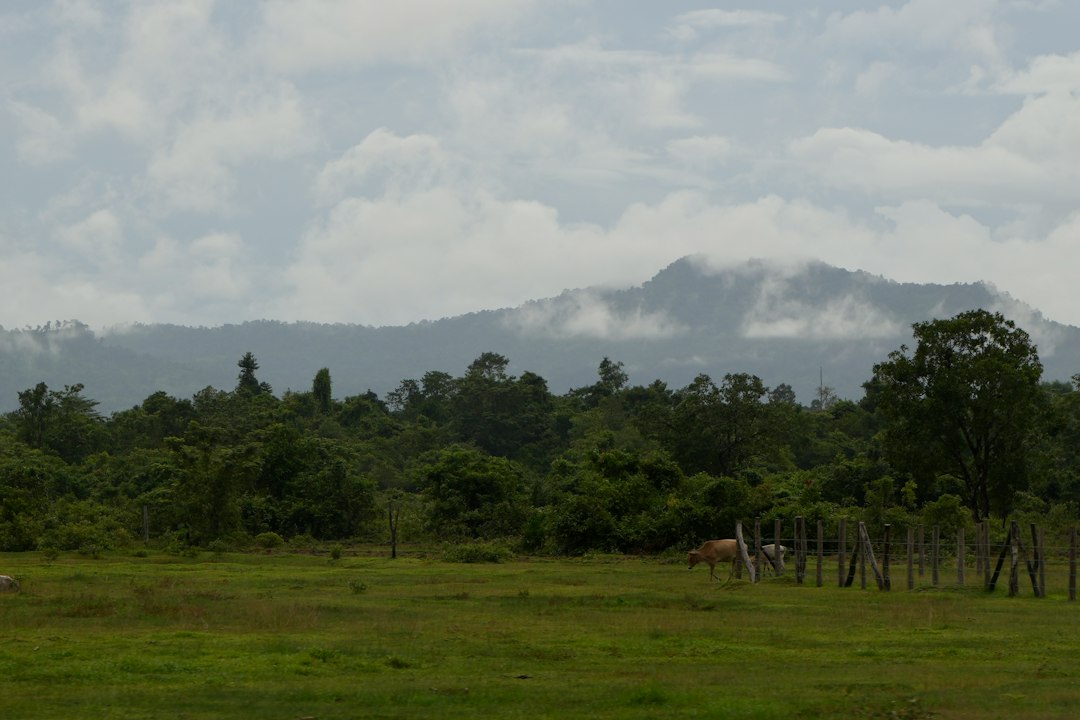
Brazil has already seen the climate shift where coffee is grown. In the 1960s and early 1970s, around 64 per cent of Brazilian coffee came from Paraná. That was about 21.3 million 60 kg bags a year.
The frost came on the night before 17 July 1975, known in Brazil as the Geada Negra (black frost). Around 60 per cent of the state’s 1.8 million hectares of coffee were destroyed. Many farmers then switched to soya, maize and beans. Coffee growing moved to Minas Gerais, Bahia and Mato Grosso.
Today Paraná harvests less than 1 million bags a year on just over 26,000 hectares. With milder winters, the models suggest southern Brazil could become more suitable again.
The situation in 2026: a record harvest, but El Niño looming
The US Department of Agriculture expects a record harvest of 189.7 million bags for 2026/27. Brazil is forecast to supply 71.9 million bags and Vietnam 32.5 million. That makes Vietnam the source of a good third of all robusta, more in Fine robusta from Vietnam.
The composite indicator of the International Coffee Organization (ICO) fell by 8.7 per cent in September 2026 to 262.18 US cents per pound. That is roughly €5.16 per kilo of green coffee (our conversion). The robusta indicator stood at 167.49 US cents, roughly €3.30 per kilo (our conversion).
| Country or region | Weather in 2026 | Source |
|---|---|---|
| Brazil | rain disrupted the harvest, September rain helped flowering, local heat at the end of September | ICO, September 2026 |
| Vietnam | too much rain and pests in parts of the highlands; 20 to 40 % less rain expected for the rainy season | Reuters, 19 October 2026; Vietnam’s weather service, 26 September 2026 |
| Honduras, Nicaragua | drought warnings, possibly less washed arabica | ICO, September 2026 |
| Indonesia | heavy rain disrupted flowering and fruit set on Sumatra and Java | USDA, July 2026 |
The biggest risk is El Niño, a natural warming of the tropical Pacific. On 8 October 2026, the US weather agency NOAA reported a deviation of 2.1°C in the central Pacific. A strong to very strong event is considered likely until early 2027, possibly the strongest since 1950.
In Vietnam, the state weather service expects temperatures 1 to 2.5°C above normal. Water is likely to run short in the highlands from the end of 2026. Around 735,300 hectares of perennial crops such as coffee and pepper lie outside any irrigation network. According to Reuters, farmers fear a smaller 2027/28 harvest, but it cannot yet be quantified.
Adaptation: shade, new varieties and other coffee species
The models assume no countermeasures. On the farms, though, there are several levers. Shade trees soften heat and swings in temperature and humidity. Depending on the variety, they cost some yield; the studies are covered in Coffee under shade trees.
New varieties are the second lever. In a field trial in northern Vietnam at 780 m, tarpaulins kept around 35 per cent of the rain off five arabica varieties. Only the F1 hybrid Mundo Maya held its yield. The trial ran at one site, in shade and over around two harvest years.
The third lever is other coffee species. West African stenophylla grows wild at an annual mean of 24.9°C. According to the study, that is 6.2 to 6.8°C more than wild arabica and 1.9°C more than robusta. In a blind tasting, 81 per cent of experts took it for arabica. However, seed and harvests for trade do not exist yet; more in Coffea stenophylla.
Switching to robusta runs into similar heat limits. The authors of the 2022 study therefore consider adaptation on a global scale to be very uncertain.
There will still be coffee, but in different places and from different plants. Low, hot areas in Brazil, Vietnam and Central America will be hit hardest. How fast this happens depends on how much the Earth warms.
Last updated: 24 October 2026.
Sources
- Bunn, C.; Läderach, P.; Ovalle Rivera, O.; Kirschke, D., Climatic Change 129, 89-101: A bitter cup: climate change profile of global production of Arabica and Robusta coffee, online 2014, print issue March 2015.
- Grüter, R.; Trachsel, T.; Laube, P.; Jaisli, I., PLOS ONE 17(1): e0261976: Expected global suitability of coffee, cashew and avocado due to climate change, 26 January 2022.
- Phys.org (on Moat, J. et al., Nature Plants 3:17081): Climate imperils Ethiopia’s coffee output: study, June 2017.
- Kath, J.; Craparo, A.; Fong, Y. et al., Nature Food 3, 871-880: Vapour pressure deficit determines critical thresholds for global coffee production under climate change, 2022.
- Jarrod Kath, Scott Power, Daily Coffee News (from The Conversation): Global Warming Puts Arabica Coffee at Risk, and We’re Barreling Towards a Crucial Threshold, 17 October 2022.
- Alliance of Bioversity International and CIAT (on Kath, J. et al., Global Change Biology 26(6)): Not so robust: robusta coffee more sensitive to warming than previously thought, 29 June 2020.
- Davis, A. P. et al., Nature Plants 7, 413-418: Arabica-like flavour in a heat-tolerant wild coffee species, 19 April 2021.
- Climate Central: More coffee-harming heat due to carbon pollution, 18 February 2026.
- Célio Yano, Gazeta do Povo: Paraná aposta em qualidade para resgatar cafeicultura devastada pela Geada Negra de 1975 (in Portuguese), 15 May 2026.
- USDA Foreign Agricultural Service: Coffee: World Markets and Trade, 2 July 2026.
- International Coffee Organization: Coffee Market Report, September 2026, October 2026, accessed 25 October 2026.
- NOAA Climate Prediction Center: ENSO Diagnostic Discussion, 8 October 2026.
- Viet Nam News (National Centre for Hydro-Meteorological Forecasting): Việt Nam braces for long, uncertain El Niño, 26 September 2026.
- Reuters, via The Star: Vietnam coffee output forecast flat; El Niño threatens next crop, 19 October 2026.
- Sarzynski, T. et al., Frontiers in Plant Science 15:1443900: Contrasted agronomical and physiological responses of five Coffea arabica genotypes under soil water deficit in field conditions, 8 October 2024.
- European Central Bank: Euro foreign exchange reference rates, 22 October 2026.