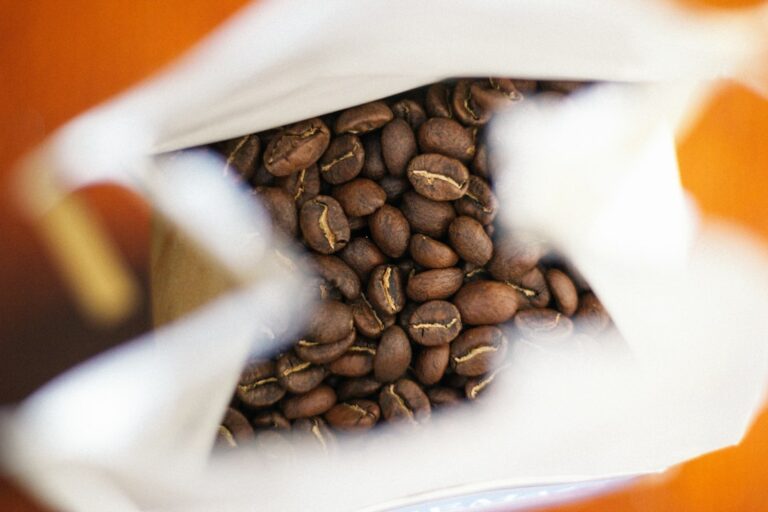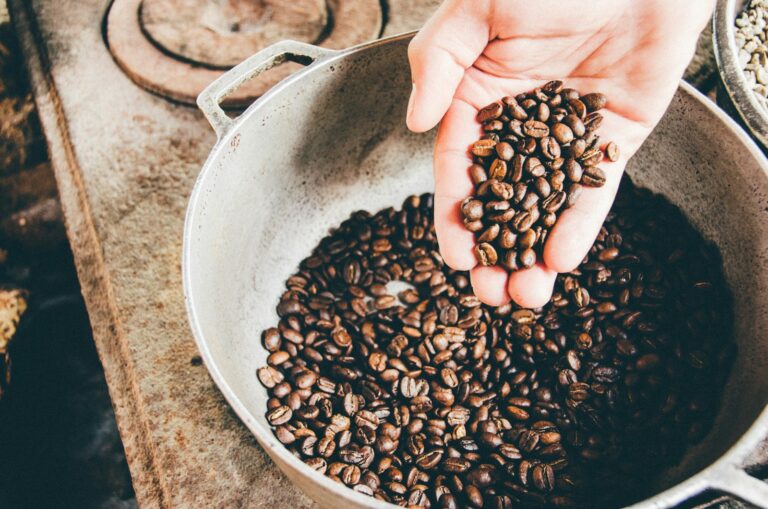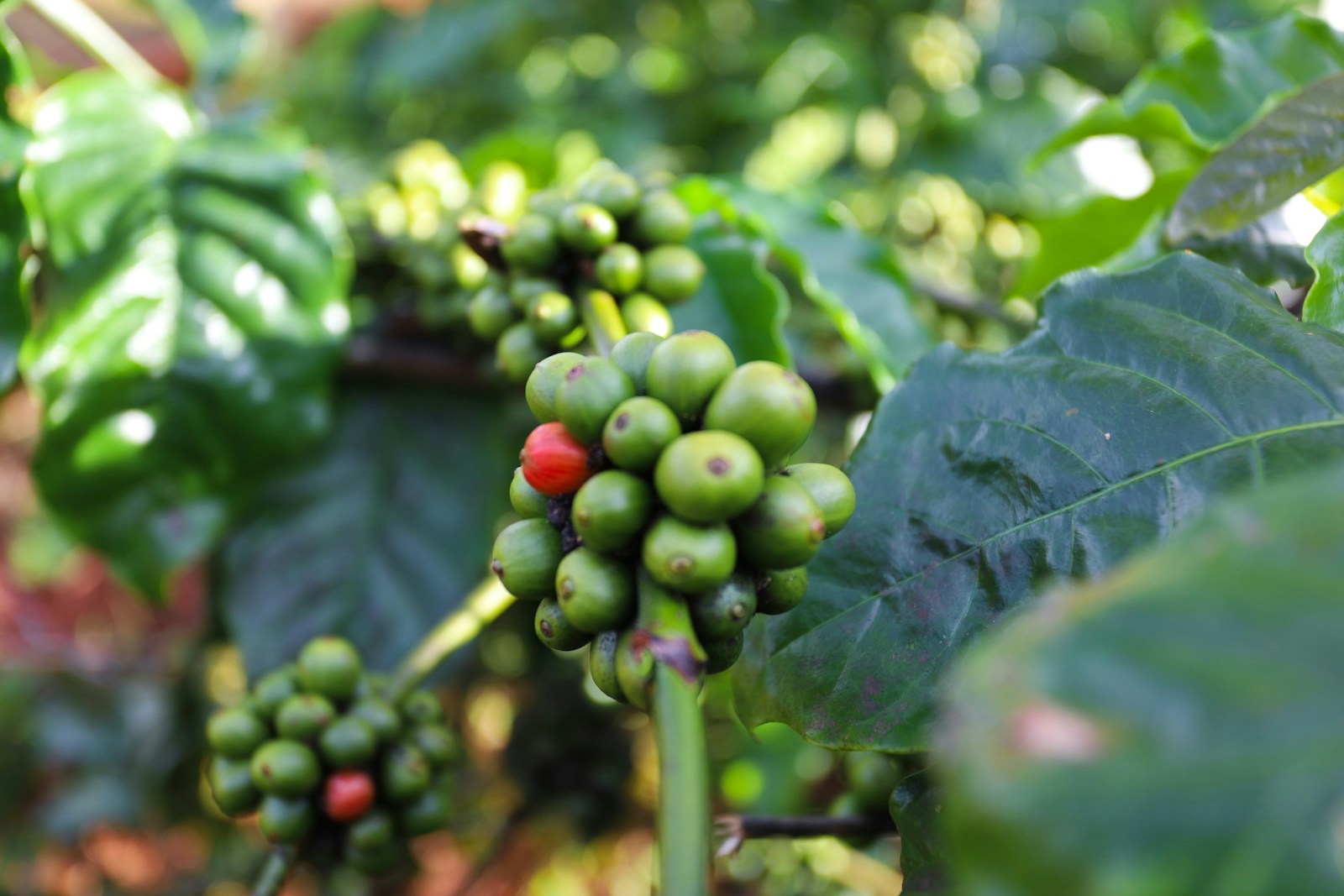
Yes, a carefully harvested and dried Robusta can taste really good. Vietnam produces such fine Robustas, but so far only in small quantities.Scoring by points, Vietnam’s role in the world market, harvesting and drying, and prices in euros.
You probably know Robusta as the cheap share in a supermarket blend. It has a reputation for being bitter, earthy and above all strong. Then, at a tasting, someone hands you a cup that tastes of cocoa, raisins and clove. It is rounded and barely bitter. At the end you learn that it was a Robusta from the Vietnamese highlands.
Cups like that are no accident. Robusta has its own points-based scoring system, and good lots are called fine Robusta. The basics on both species are in Arabica or Robusta.
Fine Robusta: 80 points and up on its own protocol
With Arabica, coffee scoring 80 points or more at cupping counts as specialty. For a long time these forms were a poor fit for Robusta. So in 2010 the US-based Coffee Quality Institute (CQI) and Uganda’s coffee authority introduced their own cupping rules. According to the CQI, the two published the first comprehensive guide to fine Robusta in 2014.
Here too the threshold is 80 points. Only trained Q Robusta Graders may score. The course lasts a week and ends with 20 sensory exams. That is how a Swiss roaster who passed it in 2019 describes it.
| Points | Grade |
|---|---|
| 90 to 100 | Outstanding |
| 80 to 90 | Fine |
| 70 to 80 | Premium |
| below 70 | usual quality down to commercial grade |
The form differs from the Arabica sheet. Instead of acidity alone, it scores the balance of salt and acidity. Robusta contains more potassium and so tastes slightly salty, which costs points. Instead of sweetness, the sheet lists the balance of bitterness and sweetness. Less bitterness is rewarded, and so is a round, smooth body.
Since 1 October 2025 the Specialty Coffee Association (SCA) has run the CQI’s Q programme, including Robusta. Future licences are to be based on its Coffee Value Assessment, or CVA for short. These are cupping forms the SCA has been introducing since 2023. When we researched this article, no finished CVA protocol for Robusta had been published.
Vietnam: just over a third of the Robusta on the world market
Vietnam is by far the largest Robusta producer. The US Department of Agriculture (USDA) expects a 2026/27 crop of 32.5 million 60 kg bags. Of these, 31.4 million bags are Robusta and only 1.1 million bags Arabica. Worldwide the USDA expects around 84 million bags of Robusta, so Vietnam supplies around 37 per cent (our calculation).
| Vietnam according to the USDA | 2025/26 | 2026/27 (forecast) |
|---|---|---|
| Total crop | 31.7 million bags | 32.5 million bags |
| of which Robusta | 30.5 million bags | 31.4 million bags |
| of which Arabica | 1.2 million bags | 1.1 million bags |
| Robusta harvested area | 630,200 ha | 644,000 ha |
| Exports | 28.5 million bags | 28.95 million bags |
The International Coffee Organization (ICO) estimates the 2025/26 world crop at 183.6 million bags, 79.2 million of them Robusta. In August 2026, according to the ICO, Vietnam exported 1.78 million bags of Robusta, 69.2 per cent more than a year earlier. The new harvest has been getting under way in the highlands since October.
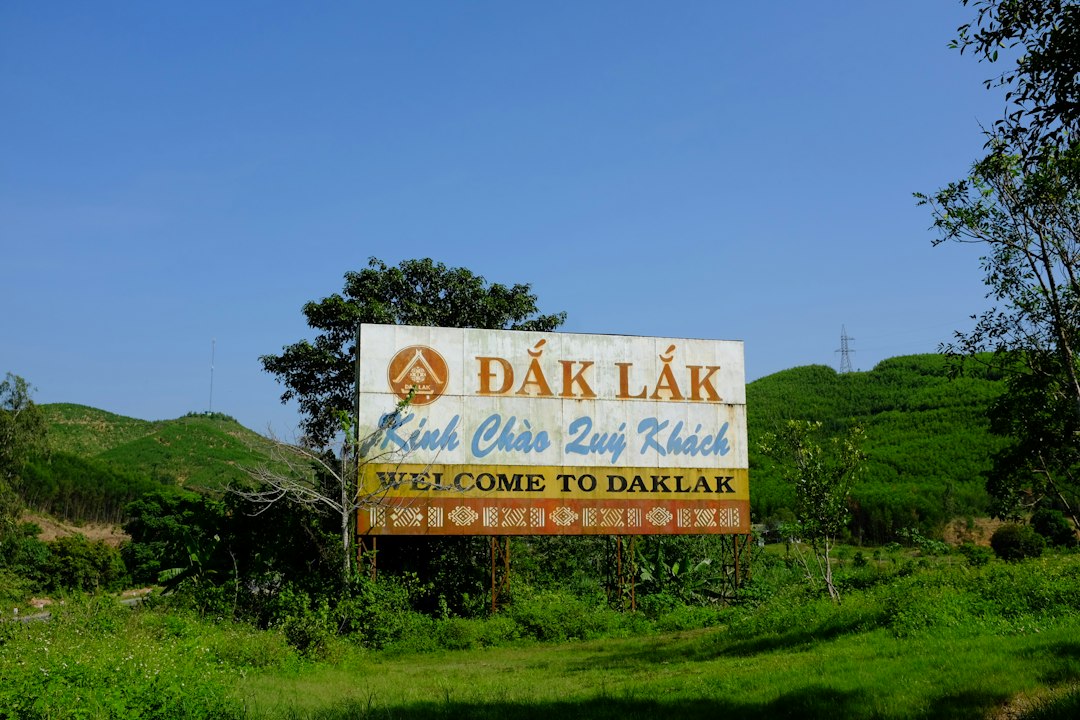
Most of it grows around Buôn Ma Thuột in Đắk Lắk province, at 500 to 800 metres. After the country opened up in 1986, the crop rose from 18,400 tonnes to over 1.9 million tonnes. There is a separate article on growing coffee with shade trees.
Harvesting and drying: where the difference is made
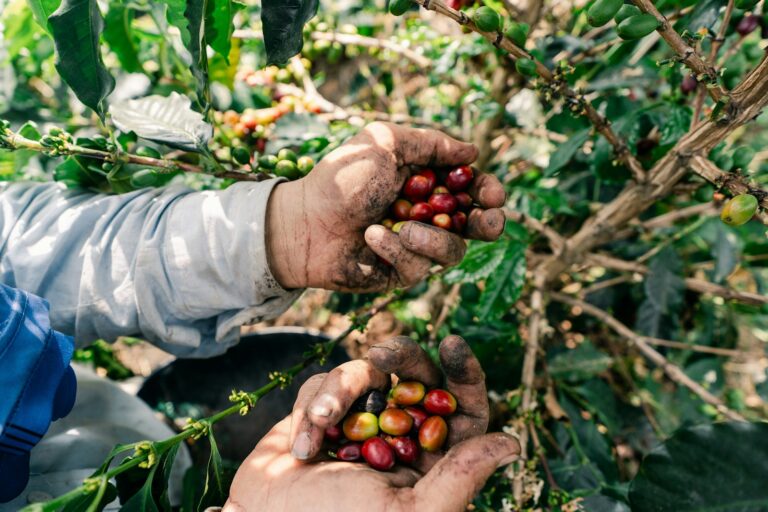
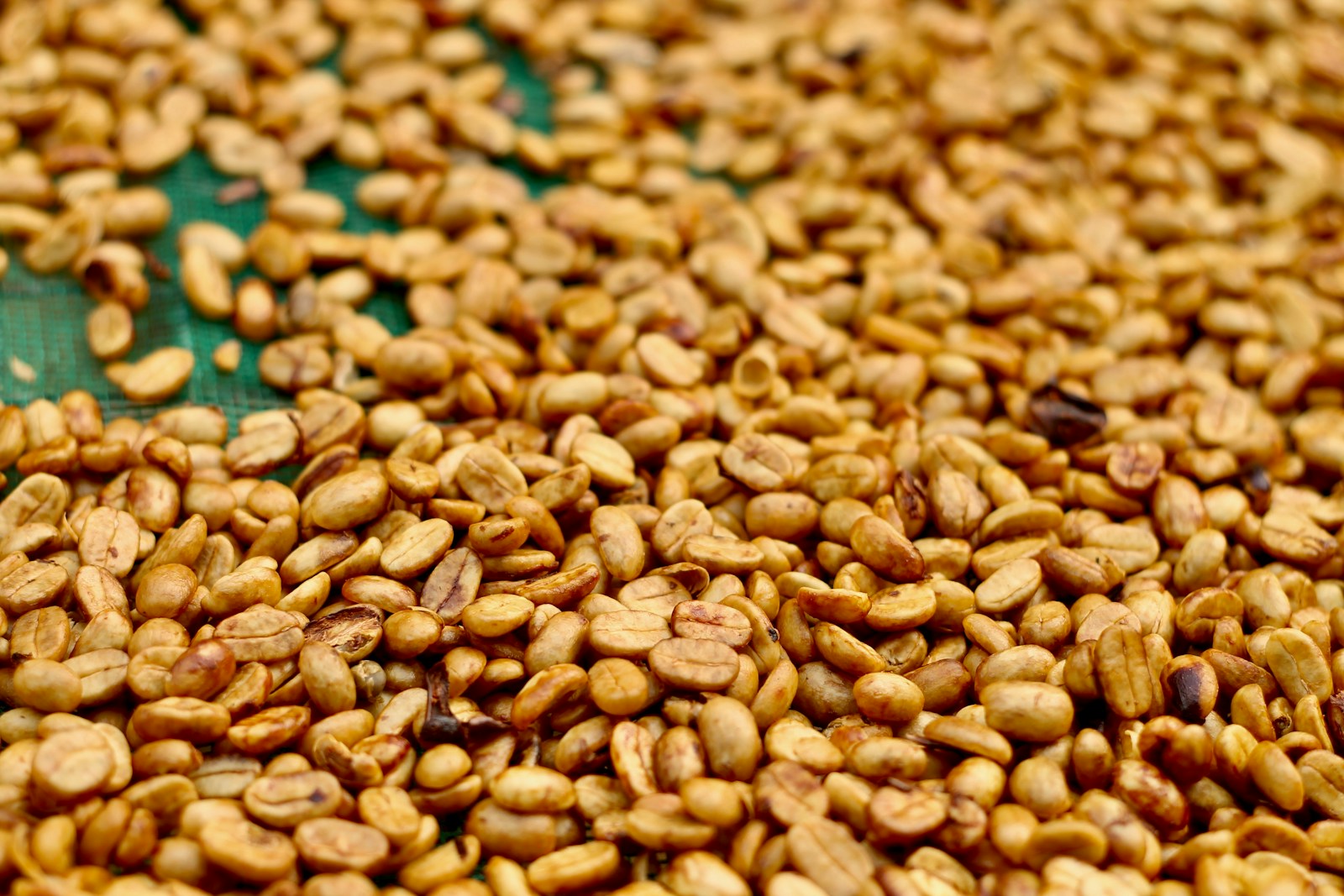
Harvesting and drying make the biggest difference between standard Robusta and fine Robusta. In Vietnam, conventional Robusta is usually harvested in a single pass. Unripe and damaged cherries go into the sack too, and drying often happens on the ground.
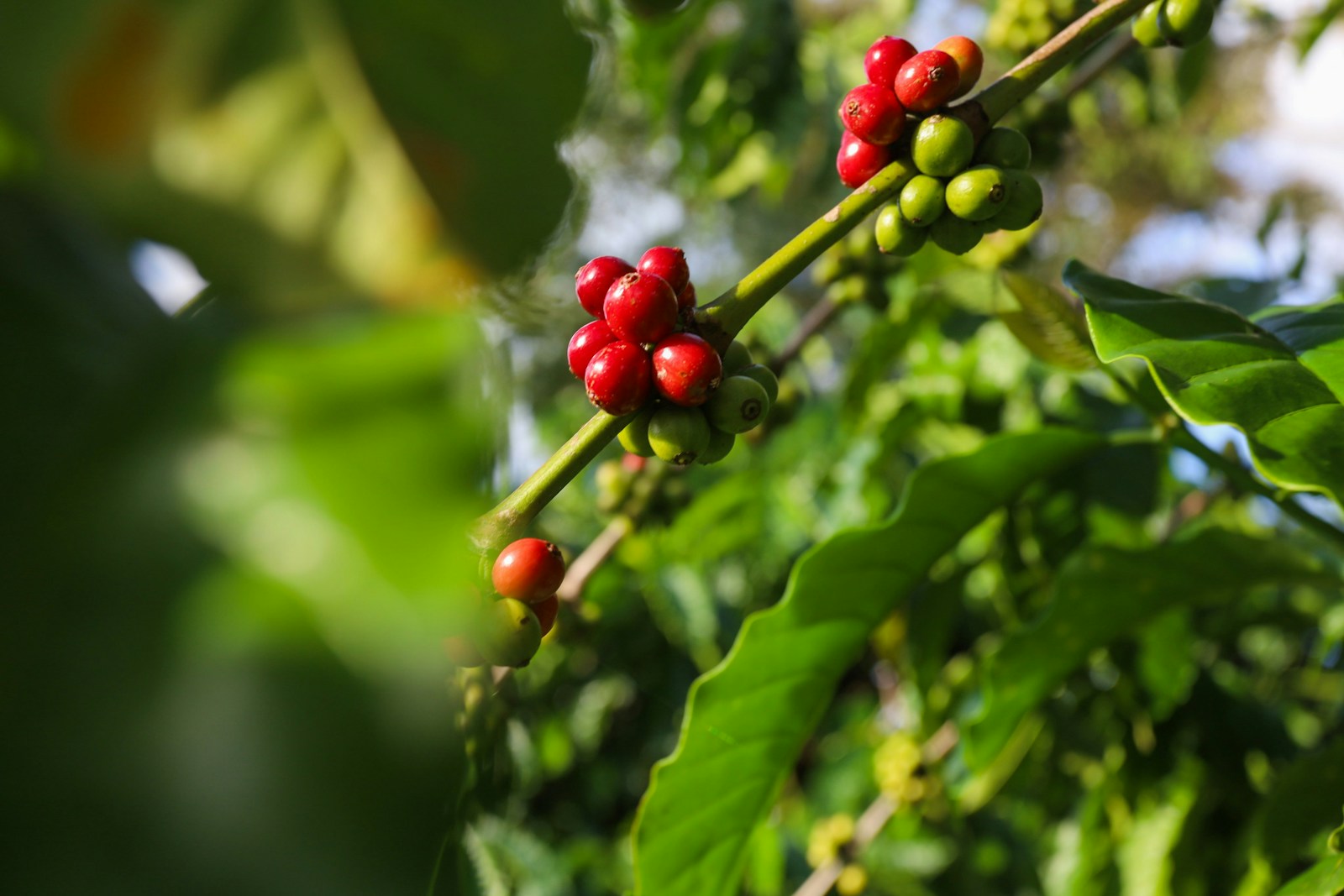
Farms in the highlands take a different approach for fine Robusta. One farm south of Buôn Ma Thuột picks by hand in several passes, taking only ripe cherries each time. It dries the coffee on tarpaulins in the sun, turns it every 30 minutes and brings it in during the afternoon. This costs yield, but the owner calls the quality incomparable.
| Step | Standard Robusta | Fine Robusta |
|---|---|---|
| Harvest | one pass, ripe and unripe mixed | several passes, only ripe cherries |
| Drying | often on the ground | on tarpaulins or raised beds, turned frequently |
| Sale | at the daily price | usually freely negotiated, often via competitions |
Processing also shapes the flavour, with Robusta as with Arabica. What the three usual methods do to the flavour is explained in Processing: washed, natural and honey.
Flavour: cocoa and clove instead of rubber and hay
A fine Robusta does not taste like a light Arabica from Ethiopia. The Swiss Q Robusta Grader names cocoa, chocolate, caramel, nuts, raisins, clove, pepper and cedarwood as good notes. Weak lots taste of grass, hay, grain, potato or rubber. For him, good Robustas stand out for their clarity and a long aftertaste.
Some of the bitterness is inherent in the species. Robusta contains more chlorogenic acids and, at 1.5 to 2.5 per cent, around twice as much caffeine as Arabica.
Genetics also sets limits. In 2024 Belgian researchers cupped Robusta from 70 plants from the Congo using the fine Robusta protocol. Scores ranged from 75.75 to 84.75 points, and no plant reached 85. Fruity and sweet notes raised the score, while green and roasty notes lowered it.
Competitions: what Vietnam’s best Robustas achieve
Since 2019 the Buôn Ma Thuột coffee association has run the Vietnam Amazing Cup. The eighth edition in April 2026 drew 182 samples from 81 producers in seven provinces. Scoring followed SCA and CQI protocols. The two best Robustas, both from Lâm Đồng, scored 85.94 points each, and the best Arabica 85.3.
151 samples, or 83 per cent, met the specialty threshold. The volume entered was 348 tonnes, 262 tonnes of it Robusta. Measured against a crop of almost 2 million tonnes, that is very little (our calculation).
There is no official figure for the volume of specialty coffee in Vietnam. A plan by the agriculture ministry targets around 19,000 hectares and 11,000 tonnes by 2030. That would be about 3 per cent of the area and just over 0.5 per cent of today’s crop (our calculation). The coffee association VICOFA has asked the SCA for help with a national standard for specialty Robusta.
Prices: daily price, exchange and auction
In the highlands, standard Robusta trades at a daily price that follows the London exchange. On 20 October 2026 traders in Đắk Lắk paid 93,000 dong per kilo of green coffee. That is roughly €3.20, and so even slightly more than the London price. In early October Robusta in London still stood at 3,469 US dollars per tonne, roughly €3.10 per kilo.
| Price | Date | Quotation | per kg, roughly (our conversion) |
|---|---|---|---|
| Green coffee in the highlands, Đắk Lắk | 20 October 2026 | 93,000 dong/kg | €3.20 |
| Robusta London, November 2026 | 20 October 2026 | $3,414/t | €3.05 |
| ICO Robusta indicator | monthly average, September 2026 | 167.49 US cents/lb | €3.30 |
| Arabica New York, December 2026 (for comparison) | 20 October 2026 | 305.60 US cents/lb | €6.00 |
| Competition Robusta, Hanoi auction, round 1 | August 2024 | 350,000 dong/kg ($14) | €12.50 |
| Competition Robusta, Hanoi auction, round 2 | August 2024 | 610,000 dong/kg ($24.40) | €21.80 |
At an auction in Hanoi in August 2024, a Robusta from a cooperative in Đắk Lắk first fetched 350,000 dong per kilo. In a second round, a buyer from Poland bid 610,000 dong. The usual buying price at the time was around 119,000 dong. So the bids were just under three times and around five times that (our calculation).
Prices like these apply to a few sacks. For most farmers the daily price remains decisive. Why good coffee still costs much more in the shop than the raw material is explained in Why specialty coffee costs so much.
Vietnam mainly supplies Robusta for the mass market. Individual farms show, however, that the same species can score over 85 points with careful harvesting. If you are looking for a surprising cup like that, check the origin, processing and score on the bag.
Last updated: 24 October 2026.
Sources
- Coffee Quality Institute: Uganda, undated, accessed 24 October 2026.
- Isabelle Mani, Fresh Cup: How The Canephora Flavor Wheel Could Redefine How We Taste and Value Robusta Coffee, 20 June 2025.
- Benjamin Hohlmann, Kaffeemacher: Fine Robusta und Q Robusta Grading (in German), 30 November 2017, content updated, accessed 24 October 2026.
- Nick Brown, Daily Coffee News: The Specialty Coffee Association Is Taking Over the Q Grader Program, 25 April 2025.
- Daily Coffee News (based on the USDA FAS annual report on Vietnam): Vietnam Coffee Report: Production Rising for Third Straight Year, 24 June 2026.
- USDA Foreign Agricultural Service: Coffee: World Markets and Trade, 2 July 2026.
- International Coffee Organization: Coffee Market Report, September 2026, October 2026, accessed 24 October 2026.
- Jenny Gustafsson, Al Jazeera: Coffee’s in danger: Can Vietnam’s Robusta save it from climate change?, 17 March 2024.
- Bollen, R. et al., Frontiers in Sustainable Food Systems 8: Sensory profiles of Robusta coffee (Coffea canephora) genetic resources from the Democratic Republic of the Congo, 2 May 2024.
- Bắc Ninh TV: Vietnam Amazing Cup 2026 reinforces quality benchmark for specialty coffee sector, 27 April 2026.
- Nguyễn Công Lý, Nhân Dân: Cà-phê Robusta và cà-phê đặc sản Việt Nam vươn ra toàn cầu (in Vietnamese), 2 January 2026.
- Báo Lào Cai: Giá cà phê hôm nay 20/10/2026: Tăng 200 đồng/kg, cao nhất 93.200 đồng (in Vietnamese), 20 October 2026.
- Uganda Coffee Development Authority: Daily Coffee Market Analysis Report, closing prices of 2 October 2026, 5 October 2026.
- The Investor: Vietnam specialty coffee fetches $48 per kg in highest bid, 19 August 2024.
- Người Quan Sát: Giá cà phê hôm nay 17/8 (in Vietnamese), 17 August 2024.
- OFX: USD to VND, interbank rate $1 = 25,784 dong, 21 October 2026.
- European Central Bank: Euro foreign exchange reference rates, 22 October 2026.