Coffee shelf prices fall only slightly and months later, because roasters buy green coffee in advance and it is just part of the shop price.Exchange prices and shop prices, the path from contract to shelf, a calculation for 500 grams and ways to save.
On the exchange, green coffee in autumn 2026 is much cheaper than a year ago. Arabica costs around a quarter less, Robusta almost a third less. In the supermarket you notice little of this. Many branded coffees cost as much as in spring, some more than two years ago.
This is not down to a single trick by retailers. Green coffee takes many months to reach the shelf, and on the way costs are added that do not fall with the exchange price. We have gathered the figures from the exchange, the Federal Statistical Office (Destatis) and Stiftung Warentest, Germany’s consumer testing organisation. Dollar prices are converted at the ECB rate of 22 October 2026, with €1 equal to 1.1205 US dollars.
Exchange and shop shelf: two curves that barely touch
Arabica is traded in New York, in US cents per pound. On 23 October 2026 a pound cost around 307 US cents, roughly €6.05 per kilo. That is around 24 % less than a year earlier. Robusta is quoted in London in US dollars per tonne. On 22 October 2026 it stood at 3,281 dollars, roughly €2.93 per kilo and around 29 % less than a year earlier.
The fall is already reaching imports. According to Destatis, imported green coffee was 11.3 % cheaper in August 2026 than a year earlier. In the shops it is a different picture. The coffee, tea and cocoa group cost only 3.3 % less in September 2026 than in the same month a year earlier.
| Stage | Latest figure | Change on previous year |
|---|---|---|
| Arabica, New York exchange | 23 October 2026, around 307 US cents/lb (around €6.05/kg) | around minus 24 % |
| Robusta, London exchange | 22 October 2026, 3,281 US dollars/t (around €2.93/kg) | around minus 29 % |
| Green coffee imported into Germany | August 2026 | minus 11.3 % |
| Coffee, tea and cocoa in the shops | September 2026 | minus 3.3 % |
| Consumer prices overall | September 2026 | plus 3.3 % |
The long view shows how high the level still is. According to Stiftung Warentest, coffee cost around 53 % more in June 2026 than at the start of 2020. It bases this on Destatis figures. A small fall from this level does not yet make coffee cheap.
From contract to shelf: at least nine months’ lead time
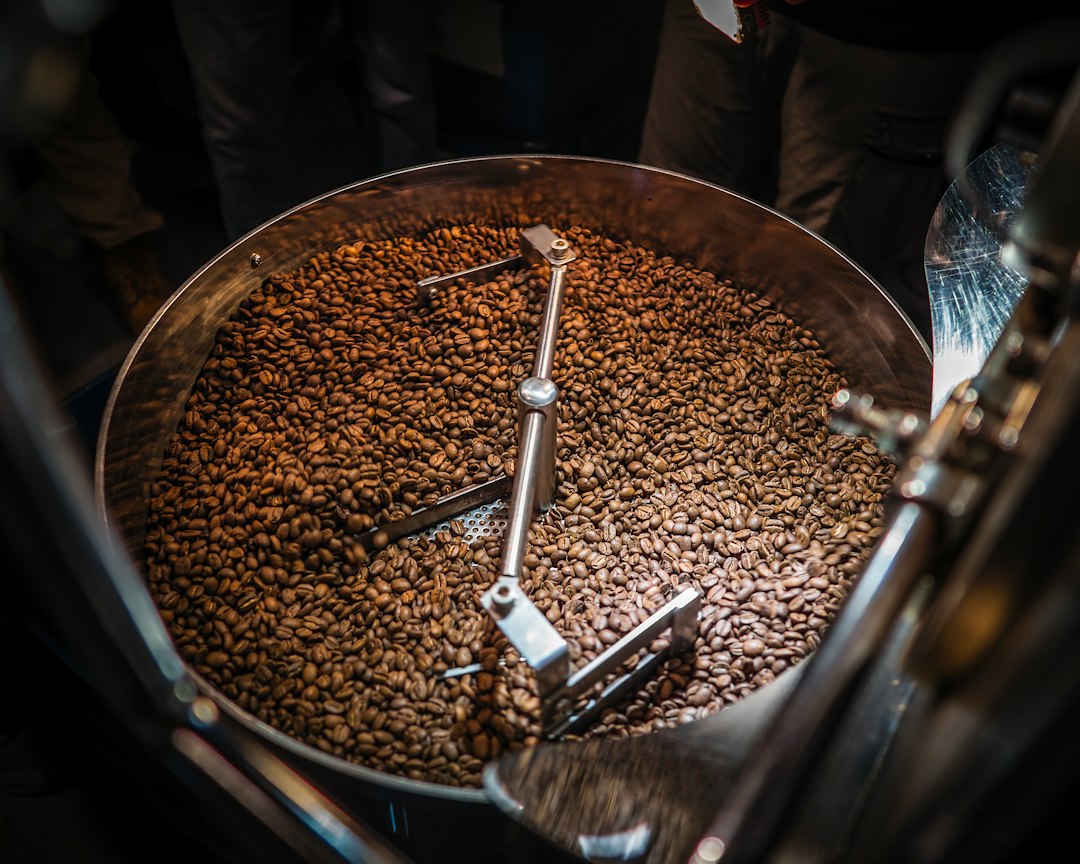
The price on the exchange is a price for coffee that will only be delivered later. Roasters usually buy their green coffee well in advance through supply contracts. Many also hedge the price with futures contracts. If the market then falls, they keep paying the old price for these goods.
After that the coffee needs time. It is loaded in the producing country, shipped, stored by the importer and only then roasted and packed. Price negotiations between manufacturers and retail chains also take place in fixed rounds. According to a Reuters report, industry insiders estimate that changes in green coffee prices take at least nine months to reach consumers.
A large Swiss food company described this itself in July 2026. The head of its coffee brands said it would take the price fall into account in future pricing decisions. How much, though, would depend on stock levels and the prices the company had paid for coffee already bought.
On top of this come costs that do not fall with green coffee at all. According to Destatis, imported energy was 43.0 % more expensive in August 2026 than a year earlier. The office cites the war in the Middle East as the main reason. Electricity for the roaster, freight, packaging and wages do not get cheaper just because Arabica falls.
How much green coffee counts in the price of a bag
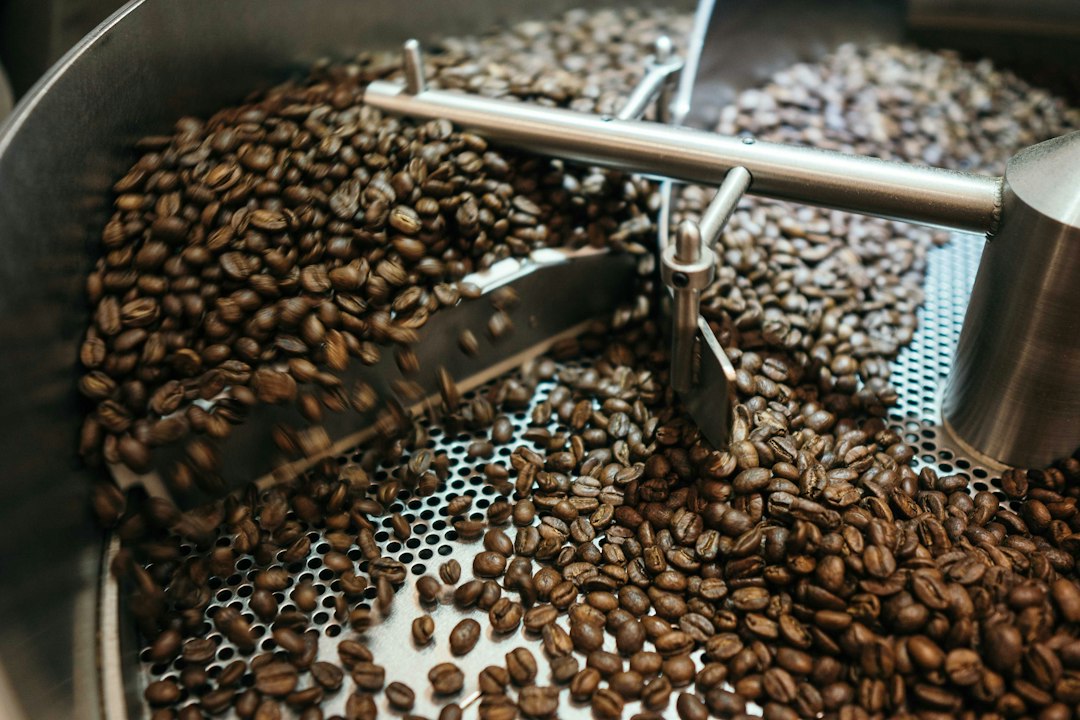
During roasting the beans lose 14 to 20 % of their weight, mainly water. So a roaster needs around 600 g of green coffee for 500 g of roasted coffee. In Germany there is also €2.19 coffee tax per kilo of roasted coffee, plus 7 % VAT. The coffee tax is based on weight and stays the same whatever the exchange price.
We calculated the most a 500 g bag could fall in price if the entire drop on the exchange were passed on. The basis is the October 2026 prices and the falls on the previous year, all at today’s exchange rate.
| Item for 500 g of roasted coffee (our calculation) | Amount |
|---|---|
| Arabica green coffee at the exchange price, around 600 g | around €3.63 |
| Robusta green coffee at the exchange price, around 600 g | around €1.76 |
| Coffee tax, €2.19 per kg | around €1.10 |
| Fall in Arabica over one year, with 7 % VAT | at most around €1.23 |
| Fall in Robusta over one year, with 7 % VAT | at most around €0.77 |
For a branded coffee at €8.99, the Arabica fall therefore equals at most around a seventh of the price. For a supermarket own brand at €4.49, it would be just over a quarter. Many cheap blends also contain Robusta, whose fall is smaller. The exchange price also applies to standard grades, and a roastery’s actual buying price may differ.
With specialty coffee the exchange plays an even smaller role, because it trades at negotiated prices well above it. How such a bag is made up is explained in Why specialty coffee costs so much. Why Robusta costs only around half as much as Arabica on the exchange is explained in Arabica or Robusta.
The buffer works in both directions
The long chain slows price cuts, but it has also softened increases. According to Destatis, imported green coffee was 53.1 % more expensive in April 2025 than a year earlier. Roasteries charged 43.3 % more for roasted coffee. Coffee beans in the shops, by contrast, cost only 12.2 % more.
| April 2025, change on the same month a year earlier | Value |
|---|---|
| Imported green coffee | plus 53.1 % |
| Producer price of roasted coffee, not decaffeinated | plus 43.3 % |
| Coffee beans in the shops | plus 12.2 % |
A study by the US Department of Agriculture reached a similar result back in 2007. If the green coffee price rose by 10 US cents per pound, only around 2 cents were passed on to customers in the same quarter. If the change persisted, it eventually reached the shops almost in full. The researchers found no evidence that increases are passed on faster than cuts.
The study covers the US market and is almost twenty years old. There is no comparable published analysis for Germany. The pattern does, however, fit today’s import and shop price figures.
Own brands first: where the cuts are already arriving
The own brands of discounters and supermarkets react fastest. In October 2025 large retailers cut their coffee prices by around 7 %. The next round followed in March 2026, and in May 2026 prices fell by a further 10 to 50 cents per bag. One discounter explicitly cited falling raw material prices as the reason.
| Ground own-brand coffee, 500 g | Price |
|---|---|
| 2023 | under €4 |
| October 2025 | from €5.49 |
| May 2026 | from €4.79 |
| End of June 2026, three own brands | €4.49 |
Branded coffee is slower. According to Stiftung Warentest, two roasted coffees from a large coffee chain cost €8.99 each per 500 g in August 2026. That is 22 % more than in 2024. Several brand manufacturers only gave recommended retail prices. Retailers set the shelf prices, and they often work with promotions.
The exchange price is an early signal, not a shop price. If green coffee stays cheaper for months, coffee on the shelf will gradually get cheaper too, starting with own brands. But the price of a bag will not fall by a quarter. Tax, roasting, energy and retail make up too large a part of it.
Last updated: 24 October 2026.
Sources
- Trading Economics: Coffee, Price, Chart, Historical Data (Arabica 307.45 US cents/lb, 23 October 2026), accessed 24 October 2026.
- wallstreet-online: Kaffee Robusta, ICE Futures Europe (3,281 US dollars/t, 22 October 2026) (in German), accessed 24 October 2026.
- European Central Bank: Euro foreign exchange reference rates, 22 October 2026.
- Federal Statistical Office (Destatis): Pressemitteilung Nr. 364: Inflationsrate im September 2026 (in German), 13 October 2026.
- Federal Statistical Office (Destatis): Pressemitteilung Nr. 344: Import- und Exportpreise im August 2026 (in German), 30 September 2026.
- top agrar (based on Destatis): Bohnenkaffee hat sich stark verteuert (in German), 3 June 2025.
- Stiftung Warentest: Kaffee-Preise: Mit diesen Marken können Sie jetzt sparen (in German), 12 August 2026.
- Lebensmittel Praxis: Discounter und Supermärkte senken Preise für Kaffee erneut (in German), 11 May 2026.
- Tageskarte (dpa): Kaffee wird wieder etwas günstiger (in German), 23 October 2025.
- ESM Magazine (Reuters): Nestlé Could Lower Coffee Prices As Bean Costs Fall, 2 July 2026.
- Leibtag, E.; Nakamura, A.; Nakamura, E.; Zerom, D., USDA Economic Research Service: Cost Pass-Through in the U.S. Coffee Industry (ERR-38), summary, March 2007.
- Barista Hustle: Knowledge article on weight loss during roasting, undated, accessed 24 October 2026.
- Research Services of the German Bundestag (Wissenschaftliche Dienste): Kaffeesteuer (WD 4, 140/18) (in German), 2018.
- Philipp Schallberger, Kaffeemacher: Die Kaffeesteuer (in German), 3 January 2024.