If you mainly drink espresso, a single boiler is enough. For daily milk drinks, choose a heat exchanger or dual boiler, and the dual boiler holds brew temperature most precisely.The four designs compared, heat-up time and temperature, electricity and prices, a decision guide.
Every espresso machine has to deliver two temperatures. According to a Swiss roastery, espresso needs water at 90 to 96°C. Steam for milk only forms in the boiler at 120 to 130°C. If the brew water is above 100°C, the espresso tastes bitter and sour. How a machine separates these two tasks defines its design.
Heat-up time, temperature, electricity and price all depend on it. The grinder, accessories and bean costs of switching are explained in From bean-to-cup machine to espresso machine.
Single boiler: one boiler for espresso and steam, one after the other
A single boiler machine has just one small boiler. It keeps the water at brew temperature. For milk foam, you press a button and the same boiler heats up to around 125°C. Afterwards, it has to cool down again before the next espresso works.
On a single boiler that the roastery tested in March 2026, it took around 60 seconds after the espresso to reach steam. Before the next shot, you then wait 1 to 2 minutes. On an older model, you cool the boiler by releasing steam and water.
Without electronic control, the temperature varies a lot. The tested machine only has a pressure switch and no PID control. Over five doubles pulled a minute apart, the brew temperature fell from 95.8 to 88.2°C. With a short flush before the first shot and a break of 1.5 to 2 minutes, all five were between 90.1 and 92.3°C.
A PID controller measures continuously and doses the heating power, instead of just switching on and off at one threshold. According to the roastery, single boilers can be retrofitted with one and then become very temperature-stable. Even so, it does not rate the single boiler as an ideal beginner’s machine, because you have to keep an eye on the temperature yourself.
Heat exchanger: a hot steam boiler with a heat exchange tube
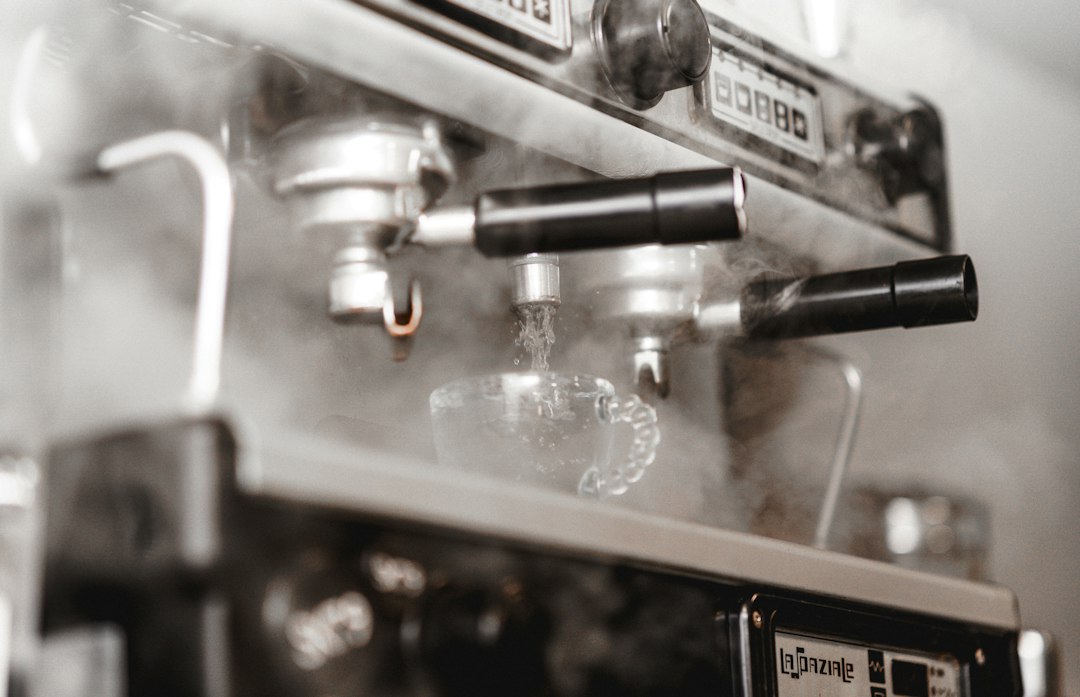
A heat exchanger machine also has only one boiler, but it runs at steam temperature all the time. A tube, the heat exchanger, runs through the boiler. Fresh water flows through it to the group head and warms up on the way. This lets you steam milk while the espresso is running.
Many heat exchangers have an E61 group head. An Italian manufacturer launched it in 1961 and named it after the total solar eclipse of that year. Two pipes connect the boiler and the group, and hot water circulates through them without a pump. This thermosiphon keeps the chrome-plated brass group warm, which usually weighs over 4 kg.
This mass takes time. The roastery gives 20 to 30 minutes of heat-up time for E61 machines, with 25 minutes as a guide value. A current heat exchanger reached full temperature after 24 minutes in a 2026 test.
If the machine stands idle for a while, the water in the tube overheats. You let it run through briefly before the shot, for 2 to 3 seconds on E61 machines. With many shots in a row, on the other hand, the brew water cools down. In the test, the temperature fell from 94.8 to 86.7°C over five shots. With a break of 2 to 3 minutes, the drop was smaller.
On a heat exchanger, you only set the brew temperature indirectly. A PID controller regulates the boiler temperature, and that changes the brew water and steam pressure at the same time. According to the roastery, steam power drops slightly after two to six jugs of milk. That is not enough for parties with lots of guests.
Dual boiler: two boilers with their own control
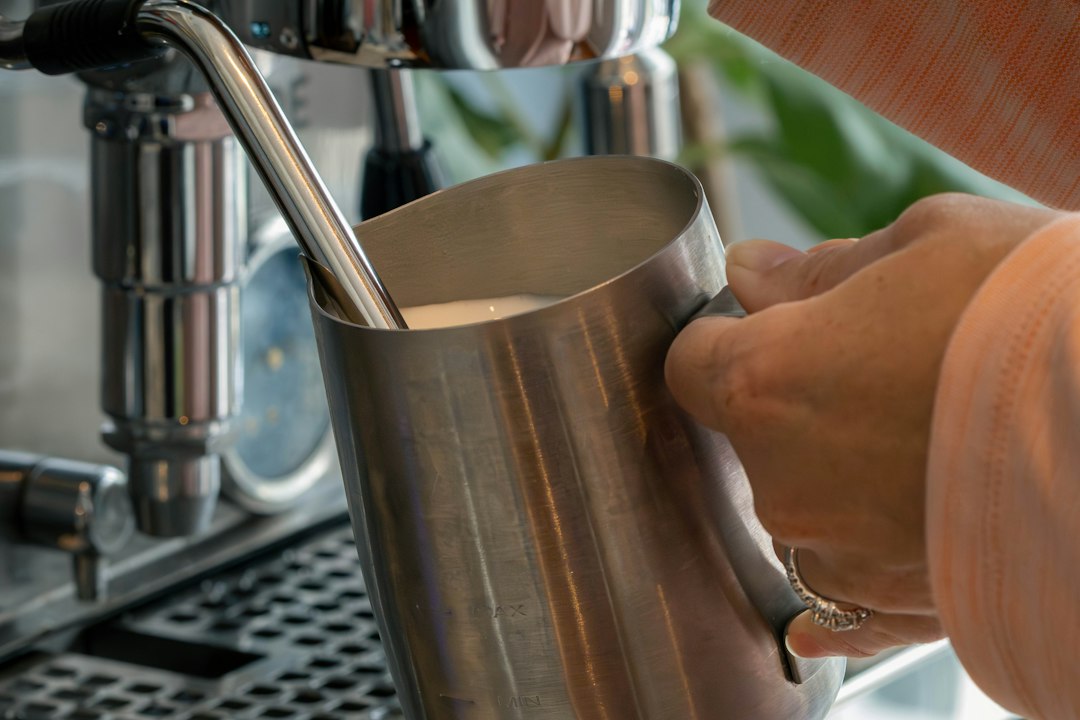
The dual boiler separates the two tasks completely. A steam boiler works at 120 to 130°C, while a separate brew boiler holds 90 to 96°C. According to the roastery, a PID controller sets the brew boiler to within a tenth of a degree. A Florentine manufacturer filed a patent for the principle for café machines in 1970.
Because the brew boiler is fed with preheated water, the temperature stays the same from shot to shot. You don’t need a cooling flush as with a heat exchanger. You set the brew temperature and steam pressure separately. On many models, you can switch off the steam boiler if you only drink espresso, which saves electricity.
A dual boiler does not automatically mean PID control and a quiet rotary pump, so check the data sheet. A large brew boiler takes longer to heat up and only pays off if you make lots of drinks. On one inexpensive dual boiler in the tests, the steam boiler always has to run because it preheats the brew water.
Heat-up time depends mainly on the mass that has to warm up. The cheapest dual boiler tested, with a small brew boiler, was ready after 8 minutes, plus a flush. Another dual boiler, which the roastery names in 2026 as an alternative to the tested heat exchanger, needs 17 minutes.
Thermoblock: the boilerless special case
A thermoblock works like an instant water heater. The water flows through a pipe in a heated aluminium block. According to the roastery, it is ready quickly, scales up less and is inexpensive. But the temperature depends on flow rate, water volume and block size.
With many shots in a row, the block cools down. With a very fine grind, on the other hand, the water flows so slowly that it rises above the target value. Many machines lack the steam pressure to foam milk, and the foam turns out wet. There are now machines with two blocks, one for espresso and one for steam.
In the roastery’s long-term test of over 20 thermoblock machines, the best twin-block machine held the brew temperature to within 0.75°C. Others varied by up to 7.6°C or even 15°C.
Heat-up time, electricity and price compared
The prices come from different years, so each one is shown with its date.
| Design | ready after | Milk and espresso | Prices with date |
|---|---|---|---|
| Thermoblock | 3 to 10 minutes, 2 to 4 minutes with thick-film heating | one after the other, steam often weak | budget up to €500 (2019 recommendation) |
| Single boiler | boiler machines usually 20 to 30 minutes, small brass boiler in the test just under 16 minutes | one after the other, with waiting time | budget up to €1,000 (2019 recommendation), tested machine €480 (March 2026), €448.99 in a shop (24 October 2026) |
| Heat exchanger | around 25 minutes, 24 minutes in the test | at the same time | tested machine €1,699 (recommended retail price, March 2026) |
| Dual boiler | 8 minutes for the cheapest machine tested, 17 minutes for another | at the same time and independently adjustable | cheapest tested from around €999 (August 2026) |
The small single boiler in the test warmed up faster than an E61 machine. But after 15 minutes, its portafilter had only reached 65 to 70°C. A cold portafilter cools the first espresso, even if the water is already hot.
For electricity, what counts most is how long the machine stays hot and ready. We converted the costs at 37.0 cents per kWh, the 2026 average for households according to the German energy industry association BDEW.
| Roastery measurement | Consumption | Cost at 37 cents/kWh |
|---|---|---|
| Thermoblock: heat-up and 5 espressos without steam | 0.08 to 0.09 kWh | around 3 cents |
| Single boiler: heat-up and 1 double espresso | 0.067 kWh | around 2.5 cents |
| Heat exchanger: heat-up and 1 espresso (2026 test) | 0.266 kWh | around 10 cents |
| Heat exchanger: 25 minutes heat-up and 5 espressos | 0.24 to 0.36 kWh | around 9 to 13 cents |
| Heat exchanger: 4 hours ready, with cleaning | 0.68 to 1.06 kWh | around 25 to 39 cents |
If a heat exchanger stands ready for four hours every day, that adds up to around €90 to €140 a year. According to the roastery, boiler machines typically use 0.2 to 0.5 kWh for heat-up and shots. In the tests we reviewed, we found no consumption figures in kilowatt hours for dual boilers. Since 2015, new household coffee machines in the EU must switch to standby or off no later than 30 minutes after the last shot.
Which design suits you: by drink and daily routine
The most important question is how often you steam milk. For straight espresso, a thermoblock or a single boiler with PID control is enough. For several cappuccinos in the morning, the roastery names only heat exchangers and dual boilers as suitable. It recommends the dual boiler if you need maximum consistency or often make drinks for guests.
| Your routine | suitable design | what to watch |
|---|---|---|
| 1 to 2 espressos a day, hardly any milk | Thermoblock or single boiler with PID | flush a single boiler without PID and take breaks |
| Espresso and the occasional cappuccino | Single boiler | wait 1 to 2 minutes after steaming |
| several milk drinks every day | Heat exchanger or dual boiler | cooling flush on a heat exchanger, around 25 minutes heat-up |
| light roasts, often changing beans | Dual boiler | check PID and boiler size in the data sheet |
| little time in the morning | Thermoblock or dual boiler with a small brew boiler | timer switch for boiler machines |
A precise brew temperature helps above all if you switch between roasts. As starting values, the roastery gives 90 to 93°C for dark and 92 to 94°C for medium-light roasts. For light roasts, it is 93 to 96°C. The values come from a small internal experiment and are not a fixed standard. Dark roasts dissolve more easily and quickly taste burnt at high temperatures.
The machine is only one part. The roastery advises setting aside at least a quarter, better a third, of the budget for the grinder. Which burrs work for espresso is compared in Flat or conical burrs. Even the most precise control does not replace dialling in grind size and shot time.
Boiler machines scale up over time, the thermoblock less so according to the roastery. How to assess your tap water and soften hard water is shown in Which water for coffee.
If you steam milk for several cups every day, a heat exchanger is the proven choice. A dual boiler pays off if you actually use the separate control of brew water and steam.
Last updated: 24 October 2026.
Sources
- Benjamin Hohlmann, Kaffeemacher: Welche Espressomaschine passt zu mir? (in German), 23 June 2019.
- Benjamin Hohlmann, Kaffeemacher: Faema E61 Brühgruppe (in German), 4 March 2023.
- La Marzocco: Our History, accessed 24 October 2026.
- Benjamin Hohlmann, Kaffeemacher: Rancilio Silvia (in German), 19 June 2019.
- Benjamin Hohlmann, Kaffeemacher: Gaggia Classic Evo Pro E24 im Test (in German), 7 March 2026.
- Benjamin Hohlmann, Kaffeemacher: Lelit Mara X3 im Test 2026: Flow Control für 1.699 Euro (in German), 16 May 2026.
- Michel Aeschbacher, Benjamin Hohlmann, Kaffeemacher: Zweikreiser-Espressomaschinen im Vergleich (in German), 5 December 2020.
- Benjamin Hohlmann, Kaffeemacher: Sage Dual Boiler in the test: dual boiler from €999, 30 March 2023, market price 11 August 2026.
- Benjamin Hohlmann, Kaffeemacher: Thermoblock-Siebträger im Test (in German), 19 December 2020, as of August 2026.
- Philipp Schallberger, Kaffeemacher: Espresso-Temperatur (in German), 9 May 2020.
- MediaMarkt (shop): Gaggia RI9481/11 Classic Evo Siebträgermaschine (448,99 €) (in German), accessed 24 October 2026.
- BDEW Bundesverband der Energie- und Wasserwirtschaft: BDEW-Strompreisanalyse August 2026 (in German), August 2026.
- eceee: Regulation 801/2013: Non-tertiary coffee machines (Lot 25), accessed 24 October 2026.