A good specialty café shows itself at a glance: a menu with origin and roastery, scales at the machine and a clean steam wand.A checklist with ten signs, grinders and milk at the counter, questions for the barista and cappuccino prices in 2026.
‘Specialty coffee’ is written on a lot of doors these days. It means green coffee that scores well in a tasting under the system of the SCA trade association and whose origin can be traced. As a customer, you almost never see this score.
What you can see is how a café treats its coffee. That starts with the board above the counter and ends with the milk foam in your cup. You can spot most of the signs in the queue before you have even ordered.
The checklist: ten signs for your first visit
No café has to meet all ten points. A small café may not have a second grinder, a roastery café may not serve batch brew. The more points apply, the more likely the team takes its coffee seriously.
| Sign | What you see | Why it matters |
|---|---|---|
| Origin on the menu | country and region, often also farm, variety and process | traceability is part of the definition of specialty coffee |
| Named roastery | its own roaster or the name of the roastery on the board and bags | the café knows where its coffee comes from and stands behind it |
| Roast date | roast date on the retail bags, not just a best-before date | beans taste best about 1 to 4 weeks after roasting |
| One grinder per coffee | several grinders, labelled for example house espresso, guest coffee, decaf | each coffee stays dialled in, nothing has to be changed during service |
| Freshly ground | the grinder grinds straight into the portafilter for every shot | ground coffee loses its aroma within minutes |
| Scales at the portafilter | scales under the cup or next to the grinder | dose and yield are weighed, so every espresso is the same |
| Clean bar | steam wand wiped after every milk, portafilter dry and empty | you can taste dried-on milk and old coffee grounds |
| Filter coffee | pour-over or batch brew on the menu | without milk, it shows how good the coffee and roast are |
| Milk foam | glossy, fine-textured surface, cup ready to drink straight away | milk above around 70°C tastes cooked and loses sweetness |
| Barista happy to explain | clear answers about origin and flavour, without jargon | the team knows its coffees and helps you choose |
You cannot rely on any single sign. Only several points together give you a picture. In the end, though, the cup decides.
Menu and beans: origin, roastery and roast date
If the board only says espresso, cappuccino and latte, you have no idea which coffee is in the grinder. A specialty café names at least the country and region. Often the farm or cooperative, variety, process and harvest year are added. The Deutscher Kaffeeverband (German Coffee Association) explicitly names traceability as a hallmark of specialty coffee.
Many cafés use a blend for espresso, alongside a changing single-origin coffee. According to the Kaffeeverband, the origin of a blend is usually harder to trace. That does not make it a bad sign. A good menu still tells you what the blend is made of.
Coffee should come with a named roastery. Some cafés roast their own, others work with a regular partner roastery. Both are fine, as long as you find out who roasted the coffee.
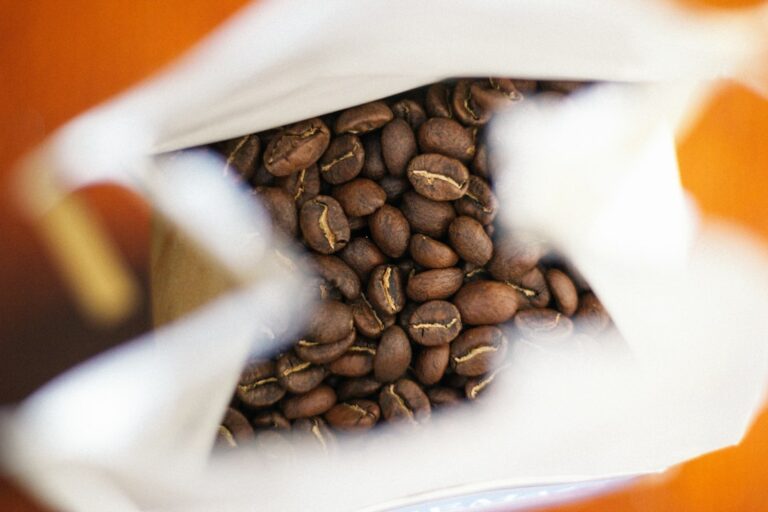
If the café sells beans, look at the bag. Specialty roasteries print the roast date, not just a best-before date. The SCA gives one to four weeks after roasting as a typical freshness window. So a date from two weeks ago is not a flaw. There is more in Keeping coffee fresh.
At the counter: grinders, scales and a clean bar
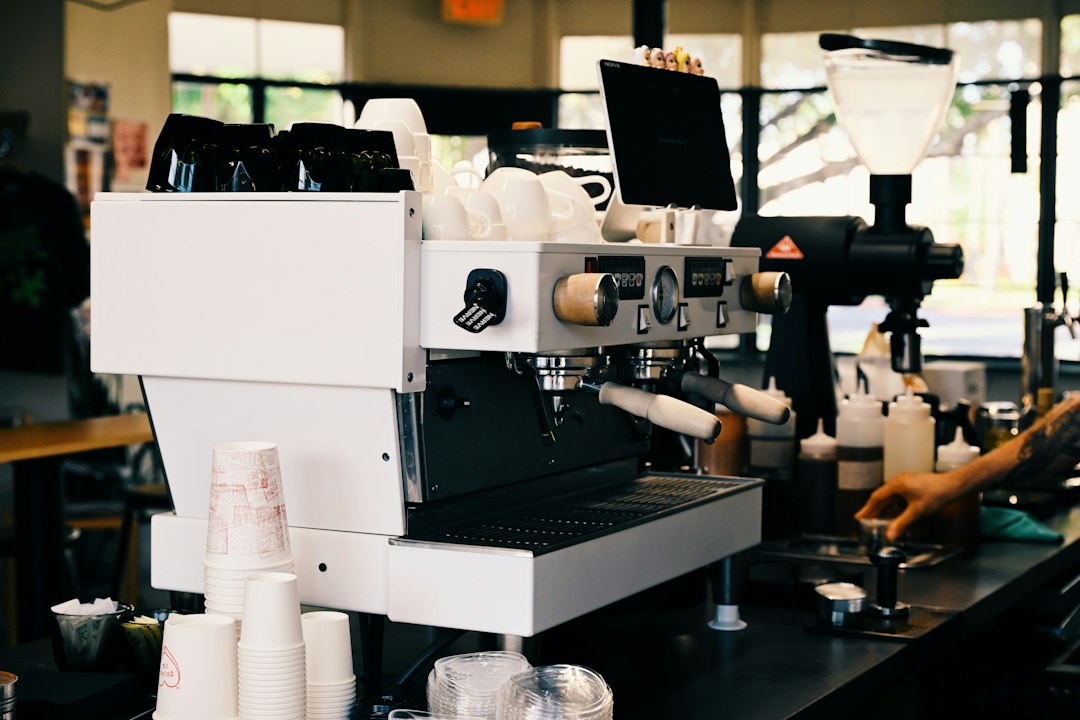
In many specialty cafés, two or more grinders stand next to the espresso machine. A US café equipment supplier recommends two grinders even for small shops. One is for the house espresso, the second for decaf or a seasonal espresso. Filter coffee gets its own grinder, because espresso grinders are poorly suited to it. If several coffees share one grinder, the team has to swap beans and readjust during service.
Also watch when the coffee is ground. Good grinders grind fresh straight into the portafilter for every shot. If ground coffee sits in the container in advance, some of the aroma has already gone. According to Barista Hustle, grinding quickly releases roast gases, and volatile aroma compounds escape with them. The specialist site therefore advises grinding as close as possible to brewing.
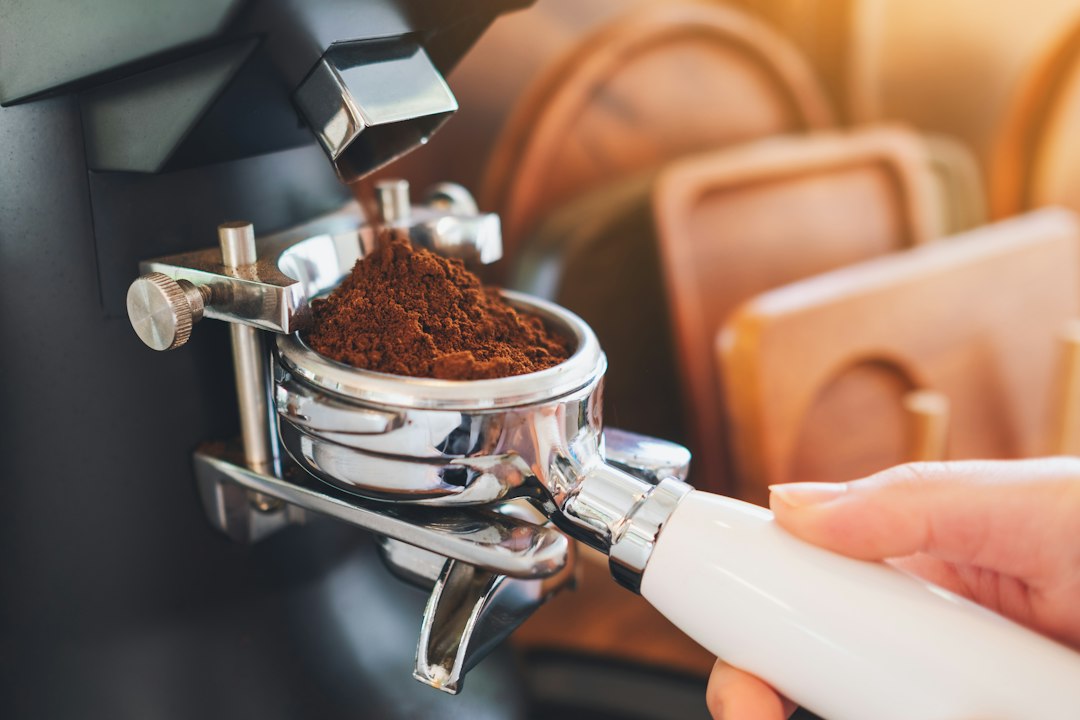
Scales under the cup are standard in specialty cafés today. In a Barista Guild of America survey back in 2017, 82 per cent of 275 baristas weighed their espresso. Ratios of 1:2 to 1:2.5 are usual, so 18 g of ground coffee makes 36 to 45 g of espresso. How to do this on your own machine is explained in How to dial in espresso.
The cleanliness of the bar also tells you a lot. A US machine retailer advises briefly purging the steam wand after every drink, wiping it and purging again. According to its guide, cooled milk quickly sets as hard as cement. If you see a crusted wand, a wet cloth full of milk or old grounds on the portafilter, you will taste it later.
Filter coffee and milk foam: what the cup reveals
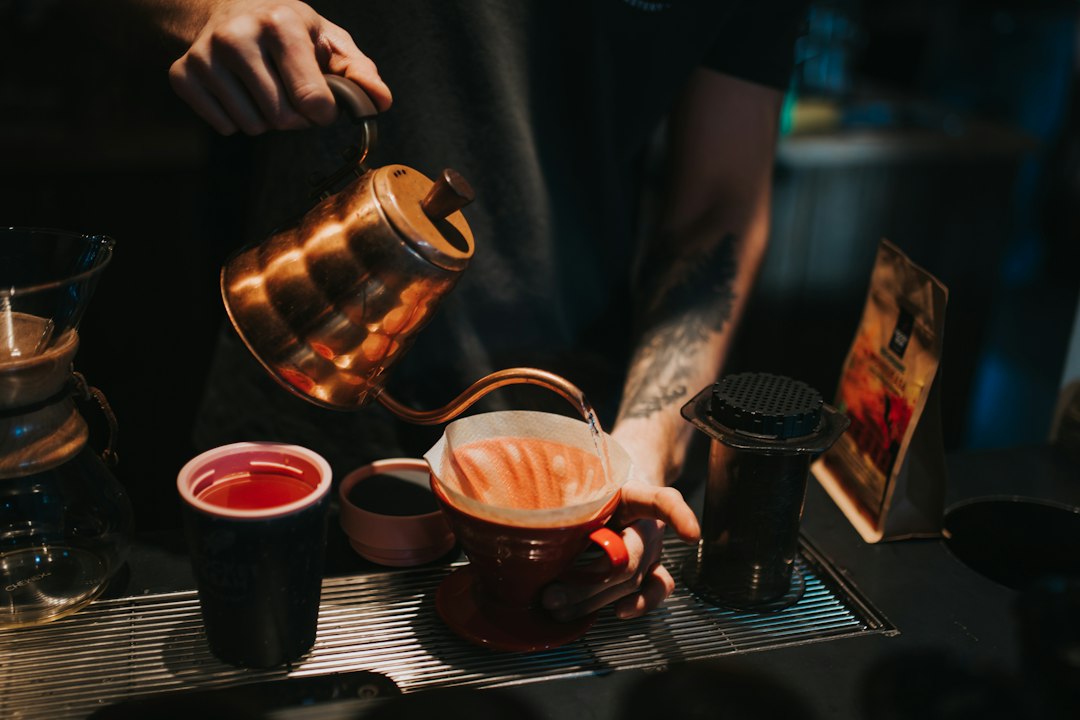
A café with filter coffee on the menu trusts its coffee without milk. It comes either fresh from a pour-over dripper or as batch brew from a commercial filter machine. An Australian roastery sees a filter offering as a sign that a café takes coffee seriously. It advises serving batch brew within an hour of brewing.
A jug that has been sitting on the hotplate since mid-morning, on the other hand, is a warning sign. Feel free to ask when the coffee was brewed.
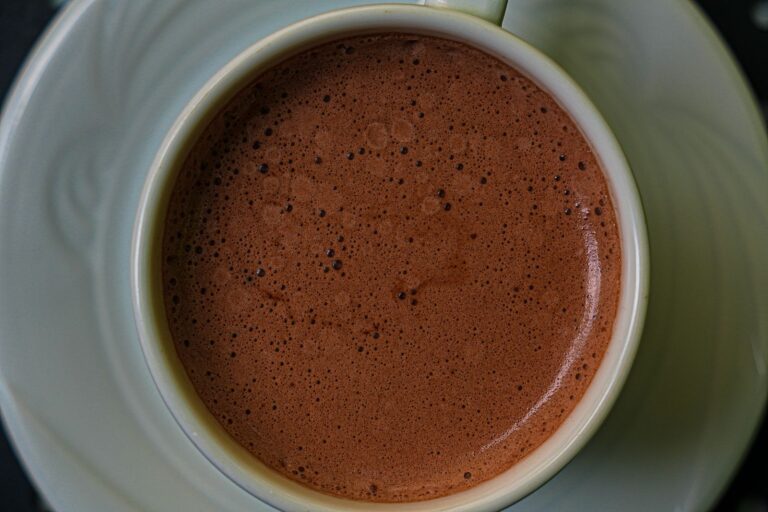
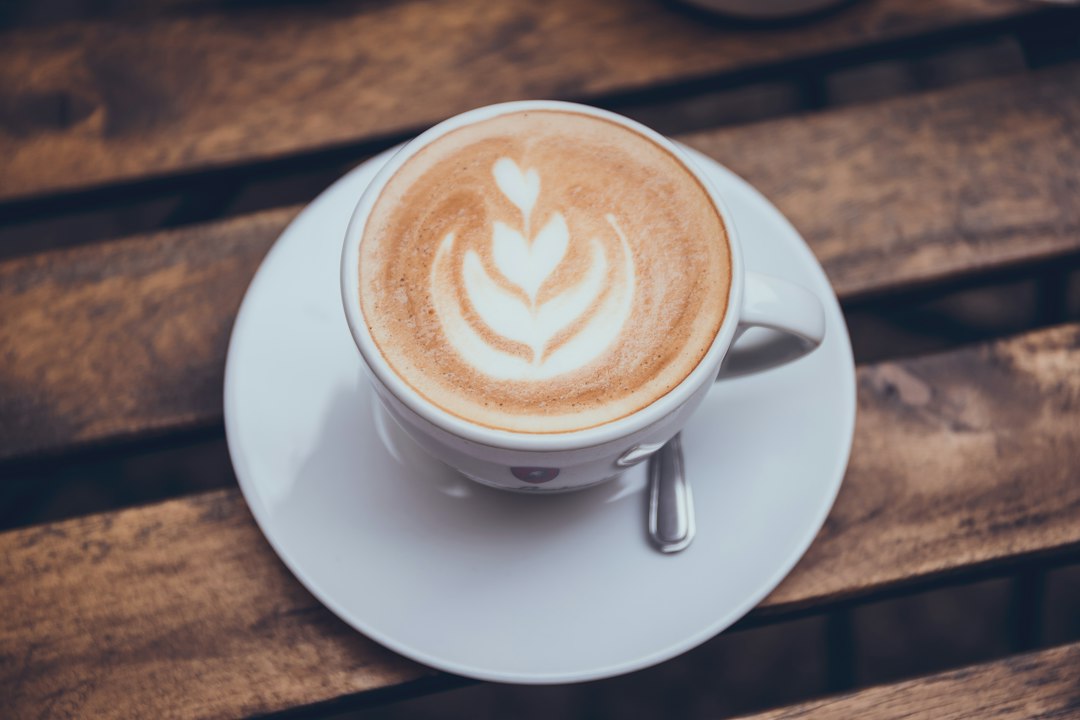
A cappuccino shows the work done at the steam wand. Good milk foam is glossy, has very fine bubbles and blends with the espresso. Coarse, dry foam with large bubbles sits on top like a cap. Latte art is a sign of finely textured milk, but it is not a must.
Temperature also reveals a lot. Specialist sources give around 60 to 65°C for cow’s milk. According to a Swiss roastery, milk above 70°C loses sweetness and tastes cooked. So you can drink a good cappuccino as soon as it is served. How steaming works is shown in Milk foam for cappuccino and oat drink.
Questions for the barista: clear answers without jargon
A good specialty café is happy to explain. Ask where today’s espresso comes from or which filter coffee tastes fruitier. A good answer is specific and gets by without technical terms.
Arrogance behind the counter, on the other hand, is not a mark of quality. If you want sugar in your espresso or a hotter cappuccino, just say so. A good team will explain why it works differently and still make you your drink.
How to test a new café on your first visit:
- Read the board first and look for origin, roastery and process.
- While you wait, look at the grinders, scales and steam wand.
- Order a filter coffee or a straight espresso once before you judge a milk drink.
- Ask about the roast date of the beans on the retail shelf.
- Ask which coffee best suits your taste right now, and listen to the answer.
The price: what a cappuccino costs in 2026
According to YouGov, a cappuccino in Germany cost €3.14 on average in 2025. The German Press Agency (dpa) reported the figure in February 2026. In 2021, it was still €2.24. In the south, the average of €3.20 was slightly higher than in the north. The price database Numbeo gives €3.57 for a cappuccino in a restaurant.
Specialty cafés are often above that. A roastery blog that sells coffee to the hospitality trade calculates €4.50 to €5.00 for a specialty cappuccino. For a cappuccino with standard coffee, it assumes €3.50. There is no systematic survey of prices in specialty cafés.
| Cappuccino in Germany | Price | Source, date |
|---|---|---|
| Average 2021 | €2.24 | YouGov via dpa, February 2026 |
| Average 2025 | €3.14 | YouGov via dpa, February 2026 |
| Bavaria and Baden-Württemberg | €3.20 | YouGov via dpa, February 2026 |
| northern federal states | €3.08 | YouGov via dpa, February 2026 |
| Restaurant, medium cup | €3.57 | Numbeo via dpa, February 2026 |
| Specialty café, calculation | €4.50 to €5.00 | roastery blog for café owners, May 2026 |
VAT comes off the price first. Since 1 January 2026, food in German restaurants and cafés has been permanently taxed at 7 per cent. According to IHK Köln (Cologne Chamber of Commerce and Industry), drinks consumed on the premises are still taxed at 19 per cent. On €3.14, that is around 50 cents (our calculation). For the beans, the roastery blog allows around 50 cents, based on 18 g of coffee at €28 per kilo.
The rest pays for milk, staff, rent, energy, grinders and the machine. A higher price is therefore not automatically overpriced, but it is not proof of quality either. A 2026 coffee report with 1,500 respondents found an average pain threshold of €4.50 for an espresso. Why the beans alone cost more is explained in Why specialty coffee costs so much.
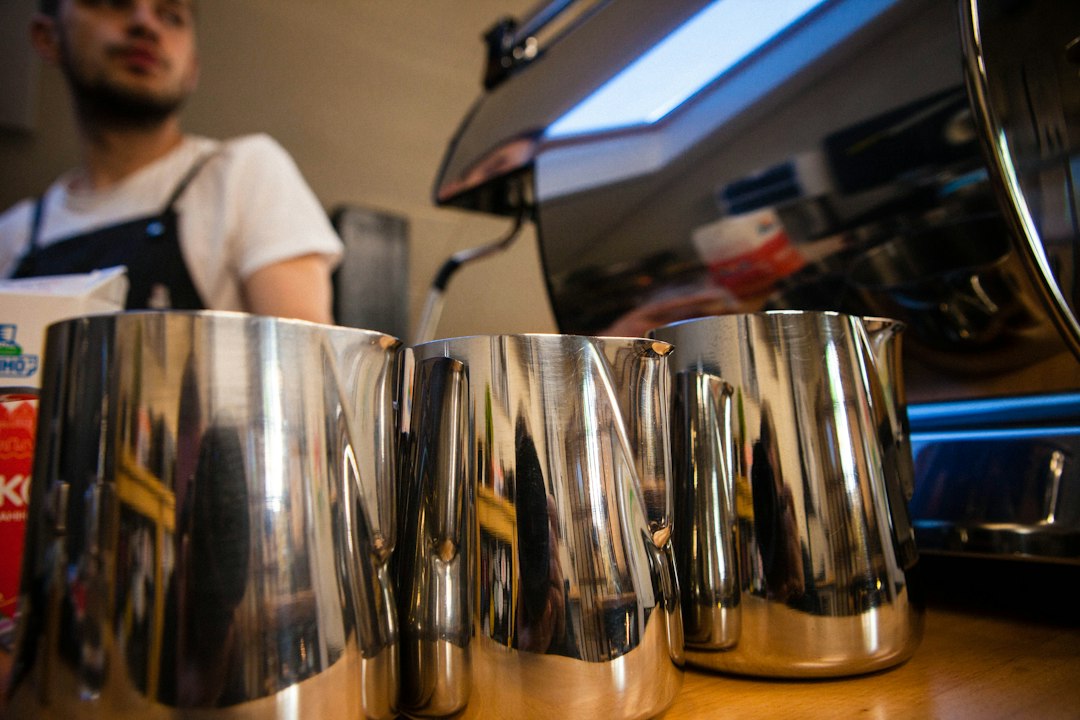
On your next visit, a quick look is enough. Is the origin on the board, are there scales under the cup and is the steam wand shiny? Then you are probably in the right place. Now order an espresso or a filter coffee on its own and decide with the first sip.
Last updated: 24 October 2026.
Sources
- Natalie Ziebolz, HOGAPAGE, interview with Holger Preibisch (Deutscher Kaffeeverband): Der Gast erkennt gute Qualität (in German), 8 November 2021.
- Specialty Coffee Association, Antony Watson, 25 Magazine 4: Preserving Freshness: A Race Against Time, accessed 24 October 2026.
- Dani Howell, Espresso Parts: How many commercial grinders does a coffee shop need?, 19 February 2026.
- Barista Hustle: Grinding Fresh, undated, accessed 24 October 2026.
- David Fasman, Specialty Coffee Association, 25 Magazine, issue 3: Defining the Ever-Changing Espresso, survey March 2017, accessed 24 October 2026.
- Kaffeemacher, Benjamin Hohlmann: Espresso zubereiten: Anleitung, Rezept & Mahlgrad (in German), 16 August 2026.
- Clive Coffee: How to Clean an Espresso Steam Wand, 13 July 2026.
- Five Senses Coffee: Batch Brew Fundamentals, 7 November 2019.
- Benjamin Hohlmann, Kaffeemacher: Flat White, 5 July 2026.
- dpa / Tageskarte (with data from YouGov and Numbeo): Preise für Tasse Kaffee in Europa teilweise über 10 Euro (in German), 27 February 2026.
- Christian Häfner, Happy Coffee: Warum Specialty Coffee dein Café-Geschäft rettet (in German), 17 May 2026.
- IHK Köln: Mehrwertsteuer in der Gastronomie (in German), as of 28 January 2026.
- Tageskarte (coffee report by Tchibo, brand eins and Statista): Umfrage zeigt Preisgrenze für Espresso in Restaurants (in German), 2 June 2026.