Coffee grown under shade trees usually yields a little less, but brings more bird species, steadier harvests and often larger beans. It tastes better mainly in hot areas.Studies on yield, flavour, biodiversity and climate, certification labels compared and the role of the EUDR.
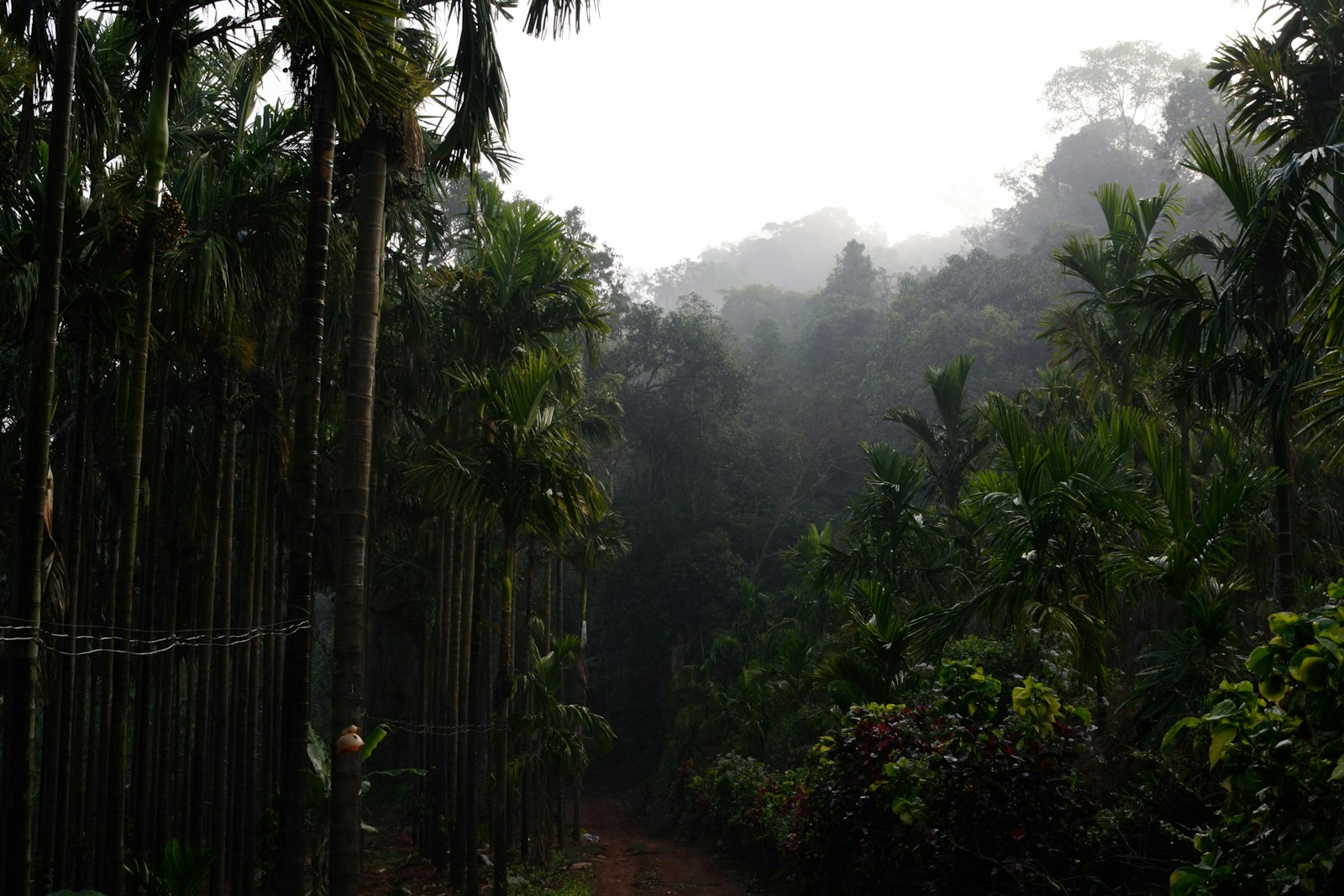
Arabica is originally a forest plant. In the mountain forests of Ethiopia it still grows wild in the shade of large trees. On many plantations, by contrast, coffee stands in dense rows with no tree canopy.
Agroforestry means that trees and crops grow on the same land. There is plenty of research on it, but the results depend heavily on location, variety and the amount of shade.
From forest coffee to sun plantation: the growing systems
Experts classify coffee land by the density of the tree canopy. A 2008 review on Latin America ranges from rustic coffee under thinned natural forest to sun coffee without trees. For Ethiopia, a guide from the coffee authority published in May 2026 gives figures for canopy cover.
| System | Tree canopy | Description |
|---|---|---|
| Forest coffee (Ethiopia) | often over 60 % | wild in mountain forest, hardly managed |
| Semi-forest coffee (Ethiopia) | mostly 40 to 60 % | natural shade trees, thinned out |
| Plantation (Ethiopia) | often around 20 % | mostly with shade trees |
| Intercropping (Vietnam) | depends on tree species | coffee with durian, macadamia or persimmon |
| Sun coffee | none | dense rows, usually more fertiliser |
In Central America, shade often comes from tall trees such as Erythrina, a legume. In Vietnam, fruit and nut trees are more common between the shrubs, and they bring in money themselves.
Yield: usually a little lower, but more even
A 2006 field trial in Costa Rica found 18 per cent less harvest under 45 per cent shade than in full sun. In return, yields varied less from year to year. The meta-analyses show that variety and coffee species make a big difference.
| Study | Design | Result | Limits |
|---|---|---|---|
| Vaast et al., 2006 | field trial in Costa Rica, 2 harvest cycles, sun versus 45 % shade | 18 % less yield, more even harvests | one variety, one site |
| Koutouleas et al., 2022 | meta-analysis, over 200 yield values, 18 arabica varieties | neutral, optimum at medium shade, or falling, depending on variety | no thresholds per variety |
| Piato et al., 2020 | meta-analysis, 30 studies on robusta | no significant yield loss anywhere | studies averaged 1.3 years, none from Vietnam |
| Jezeer et al., 2017 | meta-analysis, 23 studies on coffee and cocoa | lower yield, but more profitable for smallholders | biodiversity and income rarely measured together |
With robusta, older shrubs benefited most, while the effect on young ones was small or negative. More on the two species in Arabica or robusta. According to the 2017 analysis, shaded smallholdings had lower costs and sometimes higher prices per kilo.
Flavour: shade helps mainly in areas that are too warm
In the 2001 trial, Caturra and Catimor grew at a low site in Costa Rica that was too warm for coffee. Under dense shade, the share of large beans over 6.7 mm in Caturra rose from 49 to 69 per cent. In the blind tasting, acidity and body improved.
In the 2006 trial at a good site, the cherries in the shade ripened up to a month later. Sun-grown beans contained more sucrose, chlorogenic acid and trigonelline, a sign of incomplete ripening. Their brew tasted more bitter and astringent.
| Study | Location | Shade and cup | Limits |
|---|---|---|---|
| Muschler, 2001 | Costa Rica, low and warm | better acidity and body, aroma neutral to slightly worse | two varieties, one site |
| Vaast et al., 2006 | Costa Rica, Central Valley | less bitter and astringent | one variety |
| Bosselmann et al., 2009 | Colombia, 1,270 to 1,730 m, 16 farms | worse at higher altitude, no difference lower down | one harvest, one variety |
| Piato et al., 2020 | robusta, several countries | no effect up to 30 % shade, worse above | short studies |
In the study from Huila, shaded plots in the higher municipality scored worse for fragrance, acidity, body and sweetness. So shade mainly offsets heat. In cool highlands it does little for the cup or even harms it.
Birds and biodiversity: shade helps, but forest is still needed
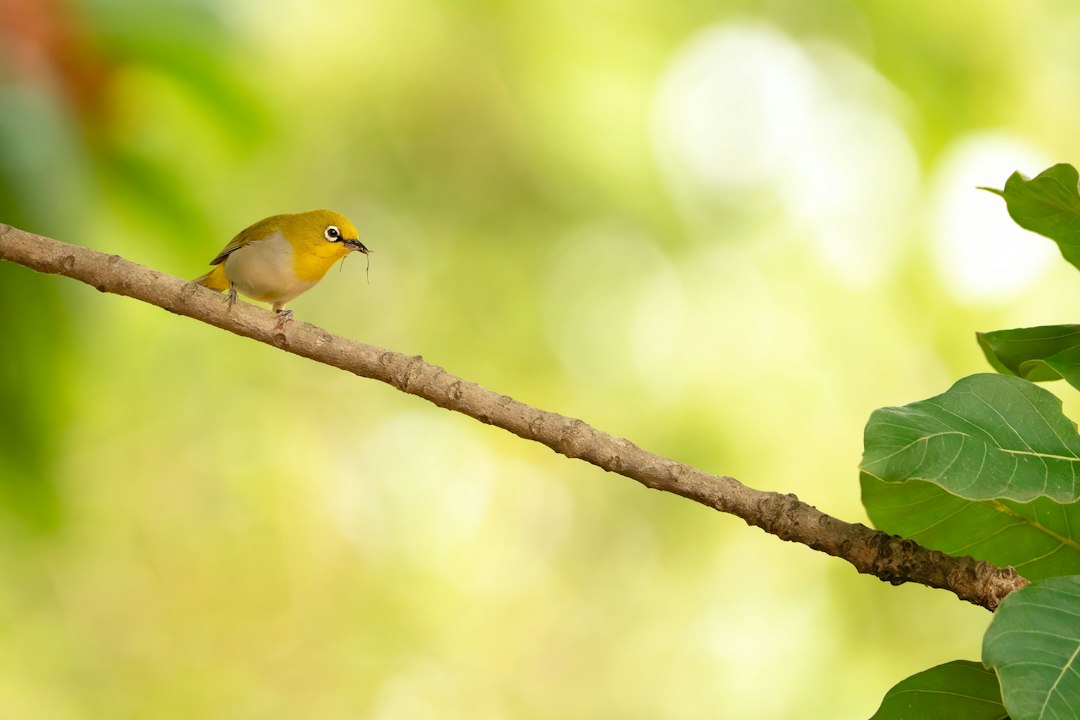
The 2008 review analysed studies on ants, birds and trees in Latin America. Rustic shade coffee had as many or more ant and bird species as nearby forest. Species were lost with every step of intensification, most of all among ants.
A 2026 study from the Colombian Andes draws a line. According to a report of 4 August 2026, forest specialists needed more than 32 per cent forest within 2 km. They were almost entirely absent from coffee farms. Dense, species-rich shade helped fruit eaters, insect eaters and nectar feeders. The data come from a single region.
Soil and climate: more carbon, fewer extremes
A 2025 meta-analysis covered 14 studies from nine countries. Species-rich agroforestry systems held an average of 111 t of soil carbon per hectare, simple ones 84 t. That is around 31 per cent more (our calculation). Annual gains across all systems were not statistically certain, though, as the data varied widely.
In a 2007 series of measurements in Chiapas, Mexico, temperature, air humidity and soil moisture fluctuated more the less shade a plot had. Only three plots were studied. A 2019 modelling study expects over half of Central America’s coffee land to become unsuitable by 2050, and many shade tree species will suffer too.
Vietnam shows the consequences of intensive monoculture. According to a 2025 review, soils in the Central Highlands have a pH of 4.1 to 5.6. Nitrogen fertiliser was applied at up to 50 per cent above recommendations. When old land is replanted, around 40 per cent of the shrubs die.
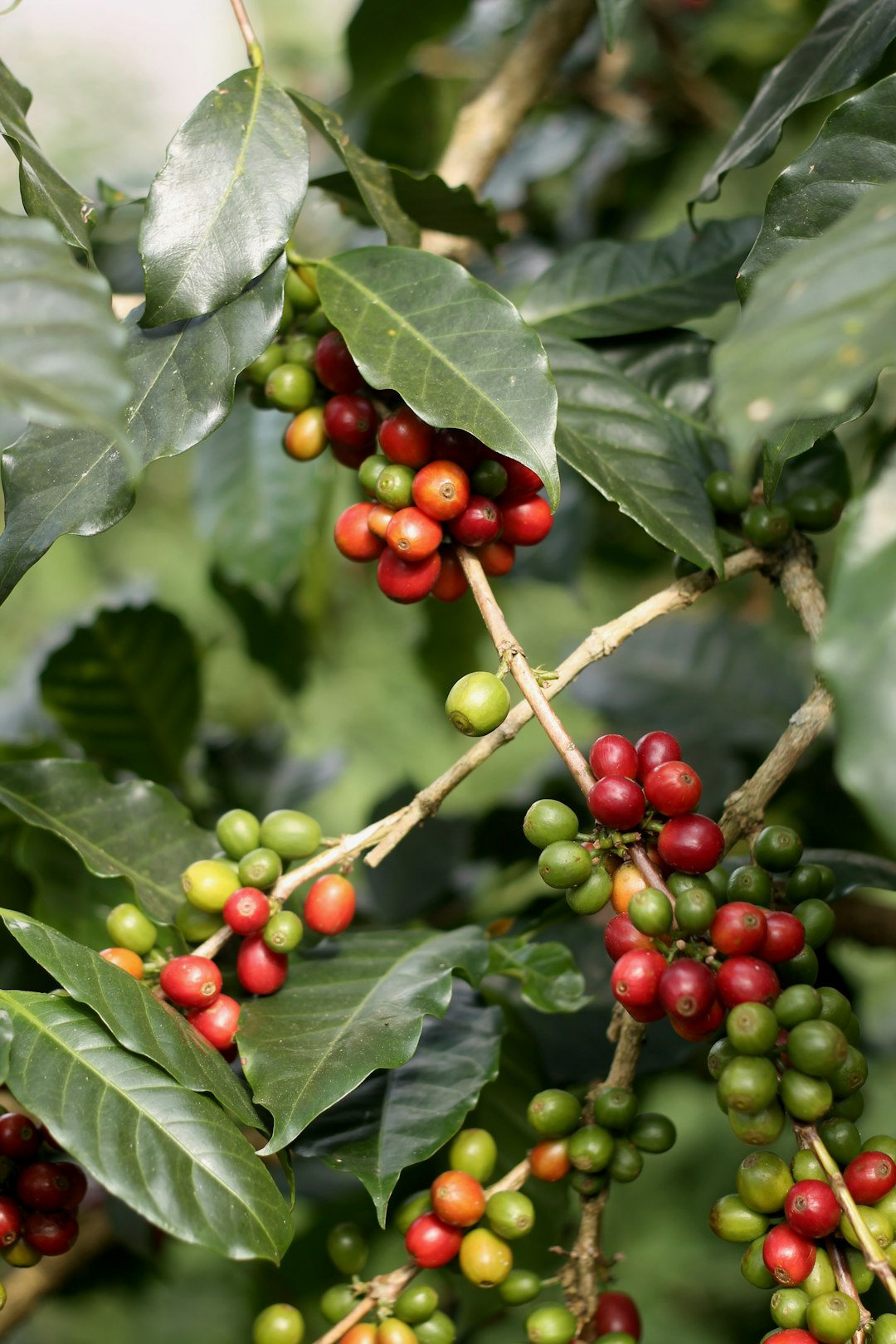
In 2024, a survey of 510 farmers in Lam Dong and Dak Nong modelled intercropping over 25 years. It was mostly more profitable than monoculture, and at least 60 per cent of households would benefit. The upfront cost of trees holds farmers back, though. Fine robusta from Vietnam shows that Vietnamese robusta can also stand for quality.
Labels and the EUDR: what you can rely on from the pack
According to the Smithsonian, nobody independently checks claims such as ‘shade-grown’. Labels with fixed criteria are more reliable. What the labels say about price and premium is covered in Direct trade, Fairtrade and other labels.
| Label | Shade requirement | Other |
|---|---|---|
| Smithsonian Bird Friendly | at least 40 % canopy, 10 tree species, 3 layers, trees from 12 m | organic required |
| Rainforest Alliance (2020 standard) | no shade canopy required; 15 % natural vegetation by year 6; 40 % canopy and 12 species per hectare voluntary | environment and labour, no minimum price |
| EU organic logo, Fairtrade | none | farming or price |
The EU Deforestation Regulation applies from 30 December 2026 to large and medium-sized companies, and from 30 June 2027 to small ones. Coffee may then only come from land that has not been deforested after 31 December 2020. The regulation counts agroforestry with crops under a tree canopy as agricultural plantations, not as forest. A label does not replace the due diligence statement; more in The EUDR for coffee and cocoa.
Shade trees cost some yield and in return bring biodiversity, soil protection and steadier harvests. They help the cup mainly in hot, low areas. They help birds most when forest remains nearby.
Last updated: 24 October 2026.
Sources
- Ethiopian Coffee and Tea Authority, European Forest Institute: From Bean to Cup: Ethiopian coffee value chain and the EUDR, May 2026.
- Philpott, S. M. et al., Conservation Biology 22(5): Biodiversity Loss in Latin American Coffee Landscapes, 2008.
- Vaast, P. et al., J. Sci. Food Agric. 86(2): Fruit thinning and shade improve bean characteristics and beverage quality of coffee, 2006.
- Muschler, R. G., Agroforestry Systems 51: Shade improves coffee quality in a sub-optimal coffee-zone of Costa Rica, January 2001.
- Bosselmann, A. S. et al., Agric. Ecosyst. Environ. 129: The influence of shade trees on coffee quality in Southern Colombia, 2009.
- Koutouleas, A. et al., Agron. Sustain. Dev. 42: Shade effects on yield across different Coffea arabica cultivars, 2022.
- Piato, K. et al., Agron. Sustain. Dev. 40: Effects of shade trees on robusta coffee growth, yield and quality, 2020.
- Jezeer, R. E. et al., Ecological Economics 140: Shaded Coffee and Cocoa: Double Dividend for Biodiversity and Small-scale Farmers, 2017.
- Daily Coffee News: Study: Bird-Friendly Coffee Landscapes Need Forest Alongside Shade, 4 August 2026.
- Gomes, V. M. et al., Agronomy 15(2): A Global Meta-Analysis of Soil Carbon Stock in Agroforestry Coffee Cultivation, 17 February 2025.
- Lin, B. B., Agric. For. Meteorol. 144: Agroforestry management as an adaptive strategy against potential microclimate extremes, May 2007.
- Inland Norway University, on de Sousa, K. et al., Sci. Rep.: Climate change threatens coffee production, 16 September 2019.
- Van, L. N. et al., Agron. Sustain. Dev. 45: Restoring soil health from long-term intensive Robusta coffee cultivation in Vietnam, 13 June 2025.
- Pham, G. et al., Tropentag: Long-term economic viability of coffee intercropping systems in Vietnam, 2024.
- Smithsonian’s National Zoo: The Essential Bird Friendly Toolkit, undated, accessed 24 October 2026.
- Julie Craves, Coffee & Conservation: New Rainforest Alliance criteria for shade, 28 July 2020.
- EUR-Lex: Verordnung (EU) 2023/1115, konsolidiert, Art. 2 (in German), 18 September 2026.